

The burgeoning e-commerce landscape has witnessed a significant surge in the popularity of print-on-demand (POD) services, offering aspiring entrepreneurs a low-barrier entry into the custom merchandise market. Among the prominent players, Tapstitch and Printful stand out, each carving a distinct niche with their operational philosophies and product offerings. While both platforms empower creators to sell customized products online, their approaches to catalog breadth, print quality, global reach, and integration capabilities present a crucial decision point for sellers. This comprehensive analysis delves into the intricacies of Tapstitch and Printful, offering a clear, data-driven recommendation for various seller profiles.
For sellers prioritizing a vast POD catalog with extensive global reach, Printful emerges as the more robust and reliable option. Its comprehensive suite of products, diverse printing techniques, and expansive fulfillment network cater to a broad spectrum of e-commerce ventures. Conversely, for businesses meticulously building a premium streetwear or niche fashion brand, Tapstitch warrants serious consideration due to its specialized focus on high-quality apparel blanks and a curated selection designed for the discerning fashion market.
Tapstitch vs. Printful: A Strategic Overview
At its core, the choice between Tapstitch and Printful hinges on a seller’s strategic objectives. Printful’s strength lies in its versatility and scale. With over 479 Stock Keeping Units (SKUs) spanning apparel, home decor, accessories, and wall art, it provides a one-stop solution for diversification and testing new product categories. Its advanced print methods, including Direct-to-Garment (DTG), embroidery, sublimation, cut-and-sew, and UV printing, allow for a wide array of creative expression. Furthermore, Printful’s extensive network of over 12 global fulfillment centers ensures efficient and cost-effective shipping to a worldwide customer base, mitigating delivery delays and customs hurdles.
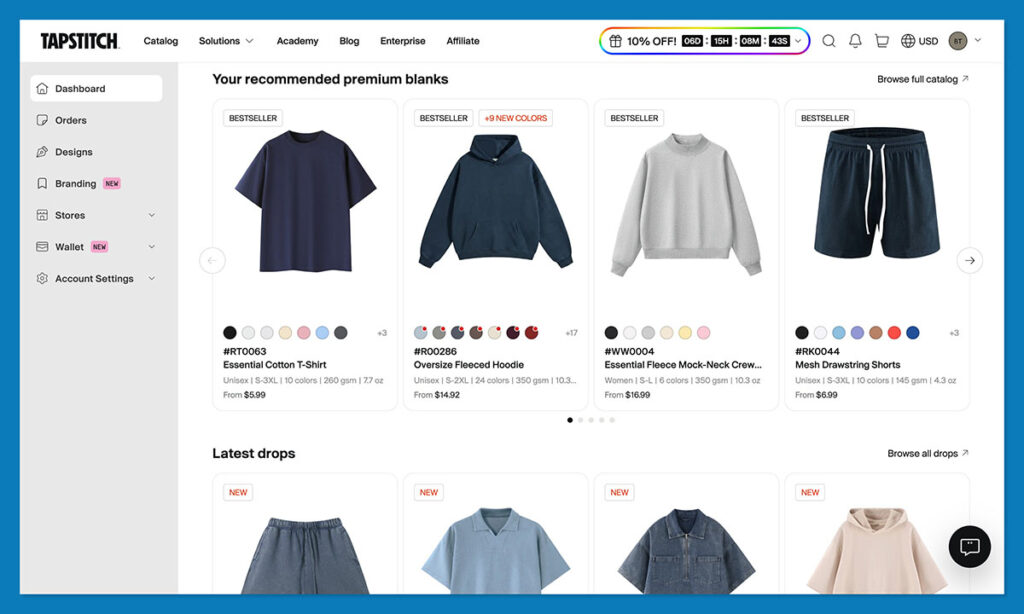
Tapstitch, on the other hand, adopts a highly focused approach. Its catalog boasts over 400 apparel-only blanks, meticulously selected for their heavyweight feel, premium streetwear cuts, and oversized silhouettes. This specialization is not a limitation but a deliberate strategy to cater to brands that prioritize garment quality and a distinct fashion-forward aesthetic. By concentrating on apparel, Tapstitch aims to deliver a superior product experience for niche markets, particularly those in the streetwear and high-fashion segments.
Pricing Structures: Accessibility and Scalability
When it comes to initial investment, both Tapstitch and Printful offer an accessible entry point for new sellers. Neither platform imposes mandatory monthly fees to begin operations, making them financially attractive for individuals testing the waters of online entrepreneurship.
Tapstitch operates on a straightforward pay-per-order model. This means sellers are only charged for the products they sell, with no recurring subscription costs. This simplicity can be appealing for businesses with unpredictable sales volumes or those just starting out and seeking to minimize upfront expenses.
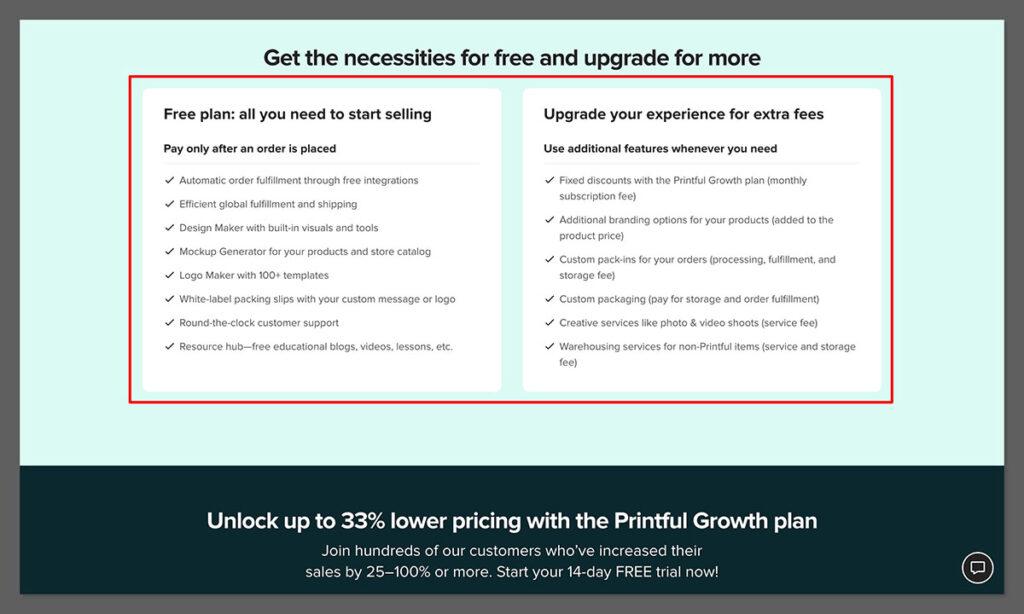
Printful also offers a free-to-start tier, mirroring Tapstitch’s accessibility. However, Printful differentiates itself by offering an optional "Growth" plan. This premium tier, priced at approximately $24.99 per month, unlocks significant product discounts of up to 33%. For sellers experiencing consistent sales volume and aiming to optimize their profit margins, this plan can become highly cost-effective, effectively paying for itself through reduced per-unit costs.
In terms of per-unit pricing, the differences are often minimal at lower volumes. A comparable branded t-shirt, including standard US shipping, might cost around $22.95 through Tapstitch and approximately $21.73 through Printful. While this disparity may seem negligible on a single item, it can compound significantly for businesses with higher order volumes. The true pricing advantage for Printful emerges when its Growth plan discounts are factored in, making it the more economical choice for scaling operations. For nascent sellers, however, the cost advantage is negligible, allowing them to choose based on other differentiating factors.
Pricing at a Glance:
| Feature | Tapstitch | Printful |
|---|---|---|
| Base Platform Fee | $0 (Pay-per-order) | $0 (Free tier); Optional Growth plan ~$24.99/mo |
| Typical Tee + US Ship. | ~$22.95 | ~$21.73 |
| Volume Discounts | None | Up to ~33% on paid plan |
| Free Trial | N/A (Free account) | N/A (Free account) |
The Winner: For low-volume sellers, pricing is a tie, as both platforms are free to start with comparable per-unit costs. Printful gains a distinct advantage for higher-volume sellers due to its Growth plan discounts, offering significant savings as sales scale.
Product Range and Printing Capabilities: Breadth vs. Depth
The divergence in product range and printing methods is perhaps the most significant differentiator between Tapstitch and Printful.
Tapstitch has deliberately curated a focused apparel-only catalog, featuring over 400 clothing blanks. This selection emphasizes premium streetwear essentials, including heavyweight t-shirts, high-GSM hoodies, and garments with oversized cuts designed for a fashion-forward audience. If a seller’s vision is to establish an apparel brand that resonates with current fashion trends, Tapstitch’s specialized catalog provides the ideal foundation. However, for those seeking to offer a diverse range of merchandise beyond apparel, such as mugs, phone cases, or posters, Tapstitch is not the appropriate platform.
Printful, in contrast, offers an expansive catalog of over 479 SKUs that extend far beyond apparel. Their offerings encompass a wide array of home decor items, accessories, and wall art, providing sellers with the flexibility to create a comprehensive product line. Complementing this broad product selection, Printful supports a more extensive suite of printing techniques. These include DTG for detailed graphic prints, embroidery for headwear and apparel embellishments, all-over sublimation for vibrant, edge-to-edge designs, cut-and-sew for custom garment construction, and UV printing for unique applications. This diversity in print methods and product types makes Printful an ideal choice for sellers looking to experiment with different product categories or build a multi-faceted brand.
While Printful excels in breadth, Tapstitch shines in depth within its chosen niche. The platform’s apparel selection is characterized by its commitment to quality, featuring substantial fabric weights and ample print areas, including large back prints, often included in the base fee. For a clothing brand that intends to specialize in high-quality tees and hoodies, Tapstitch’s dedicated focus ensures that these items possess a premium feel and aesthetic.
Product and Print Method Comparison:
| Dimension | Tapstitch | Printful |
|---|---|---|
| Catalog Breadth | Apparel-only, ~400+ fashion-focused blanks | 479+ SKUs across apparel, home, accessories, wall art |
| Print Methods | DTG, DTF (apparel only) | DTG, embroidery, all-over sublimation, cut & sew, UV |
| Specialty Strengths | Heavyweight tees, 400 GSM hoodies, oversized fits, large print zones | All-over print products, embroidered hats, diverse merch types |
The Winner: Printful unequivocally wins on product range. Its extensive catalog of over 479 products and diverse printing methods make it the superior choice for sellers aiming to offer a wide variety of merchandise beyond just apparel.
Print Quality and Garment Excellence: A Tale of Specialization
Print quality is a crucial factor for any POD business, and here, Tapstitch presents a compelling argument for its specialized approach. The platform operates its own vertically integrated facilities, eschewing the marketplace model of third-party printers. This control over the production process allows Tapstitch to utilize modern DTG and DTF printing technologies, particularly effective for dark fabrics.
Independent reviews and user feedback frequently highlight Tapstitch’s garment quality as being notably superior to mass-market POD offerings, especially for streetwear applications. The platform is praised for its strong white ink coverage, excellent wash performance, and the use of premium fabric weights that contribute to a luxurious feel. This focus on tangible product quality is a significant draw for brands that prioritize the tactile experience of their merchandise.
Printful, while renowned for its consistency and reliability at scale, has encountered recurring feedback within user communities regarding print placement variance. Reports of deviations ranging from 0.5 to 1 inch can lead to designs appearing off-center, a concern particularly for larger graphic prints where precise placement is paramount. While Printful’s ability to maintain quality across its vast operational network is commendable, this minor inconsistency can be a point of contention for fashion brands where meticulous detail is expected.
It is important to acknowledge that Tapstitch, being a relatively newer entrant compared to Printful, has a more limited volume of third-party reviews. However, the existing feedback strongly favors Tapstitch for apparel-centric sellers who value superior garment construction and print finish.
Quality and Fulfillment Details:
| Dimension | Tapstitch | Printful |
|---|---|---|
| Production Model | In-house, vertically integrated facilities | Own and partner facilities across multiple regions |
| Locations | Los Angeles (US) & Guangzhou (China) | 12+ fulfillment centers in North America, EU, and beyond |
| Typical Production | ~2–4 business days | ~2–5 business days (product/region dependent) |
| Quality Notes | Heavy fabrics, strong color output, solid wash performance | Consistent at scale; some reports of print placement variance |
The Winner: Tapstitch takes the lead in garment quality for apparel. Its vertically integrated production process, combined with its selection of premium blanks, gives it a distinct edge for fashion-focused sellers where the feel and finish of the product are critical to brand perception.
Global Reach and Shipping Logistics: Connecting Across Continents
For e-commerce businesses with an international customer base, Printful’s global fulfillment infrastructure provides a significant competitive advantage. The company operates over 12 fulfillment centers strategically located across North America and Europe. This distributed network allows orders to be processed and shipped from locations geographically closer to the end customer. The benefits are manifold: reduced shipping times, lower shipping costs, and a minimized likelihood of complex customs procedures and associated fees. For businesses targeting European markets, in particular, Printful’s local production capabilities translate into a more efficient and customer-friendly delivery experience.
Tapstitch currently fulfills orders from two primary locations: Los Angeles in the United States and Guangzhou in China. This dual-location strategy is effective for serving customers within the US and for international orders that can be efficiently routed through the China facility. However, it offers less flexibility and fewer routing options compared to Printful’s more extensive network. While Tapstitch can manage international shipments, the lack of localized fulfillment in regions like Europe means longer transit times and potentially higher shipping costs for those customers.
Global Fulfillment Network Comparison:
| Dimension | Tapstitch | Printful |
|---|---|---|
| Fulfillment Centers | 2 (US & China) | 12+ (North America, EU, etc.) |
| International Reach | Yes, via US/CN hubs | Extensive, with localized fulfillment options |
| Delivery Speed | Variable, can be longer for non-US/CN orders | Generally faster due to proximity |
The Winner: Printful is the clear victor in terms of global reach and shipping efficiency. Its network of over 12 fulfillment centers enables faster, more cost-effective international shipping, a capability that Tapstitch’s two-location model cannot match.
Integrations and Platform Capabilities: Ecosystem and Automation
The ease with which a POD platform integrates with existing e-commerce storefronts and marketplaces is a critical factor for operational efficiency and scalability.
Tapstitch supports integrations with three major platforms: Shopify, Etsy, and Wix. These integrations are sufficient for many emerging clothing brands launching their initial online presence. However, for sellers aiming to expand their reach across a wider array of channels, such as Amazon, eBay, TikTok Shop, WooCommerce, or Squarespace, Tapstitch’s integration list is considerably limited.
Printful boasts a far more extensive integration ecosystem, connecting with over 21 e-commerce platforms and marketplaces. This includes major players like Amazon, eBay, and TikTok Shop, along with popular website builders like WooCommerce and Squarespace. Furthermore, Printful provides an Application Programming Interface (API) for developers who wish to create custom integrations, offering unparalleled flexibility for businesses with unique technical requirements.
Beyond mere integrations, Printful offers a more developed suite of tools and automation features. These include AI-assisted design capabilities, a robust mockup generator for creating realistic product visualizations, pre-designed product templates, tools for bulk ordering, and "Quick Stores," a feature that allows sellers to quickly launch a simple, functional storefront. While Tapstitch provides a capable built-in design tool with 3D apparel mockups, which is well-suited for fashion catalog building, and offers brandable custom neck labels (for a per-unit fee) to enhance brand presentation, Printful’s overall platform breadth and automation capabilities are significantly more advanced.
Platform Capabilities Compared:
| Dimension | Tapstitch | Printful |
|---|---|---|
| Integrations | Shopify, Etsy, Wix | 21+ platforms (Amazon, eBay, TikTok Shop, etc.), plus API |
| Design Tools | Built-in designer with 3D apparel mockups | Full mockup generator, AI design tools, product templates |
| Branding | Custom neck labels (paid), brand-forward packaging | Inside labels, pack-ins, branded packing slips |
| Scale Tools | Curated catalog, fewer automation features | Bulk tools, automation, warehousing, sample discounts |
The Winner: Printful emerges as the winner in terms of integrations and platform capabilities. Its extensive network of over 21 platform connections, coupled with a more sophisticated design and automation ecosystem, makes it the superior choice for sellers looking to expand across multiple sales channels.
Strategic Alignment: When to Choose Which Platform
The decision between Tapstitch and Printful is not a one-size-fits-all scenario. It requires a clear understanding of a business’s unique goals and target market.
When to Choose Tapstitch Over Printful:
Tapstitch is the optimal choice for businesses that are primarily focused on building a distinct clothing brand, rather than a general merchandise store. Its core strengths lie in:
- Premium Apparel Blanks: Tapstitch’s selection of heavyweight fabrics, oversized fits, and generous print areas are specifically designed for the streetwear and fashion market. These high-quality blanks are difficult to replicate with the more generalized offerings of Printful.
- Fashion-First Catalog: The platform’s curated apparel-only catalog ensures that every product aligns with a fashion-conscious aesthetic, making it easier to build a cohesive brand identity.
- US-Centric Fulfillment: For brands with a predominantly US customer base, Tapstitch’s Los Angeles fulfillment center offers efficient domestic shipping without the routing complexities of a multi-regional network.
- Brand Elevation: Tapstitch’s commitment to premium presentation, including options for custom neck labels and brand-forward packaging, helps nascent clothing brands project a professional and high-end image, differentiating them from generic POD providers.
The trade-off for this specialization includes fewer integrations, a lack of volume-based discounts, a more limited product range beyond apparel, and a less extensive library of third-party reviews. However, for the right brand, these compromises are outweighed by the platform’s ability to deliver a superior, specialized product experience.
When Printful Still Wins:
Printful remains the superior choice for the majority of sellers due to its inherent versatility and comprehensive offerings. Its advantages are particularly pronounced in the following scenarios:
- Diverse Product Offerings: If a seller wishes to offer a wide range of products, including embroidered hats, all-over print hoodies, mugs, posters, or phone cases, Printful’s expansive catalog is indispensable. It allows for the creation of a complete product line under a single provider.
- International Sales: For businesses with a significant global customer base, Printful’s 12+ international fulfillment centers are crucial. They ensure faster, more cost-effective delivery to customers in regions like Europe, the UK, or Australia, compared to Tapstitch’s US and China hubs.
- Multi-Channel Selling: Sellers utilizing marketplaces such as Amazon, TikTok Shop, or eBay will find Printful’s extensive integrations essential. Tapstitch does not offer direct integrations with these platforms, necessitating workarounds or alternative solutions.
- Scalability and Cost Optimization: As businesses grow, Printful’s Growth plan and volume discount structure become a significant financial advantage. Tapstitch’s flat pricing model does not offer similar economies of scale.
- Beginner Friendliness: For individuals new to e-commerce and POD, Printful’s broader support community, extensive documentation, and wider array of integrations often make it a more accessible starting point.
Methodology and Conclusion: Informed Decision-Making
This comparative analysis was conducted through rigorous hands-on testing of both platforms, a thorough review of independent user feedback and community discussions, and an in-depth examination of third-party comparative data. The evaluation focused on key areas critical to print-on-demand success, including product range, print quality, integration capabilities, pricing structures, and global fulfillment networks.
Tapstitch vs. Printful: Our Verdict
For the vast majority of e-commerce sellers, Printful stands out as the more advantageous platform. Its comprehensive product catalog, diverse printing options, extensive network of over 21 integrations, and global fulfillment infrastructure make it a highly versatile and scalable solution capable of supporting a wide array of business models. Whether operating on Shopify, Amazon, or TikTok Shop, or shipping to customers across continents, Printful is engineered to meet diverse operational demands.
However, Tapstitch earns a clear and enthusiastic recommendation for fashion-first clothing brands. For businesses whose core identity is built around premium t-shirts and hoodies, Tapstitch’s superior garment quality, expansive print areas, and streetwear-ready blanks offer a distinct advantage that Printful’s more generalized approach does not fully replicate. The minimal cost difference at lower volumes, coupled with the potential for significant quality improvements, makes Tapstitch a compelling choice for brands where the product itself is the primary differentiator.
Ultimately, the most effective way for any seller to make an informed decision is through direct experience. Both Tapstitch and Printful offer free accounts with no mandatory monthly commitments. This allows entrepreneurs to order samples, test the print quality, and evaluate the platform’s user interface firsthand before committing to either provider. This empirical approach ensures that the chosen platform aligns perfectly with the unique vision and operational requirements of their e-commerce venture.
Frequently Asked Questions: Clarifying Key Concerns
Is Tapstitch better than Printful for clothing brands?
For premium streetwear and fashion-focused brands, Tapstitch’s heavyweight blanks, large print areas, and apparel-only focus can indeed make it a stronger choice than Printful, primarily on garment quality. However, Printful’s broader integrations and global fulfillment capabilities still position it as the safer, more versatile default for a wider range of sellers.
Does Tapstitch integrate with Shopify?
Yes, Tapstitch offers integrations with Shopify, Etsy, and Wix. For sellers requiring connections to additional platforms like WooCommerce, Amazon, or TikTok Shop, Printful provides a more extensive array of options, supporting over 21 channels.
Is Printful free to use?
Printful is free to start, with no mandatory monthly fees. The optional Growth plan, priced at approximately $24.99 per month, unlocks volume discounts of up to 33% on products, which can be highly beneficial for sellers with consistent order volumes.
How does Tapstitch’s pricing compare to Printful?
At the per-unit level, pricing is quite comparable. A standard branded tee with US shipping costs around $22.95 on Tapstitch and approximately $21.73 on Printful. The cost advantage shifts towards Printful at higher volumes due to its Growth plan discounts, which are not matched by Tapstitch’s flat pricing structure.
Does Tapstitch ship internationally?
Tapstitch facilitates international shipping from its US and China facilities. However, its fulfillment network is less extensive than Printful’s. For sellers with a substantial international customer base, Printful’s 12+ global fulfillment centers typically offer faster and more cost-effective delivery across a wider range of regions.
Which platform is better for beginners?
Printful is generally the more recommended starting point for beginners, owing to its extensive product catalog, a wider range of platform integrations, and a larger, more established support community. Tapstitch is best suited for beginners who have a clear vision of building a specialized apparel brand rather than a general merchandise store.








