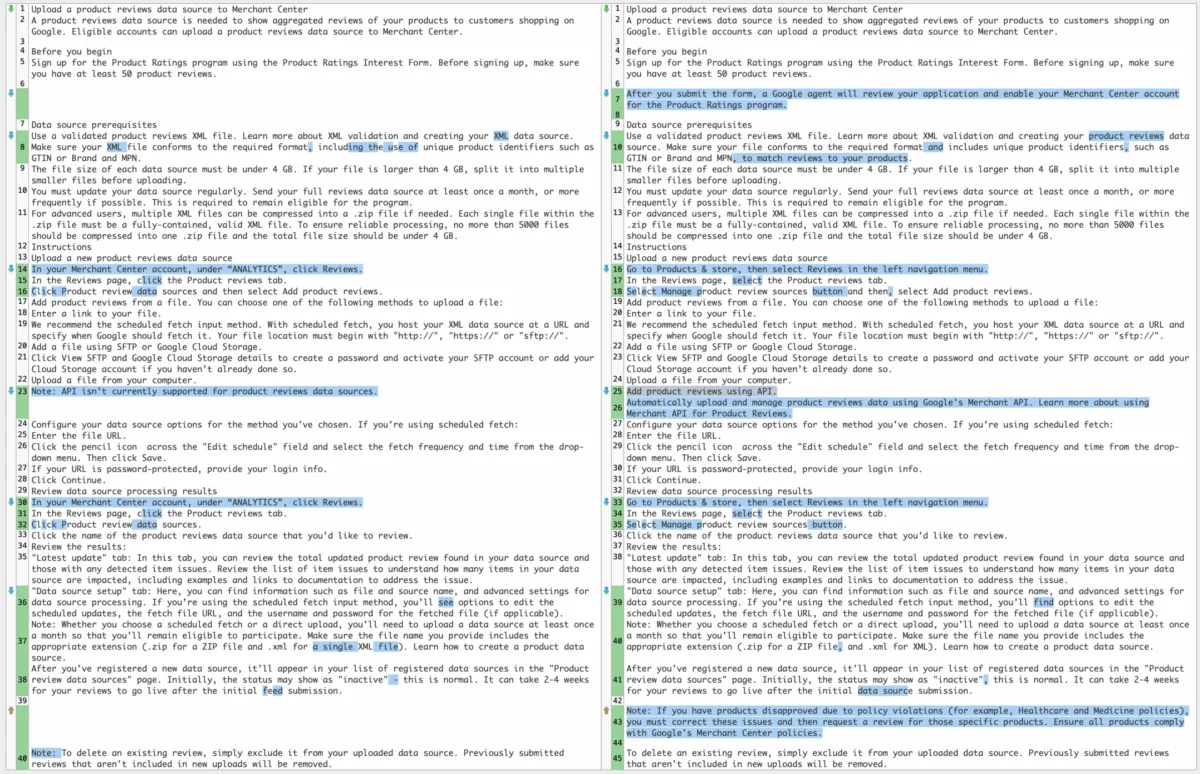
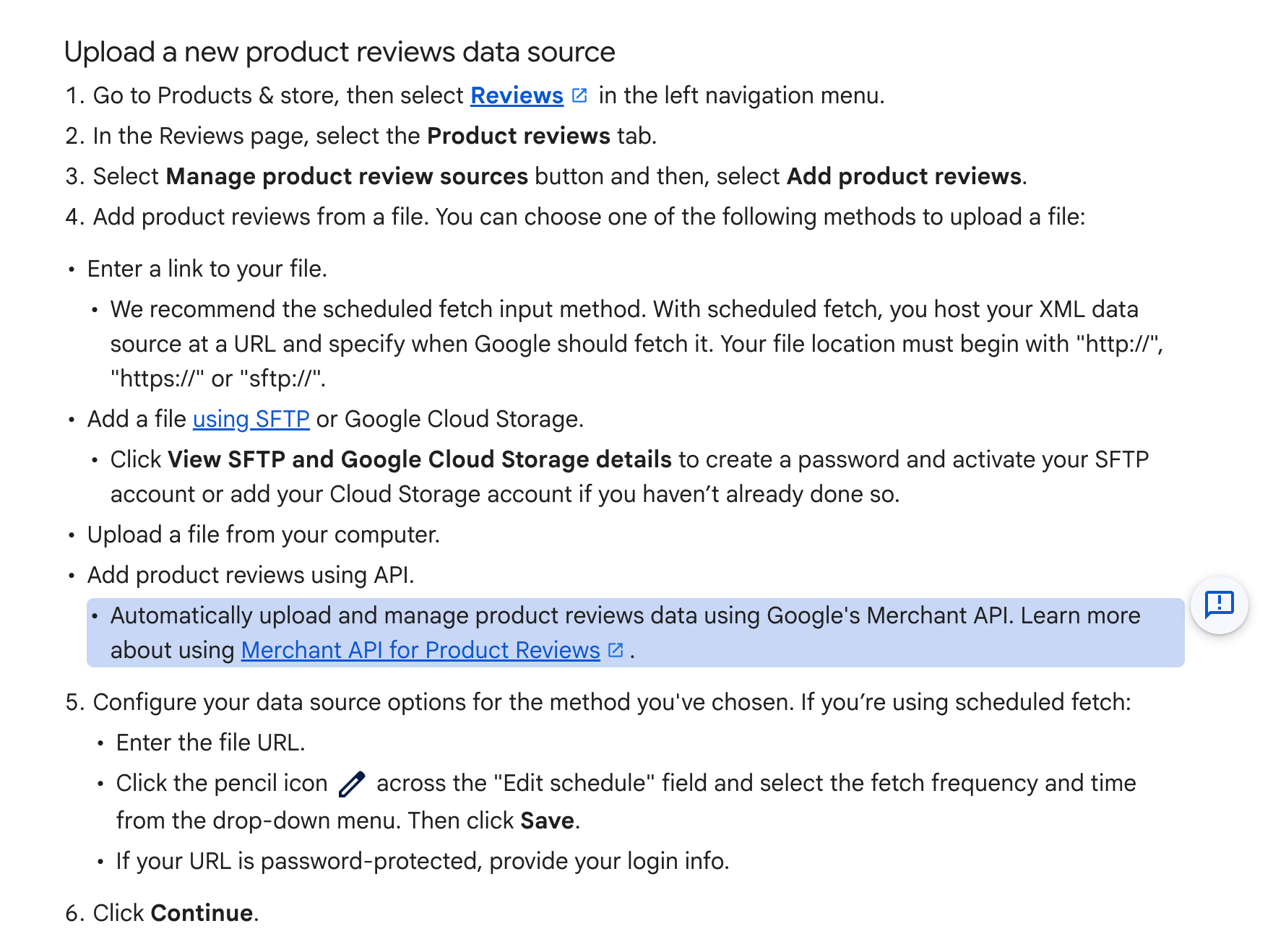
Google has officially updated its Merchant Center API to support the direct submission of product review data, marking a significant enhancement for e-commerce businesses and developers leveraging Google’s expansive shopping ecosystem. This pivotal change, confirmed through an update to Google’s "upload a product reviews data source to Merchant Center" help document, removes a previous limitation where API support for product reviews was explicitly unavailable. The documentation now clearly states, "Add product reviews using API," replacing the prior caveat, "API isn’t currently supported for product reviews data sources." This development streamlines the process for merchants to integrate crucial customer feedback directly into Google’s product listings, promising increased efficiency, accuracy, and visibility for product-centric businesses worldwide.
The modification to the help document extends beyond mere API enablement. Google has also implemented several other revisions, including updates to the interface navigation within Merchant Center, refinements to the onboarding process for new data sources, and clarifications regarding policy disapprovals related to product reviews. These comprehensive changes suggest a broader strategic initiative by Google to improve the management and integration of product review data, thereby enriching the overall shopping experience for consumers and providing merchants with more robust tools for managing their online presence.
The Critical Role of Product Reviews in Modern E-commerce
In the contemporary digital marketplace, product reviews are more than just customer feedback; they are a cornerstone of consumer trust, a powerful driver of purchasing decisions, and an increasingly vital component of online visibility and search engine optimization (SEO). Research consistently demonstrates that a vast majority of consumers consult online reviews before making a purchase. Studies, such as those conducted by Spiegel Research Center and BrightLocal, indicate that over 90% of consumers read online reviews, and a significant percentage trust these reviews as much as personal recommendations. Products with a higher volume and average rating of reviews typically experience higher conversion rates, improved click-through rates (CTR) in search results, and enhanced credibility.
For merchants, product reviews serve multiple strategic purposes:
- Building Trust and Credibility: Authentic reviews provide social proof, reassuring potential buyers about the quality and reliability of a product.
- Informing Purchase Decisions: Detailed reviews offer insights into product features, performance, and suitability, helping consumers make educated choices.
- Improving SEO and Visibility: Google’s algorithms often factor in review data for ranking purposes. Rich snippets, which display star ratings and review counts directly in search results, significantly increase visibility and CTR.
- Providing Valuable Feedback: Reviews offer direct insights into customer satisfaction, product strengths, and areas for improvement, guiding product development and marketing strategies.
- Reducing Returns: Accurate reviews help set realistic customer expectations, potentially reducing post-purchase dissatisfaction and returns.
Prior to this API update, merchants primarily relied on manual data uploads or integrations through approved third-party review aggregators to submit their product review feeds to Google Merchant Center. While effective, these methods could sometimes be less agile or scalable, especially for businesses managing extensive product catalogs or seeking real-time updates.
Deep Dive into the API Enhancement
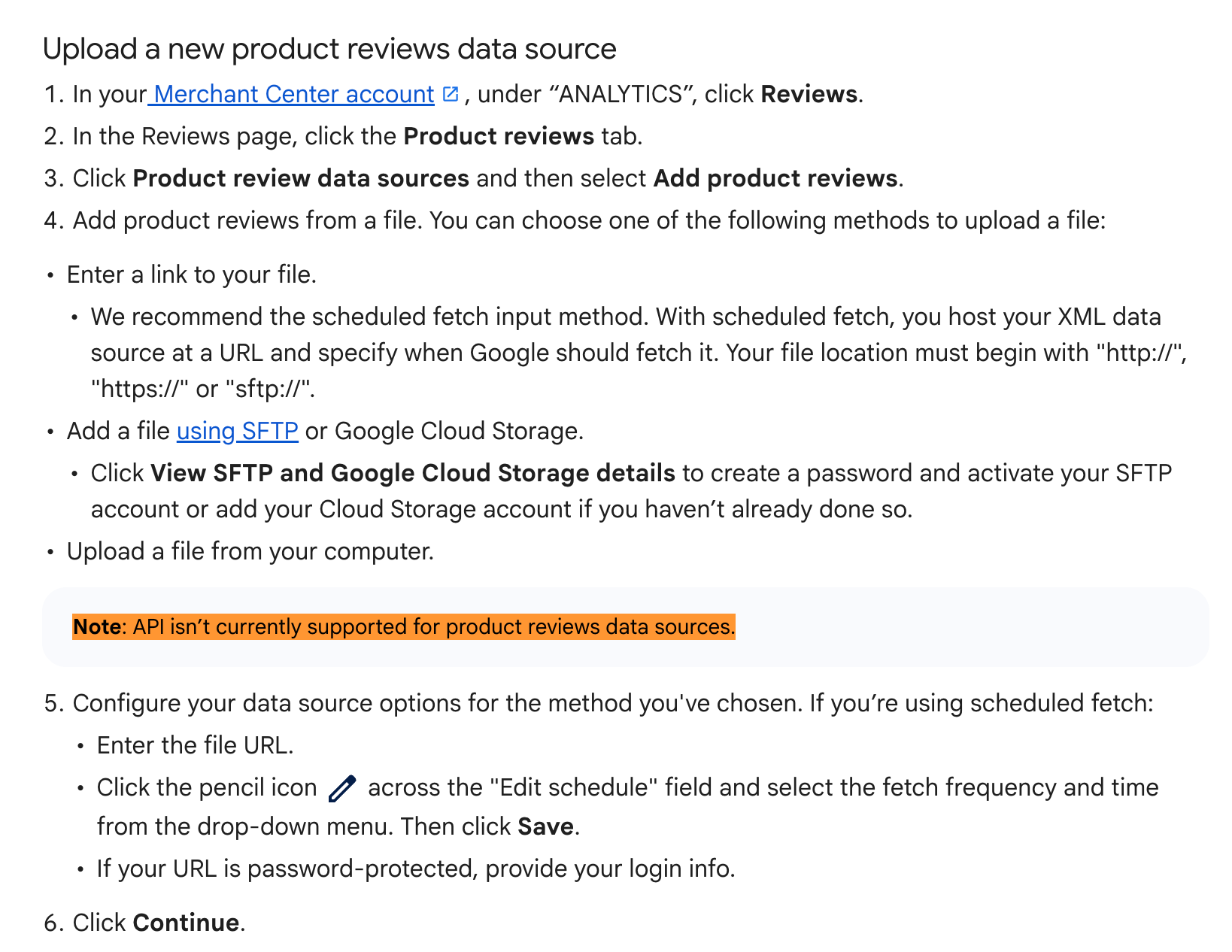
The core of this announcement lies in the enablement of the Merchant Center API for product reviews. Previously, the "upload a product reviews data source to Merchant Center" help document explicitly stated: "API isn’t currently supported for product reviews data sources." This restriction meant that automated, programmatic submission of review data, a standard practice for other data types like product feeds, was not available for reviews. The updated documentation now features a clear instruction: "Add product reviews using API," signaling a fundamental shift in how merchants can interact with Google’s review infrastructure.
This change is not merely a textual alteration; it represents a significant technical upgrade. Developers can now build direct integrations between their e-commerce platforms, customer relationship management (CRM) systems, or dedicated review management platforms and Google Merchant Center. This programmatic access allows for:
- Automated Data Submission: Eliminating the need for manual file uploads or relying solely on third-party aggregators for data transfer.
- Real-time Updates: Reviews collected on a merchant’s website can be pushed to Google Merchant Center almost instantly, ensuring that the freshest customer feedback is displayed.
- Enhanced Scalability: Businesses with thousands or even millions of products can manage review data more efficiently without prohibitive manual overhead.
- Greater Control and Flexibility: Merchants and their development teams gain more granular control over the review data submitted, allowing for tailored integrations.
The updated help document also points to a broader optimization effort. Changes related to "interface navigation," "onboarding process," and "policy disapprovals" suggest a concerted effort by Google to refine the entire lifecycle of product review management within Merchant Center. This indicates a more structured and perhaps more stringent approach to ensure the quality and authenticity of review data, aligning with Google’s commitment to providing reliable information to its users.
Chronology of Google’s Review Integration Journey
Google’s journey to integrate and leverage product reviews has evolved significantly over the years, mirroring the growth of e-commerce itself:
- Early 2000s – Initial E-commerce Forays: Google’s first steps into e-commerce involved basic product listings, initially through Froogle (later Google Shopping). Review data was rudimentary or non-existent in these early stages.
- Mid-2000s – Emergence of Structured Data: With the rise of user-generated content, Google began exploring ways to incorporate review data. This coincided with the development of structured data markup (schema.org), which allowed websites to explicitly tag review content.
- Late 2000s – Introduction of Rich Snippets: Google started displaying star ratings and review counts (rich snippets) directly in search results for products and businesses. This significantly boosted the visibility and importance of review data.
- Early 2010s – Google Product Ratings and Seller Ratings: Google launched dedicated programs for Product Ratings and Seller Ratings, allowing merchants to submit aggregate review data to appear in Google Shopping ads and organic search results. This largely relied on XML feeds from approved review aggregators.
- Mid-2010s – Expansion of Google Shopping and Local Reviews: Google continued to integrate reviews across its various platforms, including local search results (Google My Business) and Google Shopping. The emphasis remained on trusted sources and structured data.
- Late 2010s – API for Core Product Data: While the API for core product data (product feeds) in Merchant Center became robust, direct API support for product reviews remained absent, forcing merchants to use manual uploads or third-party solutions.
- September 2026 (or similar date inferred from screenshot): The Current Update: Google formally enables API support for product review data, closing a long-standing gap in its Merchant Center API capabilities. This marks a significant step towards fully programmatic control over product data and its associated feedback.
This timeline illustrates Google’s consistent effort to enhance the utility and display of user-generated content, recognizing its indispensable role in the modern purchasing funnel.
Inferred Statements and Industry Reactions
While Google has not released a formal press statement specifically on this API update, the implications are clear, and reactions from various stakeholders can be logically inferred:

From Google (Inferred Stance):
"This update reflects Google’s ongoing commitment to empowering merchants with more robust tools for data management and enhancing the shopping experience for consumers," a hypothetical Google spokesperson might state. "By enabling API support for product reviews, we are providing businesses with greater flexibility and efficiency in delivering comprehensive, up-to-date customer feedback across Google surfaces. Our goal remains to connect users with the most relevant and reliable product information, fostering trust and driving successful transactions."
From E-commerce Platform Providers and Developers (Anticipated Positive Reception):
E-commerce platform providers and developers are likely to welcome this change enthusiastically. A representative from a leading e-commerce platform might comment, "This API support is a game-changer for our clients, enabling seamless synchronization of valuable customer feedback directly into Google’s ecosystem. It will significantly reduce the technical overhead associated with managing review data, allowing merchants to focus on their core business while ensuring their products benefit from maximum visibility and credibility on Google." Developers would appreciate the programmatic access, enabling them to build more integrated and efficient solutions for their merchant clients.
From Merchants (Expected Benefits):
Merchants, particularly those with extensive product catalogs or sophisticated data management systems, stand to gain significantly. A large online retailer could state, "Automating the submission of product reviews via API means we can ensure our customer feedback is always current and accurately represented on Google. This not only saves us considerable time and resources but also strengthens our brand’s presence and helps potential customers make more informed decisions." Smaller businesses might also benefit by leveraging third-party tools that will now build upon this API, making advanced review management more accessible.
Policy and Quality Control: Ensuring Authenticity
With the increased automation and direct submission capabilities, Google’s emphasis on policy adherence and review authenticity becomes even more critical. The mention of "policy disapprovals" in the updated help document underscores Google’s commitment to maintaining the integrity of review data. Merchants utilizing the API must ensure their submitted reviews comply with Google’s stringent guidelines, which typically include:
- Authenticity: Reviews must be genuine, from actual customers who have purchased or experienced the product.
- Impartiality: Reviews should not be influenced by incentives or bias.
- Relevance: Content must be directly related to the product being reviewed.
- Compliance with Content Policies: No spam, offensive language, personal information, or illegal content.
The API integration will likely feature robust validation checks to ensure that data conforms to the required schema and policies. This structured approach helps Google filter out fraudulent or low-quality reviews, protecting both consumers and legitimate merchants. Failure to adhere to these policies can result in reviews not being displayed, or even more severe penalties like product listing disapprovals.
Broader Impact and Future Implications
The integration of product review submission via the Merchant Center API carries broad implications across the e-commerce landscape:
For Consumers: Enhanced Shopping Experience
Consumers stand to benefit from more comprehensive, current, and reliable product review information directly within Google Search, Google Shopping, and other Google surfaces. This improved access to genuine customer feedback will empower them to make better purchasing decisions, fostering greater trust in Google as a shopping destination.
For Merchants: Competitive Edge and Operational Efficiency
Merchants will gain a significant competitive advantage. Those who can quickly and efficiently integrate their review data via the API will ensure their products are presented with the most up-to-date social proof. This leads to improved product visibility, higher conversion rates, and a more robust brand image. Operationally, the automation translates into reduced manual labor, cost savings, and the ability to scale review management alongside business growth. It also helps level the playing field, allowing businesses of all sizes to manage their review presence more effectively, rather than being solely dependent on large, integrated third-party solutions.
For SEO and SEM Professionals: Holistic Optimization
For search engine optimization (SEO) and search engine marketing (SEM) professionals, this update provides a new layer of optimization. The ability to programmatically manage review data means that a holistic approach to product data, encompassing attributes, pricing, and customer feedback, can be achieved. This integrated strategy can lead to stronger rich snippet presence, improved organic rankings, and potentially higher Quality Scores for Google Shopping ads, ultimately maximizing return on investment. Developers will need to update their integrations to leverage this new capability, opening up new service opportunities.
Future Outlook: AI and Deeper Integration
This API update also paves the way for future innovations. With programmatic access to review data, Google could further integrate artificial intelligence (AI) and machine learning to analyze review sentiment, identify common themes, and even summarize reviews for users. Deeper integration with other Google services, such as Google Analytics and Google Ads, could provide merchants with more granular insights into how review data impacts their overall performance. This move solidifies Google’s position in the highly competitive e-commerce sector, offering merchants tools that rival those found on platforms like Amazon, which has historically excelled in leveraging user reviews.
In conclusion, the enablement of product review submission through the Google Merchant Center API represents a critical evolution in Google’s e-commerce strategy. By offering merchants a more direct, automated, and scalable method to provide vital customer feedback, Google is not only enhancing the efficiency of online businesses but also enriching the informational landscape for consumers. This update underscores the growing importance of authentic reviews in the digital economy and signals Google’s continued commitment to fostering a dynamic and trustworthy online shopping environment.