rifanmuazin
The technological paradigm that has governed the internet for over a quarter of a century reached a definitive turning point during the Google I/O 2026 keynote, where the company announced a fundamental transition of its core product: Google Search is no longer merely an encyclopedia of the world’s information, but has become a proactive digital assistant. This evolution centers on the deployment of “AI agents”—autonomous systems capable of not only retrieving information but executing complex, multi-step tasks on behalf of the user. By integrating these agents across its search engine, coding platforms, and a new standalone application ecosystem, Google is attempting to move from a reactive AI that answers queries to an active AI that fulfills objectives.
The shift marks a radical departure from the traditional search experience that has defined the web since 1998. For decades, the “search and scourge” method required users to input keywords, sift through a list of blue links, and manually aggregate information from disparate websites. Under the new model unveiled at I/O 2026, the AI agent serves as an intermediary that performs the labor of navigation. For instance, a user seeking a specific garment no longer needs to visit multiple retail platforms; instead, the AI agent scrolls through millions of data points in real-time, identifies the closest matches, and presents a direct purchase interface within the search results.
The Technical Foundation: Gemini 3.5 Flash and the Agentic Era
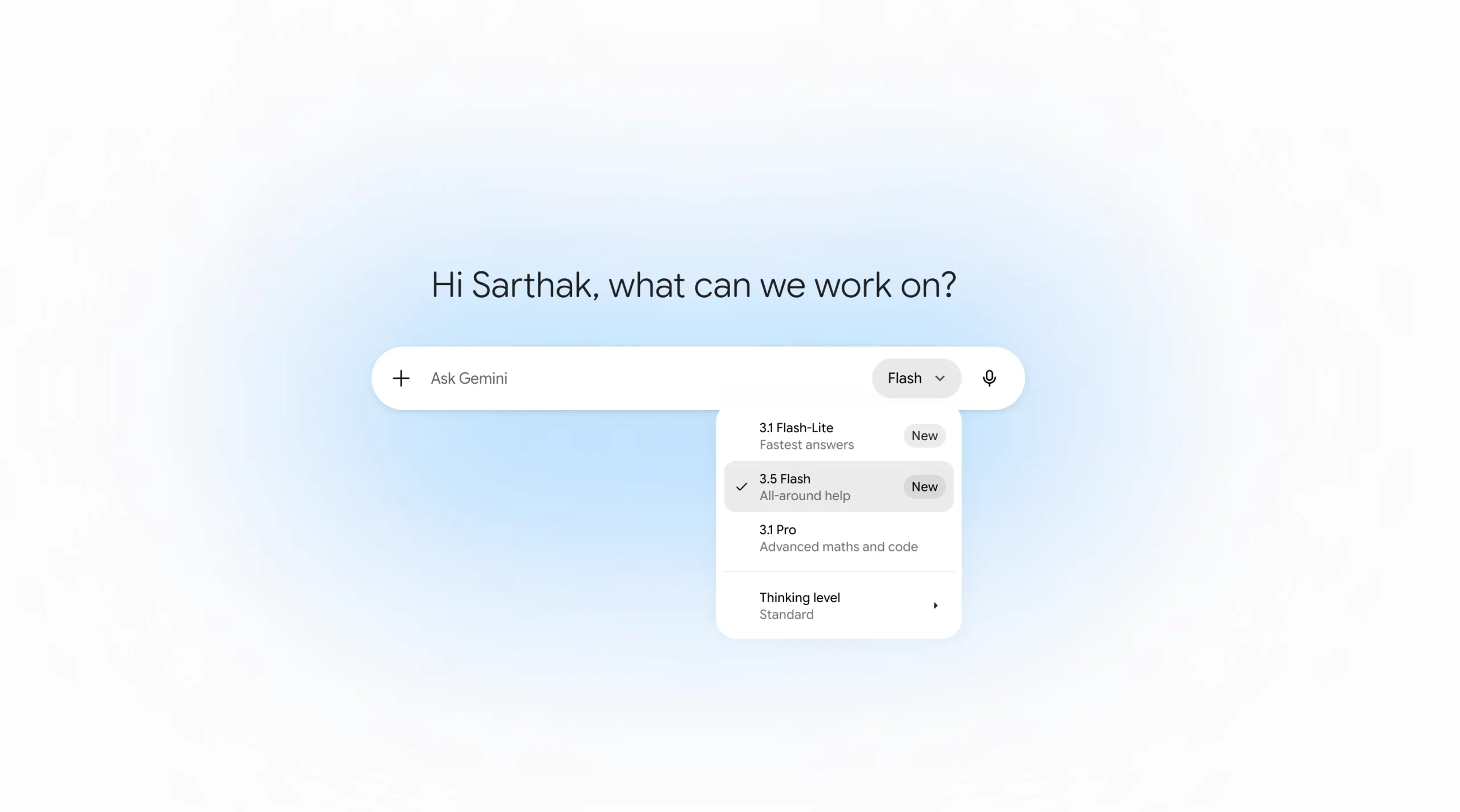
At the heart of this transformation is the introduction of Gemini 3.5 Flash, the latest iteration of Google’s multimodal large language model (LLM) family. Built specifically for speed and “agentic” efficiency, Gemini 3.5 Flash is designed to handle high-frequency, low-latency tasks that require immediate action. According to technical specifications released during the event, the Flash model is four times faster than previous frontier models in terms of output tokens per second. This speed is critical for the “agentic workflows” Google envisions, where AI must make rapid-fire decisions to navigate the web, debug code, or manage schedules.
While Gemini 3.5 Flash is currently being integrated into Google Search and the Gemini app, the company confirmed that a more robust Gemini 3.5 Pro model is scheduled for release next month. For the developer community, access to these models is being streamlined through the “Google Antigravity” harness—a development framework designed to orchestrate multiple AI agents working in tandem. Enterprise clients will also gain access via the Gemini Enterprise Agent Platform, signaling Google’s intent to dominate the B2B AI sector by providing tools that can automate corporate workflows.
Google Search: From Information Retrieval to Execution Engine
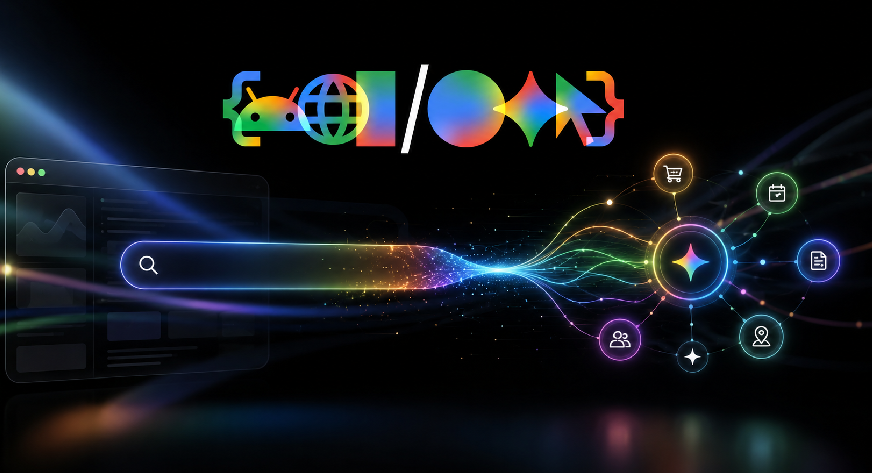
The integration of AI agents into Search represents the most significant update to the platform’s interface in its history. Google highlighted several key areas where this “action engine” will change user behavior:
- Visual Concept Synthesis: Moving beyond static image search, the new “AI Mode” allows users to request visual illustrations of complex concepts. The agentic AI generates these visuals on the fly, eliminating the need for users to browse YouTube or educational blogs for explanatory diagrams.
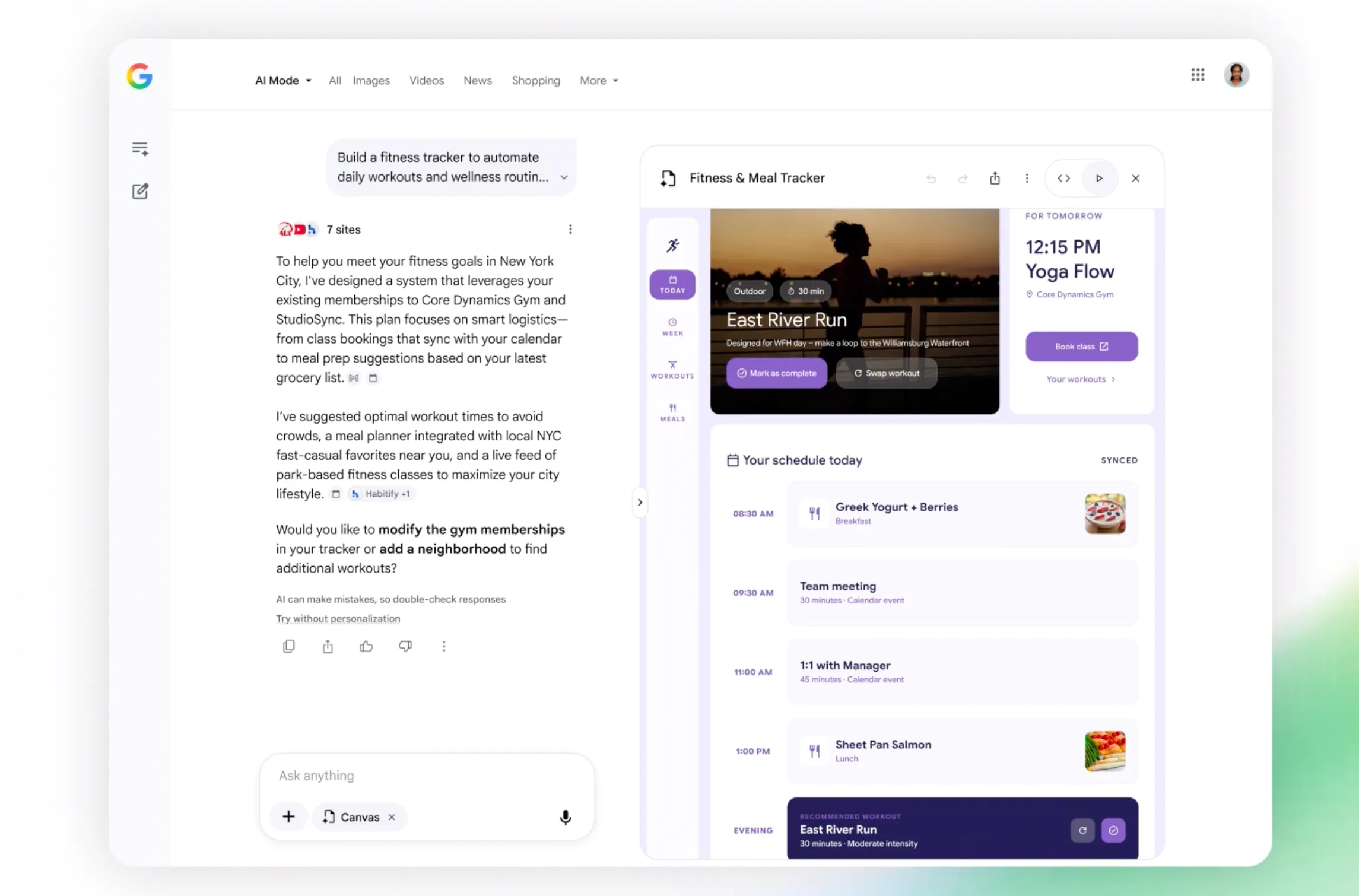
- Integrated Coding Assistance: Developers can now input code snippets directly into the search bar for real-time debugging and optimization. The agents within Search act as a live IDE (Integrated Development Environment), providing suggestions and corrections without requiring the user to open specialized software.
- Autonomous Event Tracking: Users can instruct Search to monitor specific events—such as product launches, stock market movements, or legislative updates. The AI agents establish a persistent tracker that provides push notifications through the Google app as new information emerges, effectively turning Search into a personalized news desk.
Gemini Spark: The 24/7 Virtual Worker
Perhaps the most ambitious announcement of the conference was Gemini Spark, a personal AI agent that operates independently of the user’s hardware. Unlike traditional AI chatbots that require an active session, Gemini Spark runs on dedicated virtual machines within Google Cloud. This allows the agent to work in the background 24/7, even when the user’s devices are powered down.
Powered by Gemini 3.5 and the Antigravity platform, Spark is designed to handle “long-running tasks.” This includes managing complex travel itineraries, coordinating between multiple email threads to schedule meetings, or monitoring digital marketplaces for specific price drops. By utilizing the Model Context Protocol (MCP), Spark will eventually interface with third-party tools, expanding its reach beyond the Google ecosystem into the broader digital economy. Google executives described Spark as the “clearest signal” that AI agents are transitioning from developer experiments to essential consumer utilities.
Gemini Omni and the Future of Multimodal Creation
In the realm of content creation, Google unveiled Gemini Omni, a model that integrates reasoning capabilities directly into video generation. Unlike previous generative video tools that often produced disjointed or surreal results, Gemini Omni utilizes Google’s vast understanding of physics, history, and culture to create consistent, high-quality video outputs.
The standout feature of Gemini Omni is its conversational editing interface. Users can refine video content by simply talking to the AI—asking it to change a camera angle, swap an object in a scene, or alter the lighting style while maintaining the continuity of the original thread. The model also allows for the blending of real-world imagery with generated content; for example, a user could use a physical object like a cricket ball as a reference for the AI to generate a realistic planet Saturn within a space-themed video. Gemini Omni is currently rolling out to the Gemini app, Google Flow, and YouTube Shorts, positioning Google as a direct competitor to specialized AI video startups.
Developer Ecosystem: Antigravity 2.0 and Native Migration
For the developer audience, I/O 2026 focused on “Agentic Development.” The release of Antigravity 2.0 provides a platform where developers can create specialized “subagents” to handle different parts of a software development lifecycle. In this modular approach, one subagent may focus on writing code, while another handles testing, and a third manages security auditing. To support this, Google introduced terminal sandboxing and credential masking to ensure that autonomous agents do not compromise system security.
Furthermore, Google introduced a significant “Migration Agent” within Android Studio. This tool is designed to lower the barrier for cross-platform development by automatically converting apps built in React Native, web frameworks, or iOS into native Kotlin Android apps. This move is seen by industry analysts as a strategic attempt to bolster the Android ecosystem by making it easier for developers to transition their existing software into Google’s native environment.
Industry Analysis: Implications for the Open Web
While the advancements presented at I/O 2026 offer undeniable convenience, they also raise critical questions about the future of the internet’s economic model. For 25 years, the “social contract” of the web was based on Search directing traffic to third-party websites in exchange for information. As Google Search becomes an “action engine” that summarizes content and facilitates purchases within its own interface, the flow of traffic to independent publishers may diminish.
Industry analysts have noted that if AI agents perform the “scrolling and sifting” on behalf of the user, the traditional ad-revenue models that sustain many websites could be threatened. However, Google maintains that its goal is to make information “more useful,” suggesting that the efficiency gained by AI agents will create new opportunities for high-value interactions that were previously too cumbersome for users to attempt.
Chronology of the AI Evolution at Google
The announcements at I/O 2026 are the culmination of a rapid acceleration in Google’s AI strategy over the past three years:
- 2023: Introduction of Bard and the initial integration of LLMs into Search (SGE).
- 2024: Rebranding to Gemini and the launch of the Ultra 1.0 model.
- 2025: The introduction of the first-generation Antigravity framework and “Project Astra” for real-time multimodal interaction.
- 2026: The pivot to “Agentic AI” with Gemini 3.5 Flash, Spark, and Omni, marking the end of the traditional search engine era.
Conclusion: The Layer Through Which We Experience the World
The overarching message of Google I/O 2026 is that AI is no longer a feature or a standalone application; it is becoming the fundamental layer through which users interact with the internet. By evolving Search into an assistant, Google is betting that the future of technology lies in reducing “cognitive load”—the mental effort required to navigate the digital world.
Whether this transition will result in a more efficient internet or a more centralized one remains a subject of intense debate among regulators and tech enthusiasts. However, the technical milestones achieved with Gemini 3.5 Flash and the autonomous capabilities of Gemini Spark indicate that the era of the “active web” has officially begun. Google’s vision is clear: they do not want you to search for the world; they want their AI to bring the world to you, fully processed and ready for action.