rifanmuazin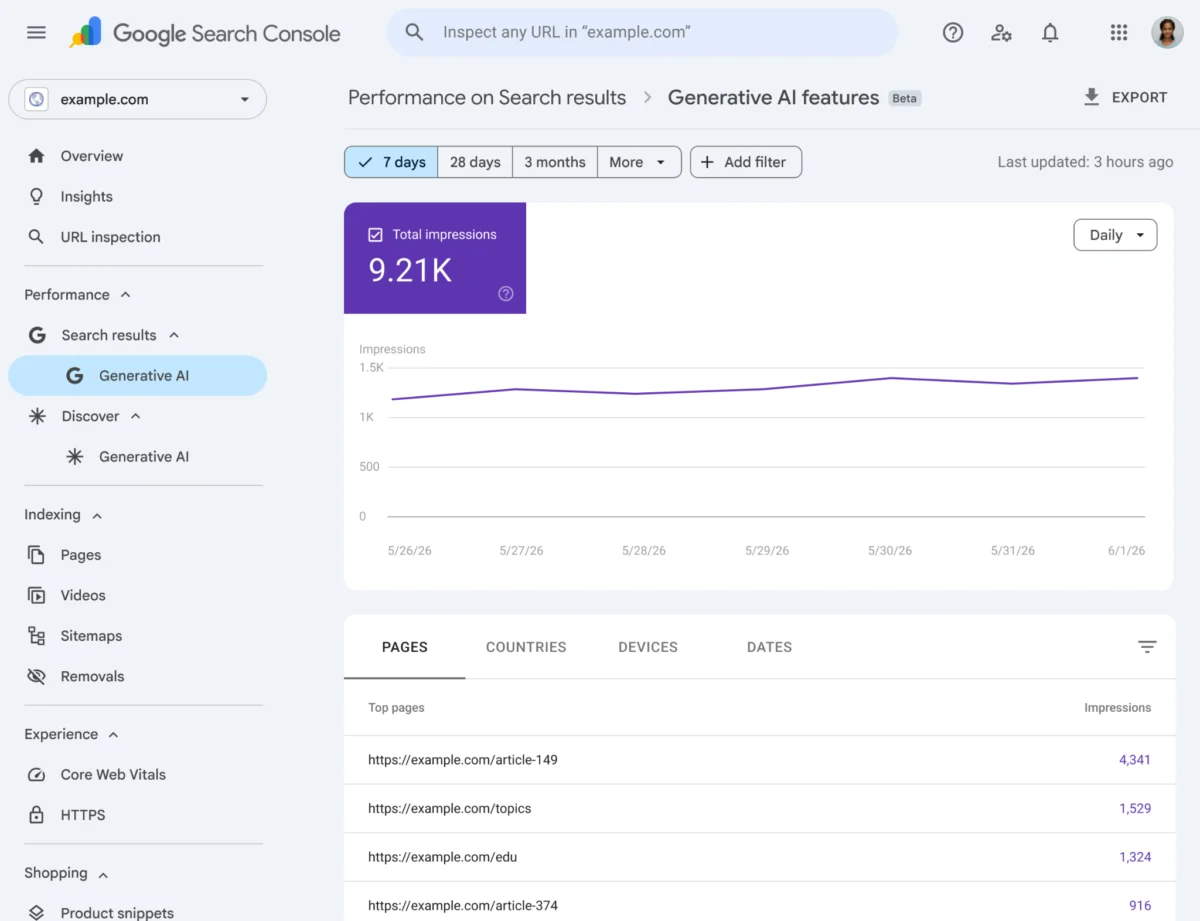
Google has officially launched new functionalities within its Search Console platform, offering website owners access to Search Generative AI performance reports and a crucial toggle for blocking their site’s content from appearing in AI responses. This rollout, initially confined to a select group of UK-based site owners, marks a significant development in the evolving relationship between search engines, generative artificial intelligence, and content publishers. While the performance reports are designed to offer insights into how content is interacting with AI-driven search features, they notably do not include click data, a point of contention for many webmasters. The company has indicated a global expansion of these features is planned, though no specific timeline has been provided beyond the initial UK deployment.
The decision to pilot these features in the United Kingdom is not coincidental but rather a direct response to regulatory mandates. The UK’s Competition and Markets Authority (CMA), a non-ministerial government department responsible for strengthening business competition and preventing anti-competitive activities, has been a leading voice globally in scrutinizing the market dominance of tech giants like Google. In a significant intervention, the CMA legally compelled Google to implement measures that ensure a “fairer deal for publishers and improves Google search services in UK.” A key component of this directive, as articulated by the CMA, is the requirement for Google to “allow publishers to opt-out of allowing their content to be used for the ‘fine-tuning’ of AI models.” This mandate underscores a broader regulatory push to empower content creators with greater control over their intellectual property in the age of advanced AI, ensuring they have agency over how their content is utilized across the full spectrum of AI applications.
The Genesis of Generative AI Controls: A Regulatory Imperative
The journey towards these new Search Console features has been protracted, reflecting the complexity of integrating advanced AI with established web indexing and publishing ecosystems. Google’s engagement with regulatory bodies, particularly in Europe, has intensified over the past few years. The CMA, alongside other European antitrust authorities, has expressed concerns regarding Google’s dominant position in the search advertising market and its potential to disadvantage publishers. The advent of generative AI, exemplified by features like Google’s AI Overviews (formerly Search Generative Experience or SGE), introduced a new layer of complexity. Publishers voiced anxieties that AI models could “ingest” their content to generate direct answers, potentially reducing referral traffic and eroding traditional monetization avenues without adequate compensation or control.
Against this backdrop, the CMA’s intervention became a catalyst. The authority’s Digital Markets Unit (DMU), established to oversee new rules for tech giants, has been actively engaged in ensuring fair competition and consumer protection in digital markets. Their specific directive regarding AI content usage for publishers highlights a proactive stance on intellectual property rights and economic fairness in the digital realm. This regulatory pressure effectively accelerated Google’s development of opt-out mechanisms, which the company had previously acknowledged as a “huge engineering project” back in January, with further reiterations in March about its commitment to developing such blocking controls. The timeline thus reveals a reactive rather than purely proactive approach by Google, driven by external legal and market forces.

Understanding the Search Generative AI Performance Reports
The newly introduced Search Generative AI performance reports within Search Console are designed to provide site owners with a clearer picture of their content’s visibility and interaction within Google’s generative AI features. These reports aim to demystify how AI overviews and other AI-driven snippets are leveraging web content. While specific data points beyond “no click data” were not exhaustively detailed in the initial announcement, typical performance reports in Search Console track metrics such as impressions (how often content appears), average position, and potentially specific queries that trigger AI responses. For these new AI-centric reports, it is logically inferred that they would display similar metrics pertaining to AI-generated answers, such as:
- AI Impressions: The number of times a site’s content was cited, linked, or used as a grounding source within an AI Overview or similar generative AI feature.
- Query Coverage: Which specific search queries led to a site’s content being utilized by AI features.
- Source Citation: Data on how frequently and prominently a site’s content is referenced or attributed within an AI-generated response.
- AI Feature Engagement: Insights into which specific generative AI features (e.g., AI Overviews, AI Mode) are interacting with the content.
The absence of click data, however, remains a significant point of concern for publishers. Traditional SEO relies heavily on click-through rates (CTR) to measure the effectiveness of content in driving traffic. If AI Overviews increasingly answer user queries directly, the value of impressions without corresponding clicks diminishes for publishers reliant on ad revenue or direct conversions. Google’s response to inquiries about click data – “We’re continuing to work with website owners to understand what insights will be most helpful to inform their strategies, and we’ll introduce additional metrics over time” – suggests an ongoing evaluation but offers no immediate solution to this critical data gap.
Interestingly, Google’s naming convention for these new reports, “AI performance reports,” mirrors that of Bing Webmaster Tools, which introduced its own AI performance report earlier. This alignment could signify a nascent industry standard for how search engines report on AI-driven content interactions. The data in Google’s reports for early access users appears to commence around May 18, 2024, providing a historical baseline for analysis. The availability of dedicated help documentation for both the “AI performance report” and an “AI Discover performance report” further indicates the nuanced approach Google is taking, potentially differentiating between AI interactions within core search and those within personalized discovery feeds.
The AI Blocking Controls: A Toggle for Content Autonomy
Perhaps the most impactful of the new features for publishers is the introduction of blocking controls for AI search. This toggle empowers eligible site owners to prevent their content from being displayed or utilized within Google’s various generative AI features, including AI Overviews, AI Mode, and AI Overviews in Discover. The control allows publishers to opt out of their content being used either as direct links or for “grounding purposes” – the process by which AI models verify facts and generate accurate responses by referencing external sources.

Google has made it unequivocally clear about the implications of activating this control: “sites that opt out will not receive traffic or impressions from our generative AI features.” This statement presents a crucial strategic decision for publishers: maintain potential, albeit undefined, visibility within AI summaries at the risk of reduced direct traffic, or completely withdraw from AI features to safeguard content and potentially redirect users to traditional search results where clicks are more likely.
A critical clarification from Google addresses a major apprehension among webmasters: blocking content via this new control “will not be used as a ranking signal for search results outside of these generative AI Search features.” This assurance is vital, as it means opting out of AI features will not negatively impact a site’s ranking or visibility in Google’s traditional core search results. This separation is crucial for fostering trust and encouraging publishers to experiment with the control without fear of broader algorithmic penalties.
The rollout of these blocking controls is also structured carefully. Google is deploying this feature to a “subset of website owners” for “thorough testing” before a wider release. For these initial participants, the Search Generative AI control is available for review and configuration, but it will not take effect immediately. Google has stated that it will begin to take this control into account on June 17, 2026. This extended period, nearly two years from the initial announcement, suggests either a complex technical implementation schedule or a strategic decision to allow publishers ample time to assess the implications and configure their preferences before the changes become live. The initial availability appears to be limited to .co.uk country code top-level domains (ccTLDs), further emphasizing the UK-centric nature of this preliminary phase.
Publisher Sentiment and Broader Implications
The introduction of these features has elicited a mixed but generally welcoming response from the publishing and SEO communities. On one hand, the provision of specific controls and performance reports is seen as a positive step towards greater transparency and autonomy for content creators. The CMA’s intervention, leading to these controls, is widely lauded as a victory for publisher rights, especially concerning intellectual property and the economic value of their content. The UK regulation reportedly grants Google nine months to fully roll out these changes to all UK publishers, indicating an accelerated timeline beyond the initial “subset” phase.
However, significant concerns persist. The lack of click data in the performance reports is a recurring point of contention. Publishers argue that impressions alone are insufficient metrics for business strategy, particularly when the core objective of online content is often to drive user engagement and conversions, typically measured by clicks. The extended delay until June 2026 for the blocking controls to take effect also raises questions, potentially prolonging the period of uncertainty for publishers grappling with the evolving AI landscape.

A poll conducted among SEO professionals earlier this year indicated that a substantial portion, around 33%, would consider blocking Google from using their content for AI features. This sentiment reflects a deeper anxiety within the industry about the potential for generative AI to disintermediate publishers, reducing their role to mere data sources for AI models rather than direct destinations for users. The strategic dilemma for publishers is profound: risk losing some, potentially unquantifiable, visibility within AI Overviews, or protect their content from being repurposed by AI, hoping to funnel users towards traditional search results and direct site visits.
Beyond the immediate technical features, these developments signal a fundamental shift in the architecture of search and the digital economy. The increasing sophistication of generative AI places new pressures on content monetization models, prompting publishers to explore alternative revenue streams and rethink their SEO strategies. The global regulatory landscape is also likely to take cues from the CMA’s actions, potentially leading to similar mandates in other jurisdictions, further decentralizing control over content usage in AI systems.
In conclusion, Google’s rollout of Search Console AI performance reports and blocking controls represents a pivotal moment. While currently limited in scope and accompanied by certain limitations, these features are a direct result of critical regulatory pressure and reflect an acknowledgment by Google of the need to empower content creators in the age of generative AI. As these features expand globally, their impact on web traffic, content strategy, and the very economics of online publishing will be profound, shaping the future relationship between search engines, AI, and the creators who fuel the internet’s vast information ecosystem. The journey toward a truly equitable and transparent AI-driven web is still unfolding, but these initial steps mark a significant stride forward in giving publishers a much-needed voice and control.


 Jia Lissa
 Siti Muinah