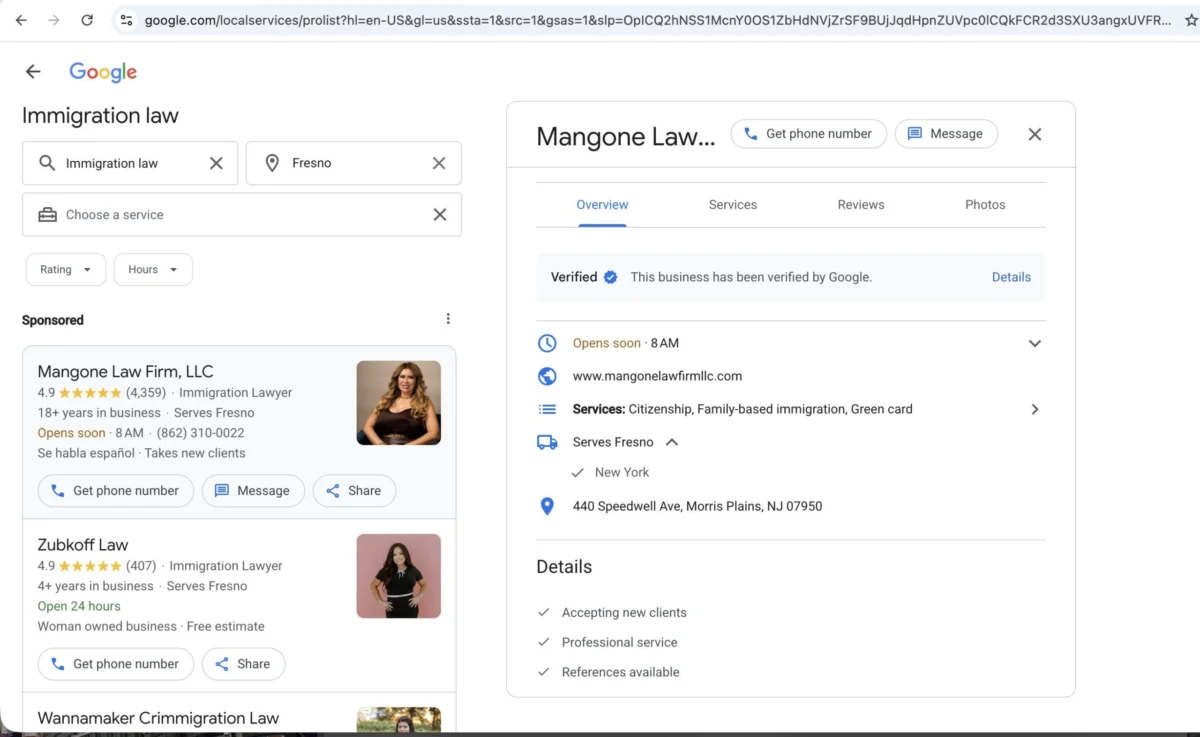
Google is implementing a significantly stricter, additive penalty system for Google Business Profiles (GBPs), indicating a renewed and intensified commitment to combating policy violations, particularly those related to fake engagement and incentivized reviews. This new enforcement mechanism means that businesses found to repeatedly infringe upon Google’s guidelines will face progressively longer and more severe restrictions on their profiles, moving beyond the previously standardized, fixed-term penalties. An initial restriction, which might have been set for 30 days, can now effectively double or more for subsequent infractions of the same policy, sending a clear message to businesses about the imperative of compliance.
Escalating Penalties for Persistent Policy Infractions
The shift to an additive penalty structure represents a notable evolution in Google’s approach to maintaining the integrity of its local business ecosystem. Previously, a business violating a policy might incur a fixed penalty, such as a 30-day suspension of review capabilities. Under the new regime, successive violations will compound these penalties, leading to extended periods of restriction that can severely impact a business’s online visibility and reputation. This escalation is designed to deter persistent offenders and reinforce the gravity of adhering to Google’s content policies.
The Precedent-Setting Example
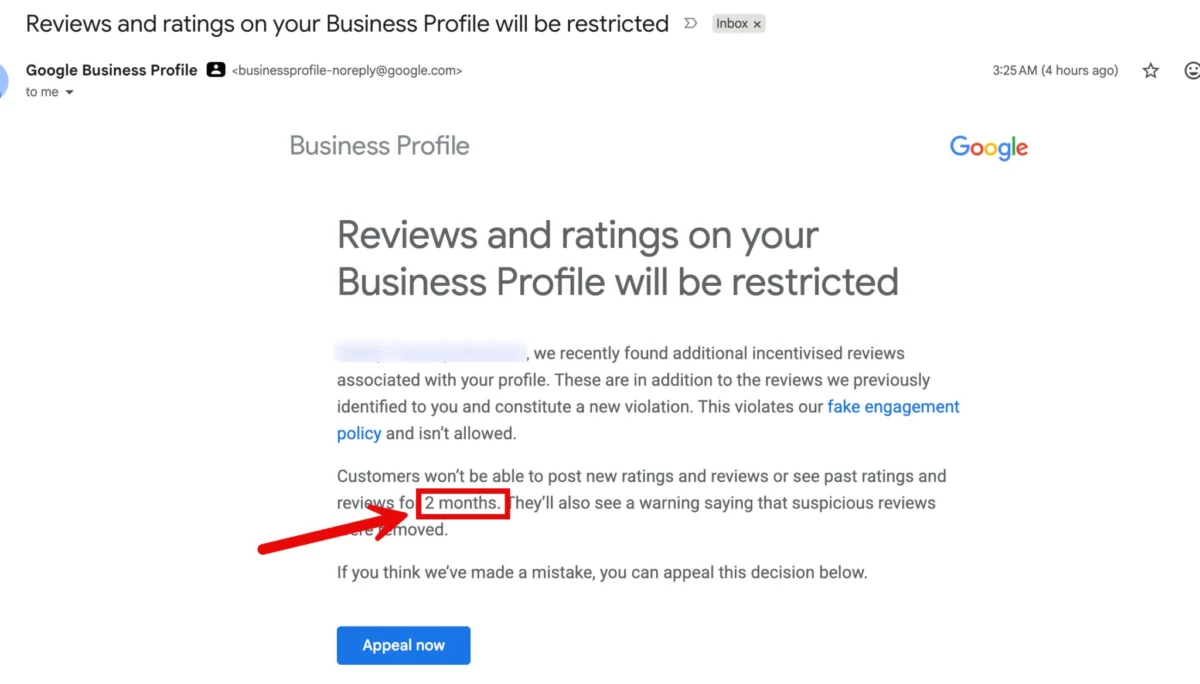
A concrete illustration of this new policy in action was brought to light by prominent local SEO expert Ben Fisher. Fisher shared an example on LinkedIn of a Google Business Profile restriction notice that explicitly detailed an additive penalty. The email sent to the affected business stated:
“Reviews and ratings on your Business Profile will be restricted. We recently found additional incentivised reviews associated with your profile. These are in addition to the reviews we previously identified to you and constitute a new violation. This violates our fake engagement policy and isn’t allowed. Customers won’t be able to post new ratings and reviews or see past ratings and reviews for 2 months. They’ll also see a warning saying that suspicious reviews were removed.”
This notice is critical because it highlights two key aspects: first, the identification of “additional incentivised reviews” that “constitute a new violation,” and second, the imposition of a “2 months” restriction, which implies an escalation from a likely shorter, previous penalty. Fisher’s accompanying commentary, “Review restrictions on your Google Business Profile are Google’s way of protecting the ecosystem from spammy content. Previously, a 1-month restriction was put in place if found to be in violation. I wonder how many more months they will add for this penalty?” underscores the significance of this development within the local SEO community. It confirms the observed shift from a fixed-term, one-off penalty to a cumulative, escalating system, leaving experts to ponder the potential upper limits of these extended restrictions.
The Critical Role of Google Business Profiles and Review Integrity
To fully appreciate the impact of this policy shift, it is essential to understand the foundational role of Google Business Profiles (GBPs) and the integrity of online reviews in the contemporary digital economy. GBPs serve as the digital storefronts for millions of businesses worldwide, offering crucial information such as location, hours, services, and, most importantly, customer reviews and ratings. For local businesses, a well-managed GBP is often the primary conduit for discovery and customer engagement, directly influencing search rankings in local packs and Google Maps. Given that an estimated 46% of all Google searches have a local intent, the visibility provided by a GBP is indispensable for attracting nearby customers.
Why Review Authenticity Matters
Reviews and ratings are not merely supplementary information; they are powerful social proof mechanisms that significantly impact consumer purchasing decisions. Studies consistently show that a vast majority of consumers—often exceeding 90%—consult online reviews before making a purchase or visiting a business. The average star rating and the content of reviews can make or break a business’s reputation, influencing everything from foot traffic to conversion rates. Positive reviews build trust and credibility, while negative or suspicious reviews can deter potential customers.
Google’s long-standing battle against spam and fake reviews stems from its core mission to provide users with the most accurate, reliable, and trustworthy information. Fake reviews, whether incentivized, fabricated, or malicious, undermine this trust, distort market competition, and can lead to consumer deception. Businesses that artificially inflate their ratings gain an unfair advantage, while those targeted by negative review attacks suffer reputational damage unjustly. Google’s comprehensive guidelines on prohibited content—which explicitly forbid fake engagement, conflict of interest, impersonation, hate speech, and off-topic content—are designed to create a fair and transparent environment for both businesses and consumers. The additive penalty system is a direct response to the persistent challenge of enforcing these guidelines against sophisticated and evolving spam tactics, including review farms, reciprocal review schemes, and other forms of deceptive practices.
A Chronology of Google’s Anti-Spam Efforts
Google’s journey to combat review spam and maintain the integrity of its local search results has been a continuous and evolving process, characterized by escalating technical sophistication and policy enforcement.
Evolving Enforcement Mechanisms
In the early days of online reviews, the landscape was less regulated, making it relatively easier for businesses to manipulate their ratings through various means, including incentivizing customers or generating fake reviews. As the importance of online reviews grew, so did the prevalence of these manipulative practices.

- Mid-2010s: Google began to significantly increase its focus on spam detection. Algorithm updates were rolled out to identify patterns indicative of fake reviews, such as sudden spikes in positive ratings from new accounts, reviews from geographically disparate users for local businesses, or identical review texts. Initial enforcement primarily involved filtering out suspicious reviews, making them invisible to the public without directly penalizing the business profile.
- 2017-2019: Google became more proactive. Review filtering became more common, and businesses started to experience direct impacts, such as the complete removal of review batches deemed inauthentic. Policy guidelines were clarified and made more accessible, emphasizing the consequences of violations.
- 2020-2022: The COVID-19 pandemic introduced new challenges, with Google temporarily suspending review functionalities in some regions during lockdowns. Post-pandemic, there was a renewed push to restore review integrity. During this period, Google also began implementing more standardized initial penalties for clear violations, such as a 30-day restriction on the ability to receive new reviews or, in severe cases, a full profile suspension. These penalties, while impactful, were typically fixed-term for a single identified infraction.
- Present Day (Late 2023/Early 2024): The observed shift to additive penalties marks a significant escalation in Google’s enforcement strategy. This change moves beyond a “one-and-done” approach to initial violations and instead implements a cumulative system, where repeat offenders face increasingly punitive measures. The example shared by Ben Fisher confirms that Google is now tracking persistent violations and applying longer restrictions, signaling a more aggressive stance against businesses that fail to learn from initial warnings. This evolution reflects Google’s continuous adaptation to the ever-changing landscape of online manipulation and its unwavering commitment to protecting the authenticity of its platform.
The Data Landscape: Pervasiveness of Fake Reviews and Their Impact
The problem of fake online reviews is substantial and far-reaching, affecting consumer trust and distorting market dynamics across various industries. Understanding the scale of this issue provides crucial context for Google’s intensified enforcement actions.
Consumer Trust and Business Implications
Numerous studies and industry reports have highlighted the pervasive nature of fake reviews:
- Prevalence: Estimates from cybersecurity firms and consumer research bodies suggest that anywhere from 10% to 15% of all online reviews across various platforms could be fake or incentivized. Some reports have even placed this figure higher in specific sectors known for aggressive competition. For instance, a 2023 study indicated that millions of fake reviews are still published annually, despite platforms’ best efforts.
- Impact on Consumer Decisions: The overwhelming majority of consumers—around 88% to 94% according to various surveys—rely on online reviews to inform their purchasing decisions. A business with a higher star rating is statistically more likely to attract customers. For every star increase in a Yelp rating, a restaurant, for example, can see a 5-9% increase in revenue. When reviews are manipulated, this fundamental decision-making process is compromised, leading consumers to potentially make poor choices based on false information.
- Economic Consequences: The economic implications of fake reviews are significant. For consumers, it can lead to wasted money on subpar products or services. For legitimate businesses, it creates an unfair competitive landscape where rivals using unethical tactics can gain an artificial advantage. Conversely, businesses unfairly targeted by negative fake reviews can suffer substantial reputational damage and financial losses. The Federal Trade Commission (FTC) in the U.S. and similar regulatory bodies globally have issued warnings and taken enforcement actions against companies involved in generating fake reviews, underscoring the legal and ethical ramifications.
- Scale of Google’s Platform: Google Business Profile hosts information for hundreds of millions of businesses globally, generating billions of interactions annually through search and Maps. This immense scale makes it a prime target for review manipulation, necessitating robust and continuously evolving defense mechanisms. Google itself reports removing billions of pieces of policy-violating content annually, including millions of fake business profiles and hundreds of millions of fake reviews, a testament to the ongoing battle. The additive penalty system is a strategic escalation in this ongoing effort, designed to increase the cost of non-compliance for repeat offenders and further safeguard the platform’s integrity.
Expert Insights and Industry Reactions
The introduction of additive penalties for Google Business Profile violations has garnered significant attention within the local SEO and digital marketing communities, prompting discussions and expert commentary on its implications.
Ben Fisher’s Observations
Ben Fisher, a respected voice in the local SEO space, was instrumental in bringing this development to light. His initial observation, “Review restrictions on your Google Business Profile are Google’s way of protecting the ecosystem from spammy content,” reflects a general consensus among experts regarding the necessity of such measures. However, his follow-up question, “Previously, a 1-month restriction was put in place if found to be in violation. I wonder how many more months they will add for this penalty?” highlights a key concern: the potential for these penalties to become increasingly severe and the lack of a clearly defined upper limit. This uncertainty can create significant apprehension for businesses navigating Google’s complex policy landscape. Local SEO professionals generally agree that while strict, these measures are a necessary step to combat the pervasive issue of review spam that harms legitimate businesses and misleads consumers.
Google’s Stated Commitment
While Google rarely provides specific commentary on individual enforcement actions or granular policy changes, its broader public statements consistently underscore a steadfast commitment to maintaining the integrity and trustworthiness of its platforms. Google’s official guidelines for reviews explicitly state its zero-tolerance policy for fake engagement and manipulative practices. The company’s internal communications and public reports often highlight its significant investment in artificial intelligence, machine learning, and human moderators to detect and remove policy-violating content at scale. From Google’s perspective, the implementation of additive penalties aligns perfectly with its overarching objective: to ensure that users receive authentic, reliable information and that businesses operate on a fair and level playing field. This intensified enforcement signals that Google is moving beyond simply removing offensive content to actively penalizing repeat offenders more harshly, thereby increasing the deterrent effect.
Broader Industry Sentiment
The local SEO community largely views this development as a double-edged sword. On one hand, there is widespread agreement that stronger measures are needed to combat review spam, which often plagues honest businesses. On the other hand, there is a recognized need for clarity and transparency from Google regarding the specific triggers for these additive penalties, the duration of increased restrictions, and the appeals process. Businesses that may inadvertently or unknowingly violate policies, or those targeted by malicious competitor attacks, could find themselves in a precarious position. The consensus among experts is that this new policy will necessitate a heightened focus on strict adherence to Google’s guidelines, proactive monitoring of GBP activity, and a greater emphasis on ethical reputation management strategies.
Broader Implications for Businesses, Consumers, and the Local SEO Ecosystem
The introduction of additive penalties for Google Business Profile violations carries significant implications that extend across businesses, consumers, and the entire local search engine optimization (SEO) ecosystem. This policy shift is poised to redefine standards of online conduct and reputation management.
The Imperative for Compliance
For businesses, the primary implication is an elevated imperative for strict and unwavering compliance with Google’s content policies. The stakes for repeat offenders have demonstrably risen. A minor infraction that once resulted in a temporary inconvenience could now, if repeated, lead to prolonged restrictions that severely hamper a business’s ability to attract new customers and maintain its online reputation. This necessitates:
- Proactive Education and Training: Businesses must ensure that all staff involved in managing their online presence, from marketing teams to customer service representatives, are thoroughly educated on Google’s review policies, particularly regarding incentivized reviews and fake engagement.
- Rigorous Monitoring: Constant vigilance over review activity and profile health is crucial. Businesses should implement systems to detect unusual review patterns or potential policy violations proactively.
- Ethical Review Acquisition: The focus must shift entirely to organically generated, authentic reviews. Any practice that could be construed as incentivizing reviews (e.g., offering discounts for reviews, requiring reviews for entry into contests) must be ceased immediately.
- Robust Appeals Strategy: While compliance is key, mistakes or malicious attacks from competitors can occur. Businesses must understand the appeals process, gather compelling evidence, and present their case clearly and factually should they believe a penalty was issued in error. However, the threshold for successful appeals against clear policy violations remains high.
- Reputational Damage: Beyond the direct restriction, a visible warning on a business profile indicating “suspicious reviews were removed” can cause significant reputational damage, eroding consumer trust and potentially deterring new customers for the entire duration of the restriction.
Enhanced Consumer Confidence
For consumers, the additive penalty system is ultimately beneficial. By more aggressively deterring and penalizing businesses that engage in manipulative review practices, Google is working to create a cleaner, more trustworthy review environment. This translates into:
- More Reliable Information: Consumers can have greater confidence that the reviews they read are authentic reflections of customer experiences, enabling them to make better-informed decisions.
- Improved User Experience: A platform free from spam and fake engagement offers a more valuable and reliable resource for users seeking local businesses and services.
- Protection Against Deception: The policy helps protect consumers from being misled by artificially inflated ratings or manipulated feedback, ensuring a fairer marketplace.
The Future of Reputation Management
Within the local SEO and digital marketing industry, this development signals a necessary shift towards genuinely ethical reputation management. Agencies and consultants will face increased pressure to guide their clients toward sustainable, policy-compliant strategies. The era of “gaming the system” for short-term gains is becoming increasingly risky and potentially catastrophic for businesses. This could lead to:
- Increased Demand for Ethical Services: Businesses will seek out agencies specializing in authentic review generation, customer experience optimization, and proactive policy compliance.
- Innovation in Legitimate Feedback Mechanisms: Companies may invest more in internal feedback systems, customer satisfaction surveys, and service improvements that naturally lead to positive, organic reviews.
- Greater Accountability: Both businesses and their marketing partners will be held to a higher standard of accountability for their online practices.
Conclusion: A Clear Message from Google
The implementation of additive penalties for Google Business Profile violations marks a significant turning point in Google’s ongoing commitment to platform integrity. By escalating consequences for repeated infractions, particularly concerning fake engagement and incentivized reviews, Google is sending an unequivocal message: persistent policy violations will no longer be met with mere slap-on-the-wrist penalties. This stricter enforcement regime underscores the critical importance of maintaining an authentic online presence, fostering genuine customer feedback, and adhering meticulously to Google’s guidelines. While presenting challenges for businesses, this evolution ultimately aims to enhance trust for consumers and ensure a fairer, more transparent digital marketplace for all participants in the local SEO ecosystem. Businesses must adapt swiftly, prioritizing compliance and ethical practices to safeguard their invaluable online reputations.