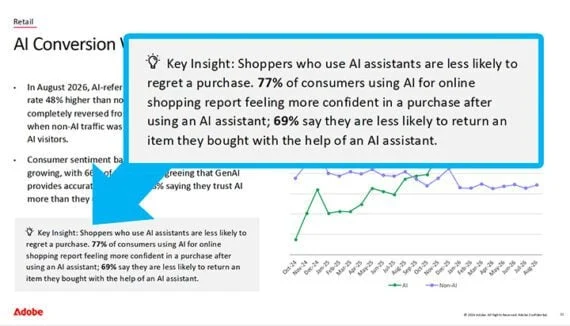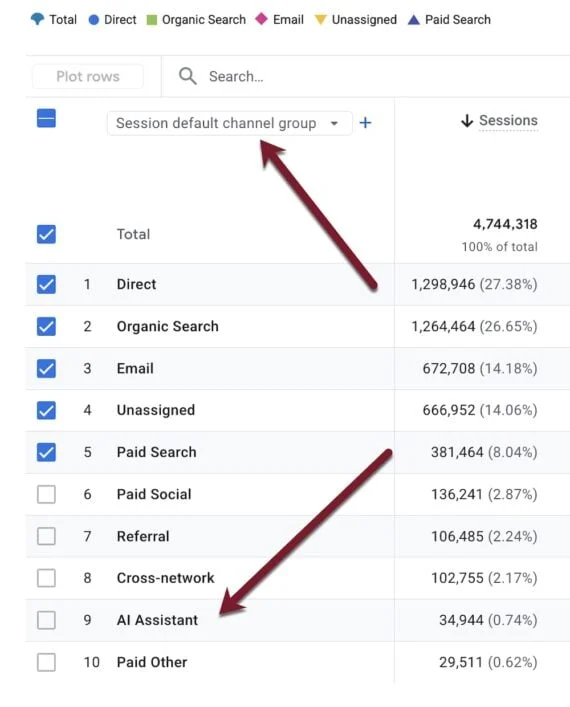
Google Analytics 4 (GA4) has introduced a significant new feature, the "AI Assistant" channel, launched in May, designed to specifically measure and analyze traffic originating from generative artificial intelligence platforms. This development marks a crucial step for businesses and marketers seeking to understand the impact of emerging AI tools on their web traffic and user engagement. The new channel aims to provide granular insights into how users interact with websites after being directed from conversational AI interfaces, a segment of digital traffic that has seen exponential growth in recent years.
Prior to this dedicated channel, traffic from AI chatbots was often conflated with other traffic sources, making it challenging to isolate and understand its unique performance characteristics. The introduction of the "AI Assistant" channel addresses this data fragmentation, offering a clearer picture of user journeys initiated through platforms like ChatGPT, Gemini, and Claude. While the GA4 documentation explicitly states these chatbots are included, it also clarifies what is not categorized under this new channel. Notably, traffic originating from Google’s own AI Overviews and its "AI Mode" will continue to be reported under the "Organic Search" category. This distinction is important for users to understand when interpreting their GA4 data, as it implies Google is categorizing its integrated AI search features differently from standalone generative AI conversational agents.
Understanding the AI Assistant Channel in GA4
To access and analyze data within the new "AI Assistant" channel, users can navigate to the "Reports" section in GA4, then select "Acquisition," followed by "Traffic acquisition." Within this report, the "Session Channel Group" dimension should be examined, where "AI Assistant" will now appear as a distinct category alongside established channels like Direct, Organic Search, and Paid Search. This provides a direct comparative view of how AI-driven traffic performs against other primary acquisition sources.
The performance metrics available for the "AI Assistant" channel are comprehensive, mirroring those for other traffic sources. These include key indicators such as user engagement, events per session, average session duration, and conversion rates. By analyzing these metrics, marketers can gain valuable insights into the quality and behavior of users arriving from AI platforms. For instance, a high engagement rate from AI Assistant traffic might suggest that users are finding relevant information or are being effectively guided towards desired actions. Conversely, lower engagement could indicate that the AI-generated referrals are not aligning with user expectations or that the content cited is not sufficiently meeting their needs.
Identifying High-Performing Landing Pages Driven by AI
A particularly valuable aspect of the "AI Assistant" channel is its ability to identify specific landing pages that are being cited in AI-generated responses and subsequently driving traffic. This functionality allows website owners to understand which of their content pieces are resonating with AI models and, by extension, with users seeking information through these AI tools.
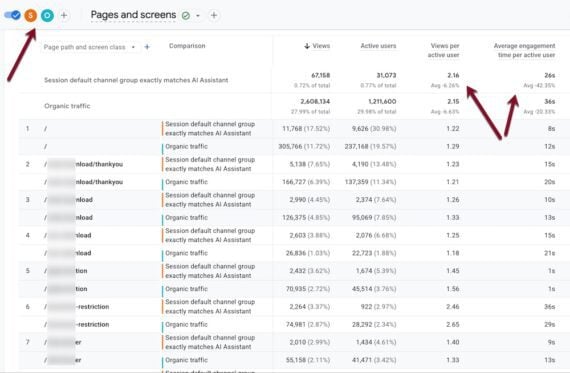
To discover these high-performing landing pages, users should navigate to the "Reports" section, then "Engagement," and finally "Pages and screens." This report typically displays the website’s most frequently visited pages. To isolate AI-driven traffic, a filter needs to be applied. At the top of the graph, users will find an "Add filter" option. Clicking this will allow them to select "Session channel group" as the dimension. The condition should be set to "exactly matches" and the value entered as "AI Assistant."
Once this filter is applied, the "Pages and screens" report will update to show the performance of each page specifically for traffic originating from the "AI Assistant" channel. This allows for a focused analysis of which content is most effective in capturing the attention of users referred by generative AI. The data presented can include views, active users, and engagement time, offering a detailed understanding of how AI-referred users interact with specific content.
Comparing AI-Assisted Traffic Against Other Sources
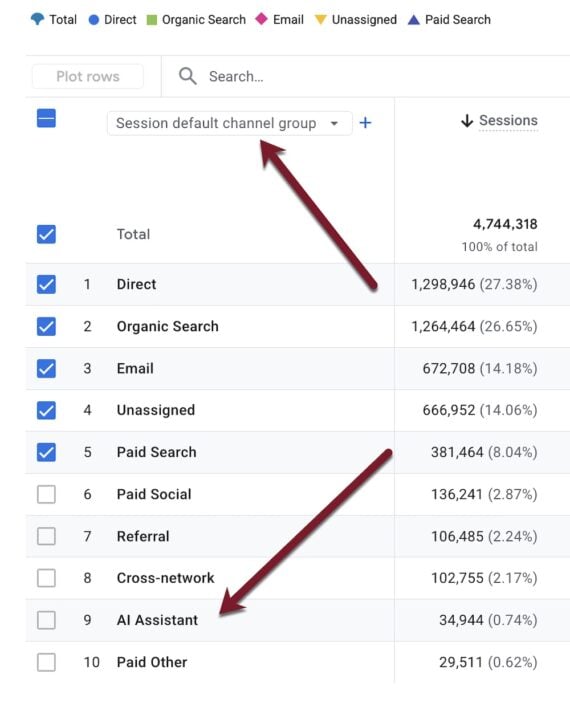
Beyond identifying AI-driven traffic and its associated landing pages, GA4’s new feature also facilitates direct comparisons between AI-assisted traffic and other acquisition channels. This comparative analysis is crucial for understanding the unique value proposition of AI-driven referrals and how they stack up against established marketing efforts.
Within the same "Pages and screens" report, users can leverage the "Add comparison" button located above the graph. By selecting "Create new," users can then replicate the filtering steps used previously: choosing "Session channel group" as the dimension, setting the condition to "exactly matches," and entering "AI Assistant" as the value. This creates a comparison view that can pit AI-assisted traffic against the site’s "All users" or a specific channel like "Organic Search."
By setting up such comparisons, website owners can analyze engagement metrics side-by-side. For example, they can compare the average session duration for AI-referred users on a particular page versus users who arrived via organic search. This granular comparison can reveal whether AI-referred users are more engaged, less engaged, or exhibit different browsing behaviors. Early observations from some analyses suggest that traffic from top organic search pages and AI-assisted pages may not significantly overlap, implying that AI platforms might be surfacing different content or engaging users with different intents than traditional search engines. This highlights the potential need for distinct content strategies to cater to AI-referred audiences.
Leveraging Regular Expressions for Granular AI Source Tracking
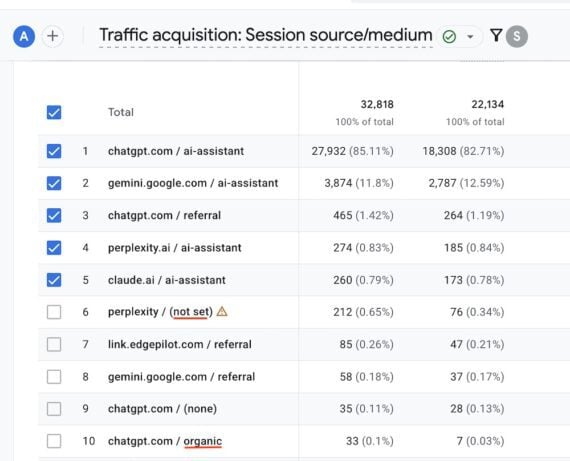
While the "AI Assistant" default channel simplifies the categorization of AI traffic, it doesn’t inherently reveal the specific generative AI platforms driving those visits. For a more granular breakdown, website owners can employ regular expressions (regex) within GA4 to track individual AI traffic sources. This advanced method allows for the identification of traffic from specific chatbots and AI services.
To implement this, users would typically navigate to "Reports," then "Acquisition," and select "Traffic acquisition." Within this report, they would add a "Session source / medium" dimension. Then, by applying a filter or creating a custom segment using regex, they can isolate traffic based on specific patterns.
A comprehensive regex string that captures many of the prominent generative AI platforms can be constructed. This might include patterns for:
.*chatgpt.com.*.*perplexity.*.*edgepilot.*.*copilot.microsoft.com.*.*openai.com.*.*gemini.google.com.*.*claude.ai.*.*grok.x.ai.*
By combining these patterns with the "OR" operator (|), a powerful regex can be created to filter traffic originating from these diverse AI sources. For instance, a typical regex for this purpose could be: .*chatgpt.com.*|.*perplexity.*|.*edgepilot.*|.*copilot.microsoft.com.*|.*openai.com.*|.*gemini.google.com.*|.*claude.ai.*|.*grok.x.ai.*
When applied within GA4’s source/medium reporting, this regex can provide a detailed breakdown, showing traffic attributed to each specific AI platform. This level of detail is invaluable for understanding which AI tools are most effectively driving traffic to a website, allowing for more targeted optimization efforts. It’s worth noting that initial implementations of such regex might reveal minor data inconsistencies, such as traffic appearing under "Organic" or "(not set)" that one might expect to be categorized under AI Assistant. This underscores the evolving nature of web traffic classification and the need for ongoing refinement of tracking strategies.
The Broader Context and Implications of AI Traffic Measurement
The introduction of the "AI Assistant" channel by Google Analytics signifies a recognition of generative AI’s growing influence on online user behavior and information discovery. As AI-powered chatbots and search assistants become more sophisticated and widely adopted, their role as traffic drivers will likely continue to expand. This new GA4 feature empowers businesses to move beyond guesswork and gain empirical data on how these emerging technologies are impacting their digital presence.
Historically, the landscape of web traffic acquisition has been dominated by search engines, social media, and direct traffic. However, the rise of conversational AI represents a paradigm shift. Users are increasingly turning to AI for answers, recommendations, and even for initiating their online journeys. This means that content creators and marketers must adapt their strategies to not only be discoverable through traditional search but also to be optimally presented and cited by AI models.
The ability to measure AI-driven traffic allows for several strategic implications:
- Content Optimization: Understanding which content is being cited by AI can inform future content creation and optimization efforts. Websites can focus on producing high-quality, factual, and well-structured content that is likely to be recognized and leveraged by AI models.
- SEO Evolution: The lines between traditional SEO and AI optimization are blurring. The "AI Assistant" channel suggests that optimizing for AI visibility is becoming an integral part of a comprehensive SEO strategy. This may involve tailoring content for clarity, providing authoritative sources, and ensuring factual accuracy.
- User Experience Analysis: By comparing AI-assisted traffic with other sources, businesses can gain insights into the user experience provided by AI referrals. Are these users more likely to convert? Do they exhibit different engagement patterns? This can lead to refinements in website design and user flow to better serve these emerging traffic segments.
- Competitive Analysis: As more businesses begin to track AI traffic, it will become a new benchmark for competitive analysis. Understanding how competitors are performing with AI-referred traffic can offer valuable strategic insights.
The data emerging from the "AI Assistant" channel will be crucial for understanding the long-term impact of generative AI on the digital ecosystem. It provides a foundation for data-driven decision-making in an era where artificial intelligence is rapidly reshaping how users find and interact with information online. The ongoing evolution of AI and its integration into search and discovery mechanisms will undoubtedly lead to further refinements in analytics tools, making the accurate measurement and interpretation of AI-driven traffic a paramount concern for digital professionals. The initial rollout of the "AI Assistant" channel in GA4 is a significant step in this direction, offering businesses the tools they need to navigate this transformative period.