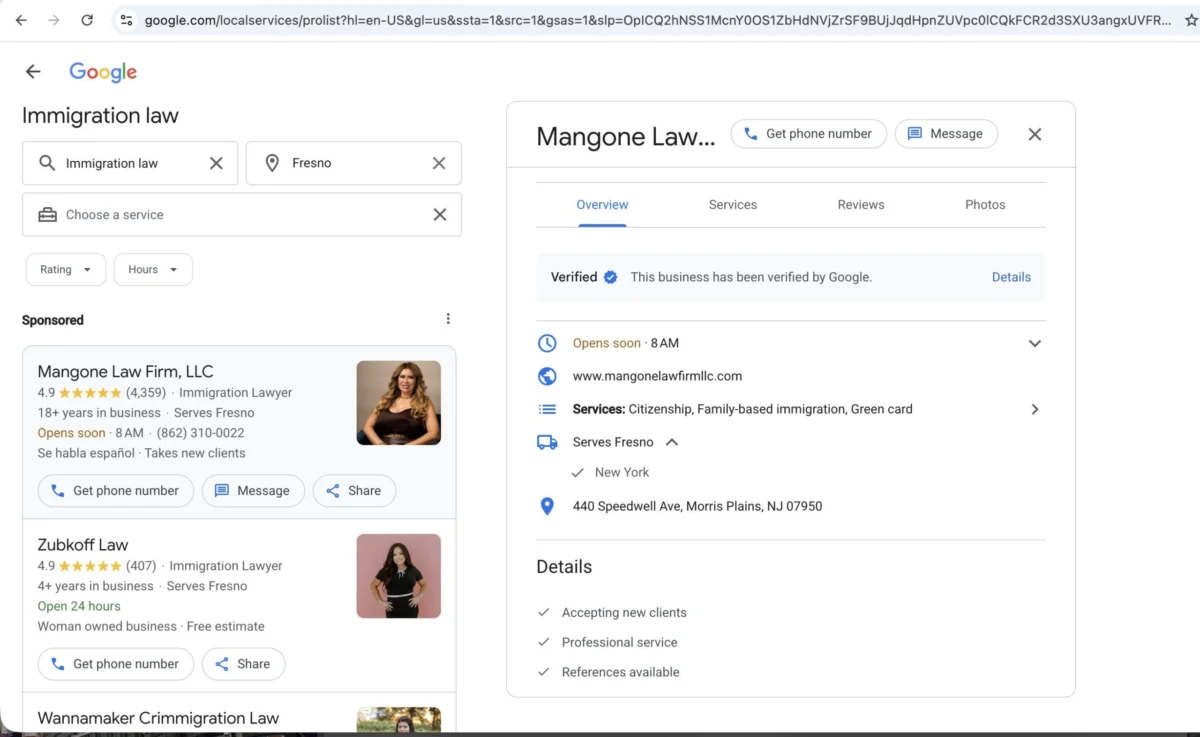
Google is significantly expanding the reach of its "Book" buttons, powered by the Reserve with Google partner integration, to now appear within Google Ads Search and Performance Max campaigns. This marks a notable shift from its previous, more confined availability, which primarily encompassed Google Local Service Ads (LSAs) and Google Maps advertisements. The strategic move aims to streamline the user journey from initial search query to confirmed appointment, directly integrating a crucial transactional step into Google’s primary advertising platforms.
This development was first brought to light by digital marketing expert Michel van Luijtelaar, who shared his findings on LinkedIn and elaborated on the GMBapi blog. Van Luijtelaar highlighted that the Reserve with Google functionality, traditionally associated with organic local search results and Maps, has now permeated paid advertising surfaces. For businesses that have already established an appointment action link through Reserve with Google, this integration is largely automatic. "If you run Search or Performance Max and already published an appointment action link, that link can now power a Book button on your ads. Nothing to build, and Google tracks the booking without extra tagging," Van Luijtelaar explained, underscoring the seamless implementation for eligible advertisers.
The Evolution of Google’s Booking Integrations
The expansion of booking buttons is not an isolated event but rather a logical progression in Google’s long-term strategy to enhance local commerce and reduce friction in the customer conversion path. For years, Google has been working towards making its platforms not just discovery engines but also transactional hubs.
Reserve with Google (RwG): Launched in 2017, Reserve with Google was designed to allow consumers to book appointments, make reservations, or order food directly from Google Search, Maps, and Assistant. It acts as an intermediary, connecting users with businesses through a network of third-party scheduling providers. This ecosystem benefits both consumers, who enjoy a frictionless booking experience, and businesses, who gain exposure and direct conversions from Google’s vast user base. The initial focus was heavily on local businesses that operate on an appointment or reservation model, such as salons, restaurants, fitness studios, and service providers.
Local Service Ads (LSAs): The booking button concept found early and prominent integration within Local Service Ads. LSAs, distinct from traditional Google Ads, offer a "Google Guaranteed" badge and appear at the very top of search results for specific service categories (e.g., plumbers, electricians, locksmiths). For these businesses, the ability for users to directly call or book an appointment via a prominent button has been a core driver of their effectiveness, simplifying lead generation and direct conversions.
Google Maps and Business Profiles: Beyond LSAs, booking links have been a staple feature within Google Business Profiles and Google Maps listings. Users searching for a local business on Maps or through local search queries could often find a "Book" or "Appointment" button, directing them to the business’s chosen scheduling platform. This has been crucial for local SEO and ensuring that businesses with physical locations can convert interest into actual visits or appointments.
The current expansion to Search and Performance Max campaigns represents a significant leap, moving the booking functionality from primarily local and organic contexts into the broader, highly competitive paid search landscape. This signifies Google’s intent to embed transactional capabilities deeper into its core advertising products, aiming to provide advertisers with more direct and measurable conversion pathways.
Mechanism of Implementation and Advertiser Control
One of the most striking aspects of this new integration is its automated nature. Google is rolling out these book buttons without requiring explicit action from eligible merchants. If a business already utilizes Reserve with Google through one of its numerous partner platforms and runs Search or Performance Max campaigns, the book button will automatically begin appearing on their ads. This "nothing to build" approach streamlines adoption, removing potential technical hurdles for businesses.
Clicking this new book button will seamlessly redirect searchers from the Google Ad directly to the business’s integrated scheduling platform, enabling them to book appointments efficiently. Google also claims to track these bookings automatically, simplifying conversion measurement for advertisers without the need for additional tagging or complex setup.
While the integration is automatic, Google does provide an opt-out mechanism. This decision to opt-out rests with the advertiser, managed within the Google Ads interface, rather than being controlled from the Google Business Profile. This distinction is crucial, as it means local marketing teams without direct access to Google Ads accounts might not be able to toggle this feature. Detailed information regarding this opt-out process and broader implications for booking is available through Google’s official help documentation, including specific guides for Google Ads and LSAs.
The Strategic Role of Performance Max
The inclusion of book buttons in Performance Max campaigns is particularly significant. Performance Max is Google’s automated, goal-based campaign type that utilizes AI and machine learning across all of Google’s advertising channels (Search, Display, YouTube, Gmail, Discover, Maps) to find converting customers. By integrating direct booking capabilities, Google is providing Performance Max with a clear, high-value conversion signal: a confirmed appointment.
As Michel van Luijtelaar noted, "Available is not the same as active. The ‘Appointments booked’ goal reaches eligible accounts with no opt-in, but it only influences bidding once you add the conversion action to your campaign settings." This means that while the button might appear, advertisers must actively configure "Appointments booked" as a conversion goal within their Performance Max (and Search) campaigns for Google’s automated bidding strategies to optimize specifically for these bookings. Once configured, Performance Max can leverage its cross-channel reach and sophisticated algorithms to drive budget towards ad placements and user segments most likely to result in a booked appointment, potentially revolutionizing how businesses acquire appointment-based leads.

Key Implications for Businesses and Advertisers
This expansion carries several profound implications for the digital advertising landscape, particularly for businesses reliant on scheduled appointments.
-
Enhanced Conversion Rates: The most immediate benefit is the potential for significantly higher conversion rates. By providing a direct "Book" button, Google removes steps in the user journey, reducing friction and the likelihood of drop-off. Instead of navigating to a website, finding a "Book Now" page, and then selecting a service, users are taken directly to the scheduling interface. Studies consistently show that reducing clicks and streamlining processes can dramatically improve conversion metrics, with some reports indicating that clear calls-to-action can increase conversions by over 200%.
-
Optimized Ad Spend and ROI: For advertisers using Performance Max, the ability to directly optimize for "Appointments booked" as a conversion goal means that ad spend can be more efficiently allocated towards driving actual business outcomes. Google’s AI will learn and adapt to target users most likely to book, potentially leading to a higher return on ad spend (ROAS). However, this also necessitates careful monitoring by advertisers to ensure that the quality of bookings meets business objectives.
-
Blurring Lines Between Organic and Paid Local Search: This integration further blurs the lines between organic local search and paid advertising. What was once a feature primarily found in organic local listings or specialized LSAs is now a core component of general paid search. Businesses will need a more holistic strategy that considers both their organic visibility and paid ad presence for appointment-based services.
-
Strategic Importance of Booking Platform Integration: The success of this feature is intrinsically tied to a business’s integration with a Reserve with Google partner. Businesses not yet integrated may find themselves at a disadvantage, as they cannot leverage this direct booking functionality. This could drive increased adoption of compatible booking platforms and services.
-
Budget Allocation and Potential Costs: As Van Luijtelaar astutely pointed out, this feature introduces a new dimension to budget allocation. "Most multi-location portfolios carry a few hundred booking links, published at different times by different people. One pointing at a generic homepage used to cost you organic clicks. Now it sits behind a paid Book button, and Performance Max will push budget toward it." This implies that poorly optimized or generic booking links, which previously might have only impacted organic performance, could now incur direct advertising costs through paid clicks if not properly managed. Advertisers must audit their existing action links to ensure they direct users to the most efficient and conversion-optimized booking pages.
-
Exclusion of Healthcare Campaigns: A notable exception to this expansion is healthcare campaigns. Google Ads does not allow booking links or goals for healthcare campaigns, meaning clinics and similar medical practices will continue to rely solely on the organic "Book" button within their Google Business Profiles and Maps listings. This exclusion is likely due to the highly regulated nature of the healthcare industry, privacy concerns (HIPAA, GDPR), and the complex, often personalized, booking requirements that may not be suitable for a standardized, automated booking button within general ads.
Broader Strategic Context for Google
This move fits squarely within Google’s overarching strategy to solidify its position as the ultimate gateway for consumer needs, from information retrieval to direct transaction.
- Deepening Ecosystem Integration: By integrating booking deeper into its ad platforms, Google further embeds itself into the customer journey. It aims to keep users within its ecosystem for as long as possible, reducing the need for them to navigate to external websites for critical actions like booking appointments.
- Competing with Other Platforms: In an increasingly competitive digital landscape, Google is constantly seeking to differentiate its offerings. This direct booking functionality competes with similar features offered by social media platforms, specialized booking apps, and direct-to-consumer websites, positioning Google Ads as a more powerful, all-in-one solution for service-based businesses.
- Enhancing Ad Value: For advertisers, the promise of direct conversions makes Google Ads an even more attractive proposition. By demonstrating a clearer path to ROI through measurable bookings, Google reinforces the value of its advertising products. This is particularly important as businesses increasingly demand tangible results from their digital marketing investments.
- Leveraging AI and Automation: The automatic implementation and the reliance on AI-driven optimization within Performance Max underscore Google’s commitment to automation. This approach aims to simplify ad management for businesses, especially SMBs, by allowing Google’s algorithms to handle the heavy lifting of targeting and bidding to achieve specific business goals.
Supporting Data and Market Trends
The decision to expand booking buttons aligns with prevailing market trends and consumer behavior. Reports from various industry analysts consistently show a growing preference for online booking. For instance, a significant portion of consumers across sectors, ranging from beauty and wellness to automotive services, now prefer to book appointments digitally. Some studies indicate that over 70% of bookings in certain service industries are made online. This trend is driven by convenience, 24/7 availability, and the ease of comparing services.
Furthermore, local search remains a critical component of consumer behavior. Over 80% of consumers use search engines to find local information, with a substantial percentage leading to a visit or purchase. Integrating direct booking into paid ads capitalizes on this intent, converting "near me" searches directly into appointments. The effectiveness of clear, prominent calls-to-action is well-documented, with studies showing they can significantly boost conversion rates by simplifying the decision-making process for users.
Conclusion and Future Outlook
The expansion of Google Ads book buttons to Search and Performance Max campaigns represents a pivotal development for service-based businesses and digital advertisers. It underscores Google’s commitment to creating a more integrated, efficient, and conversion-focused advertising ecosystem. For businesses, this offers a powerful tool to streamline appointment acquisition, potentially boosting conversion rates and optimizing ad spend. For advertisers, it necessitates a renewed focus on conversion tracking, meticulous auditing of booking links, and a strategic approach to leveraging automated campaign types like Performance Max.
As the digital landscape continues to evolve, the lines between organic search, paid advertising, and transactional capabilities will likely become even more blurred. Businesses that proactively adapt to these changes, ensuring their online presence is not only discoverable but also directly actionable, will be best positioned to thrive in an increasingly competitive market. The immediate call to action for advertisers, as suggested by Michel van Luijtelaar, is clear: "Audit the action link for every location you or your clients operate this week" to ensure maximum efficiency and ROI from this new, impactful feature.