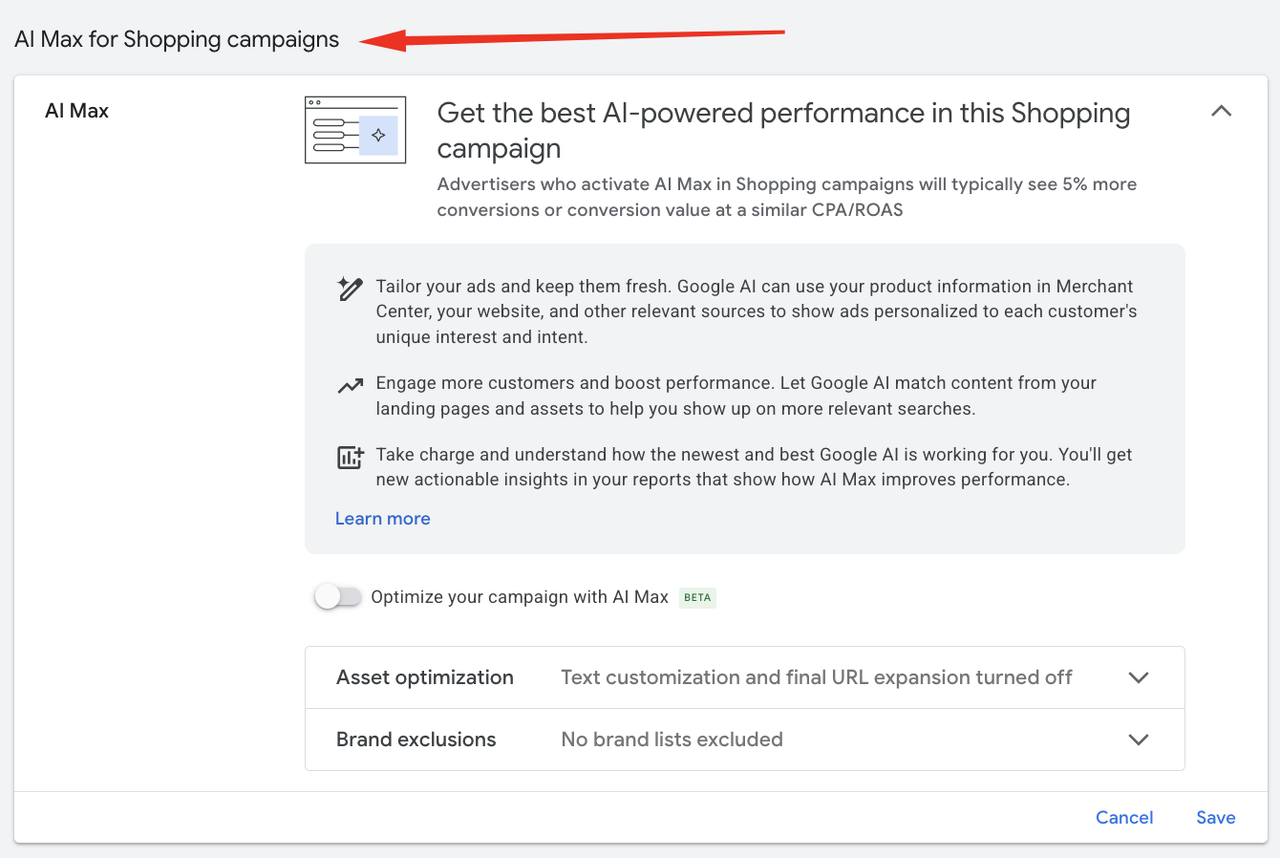
The artificial intelligence capabilities within Google Ads, specifically AI Max, have seen a significant expansion, moving beyond its initial closed beta phase to become more widely available for Shopping campaigns. This strategic rollout, observed by numerous advertisers in recent weeks, integrates advanced AI features designed to optimize performance, streamline campaign management, and enhance the overall effectiveness of retail advertising on the Google platform. This expansion builds upon an initial announcement made in May, which introduced AI Max as a global closed beta initiative. The current deployment signals Google’s accelerated commitment to infusing sophisticated AI across its advertising ecosystem, particularly within the crucial e-commerce sector.
Background and Context: The Evolution of Google Ads Automation
Google’s journey into AI-powered advertising is not a recent phenomenon. Over the past decade, the company has progressively introduced automated solutions aimed at simplifying campaign management and maximizing advertiser return on investment (ROI). Early iterations included Smart Bidding strategies like Target CPA and Target ROAS, which leveraged machine learning to optimize bids in real-time based on conversion likelihood. This was followed by the introduction of Responsive Search Ads, which dynamically combined headlines and descriptions to create the most relevant ad copy for specific queries.
The most significant precursor to AI Max arrived with Performance Max campaigns, launched in 2021. Performance Max represented a paradigm shift, allowing advertisers to run campaigns across all Google channels (Search, Display, YouTube, Gmail, Discover, and Maps) from a single interface, driven by AI optimization towards specific conversion goals. While powerful, Performance Max also sparked debates among advertisers regarding transparency and control, as its "black box" nature limited granular oversight.
AI Max, in this context, appears to be Google’s next evolutionary step, specifically refining and expanding AI capabilities within existing campaign types, starting with Shopping campaigns. This move underscores Google’s belief that advanced automation is key to navigating the increasingly complex digital advertising landscape, offering advertisers a way to achieve better results amidst rising competition and evolving consumer behaviors. The goal is to move beyond mere automation to truly intelligent optimization, where AI anticipates trends, personalizes experiences, and continuously learns to improve campaign outcomes.
The Genesis of AI Max: A Chronological Overview
The journey of AI Max began with its formal announcement in May. At that time, Google revealed that AI Max would be rolled out in a closed beta globally, hinting at a future where AI would be even more deeply embedded within its ad products. The initial phase focused on broader applications, allowing Google to gather feedback and refine the algorithms before a wider release. The core promise was to provide advertisers with enhanced tools for creative customization, audience targeting, and performance optimization, all powered by Google’s cutting-edge artificial intelligence.
The recent expansion, observed over the past week, marks a critical milestone in this rollout, specifically targeting Standard Shopping Campaigns. This focused deployment indicates Google’s strategic emphasis on the retail sector, where competition is fierce and the ability to connect consumers with products efficiently is paramount. Advertisers globally are now beginning to see these advanced features appear within their Google Ads interfaces, enabling them to leverage AI Max for their product-centric campaigns. This phased approach allows Google to progressively introduce sophisticated features, ensuring stability and gathering real-world performance data before broader implementation across other campaign types.
Deep Dive into AI Max for Shopping Campaigns
The expansion of AI Max into Standard Shopping Campaigns brings a suite of powerful features designed to fundamentally alter how advertisers manage and optimize their product listings. These enhancements are built around Google’s advanced AI and machine learning capabilities, aiming to provide more dynamic, responsive, and ultimately more effective advertising.
-
Conversational Intent: This is a groundbreaking feature that leverages Google’s understanding of natural language to better interpret user queries. Instead of relying solely on keywords, AI Max can now analyze the deeper meaning and intent behind a user’s conversational searches. For example, if a user types "best waterproof hiking boots for summer trails in Colorado," AI Max can go beyond simple keyword matching to understand the specific needs, context, and desired product attributes, connecting them with the most relevant product listings from the advertiser’s feed. This capability moves towards a more semantic understanding of search, crucial in an era dominated by voice search and more complex queries. It allows Shopping ads to appear for a wider, yet highly relevant, range of user intents, potentially uncovering previously untapped segments of the audience.
-
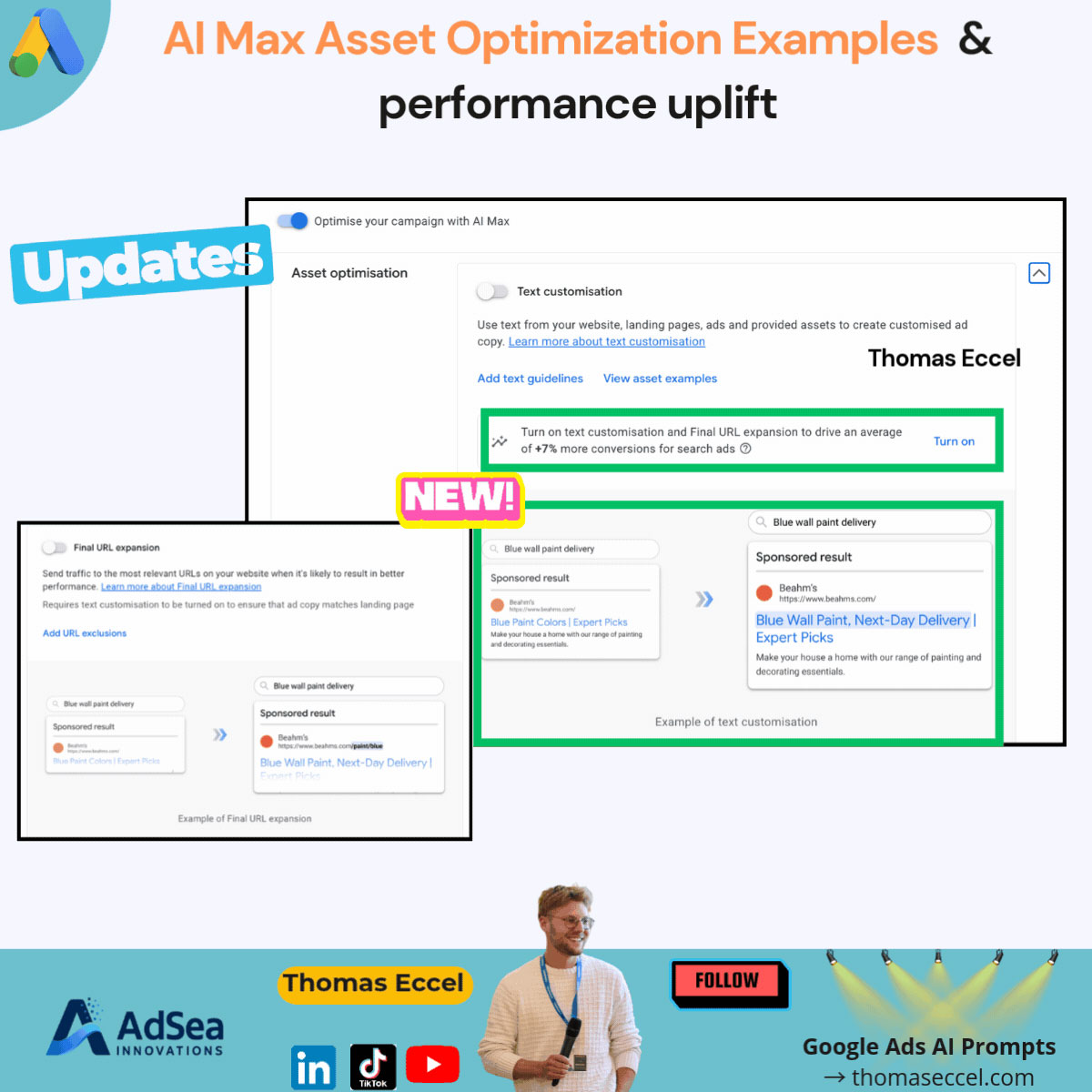
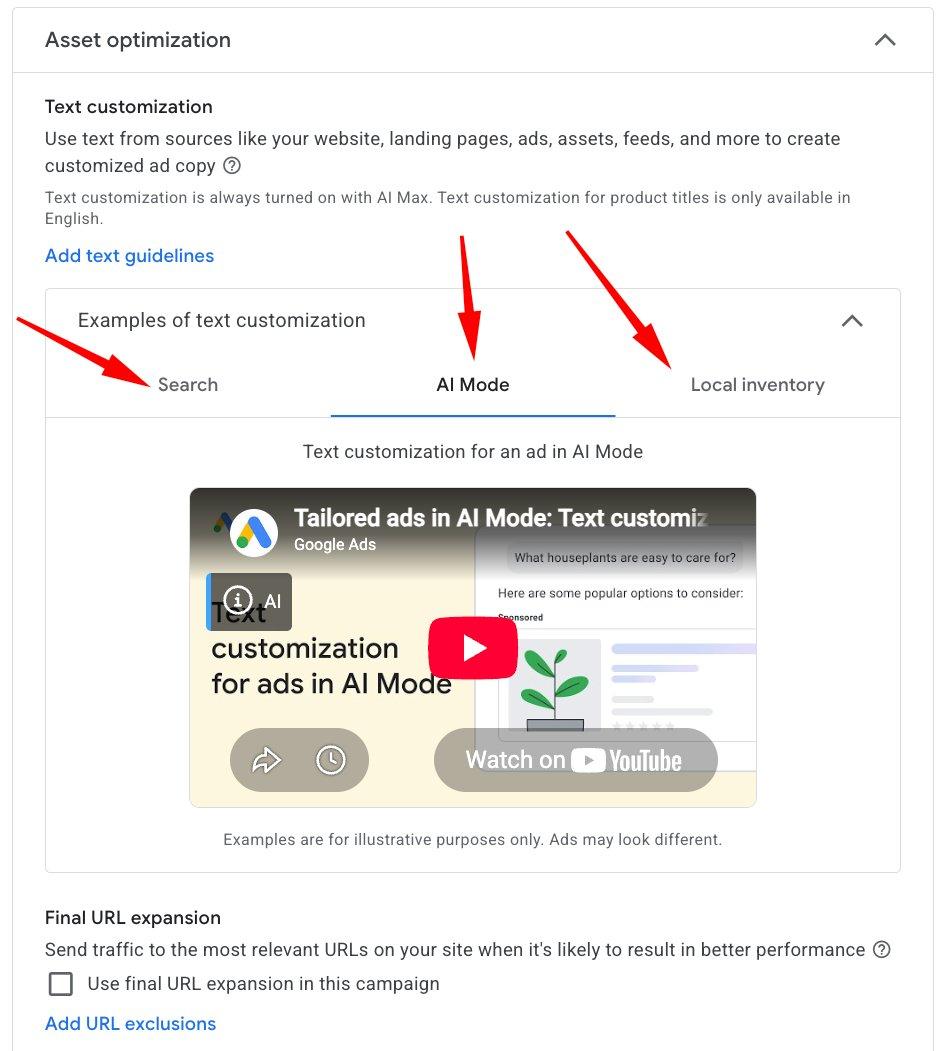
Text Customizations: AI Max introduces enhanced flexibility in ad copy generation. Historically, Shopping ads were primarily driven by product data from the merchant feed. While product titles and descriptions remain crucial, AI Max now enables more dynamic and customized text elements. This means that ad headlines, descriptions, and promotional messages can be automatically tailored by AI based on various signals such as user intent, browsing history, time of day, and even broader market trends. This level of customization ensures that the ad copy is always highly relevant and compelling to the individual user, improving click-through rates and conversion potential. It also reduces the manual effort required for A/B testing multiple ad variations, as the AI continuously optimizes for the best-performing combinations.
-
Final URL Expansion: This feature optimizes the landing page experience for users. Traditionally, Shopping ads direct users to a specific product page derived from the product feed. With Final URL Expansion, AI Max can intelligently determine if a different, more relevant page on the advertiser’s website might better fulfill the user’s intent. For instance, if a user’s query suggests they are looking for a category of products rather than a specific item, AI Max might direct them to a relevant category page on the advertiser’s site, increasing the likelihood of conversion by presenting a broader, yet still highly relevant, selection. This dynamic URL optimization ensures that users are always directed to the most appropriate destination, minimizing bounce rates and enhancing the overall user journey.
-
Format Flexibility and More Controls: AI Max provides advertisers with greater adaptability in how their ads are presented across different Google properties and devices. This includes optimizing ad formats for various screen sizes, placements, and user contexts (e.g., mobile search results, YouTube Shorts, Discover feed). The "more controls" aspect, while seemingly counterintuitive for an AI-driven system, addresses a key concern of many advertisers: the desire for strategic oversight. While AI handles the granular optimizations, these controls likely allow advertisers to set guardrails, define specific brand guidelines, exclude certain placements, or prioritize certain product categories, ensuring that the AI’s actions align with broader business objectives and brand safety requirements. This balance of automation and strategic control is crucial for advertiser adoption.
Advertiser Observations and Early Reactions
The expansion has been quickly noted by prominent figures in the digital advertising community. Arpan Banerjee, a recognized expert in PPC and SEM, took to LinkedIn to share his observations, confirming that AI Max features have indeed landed in Standard Shopping Campaigns. His post highlighted the arrival of conversational intent, text customizations, final URL expansion, format flexibility, and an increase in available controls. Banerjee’s report provided concrete evidence of the rollout and detailed the initial suite of functionalities available to advertisers.
Concurrently, Thomas Eccel, another influential voice in the industry, also shared insights on LinkedIn, reinforcing Banerjee’s findings. Eccel’s post added a critical dimension: the mention of "new performance uplift numbers estimates" when asset optimization is enabled. While the exact percentage was anonymized as "+xx%", the mere presence of such estimates indicates Google’s confidence in AI Max’s ability to drive tangible improvements. These estimates suggest that combining AI Max with existing asset optimization strategies can lead to a significant increase in conversions for search ads, signaling a potentially lucrative synergy for advertisers willing to embrace these new tools.
Early reactions from the broader advertiser community are likely to be a mix of excitement and cautious optimism. Many will welcome the promise of improved performance and reduced manual effort, especially those managing large and complex product catalogs. The prospect of more intelligent targeting via conversational intent and dynamic ad creative is particularly appealing. However, a segment of advertisers may express concerns similar to those raised with Performance Max regarding the level of control and transparency. The effectiveness of AI-driven systems often relies on robust data inputs, and advertisers will be keen to understand how best to feed their product data and campaign objectives into AI Max to maximize its potential. The inclusion of "more controls" is a direct response to this feedback, aiming to strike a balance between automation and advertiser agency.
Underlying Technology and Google’s AI Strategy
The capabilities of AI Max are deeply rooted in Google’s extensive investments in artificial intelligence and machine learning. The system likely leverages components of Google’s advanced language models, similar to those powering search and other AI initiatives like Gemini. These models enable AI Max to understand nuanced language, predict user behavior, and generate highly relevant content dynamically. The integration of such sophisticated AI allows for real-time optimization across various campaign parameters, from bidding and budgeting to creative selection and audience targeting.
Google’s overarching AI strategy in advertising is clear: to make its platforms more intelligent, efficient, and accessible. By offloading complex optimization tasks to AI, Google aims to empower advertisers of all sizes to achieve better results, even those without dedicated large marketing teams. This strategy also aligns with the broader trend of "AI everywhere," where intelligent systems are seamlessly integrated into everyday tools and services. For advertising, this means a shift from manual, rule-based campaign management to a more dynamic, predictive, and adaptive approach. AI Max represents a significant step in this direction, promising to unlock new levels of performance by harnessing the full power of Google’s AI infrastructure.
Implications for Advertisers and the Digital Marketing Landscape
The expansion of AI Max for Shopping campaigns carries significant implications for advertisers and the broader digital marketing landscape.
-
Efficiency and Performance: The most immediate benefit is the potential for increased efficiency and improved performance. By automating complex optimization tasks, AI Max can free up advertisers’ time, allowing them to focus on higher-level strategy, creative development, and business growth. The promise of "uplift numbers" suggests a tangible increase in conversions, meaning more sales and better ROI for businesses leveraging these tools effectively. This is particularly crucial in the competitive e-commerce space, where every conversion counts.
-
Shift in Skill Sets for PPC Managers: The increasing reliance on AI will necessitate a shift in the skill sets required for PPC managers. The role may evolve from tactical, manual optimization to one that focuses more on strategic oversight, data interpretation, and providing high-quality inputs (ad assets, product feeds, conversion goals) to the AI. Understanding how to "train" and guide the AI, rather than directly controlling every variable, will become paramount. Data analysis skills, strategic thinking, and a deep understanding of customer journeys will be more important than ever.
-
Control vs. Automation Debate: The expansion will undoubtedly reignite the ongoing debate about control versus automation. While AI Max offers "more controls," the inherent nature of AI-driven systems means relinquishing some granular oversight. Advertisers will need to weigh the benefits of enhanced performance and efficiency against the desire for complete manual control. Google’s challenge will be to demonstrate the superior performance of AI while addressing concerns about transparency and the ability to diagnose issues when things don’t go as expected.
-
Competitive Landscape: This development further solidifies Google’s position as a leader in AI-powered advertising. It puts pressure on other ad platforms to enhance their own automation and AI capabilities to remain competitive. For advertisers, it means that those who embrace and effectively utilize AI Max will likely gain a competitive edge over those who stick to more traditional, manual campaign management approaches.
-
Importance of Product Feed Quality: With AI Max leveraging conversational intent and dynamic ad generation for Shopping campaigns, the quality and richness of product feed data become even more critical. The AI’s ability to interpret, customize, and optimize will be directly proportional to the accuracy, completeness, and detail of the product information provided by advertisers. Investing in high-quality product feeds will be non-negotiable for maximizing AI Max’s potential.
-
Future Outlook: This expansion is likely just the beginning. We can anticipate further integration of AI Max features across other Google Ads campaign types and potentially more sophisticated customization options. As Google’s AI models continue to evolve, so too will the capabilities of its advertising platforms, pushing the boundaries of what’s possible in digital marketing.
Challenges and Considerations
Despite the significant advantages, the widespread adoption of AI Max also presents challenges and considerations for advertisers.
- Data Dependency: The effectiveness of AI Max is heavily dependent on the quality and volume of data it receives. Advertisers with limited conversion data or incomplete product feeds may not experience the full benefits. Ensuring proper conversion tracking and maintaining robust data hygiene will be crucial.
- Transparency and "Black Box" Concerns: While Google aims to provide more controls, the underlying AI decision-making process can still appear opaque to advertisers. Understanding why the AI made certain optimizations or how it arrived at specific performance uplift estimates can be challenging. Advertisers may seek more diagnostic tools or reporting insights to gain greater visibility.
- Measurement and Attribution: Accurately measuring the incremental impact of AI Max can be complex. Advertisers will need sophisticated attribution models to understand how these AI-driven campaigns contribute to their overall marketing objectives, especially across multiple channels.
- Onboarding and Learning Curve: While designed to simplify, new features always come with a learning curve. Advertisers will need to invest time in understanding how to best configure AI Max, interpret its recommendations, and integrate it into their existing marketing strategies.
In conclusion, the expansion of Google Ads AI Max for Shopping campaigns represents a pivotal moment in the evolution of digital advertising. By bringing sophisticated AI capabilities like conversational intent, dynamic text customization, and intelligent URL expansion to the forefront, Google is empowering advertisers with tools to navigate the complexities of modern e-commerce more effectively. While offering significant promise for efficiency and performance gains, this shift also underscores the evolving role of the advertiser, demanding a strategic rather than purely tactical approach to campaign management. As AI continues to deepen its integration into Google Ads, the landscape of digital marketing will undoubtedly continue to transform, pushing advertisers to adapt, innovate, and leverage these powerful technologies to stay ahead in a rapidly changing environment.