

Modern software development has evolved beyond simple code deployments toward a more nuanced, risk-averse, and data-driven methodology known as full-stack experimentation. At the heart of this transition are three distinct but interconnected mechanisms: feature flags, rollouts, and feature testing. While these terms are frequently used interchangeably in industry discussions, they represent different stages of the software lifecycle and serve unique strategic purposes. Understanding the technical architecture and business implications of each is essential for organizations aiming to optimize user experience while maintaining system stability.
The rise of full-stack experimentation marks a departure from traditional client-side testing. In the early days of web optimization, A/B testing was primarily limited to the browser, where tools would modify the Document Object Model (DOM) after a page had loaded. This often resulted in a "flicker" effect, where users briefly saw the original content before the variant appeared. Full-stack experimentation solves this by integrating testing logic directly into the application’s backend or native mobile code. By leveraging Software Development Kits (SDKs) across languages such as JavaScript, Python, PHP, and Ruby, developers can bucket users into specific experiences before the UI is even rendered. This deeper integration allows for the testing of complex logic, such as search algorithms, pricing structures, and database configurations, which were previously inaccessible to front-end testing tools.
The Foundation of Control: Feature Flags
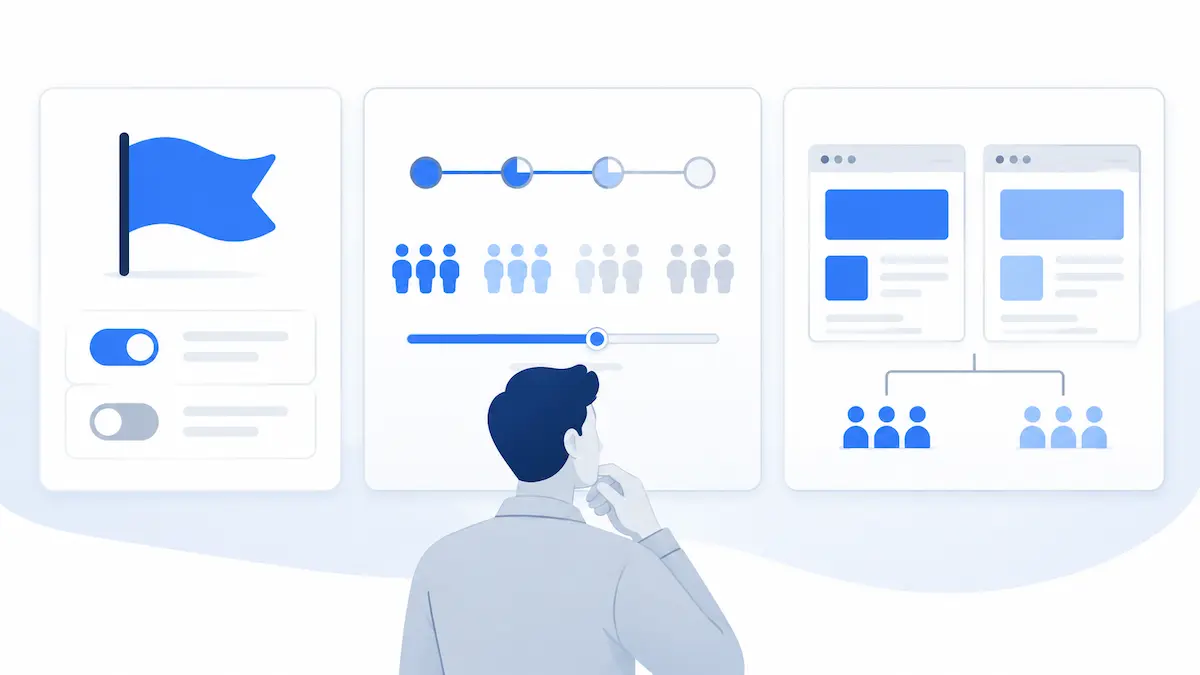
A feature flag, also known as a feature toggle, is the fundamental building block of modern deployment. At its core, a flag is a conditional statement within the code—a simple "if-else" logic—that determines whether a specific piece of functionality is active for a given user at runtime. The primary advantage of a feature flag is that it decouples code deployment from feature release. Engineering teams can ship code to production in an "off" state, ensuring that the new logic is present in the environment but dormant.
Feature flags serve several critical functions within an organization. One of the most common applications is the "kill switch." If a new integration or third-party API begins to fail, causing latency or crashes, an engineer can flip the flag to "off" in a centralized dashboard. This action immediately disables the problematic code for all users without requiring a new deployment or a rollback of the entire application. According to industry benchmarks, the ability to resolve a critical bug via a feature flag can reduce Mean Time to Resolution (MTTR) from hours to seconds.
Beyond emergency mitigation, feature flags are used for permission gating. This allows companies to manage access based on user attributes, such as subscription tiers or geographic regions. For instance, a SaaS provider might use a feature flag to ensure that a new "Advanced Analytics" dashboard is only visible to users on a "Premium" plan. Because the flag resides in the code, it can remain as a permanent fixture of the application’s architecture, though experts warn that unmanaged flags can lead to "technical debt" or "flag sprawl," where stale logic complicates the codebase over time.
Mitigating Risk Through Feature Rollouts
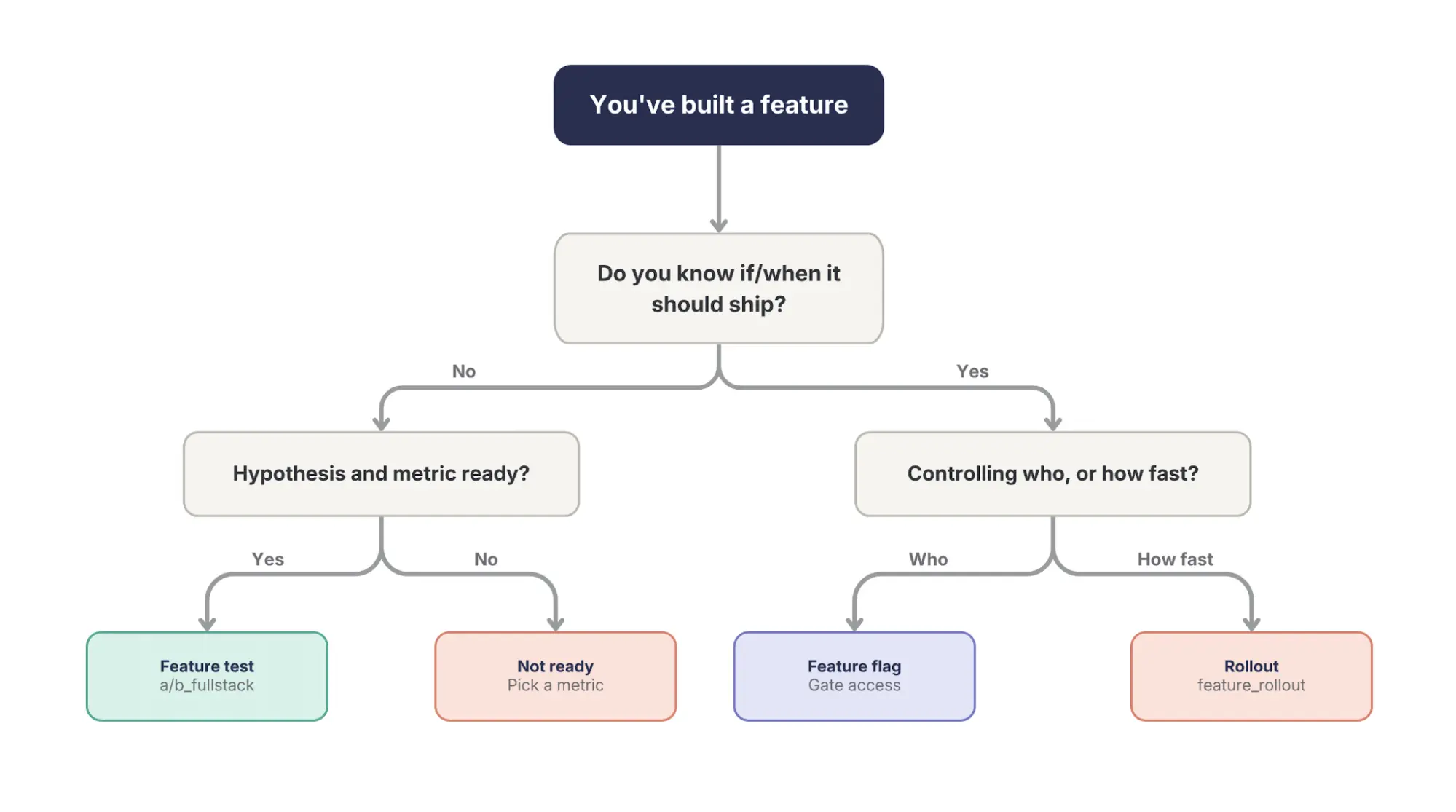
While a feature flag is a binary switch, a rollout is a "dimmer switch." A feature rollout is the process of gradually increasing the percentage of a user base that has access to a new feature. This is a strategic deployment phase used when a company has already decided to launch a feature but wants to ensure that the infrastructure can handle the new load or that the feature does not introduce unforeseen regressions.
The chronology of a standard rollout typically begins with a "Canary Release." A feature might be enabled for only 1% to 5% of the total traffic. During this initial phase, site reliability engineers (SREs) and product managers monitor "guardrail metrics"—technical KPIs such as error rates, CPU usage, and latency. If the system remains stable, the exposure is increased to 20%, then 50%, and eventually 100%.

This phased approach is particularly vital for backend changes that only surface issues under high volume. For example, a new checkout flow might work perfectly for a single tester but could cause database deadlocks when accessed by thousands of concurrent users. By using a rollout, the organization limits the "blast radius" of a potential failure. In Convert Experiences and similar full-stack platforms, rollouts are characterized by having a single variation without a control group, as the goal is not to measure performance against an alternative, but to ensure safe delivery.
Data-Driven Decisions with Feature Testing
Feature testing, often referred to as server-side A/B testing, is the most advanced application of these tools. Unlike a rollout, which focuses on safety, a feature test focuses on impact. It is a comparative experiment where traffic is split between a control group (the original experience) and one or more variations (the new feature).
The objective of feature testing is to validate a hypothesis. For example, a product team might hypothesize that changing the search algorithm to prioritize "highly rated" items over "most recent" items will increase the conversion rate by 10%. To test this, they wrap the two different algorithms in feature flags and use a full-stack experimentation engine to randomly assign users to each version.
The distinction between feature testing and traditional A/B testing lies in the depth of the change. Feature testing can involve changes to the core logic of the application. Because the statistics work identically to traditional experiments, the results are evaluated based on statistical significance. This ensures that any observed lift in metrics is due to the change itself rather than random chance. Once a feature test concludes and a winner is declared, the organization may then use a rollout to move the winning variation to the rest of the population.
Technical Integration and SDK Consistency
For full-stack experimentation to be effective, the underlying technology must ensure consistency across different platforms. This is achieved through the use of SDKs. When a user interacts with a product, the application calls the SDK to determine which flag state should be served.
A critical challenge in this process is "bucketing" or user assignment. If a user sees "Version A" on their mobile app but "Version B" on their desktop browser, the integrity of the experiment is compromised, and the user experience becomes fragmented. Leading platforms solve this by using deterministic hashing algorithms. By taking a unique user ID and combining it with the experiment ID, the SDK can ensure that a specific user is always assigned to the same bucket, regardless of the device or programming language being used.
Currently, full-stack platforms like Convert Experiences offer support for a wide array of environments, including JavaScript/TypeScript, PHP, Python, Ruby, iOS, and Android. Some advanced implementations even run at the "edge," using services like Cloudflare Workers to resolve flag logic closer to the user, further reducing latency.
Comparative Analysis: A Strategic Framework
To effectively implement these strategies, organizations must recognize which tool fits their specific needs. The following comparison highlights the operational differences:

| Factor | Feature Flags | Rollouts | Feature Testing |
|---|---|---|---|
| Primary Goal | Control and Gating | Risk Mitigation | Impact Validation |
| Control Group | No | No | Yes |
| Traffic Allocation | Targeted by attribute | Incremental (0% to 100%) | Fixed split (e.g., 50/50) |
| Success Metric | Functional availability | System stability/Error rates | Statistical significance of KPIs |
| Primary Operator | Engineering | Product & Engineering | Product, Growth, & CRO |
Industry Implications and the Future of Product Development
The adoption of these full-stack methodologies has profound implications for the business of software. It shifts the culture from "Release and Pray" to "Test and Learn." Companies that master feature flags and testing can innovate faster because the cost of failure is significantly lowered. If a new idea doesn’t perform well in a feature test, it is simply discarded before it ever reaches the full user base, saving the company from the long-term maintenance of unpopular or ineffective features.
Furthermore, this approach fosters better collaboration between departments. Engineering teams gain the autonomy to deploy code whenever it is ready, while Product and Marketing teams gain the control to release that code to the public on their own schedule.
As the digital landscape becomes increasingly competitive, the ability to perform deep, backend experimentation will likely become a baseline requirement rather than a luxury. Organizations that continue to rely solely on client-side visual changes will find themselves unable to optimize the complex, data-heavy experiences that modern consumers demand. By integrating feature flags for control, rollouts for safety, and feature testing for insight, businesses can create a robust pipeline for continuous improvement and sustainable growth.
In conclusion, while the "wiring" of these three concepts is identical—all relying on conditional logic and SDK-based evaluation—their applications define the modern software lifecycle. A switch (flag) provides the power to turn logic on or off; a dimmer (rollout) allows for a controlled increase in exposure; and a measuring scale (testing) provides the data necessary to prove that a change actually adds value. Together, they form a comprehensive framework for full-stack excellence.







