

Paid search advertising has solidified its position as the cornerstone of the global marketing economy, generating a record-breaking $102.9 billion in U.S. revenue throughout 2024. According to the latest industry data from Search Engine Land and various market analysts, this figure represents the largest share of the digital advertising market by a significant margin. The scale of this investment is driven by a singular, powerful value proposition: the ability for brands to appear before consumers at the precise millisecond of high-intent search. As digital ecosystems become increasingly fragmented, the search engine results page (SERP) remains the primary gateway for commerce, leading to a landscape where competition for visibility has never been more intense or more expensive.
Despite the massive market size, the environment for advertisers is becoming more complex. Industry benchmarks indicate that the average cost-per-lead (CPL) across all industries rose from $66.69 in 2024 to approximately $70.11 in early 2025. This inflationary trend in digital real estate means that the traditional strategy of simply bidding on keywords is no longer sufficient for maintaining profitability. Modern marketers are now forced to navigate a sophisticated auction system that prioritizes technical relevance, user experience, and post-click performance over mere financial expenditure.
The Evolution of Search Advertising: A Brief Chronology
The trajectory of paid search has moved from simple text-based bidding to a complex, AI-driven ecosystem. In the early 2000s, platforms like Overture and Google AdWords introduced the pay-per-click (PPC) model, which revolutionized how businesses reached customers. By the mid-2010s, the focus shifted toward mobile optimization and the introduction of ad extensions.
In the current era, which began roughly in 2021, the industry has entered a phase of "automation and signals." The introduction of Google’s Performance Max (PMax) and the sunsetting of Expanded Text Ads in favor of Responsive Search Ads (RSAs) marked a definitive shift. Today, the auction system is no longer just a contest of budgets; it is a contest of data quality and machine learning efficiency. Analysts suggest that the next frontier, already beginning in 2024, is the integration of generative AI into search results, which will further alter how paid placements are integrated into the user journey.
The Mechanics of the Modern Auction System
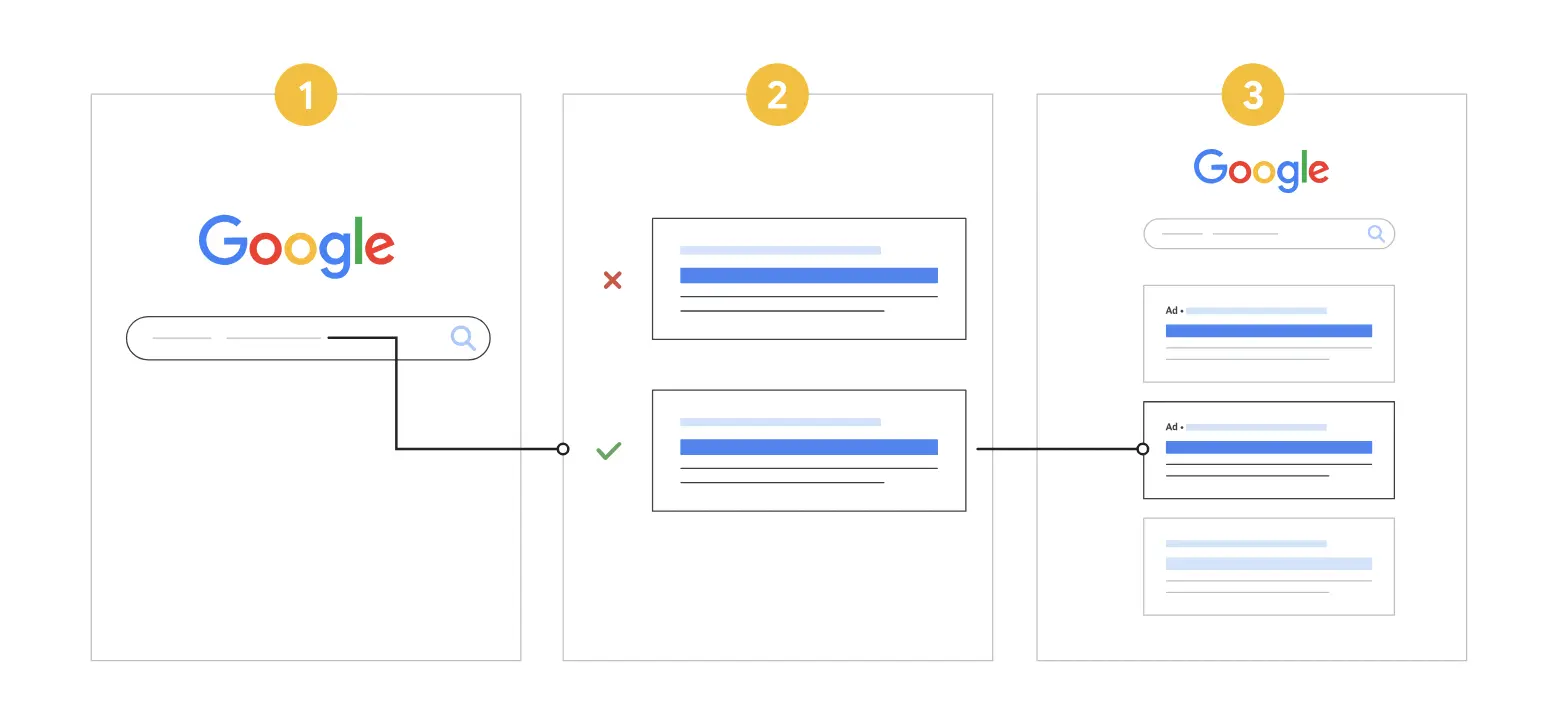
To understand the dominance of paid search, one must understand the automated auction that occurs billions of times per day. Every time a user enters a query, search engines conduct a real-time auction to determine which ads appear and in what order. This process is governed by a metric known as Ad Rank.

Ad Rank is calculated using a combination of the advertiser’s maximum bid and their Quality Score. The Quality Score is a diagnostic tool used to measure the quality of an ad relative to other advertisers. It is determined by three core components:
- Expected Click-Through Rate (CTR): The likelihood that the ad will be clicked when shown.
- Ad Relevance: How closely the ad matches the intent behind the user’s search query.
- Landing Page Experience: How relevant and transparent the page is to the user who clicked the ad.
A critical nuance of this system is the "Actual CPC" model. Advertisers do not necessarily pay their maximum bid; they pay the minimum amount required to outrank the competitor immediately below them, plus one cent. This incentivizes advertisers to improve their Quality Score, as a high-quality ad can outrank a higher-bidding competitor while paying significantly less per click.
Market Dominance: Google vs. Microsoft
While the term "search" is often used as a synonym for Google, the market is a duopoly with distinct strategic advantages on either side. Google Ads remains the undisputed leader, commanding approximately 90% of the global search market. Its ecosystem extends into YouTube, Gmail, and the Google Display Network, offering unparalleled reach. Search advertising currently accounts for 39.8% of all digital ad revenue, a testament to Google’s enduring influence.
Microsoft Advertising, however, has carved out a vital niche. While Bing’s standalone market share remains in the single digits, the Microsoft network syndicates ads across Yahoo, AOL, DuckDuckGo, and Ecosia. Furthermore, Microsoft’s recent expansion into the ad-supported tiers of streaming giants like Netflix has provided advertisers with access to high-value demographics that are increasingly moving away from traditional search environments. Analysts note that Microsoft often offers a lower average CPC compared to Google, making it an attractive secondary channel for brands looking to maximize their return on ad spend (ROAS).
The Diversification of Ad Formats
As the search landscape matures, the variety of ad formats has expanded to meet different consumer behaviors:
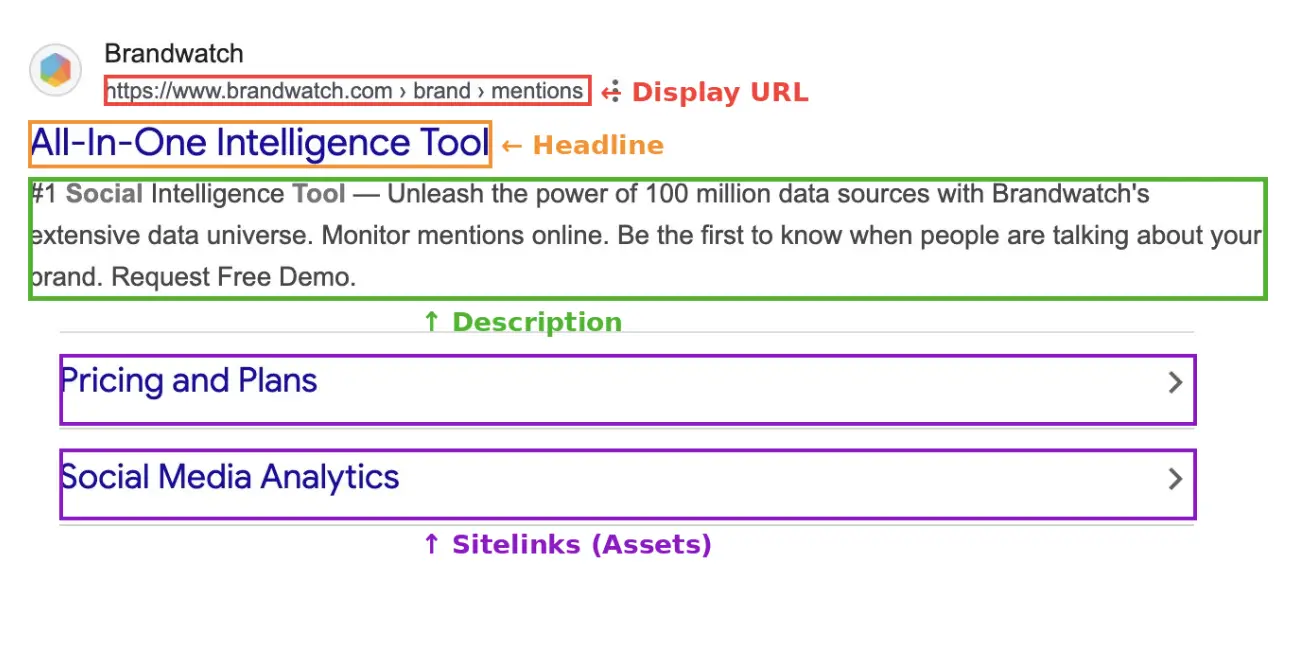
- Responsive Search Ads (RSAs): These are the current standard. Advertisers provide multiple headlines and descriptions, and Google’s AI tests various combinations to find the most effective version for each specific user.
- Dynamic Search Ads (DSAs): These ads do not rely on keywords. Instead, Google crawls the advertiser’s website and automatically generates a headline and a landing page destination based on the user’s search term.
- Performance Max (PMax): A goal-based campaign type that allows advertisers to access all of their Google Ads inventory from a single campaign. It uses AI to optimize performance across Search, Display, Discover, Maps, Gmail, and YouTube.
- Shopping Ads: Essential for e-commerce, these ads use product data rather than keywords to show high-quality images and pricing directly on the SERP.
- Apple Search Ads: Dominating the mobile app discovery space, these ads appear at the top of App Store search results, capturing users at the moment they are ready to download.
The Strategy of the Post-Click Experience
A significant portion of the $102.9 billion spent in 2024 was effectively wasted due to poor post-click experiences. Industry experts argue that the landing page is the most overlooked component of a paid search strategy. While the ad’s job is to earn the click, the landing page’s job is to earn the conversion.
The concept of "Message Match" has become a central pillar of successful campaigns. If an ad promises a "Free 14-Day Trial" but the landing page focuses on a "Contact Sales" form, the cognitive dissonance leads to immediate bounces. Data shows that dedicated landing pages—pages built specifically for a single ad group without distracting site navigation—can achieve conversion rates of 10-15%, compared to the 2-4% average seen on generic homepages.
Furthermore, technical performance is now a financial metric. Research indicates that a one-second delay in mobile page load time can reduce conversions by up to 20%. In a high-competition environment where clicks can cost upwards of $50 in sectors like legal or insurance, slow load times represent a direct drain on marketing budgets.
Industry Outlook and Implications
The surge in paid search revenue to over $100 billion signals a broader shift in corporate strategy. As privacy regulations like GDPR and CCPA limit the effectiveness of third-party tracking in social and display advertising, search remains a "safe haven" for marketers. This is because search intent is a first-party signal provided directly by the user, making it less reliant on the controversial tracking cookies that are currently being phased out by major browsers.

However, the rise of "Zero-Click Searches"—where Google provides the answer directly on the SERP via AI Overviews—presents a new challenge. Advertisers may find themselves paying more for a shrinking pool of traditional blue-link clicks. In response, the industry is seeing a move toward "Personalization at Scale," where AI is used not just to place the ad, but to dynamically alter the landing page content to match the specific profile of the visitor.
Conclusion
Paid search advertising has transitioned from a tactical option to a fundamental economic utility. The $102.9 billion spent in 2024 reflects a global marketplace that is increasingly "search-first." For businesses to succeed in this high-stakes environment, they must move beyond the basics of keyword bidding. The future of the industry lies in the seamless integration of AI-driven targeting, rigorous technical optimization of landing pages, and a relentless focus on the user’s post-click journey. As costs continue to rise, the margin for error narrows, making sophisticated management and measurement the only viable paths to sustainable growth.







