Ammar Sabilarrohman

In an increasingly data-driven marketing landscape, the ability to precisely measure and understand social media performance is paramount for businesses. As of 2026, Facebook, with its colossal global user base exceeding 3 billion monthly active users, remains a cornerstone of digital strategy for brands worldwide. Navigating this vast ecosystem effectively, however, demands more than just posting content; it requires sophisticated analytics to discern what truly resonates with audiences, optimize campaigns, and ultimately drive tangible business outcomes. This article delves into the critical role of Facebook analytics, the evolution of its measurement tools, and a comprehensive review of the leading third-party platforms available to marketers in 2026.
The Evolving Landscape of Facebook Analytics

Facebook analytics encompass the performance data derived from a brand’s Page, individual posts, and paid advertising campaigns. This data provides crucial insights into how content travels across the platform, who engages with it, and the subsequent actions users take. For instance, in the United States, approximately 71% of adults utilize Facebook, highlighting its pervasive reach and the importance of understanding user interactions. Analytics serve as a meticulously organized record of every brand interaction, enabling marketers to identify patterns, trends, and opportunities for improvement.
The evolution of Facebook’s native analytics offerings has been marked by significant shifts. Initially, businesses relied on "Facebook Insights," a built-in tool providing basic metrics. In 2021, Facebook discontinued its standalone "Facebook Analytics" product, consolidating reporting functionalities into "Meta Business Suite." This integration reflected Meta’s broader strategy to streamline management across its family of apps, including Instagram. Consequently, when marketing professionals refer to "Facebook Insights" today, they typically mean the analytics section within Meta Business Suite. While this free tool offers a foundational overview of post engagement and basic demographic data, its capabilities are often insufficient for comprehensive social media programs, particularly for businesses operating at scale or across multiple platforms.
The Imperative for Third-Party Analytics Solutions

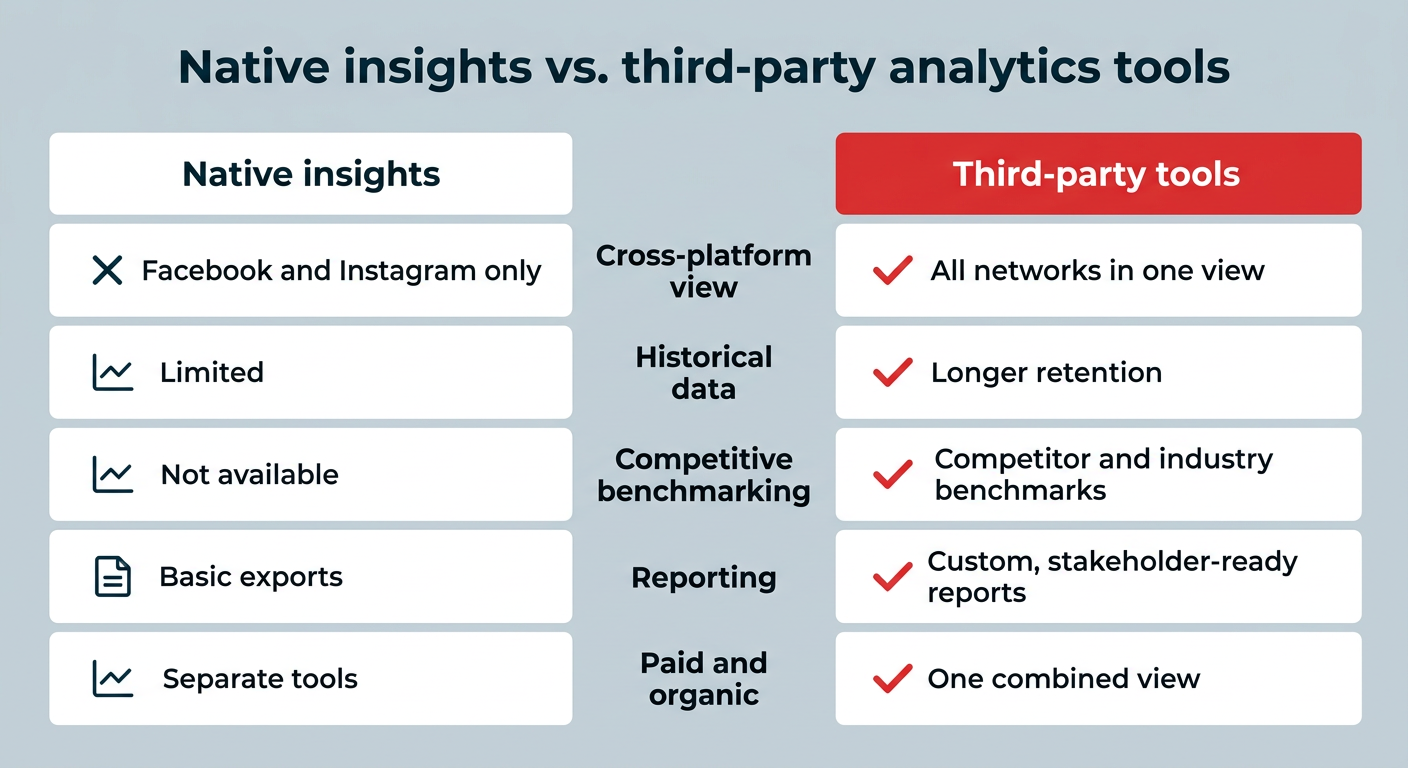
While Meta Business Suite serves as a reasonable starting point for monitoring basic performance, its limitations become apparent when marketers require deeper insights or a more holistic view of their social media efforts. Native Facebook insights typically fall short in several critical areas:
- Cross-Platform Integration: Meta Business Suite primarily focuses on Facebook and Instagram, offering a fragmented view for brands managing a presence across Twitter (X), LinkedIn, TikTok, Pinterest, and YouTube. A unified dashboard is essential for comparing performance and identifying overarching social trends.
- Historical Data Retention: Native tools often have limitations on how far back historical data can be accessed, hindering long-term trend analysis and year-over-year comparisons.
- Competitive Benchmarking: Without the ability to easily compare performance against direct competitors or industry leaders, businesses struggle to gauge their relative success and identify best practices.
- Customizable Reporting: Stakeholders, from marketing managers to C-suite executives, require tailored reports that highlight specific KPIs and business objectives. Native tools offer limited flexibility in report generation.
- Paid and Organic Integration: While Meta Business Suite connects to Ads Manager, a truly integrated view that correlates organic content performance with paid campaign efficacy in a single, digestible report is often lacking.
- Advanced Social Listening: Understanding public sentiment, brand mentions, and trending conversations beyond owned channels is crucial for reputation management and content strategy, a feature largely absent in native tools.
Industry experts widely agree that relying solely on native tools can lead to suboptimal decision-making, missed opportunities, and inefficient resource allocation. As digital advertising spend continues to rise – projected to exceed $700 billion globally by 2026 – the need for robust, integrated analytics platforms that address these gaps becomes increasingly critical. Third-party solutions provide a comprehensive Facebook analytics dashboard, customizable reporting, competitive benchmarking, and often incorporate social listening capabilities, empowering marketers with actionable intelligence. For businesses managing multiple accounts, reporting to various stakeholders, or aiming for a competitive edge, these advanced tools are indispensable.
Key Attributes of Leading Facebook Analytics Tools
Selecting the optimal Facebook analytics tool depends on a team’s specific needs, budget, and strategic objectives. However, several universal criteria define a truly effective platform:
- Customizable Reporting: The ability to tailor reports to specific KPIs, audience segments, and stakeholder requirements is crucial for effective communication and decision-making.
- Audience Insights: Granular data on demographics, interests, behaviors, and active times helps refine targeting and content strategy.
- Competitive Benchmarking: Tools that allow comparison against direct competitors or industry averages provide invaluable context for performance evaluation.
- Paid and Organic Tracking: A unified view of both paid and organic efforts is essential for understanding the holistic impact of Facebook activities and optimizing budget allocation.
- Cross-Platform Integration: For most modern businesses, a tool that consolidates data from Facebook alongside other major social networks (Instagram, X, LinkedIn, TikTok, etc.) offers a significant advantage.
- Integration with Existing Stack: Seamless connectivity with CRM systems, web analytics platforms, and other marketing tools ensures a cohesive data ecosystem.
- Pricing and Scalability: The tool should offer flexible pricing plans that align with the organization’s size, number of profiles, and evolving needs.
A Comprehensive Review of Top Facebook Analytics Platforms for 2026
The market for Facebook analytics tools in 2026 offers a diverse range of solutions, from all-encompassing social media management suites to specialized analytics platforms. Here’s an examination of nine leading options, ordered by their typical depth of analytics and breadth of use case.
1. Perch by Hootsuite: Enterprise-Grade Cross-Platform Reporting
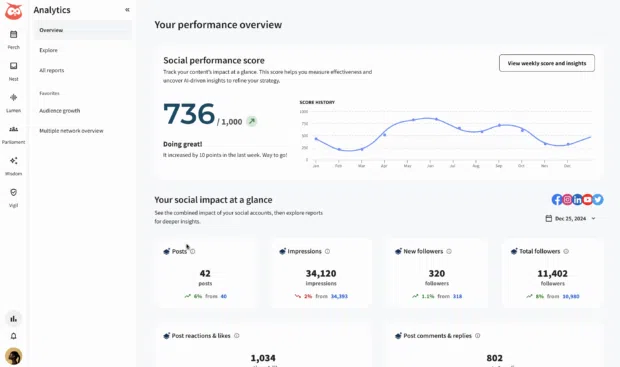
Perch by Hootsuite stands out as a robust solution for enterprise teams and marketers requiring extensive cross-platform reporting. It enables users to schedule Facebook content, monitor performance, and analyze results alongside virtually every other major social network, including Instagram, X, TikTok, Pinterest, LinkedIn, and YouTube.
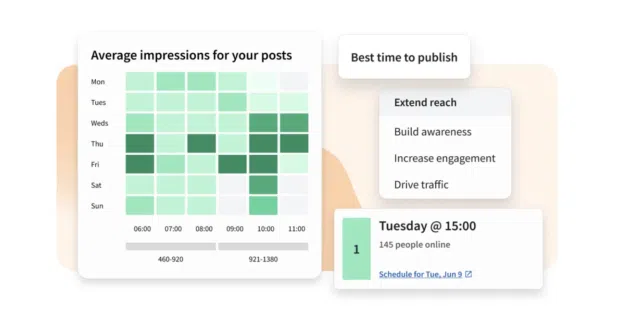
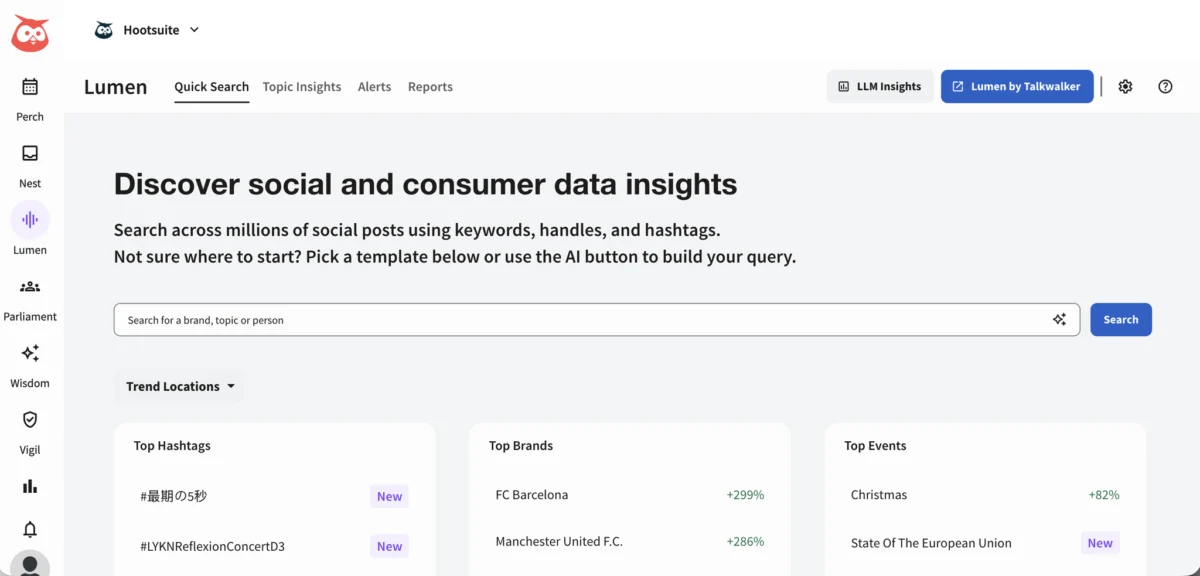
Key Strengths: Perch offers highly customizable reports, intuitive benchmarking tools, and advanced audience analysis features, making it easy to generate stakeholder-ready insights. Its ability to consolidate all social analytics in one place allows teams to identify overarching social trends impacting their brand. For users on the broader Hootsuite Social OS, integration with tools like Lumen (for insights and listening) adds valuable brand and conversation context to the quantitative data. Perch’s "best time to publish" recommendations, driven by proprietary algorithms, further aid content optimization.
Pricing: Plans start at $99/user/month for the Standard plan, with Advanced at $249/user/month, and custom Enterprise pricing available.
2. Meta Business Suite: The Foundational Free Option
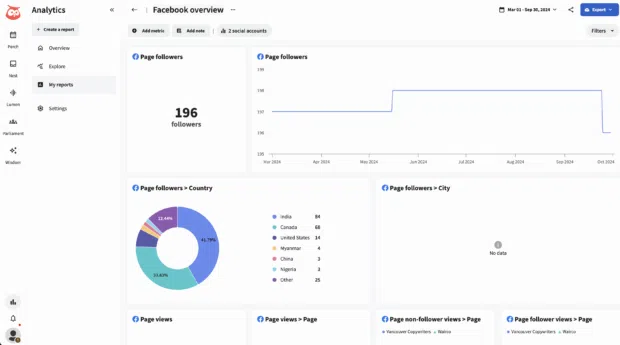
Meta Business Suite is the official, free tool provided by Meta for managing content, ads, messages, and analytics across Facebook and Instagram. It serves as the primary native dashboard for reviewing basic post engagement and Facebook Page analytics.
Key Strengths: Its direct integration with Facebook’s advertising ecosystem (Ads Manager) is unparalleled. It’s free, making it an accessible starting point for small businesses or individuals with limited budgets.
Limitations: As previously noted, its analytics are basic, lacking in-depth competitive analysis, comprehensive historical data, and cross-platform reporting beyond Meta properties.
Pricing: Free.
3. Buffer: Streamlined Tracking for Small Teams
Buffer is a social media management tool that includes Facebook analytics, alongside integrations for Instagram, X, LinkedIn, YouTube, and Mastodon. It is often favored by smaller teams due to its clean and user-friendly interface.
Key Strengths: Buffer provides straightforward Facebook performance tracking, a clean dashboard, and insights into optimal posting times and content types. Its simplicity makes it easy to adopt for those new to social media analytics.

Limitations: It is relatively light on advanced analytics features, typically not offering full metrics for every platform, social listening, paid content tracking, or competitive benchmarking.
Pricing: A basic plan is free, with more advanced options ranging from $5 to $10 per channel/month (billed annually).
4. Rival IQ: Precision in Competitive Intelligence
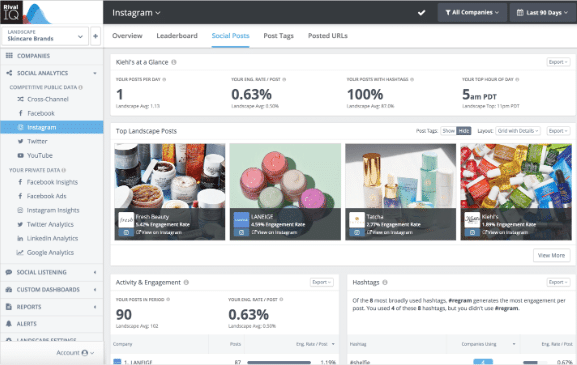
Rival IQ is a specialized social media analytics tool with a strong focus on competitive analysis. Beyond standard Facebook analytics (engagement metrics, demographics), its core strength lies in its ability to analyze competitors.

Key Strengths: It excels at competitor tracking and benchmarking, allowing businesses to monitor competitor performance, content strategies, and audience engagement. This is invaluable for identifying market trends and competitive advantages. It also offers customizable alerts for competitor activity.
Pricing: Plans typically start from $239 per month.
5. Social Status: Ad Analytics and Influencer Campaign Tracking
Social Status is a platform designed for comprehensive performance tracking, offering deep insights into both organic and paid content on Facebook and other major social networks. It is particularly strong in ad analytics and influencer campaign measurement.
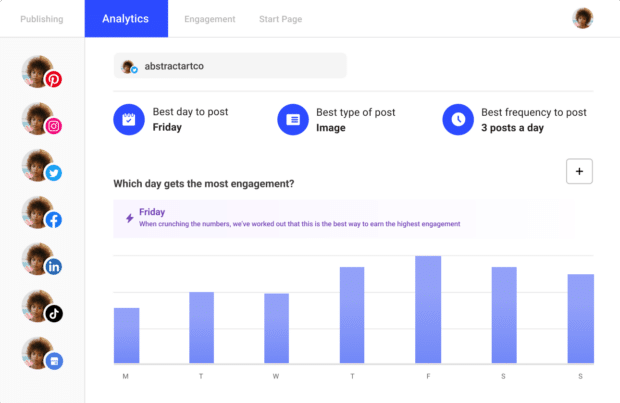
Key Strengths: Provides robust tools for analyzing advertising campaign performance, benchmarking against competitors, and meticulously evaluating the ROI of influencer marketing initiatives. This makes it a well-rounded option for performance marketers.
Pricing: A free plan is available (though without reporting tools); the Basic plan starts at $29/month.
6. Facelift Data Studio (formerly Quintly): Advanced Metric Customization
Facelift Data Studio offers an advanced social media analytics platform, providing access to an extensive array of performance metrics – approximately 350. It caters to data-driven teams that require granular control over their analytics.
Key Strengths: Its primary advantage is the profound depth of its analytics and the ability to customize almost any metric. It also features robust benchmarking capabilities against competitors or aspirational brands, along with API access for integrating data into other systems.
Pricing: From €300 a month.
7. Social Insider: Benchmarking and AI-Powered Content Pillars
Social Insider combines social media analytics with a strong emphasis on benchmarking. It helps marketers understand what competitors are doing effectively and how to leverage those insights to refine their own strategy.

Key Strengths: Offers built-in industry benchmarks to contextualize social performance. Its AI content analysis helps identify successful content pillars and predict future content performance. It also provides competitor audience insights.
Pricing: Custom pricing; quotes are available upon request.
8. Sotrender: Sentiment and Campaign Tracking Expertise
Sotrender is an analytics and reporting tool that provides a clear view of Facebook performance, campaigns, and competitive landscapes, with a unique focus on sentiment analysis.

Key Strengths: It covers a broad spectrum of metrics from reach and engagement to audience demographics and customer service performance. Its standout feature is its ability to track the sentiment of both organic and paid campaigns, offering crucial qualitative insights into brand perception. It also utilizes proprietary indexes for deeper analysis.
Pricing: Custom pricing; quotes are available upon request.
9. NapoleonCat: Integrated Social Inbox and Publishing
NapoleonCat is a social media management platform that integrates publishing, analytics, and a social inbox into a single tool. It collects performance data from Facebook, Instagram, LinkedIn, and YouTube.

Key Strengths: Its all-in-one nature is ideal for businesses seeking to streamline their social media operations. The combination of publishing, analytics, and an integrated social inbox enhances efficiency in community management and content deployment.
Pricing: Plans start at $79/month for two users and five profiles.
Strategic Facebook Metrics for 2026

The effectiveness of Facebook analytics hinges on tracking the right metrics, which should always align with specific marketing objectives. Categorizing metrics by goal helps in discerning their strategic value:
-
Awareness Metrics:
- Reach: The number of unique users who saw your content.
- Impressions: The total number of times your content was displayed.
- Follower Growth: The net increase in your Page’s audience.
- Video Views: Critical for video-first strategies, indicating content consumption.
- Strategic Implication: These metrics tell you how widely your message is disseminated and if your brand’s visibility is expanding.
-
Engagement Metrics:

- Engagement Rate: The percentage of people who interacted with your content.
- Reactions, Comments, Shares, Saves: Specific user interactions that indicate resonance.
- Strategic Implication: These reveal whether your content is compelling enough to elicit a response, fostering community and brand loyalty.
-
Conversion Metrics:
- Link Clicks: The number of times users clicked on a link in your content.
- Click-Through Rate (CTR): The percentage of impressions that resulted in a click.
- Leads, Purchases: Direct business outcomes driven by Facebook activity.
- Cost Per Result (CPR): The cost incurred for each desired action (e.g., lead, sale).
- Strategic Implication: These metrics directly measure the impact of Facebook efforts on business objectives and return on investment (ROI).
-
Audience Metrics:
- Age, Gender, Location, Language: Demographic data of your audience.
- Active Times: When your audience is most active on the platform.
- Strategic Implication: Provides insights into who you are truly reaching, allowing for better audience targeting and optimal content scheduling.
-
Health Metrics:
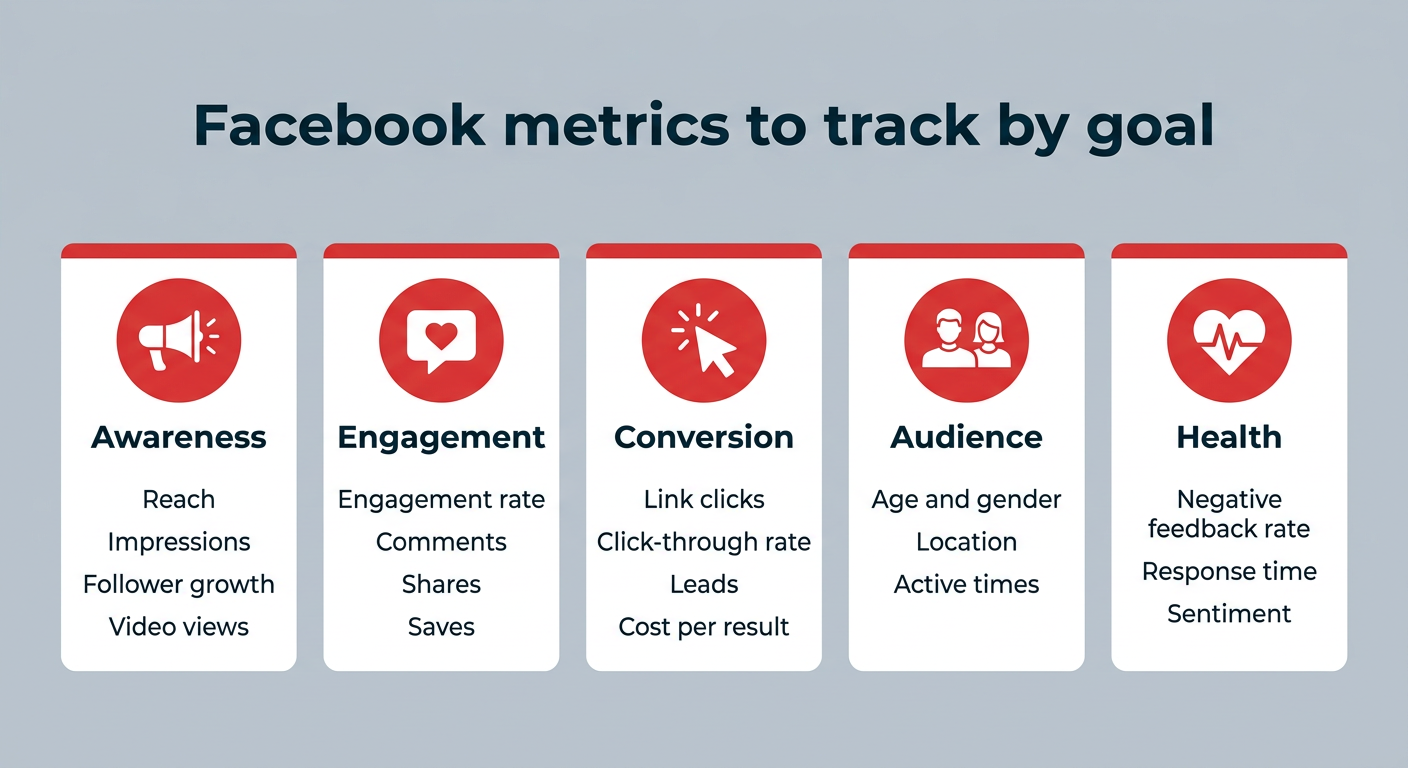
- Negative Feedback Rate: The frequency of users hiding posts or reporting content.
- Response Time: How quickly your Page responds to messages or comments.
- Sentiment: The emotional tone of comments and mentions about your brand.
- Strategic Implication: These metrics highlight potential friction points, aiding in reputation management, customer service improvements, and maintaining a positive brand image.
Leveraging Analytics for Continuous Improvement
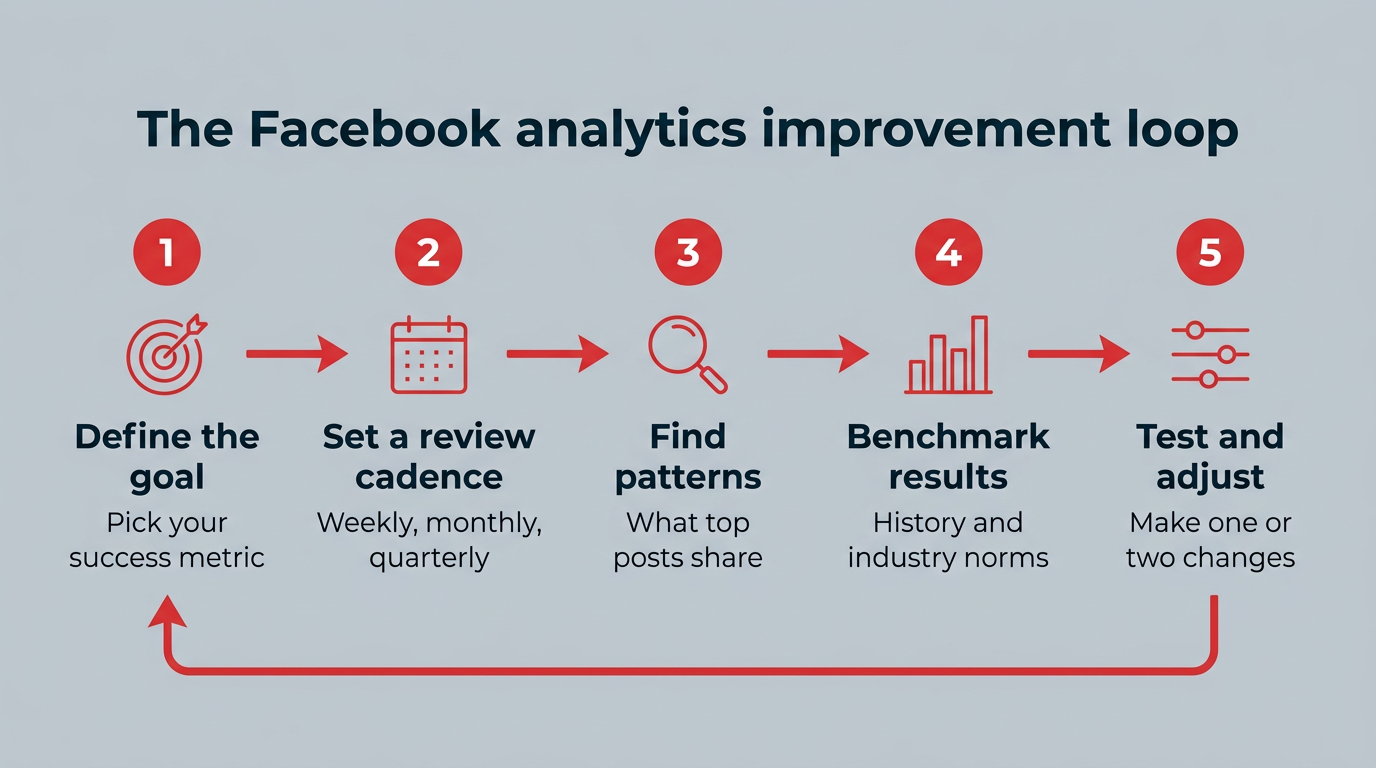
Effective utilization of Facebook analytics is an iterative process, structured around a repeatable loop that drives continuous improvement:
- Define Clear Goals: Establish specific, measurable, achievable, relevant, and time-bound (SMART) objectives for each campaign or content pillar. These goals should align with broader business strategies.
- Set a Review Cadence: Determine how frequently analytics will be reviewed – daily for active campaigns, weekly for content performance, or monthly for strategic overviews. Regularity ensures timely adjustments.
- Identify Patterns and Trends: Analyze the data to uncover what content types, posting times, or targeting strategies are performing best or worst. Look for correlations between specific actions and outcomes.
- Benchmark Results: Compare current performance against historical data, set internal benchmarks, and, crucially, benchmark against competitors to understand relative standing and identify areas for growth.
- Test and Adjust: Based on identified patterns and benchmarks, formulate hypotheses and conduct A/B tests on content, targeting, or ad creatives. Implement changes and monitor their impact, embracing an agile approach to social media marketing.
This cyclical process ensures that Facebook strategy is not static but dynamically optimized based on real-time data and actionable insights.
The Future of Facebook Analytics
Looking ahead to 2026 and beyond, the realm of Facebook analytics is poised for further innovation. Artificial intelligence (AI) and machine learning are expected to play an even more significant role, offering predictive insights into content performance, automating report generation, and enabling hyper-personalization of audience targeting. The increasing emphasis on data privacy, exemplified by regulations like GDPR and CCPA, will necessitate tools that offer robust first-party data collection and analysis capabilities, minimizing reliance on third-party cookies. Furthermore, as Meta continues to develop its metaverse vision, analytics will evolve to measure engagement and performance within these immersive digital environments, presenting new challenges and opportunities for marketers.
In conclusion, for businesses aiming to thrive on Facebook in 2026, sophisticated analytics tools are not merely an advantage but a fundamental necessity. Beyond the basic insights offered by Meta Business Suite, third-party platforms provide the depth, integration, and competitive intelligence required to optimize campaigns, understand complex audience behaviors, and ultimately drive measurable business success in a dynamic digital landscape. The strategic application of these tools, coupled with an iterative improvement cycle, will be key to unlocking Facebook’s full potential as a powerful marketing channel.

 Sagoh

 Suro Senen