The rapid proliferation of Large Language Models (LLMs) has fundamentally altered the landscape of enterprise software development, with Retrieval-Augmented Generation (RAG) emerging as the standard architecture for grounding AI responses in proprietary data. However, as organizations transition from experimental prototypes to production-grade deployments, a critical bottleneck has emerged: the inability to reliably measure the quality and safety of RAG outputs. While building a basic RAG pipeline has become a trivial task thanks to orchestration libraries, ensuring that the system does not hallucinate, provides relevant context, and maintains factual integrity remains a significant engineering challenge. To address this, a new generation of evaluation frameworks—most notably RAGAS, TruLens, and DeepEval—has entered the market, providing automated, scalable metrics designed specifically for the unique failure modes of retrieval-augmented systems.
The Evolution of RAG Evaluation: Beyond Traditional NLP Metrics
For decades, Natural Language Processing (NLP) relied on metrics such as BLEU (Bilingual Evaluation Understudy) and ROUGE (Recall-Oriented Understudy for Gisting Evaluation) to assess model performance. These metrics primarily measure word overlap between a generated output and a human-written reference answer. While effective for machine translation or summarization, they are fundamentally ill-suited for RAG systems. A RAG system’s value lies in its ability to synthesize information from a specific knowledge base; an answer can be factually correct and perfectly grounded in the provided context without sharing a single phrase with a pre-written reference answer.
Furthermore, RAG systems are composed of two distinct but interdependent components: the retriever and the generator. The retriever is responsible for scouring a vector database to find the most relevant "chunks" of information, while the generator (the LLM) must distill those chunks into a coherent response. Traditional metrics fail to diagnose which of these components has failed when an error occurs. This "black box" problem led to the development of specialized RAG evaluation frameworks that utilize "LLM-as-a-judge" methodologies to provide granular insights into both retrieval and generation quality.
Core Information Retrieval Metrics: The Foundation of Accuracy
Before exploring specific frameworks, it is essential to understand the classic Information Retrieval (IR) metrics that serve as the industry’s baseline. These metrics are mathematical in nature and do not necessarily require an LLM to compute, provided that "ground truth" (labeled data indicating which documents are relevant to which queries) is available.
Precision@K and Recall@K
Precision@K measures the proportion of relevant documents within the top "K" results returned by a retriever. If a system retrieves five documents and only two are relevant, the Precision@5 is 0.4. High precision is vital because irrelevant information (noise) can confuse the generator and lead to hallucinations. Conversely, Recall@K measures the system’s ability to find all relevant documents within the database. If there are four relevant documents in the corpus and the retriever only finds two, the Recall is 0.5. In RAG systems, there is often a "Recall-Precision Trade-off," where increasing the number of retrieved chunks improves recall but introduces more noise, thereby lowering precision.
Mean Reciprocal Rank (MRR) and NDCG
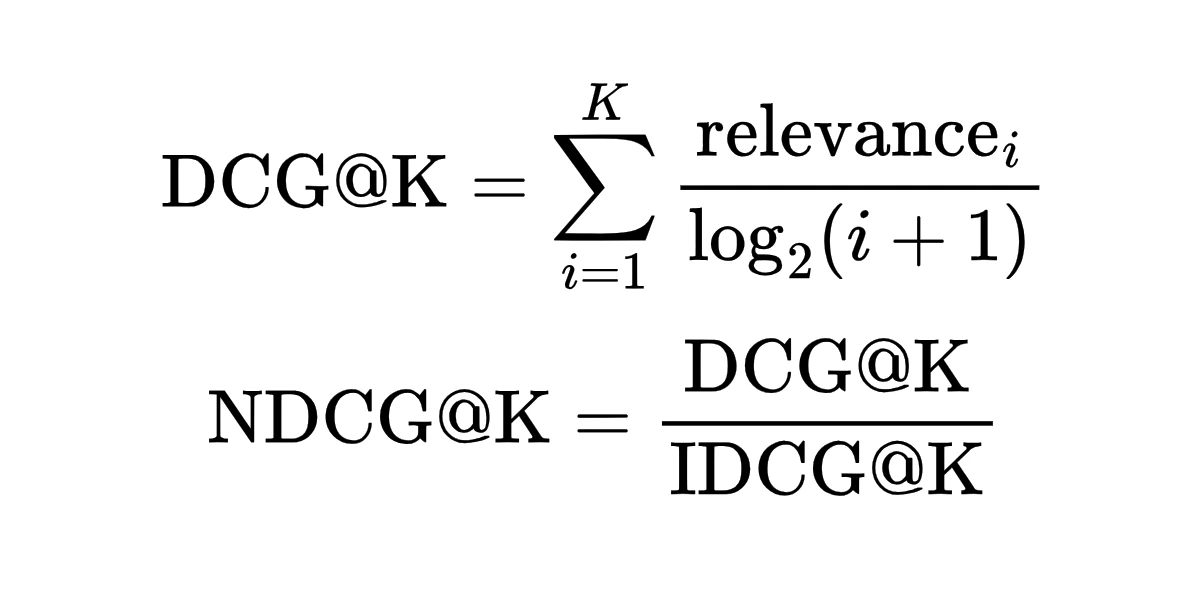
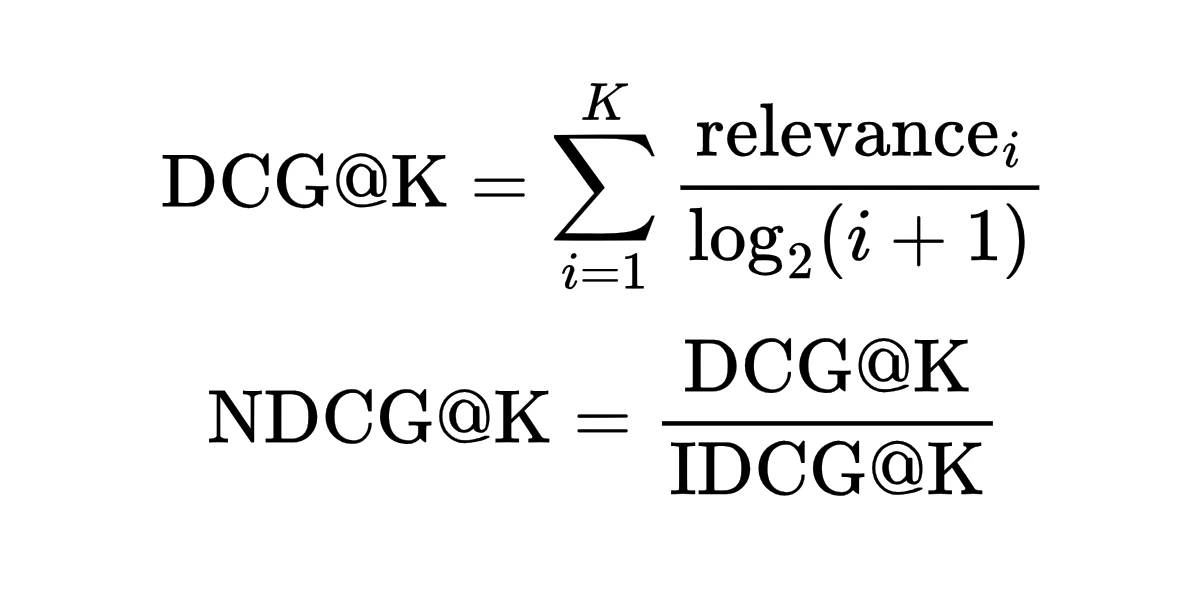
Mean Reciprocal Rank (MRR) assesses the position of the first relevant document. In an LLM context, this is crucial because models often exhibit "lost in the middle" phenomena, where they pay more attention to information at the beginning or end of a prompt. If the most important chunk is buried at rank 10, the LLM is less likely to use it effectively. Normalized Discounted Cumulative Gain (NDCG) provides an even more sophisticated view by accounting for "graded relevance." It acknowledges that some documents are "highly relevant" while others are only "somewhat relevant," rewarding the system for placing the most valuable information at the very top of the results list.
RAGAS: Automated, Reference-Free Benchmarking
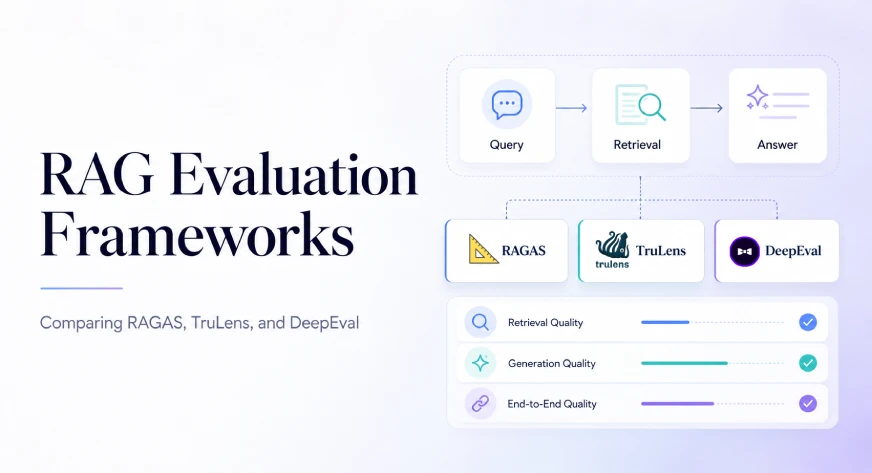
RAGAS (RAG Assessment) has emerged as a leading framework for developers seeking fast, automated scoring without the need for extensive human-labeled datasets. Its philosophy centers on using an LLM to evaluate the relationship between the question, the retrieved context, and the generated answer.
The framework is best known for its "Faithfulness" and "Answer Relevancy" metrics. Faithfulness measures the extent to which the answer is derived solely from the retrieved context—essentially acting as a hallucination check. Answer Relevancy ensures the model actually addresses the user’s query rather than providing a technically correct but tangential response. One of RAGAS’s most innovative features is its synthetic test set generation. By sampling chunks from a knowledge base and using an LLM to generate potential questions and answers, RAGAS allows teams to build a robust evaluation suite in a fraction of the time it would take to manually label data.
TruLens: Observability and the "RAG Triad"
While RAGAS is often used for one-time benchmarking, TruLens, developed by TruEra, focuses on the concept of continuous observability. It introduces the "RAG Triad," a framework designed to pinpoint exactly where a system is failing:
- Context Relevance: Is the retrieved context actually useful for answering the query?
- Groundedness: Is the answer supported by the retrieved context?
- Answer Relevance: Does the answer provide what the user asked for?
TruLens stands out for its integration with live applications. By "instrumenting" the code, TruLens logs every step of the RAG process in real-time. This data is then fed into a Streamlit-based dashboard, allowing engineers to visualize the performance of their system over thousands of live user queries. This makes it a preferred tool for teams that have already moved past the prototyping phase and need to monitor for "model drift" or quality degradation in production environments.
DeepEval: Unit Testing for the AI Era
DeepEval approaches RAG evaluation through the lens of traditional software engineering and DevOps. It treats LLM outputs as code that needs to pass unit tests before being deployed. Built on top of Pytest, DeepEval allows developers to define "test cases" with specific pass/fail thresholds.
For example, a developer might set a requirement that the "Faithfulness" score must be above 0.7 for a build to pass in a CI/CD (Continuous Integration/Continuous Deployment) pipeline. DeepEval also utilizes "G-Eval," a flexible metric that allows users to define custom evaluation criteria using natural language. This is particularly useful for niche industries—such as legal or medical fields—where standard relevancy metrics might not capture the nuances of professional compliance or terminology.
Comparative Analysis: Choosing the Right Tool
The choice between RAGAS, TruLens, and DeepEval typically depends on the current stage of the development lifecycle.
| Feature | RAGAS | TruLens | DeepEval |
|---|---|---|---|
| Primary Focus | Rapid Benchmarking | Production Observability | CI/CD Unit Testing |
| Key Strength | Synthetic Data Generation | Real-time Tracing/Dashboards | Pytest Integration |
| Best For | Prototyping & Iteration | Monitoring Live Traffic | Automated Deployment Gates |
| Setup Complexity | Low | Medium | Medium |
Industry experts suggest a "layered" approach to evaluation. During the initial research phase, RAGAS is used to experiment with different embedding models and chunking strategies. As the system moves toward a release candidate, DeepEval is integrated into the GitHub repository to ensure no new code changes break the system’s accuracy. Finally, once the application is live, TruLens provides the necessary oversight to catch edge-case failures that were not present in the test set.
Implications and the Future of "LLM-as-a-Judge"
The shift toward using LLMs to evaluate other LLMs has sparked debate within the AI community. Critics point to the potential for "self-preference bias," where an evaluator model (like GPT-4o) might give higher scores to outputs that mimic its own linguistic style. There are also concerns regarding the "cost of evaluation," as running thousands of evaluation queries through high-end models can become expensive.
Despite these challenges, the consensus among data scientists is that automated frameworks are a necessary evil. Human evaluation is simply too slow and expensive to keep pace with the daily updates seen in the AI sector. To mitigate the risks of LLM bias, many organizations are now adopting a "hybrid" approach: using automated tools for 95% of their testing while maintaining a small, high-quality "golden dataset" labeled by human experts to periodically validate the automated scores.
Conclusion: Establishing a Culture of Evaluation
As RAG systems become more complex—incorporating multi-step reasoning, agentic workflows, and massive scale—the "vibe check" (the practice of manually checking a few answers and assuming the system works) is no longer a viable strategy. The adoption of frameworks like RAGAS, TruLens, and DeepEval represents the professionalization of the LLM field.
By quantifying performance through metrics like NDCG, faithfulness, and groundedness, engineering teams can move away from subjective debates and toward data-driven optimization. The ultimate goal of these tools is to bridge the gap between "it works on my machine" and "it is safe for our customers." As these frameworks continue to evolve, they will likely incorporate more advanced features, such as cost-tracking per query and automated "red-teaming" to identify security vulnerabilities, further solidifying their role as indispensable components of the modern AI stack.