
 rifanmuazin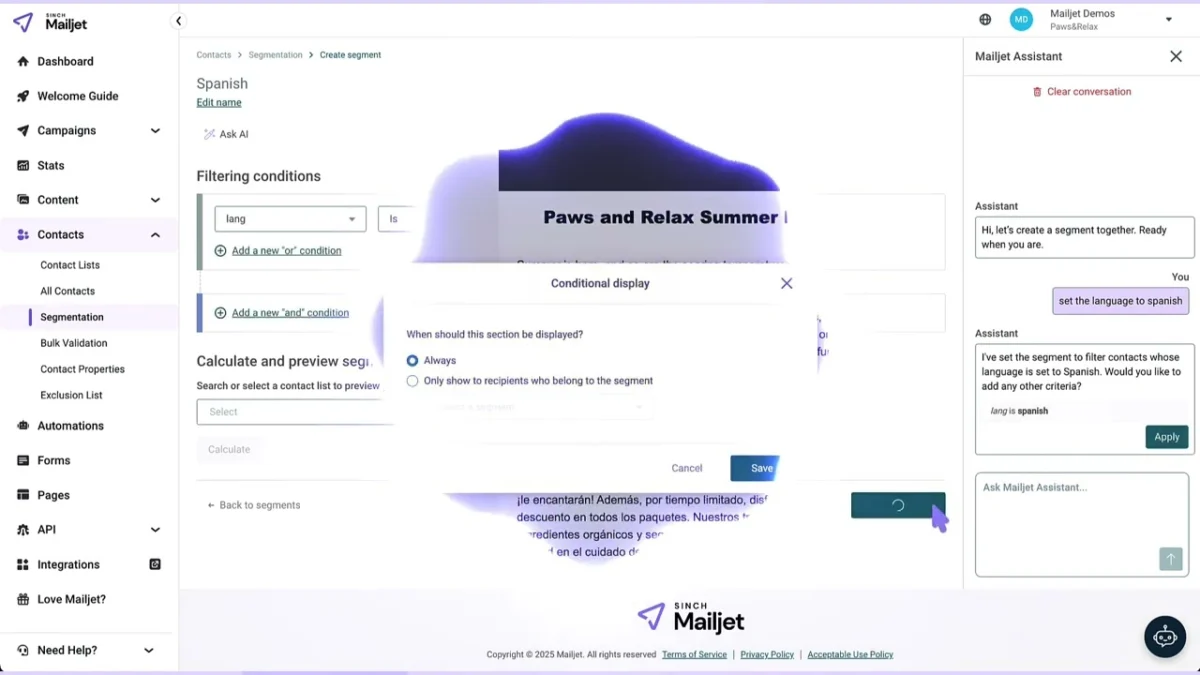
The landscape of email marketing has undergone a profound transformation, with 2024 and 2025 serving as pivotal years that underscored the immutable law of change in digital communications. Inbox providers, responding to an increasingly complex digital environment, rolled out stringent new authentication rules. Concurrently, artificial intelligence (AI) surged into every facet of the email workflow, revolutionizing how campaigns are created, managed, and optimized. These shifts, coupled with rapidly evolving customer expectations, have positioned email on the cusp of a new era in 2026—one characterized by intelligent inboxes, predictive AI, and an unyielding emphasis on trust and authenticity.
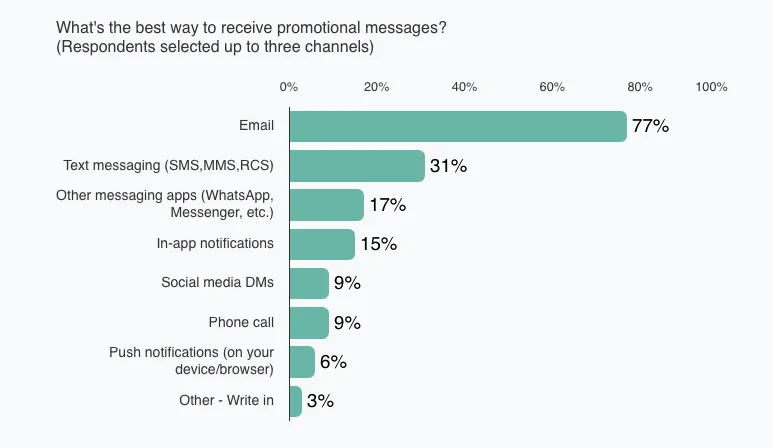
Despite the proliferation of competing communication channels, from instant messaging apps to sophisticated AI assistants, email steadfastly retains its position as one of the most powerful and widely utilized communication channels globally. Projections from Statista indicate that the number of global email users is set to reach an astounding 4.7 to 4.8 billion by the close of 2026. This monumental user base is expected to generate approximately 392 billion emails daily, solidifying email’s enduring relevance. Further reinforcing this sentiment, Sinch’s "The State of Customer Communications Report," published earlier this year, revealed that nearly 77% of consumers globally prefer email for receiving promotional messages from brands, outperforming all other channels. This data underscores that while the inbox itself is evolving in response to consumer needs and technological advancements, its fundamental role in brand-customer communication remains unchallenged. Marketers and senders who proactively adapt to these evolving dynamics are poised to lead in this new landscape.
The Catalysts of Change: A 2024-2025 Review
The foundational shifts leading into 2026 are not sudden occurrences but rather the culmination of trends and regulatory actions over the preceding years. The period of 2024-2025 witnessed a dramatic acceleration in several key areas. Privacy regulations, such as the European Union’s General Data Protection Regulation (GDPR) and California’s Consumer Privacy Act (CCPA), had already instilled a greater focus on consent and data handling. However, Apple’s Mail Privacy Protection (MPP) in 2021 began to fundamentally alter how marketers could track email opens, making traditional open rates less reliable. This set a precedent for a privacy-first approach that major inbox providers would soon follow.
In 2024, Google and Yahoo introduced landmark requirements for bulk email senders, making email authentication (SPF, DKIM, DMARC) mandatory, establishing clear spam complaint thresholds, and requiring easy one-click unsubscribe options. These rules were not merely suggestions but enforceable standards designed to curb spam, prevent phishing, and enhance user experience. The implication was clear: brands failing to meet these technical requirements would face severe deliverability issues, including messages being sent directly to spam folders or blocked outright. This era also saw the rapid integration of AI across various marketing functions, from predictive analytics for audience segmentation to generative AI for crafting compelling email copy and subject lines. The initial "AI explosion" in 2024-2025 was characterized by experimentation and the quest for efficiency, laying the groundwork for AI-driven personalization to become a standard expectation by 2026. These intertwined developments have reshaped the operational blueprint for email marketers, demanding greater technical rigor, ethical data practices, and sophisticated engagement strategies.
Mailjet’s Seven Key Predictions for 2026 and Their Implications
Drawing upon extensive industry data, sender trends, and broader communication insights, Mailjet has outlined seven critical predictions for email marketing in 2026. These predictions offer a roadmap for brands to not only navigate but thrive in this evolving environment.

1. The Rise of Intelligent Inboxes: Relevance as the New Deliverability
The era of generic, one-size-fits-all email campaigns is decisively over. For years, marketers relied on basic personalization tactics like using a subscriber’s first name or segmenting by broad demographic categories. While a step forward, this approach is insufficient for today’s crowded inboxes and high customer expectations. By 2026, major inbox providers like Google and Apple will wield even greater influence as "intelligent gatekeepers." Their advanced AI systems will increasingly determine message priority, automatically summarize content, and categorize emails into primary or secondary tabs. This means the battle for visibility in the primary inbox is intensifying, with the rules of engagement continually shifting.
To secure and maintain a coveted spot in the inbox, marketers must deliver demonstrable value. This necessitates moving beyond superficial promotions and leveraging sophisticated data analytics to create truly relevant experiences that anticipate customer needs. Sinch research highlights that 42% of consumers expect personalized promotions, and nearly 30% anticipate brands using their purchase history to tailor more relevant messages. For marketers, this translates into a crucial paradigm shift: relevance is now intrinsically linked to deliverability. If a message lacks behavioral targeting, timeliness, or genuine utility, it risks being filtered into less visible tabs or outright ignored. The implication is that engagement depth—measured by clicks, conversions, and replies—will significantly outweigh raw volume as a key performance indicator.
2. AI-Driven Personalization: From Innovation to Expectation
Mailjet’s 2025 report underscored the growing reliance on AI to accelerate campaign production, refine segmentation, and personalize content. In 2026, these AI capabilities will transition from innovative differentiators to mainstream expectations. The integration of conversational AI tools, exemplified by Mailjet’s new open-source MCP Server, allows marketers to connect directly and securely to email APIs. This innovation eliminates the need for manual data exports or complex scripting, enabling marketers to query campaign performance and audience insights using natural language. For instance, questions like "Show me the open and click-through rates of our last campaign by country" or "Which segment had the highest unsubscribe rate last month?" can yield immediate, actionable answers.
AI’s role extends to hyper-specific performance analysis, allowing deep dives into metrics beyond surface-level open rates, such as bounce rates for specific email domains or engagement by geographic region. Automated content and template management will see AI suggesting optimal designs based on past performance, while workflow monitoring and optimization will enable real-time tracking of automated email sequences to identify drop-off points. This evolution signifies a move towards smarter, tailor-made emails for every recipient, fundamentally changing how campaigns are strategized and executed. The implication for marketers is the urgent need to audit their technology stacks to ensure compatibility with advanced behavioral segmentation, dynamic content generation, and AI optimization tools.
3. Authentication and Trust: The Non-Negotiable Foundation
The stricter inbox rules implemented by Google, Yahoo, and other major providers have elevated email authentication from a best practice to a bare minimum, particularly for bulk senders in 2025-2026. Protocols like SPF (Sender Policy Framework), DKIM (DomainKeys Identified Mail), and DMARC (Domain-based Message Authentication, Reporting & Conformance) now form the essential identity layer that validates sender legitimacy and ensures message integrity. Despite their critical importance, adoption rates remain uneven. Mailjet’s "Road to Inbox 2025" report revealed that while 66.2% of senders use both SPF and DKIM, over 25% are uncertain about their authentication status, and only 53.8% have a DMARC policy, with many at the non-enforcing "p=none" level. This gap represents a significant risk as inbox providers continue to tighten requirements.
In 2026, authentication will not merely determine inbox delivery; it will increasingly influence how messages are ranked, filtered, or flagged. Stronger DMARC enforcement (quarantine/reject policies), consistent authentication across all sending domains, and a robust domain reputation will become baseline expectations. Furthermore, authentication serves as the gateway to enhanced trust signals like BIMI (Brand Indicators for Message Identification), which allows brands to display their official logo directly in the inbox, but only after DMARC is properly enforced. In an era plagued by phishing, spoofing, and growing user skepticism, authenticated identity is no longer a mere technical specification but a core component of brand trust. It also underpins the success of other emerging trends, such as AI-driven personalization and dynamic content, ensuring these advanced experiences reliably reach the intended recipient.
4. Email as an Omnichannel Orchestrator
By 2026, email will be fully integrated into a broader, unified omnichannel marketing strategy, moving beyond its traditional siloed operation. It will serve as a central node within a web of communication channels, including SMS, chat/messaging platforms, and in-app notifications. By positioning email as the strategic backbone, brands can establish core touchpoints and then build out complementary interactions across other channels. This integrated approach is crucial for enhancing engagement and optimizing the customer experience. When channels are seamlessly connected, and data flows freely between them—for example, a user clicking an email link, browsing a website, and then receiving a timely SMS or in-app reminder—companies transition from merely pushing messages to orchestrating cohesive and responsive customer journeys.
This paradigm shift demands marketers adopt a "customer-journey-first" mindset, moving away from "email-first" thinking. Email triggers, such as welcome messages, promotional newsletters, and transactional notifications, should be viewed as integral legs of a broader journey. SMS or push notifications can layer in time-sensitive alerts, while chat or in-app messaging can provide support or re-engagement opportunities. Crucially, customer data—including preferences, behaviors, and status—must be shared across all channels to ensure every interaction is informed and personalized. The implication is a focus on quality over quantity, building programs that deliver fewer but significantly more impactful messages tailored to behavior, lifecycle stage, and customer intent.
5. Sustainable and Accessible Design: Lighter, Greener, Interactive
Email design in 2026 will prioritize lighter, faster, and more sustainable experiences. Heavy emails laden with oversized images or bloated HTML not only slow load times and impede deliverability but also create friction for mobile users, who constitute a significant portion of email recipients. The emerging best practice embraces a minimalist, mobile-first approach: optimized image sizes, streamlined code, balanced text-to-image ratios, and layouts that prioritize clarity over superfluous decoration. These leaner builds enhance rendering across diverse inbox providers and devices while also reducing the environmental footprint associated with each send—a growing imperative for brands committed to conscious operation.
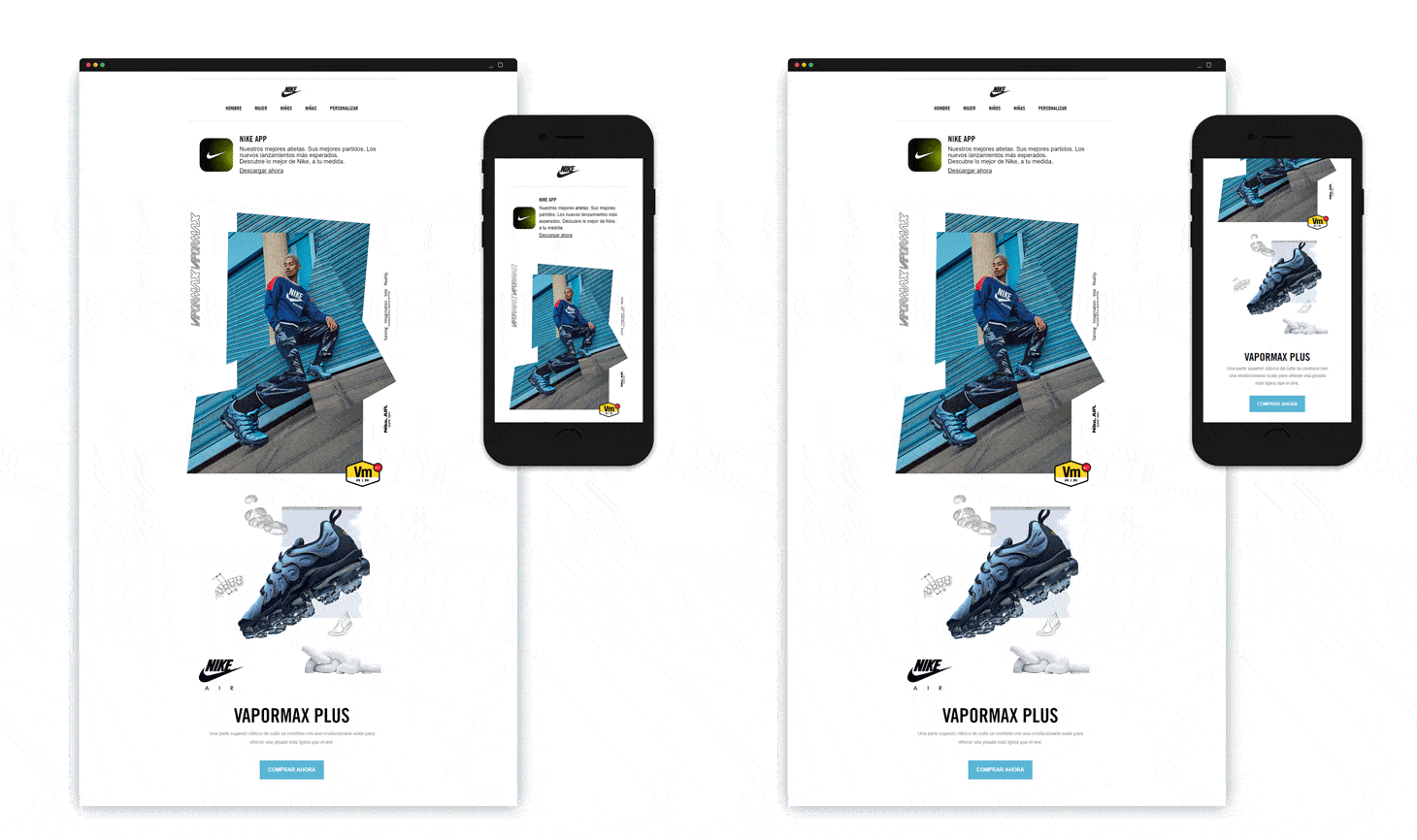
Sustainability is increasingly intertwined with accessibility. Lighter emails inherently offer greater accessibility, but 2026 design trends will push further, ensuring strong color contrast, meaningful alt-text for images, clear structural hierarchy, and reliable dark-mode support. This focus is partly driven by regulations like the European Accessibility Act (EAA), which came into effect in June 2025, mandating businesses remove digital accessibility barriers. Beyond compliance, it represents a commitment to inclusive design, making each message usable for every subscriber, regardless of assistive technology use, bandwidth limitations, or device type. Cleaner design and optimized assets reduce cognitive load, ensure rapid loading, and meet the rising expectations of both users and mailbox providers.
6. Shifting Metrics: Beyond the Open Rate
The reliability of open rates as a primary KPI has been diminishing due to privacy enhancements like Apple MPP, and intelligent inboxes will accelerate this trend. Consequently, marketers are shifting their focus to more tangible and measurable actions: click-through rates, time spent reading, and downstream conversions. These metrics offer a more accurate reflection of an email’s value delivery and directly align with how mailbox providers evaluate sender reputation, making them vital for both performance reporting and ongoing deliverability.
A significant shift in 2026 will be the increased importance of quality-of-engagement metrics, which quantify genuine subscriber satisfaction. Positive signals such as consistent engagement, safe-listing of senders, and active folder movement will carry greater weight, while negative signals—rapid deletions, ignore patterns, and spam complaints—will quickly degrade sender reputation. Jonathan Campbell, VP Product Messaging at Sinch, aptly summarizes this transition: "We must move away from the traditional marketing math of ‘send a million messages and hope that 10% get opened’. This transactional view must be replaced by relationship building through valuable, prompt-based discussion."
Finally, KPIs related to list health and infrastructure reliability are becoming core business indicators, not mere technical afterthoughts. Bounce rates, spam complaint ratios, email authentication pass rates (SPF/DKIM/DMARC), and domain-level reputation data provide a holistic view of email program health. Advanced senders are incorporating diagnostic KPIs such as inbox placement rates, blocklist monitoring, and segmentation-level engagement performance to gain comprehensive insights into how mailbox providers perceive their programs. Rebuilding dashboards to prioritize actionable engagement and conversion metrics over vanity metrics like open rates will be crucial for modern email success.
7. Ethical Data Use and Transparent Consent: Defining Brand Reputation
In a saturated inbox environment, earning subscriber trust is more challenging than ever. Consumers are on high alert due to a constant barrage of spam and increasingly sophisticated phishing attempts. This heightened skepticism means even legitimate marketing emails are often met with suspicion. Sinch research indicates that a staggering 53% of consumers have received a legitimate brand email that they initially perceived as fraudulent. This presents a formidable deliverability and engagement hurdle, as untrusted messages are unlikely to be opened.
By 2026, the most successful email programs will visibly embed trust into every interaction. The focus will shift from simply reaching the inbox to unequivocally proving legitimacy. Brands must provide instant, visual proof of authenticity, moving beyond the "From" name to leverage sender authentication technologies with a visible impact. This is where BIMI, built upon robust DMARC enforcement, becomes indispensable. BIMI allows brands to display their official logo directly next to their message in the subscriber’s inbox, serving as a verified checkmark that immediately distinguishes legitimate emails from potential fakes. It is the most powerful way to visually assure subscribers of a message’s authenticity. This commitment to ethical data use, transparent consent, and visible authentication will not only boost deliverability but also foster deep customer loyalty, ultimately defining brand reputation in the digital age.
Navigating the Future: Actionable Strategies for Marketers
The accelerating pace of change in email marketing can feel overwhelming, but a successful transition to the 2026 landscape does not demand an overnight overhaul. Instead, it calls for a commitment to continuous testing, thoughtful experimentation, and a willingness to innovate. Marketers should prioritize several key strategies:
- Strengthen Authentication: Conduct a thorough audit of all sending domains. Ensure SPF, DKIM, and DMARC are not only implemented but also configured for enforcement (e.g., DMARC policy set to ‘quarantine’ or ‘reject’). Explore BIMI implementation to visibly reinforce brand trust.
- Embrace AI for Personalization and Insights: Integrate AI tools into your workflow for hyper-segmentation, dynamic content generation, and sophisticated performance analysis. Focus on using AI to understand customer behavior and deliver truly relevant experiences, moving beyond basic automation.
- Adopt an Omnichannel Mindset: Map customer journeys across all touchpoints—email, SMS, app, web. Ensure consistent messaging and seamless transitions between channels, using email as a central orchestrator.
- Optimize for Sustainability and Accessibility: Prioritize lean, mobile-first email designs with optimized images and streamlined code. Ensure all emails meet accessibility standards (e.g., strong contrast, alt-text, dark mode compatibility) to broaden reach and demonstrate social responsibility.
- Re-evaluate KPIs: Shift focus from unreliable open rates to action-oriented metrics like click-through rates, conversion rates, and time spent engaging. Monitor sender reputation metrics (bounce rates, spam complaints, authentication pass rates) as core business indicators.
- Champion Ethical Data Practices: Maintain transparent consent processes and ensure all data usage adheres to privacy regulations. Leverage visible trust signals like BIMI to reassure subscribers of your legitimacy.
Conclusion: The Enduring Power of a Trusted Channel
The future of email marketing in 2026 is one of increased sophistication, heightened scrutiny, and immense opportunity. While the digital landscape continues to evolve, the fundamental power of email as a direct, personal, and highly effective communication channel remains undiminished. The changes sweeping through the industry—from intelligent inboxes and pervasive AI to stringent authentication requirements and a renewed focus on trust—are ultimately aimed at enhancing the user experience and fostering more meaningful brand-customer relationships.
With the right tools and trusted expertise, navigating these trends becomes a manageable and rewarding endeavor. Platforms like Sinch Mailjet offer collaborative, creator-friendly environments designed to empower marketers to build accessible, high-impact templates, responsibly manage audience data, and optimize performance with unparalleled clarity. Whether the goal is to enhance deliverability, integrate AI-powered workflows, or scale omnichannel journeys, the emphasis will be on crafting campaigns that genuinely resonate and reliably reach the inbox. The path forward for email marketers in 2026 is clear: adapt, innovate, and prioritize trust to unlock the full potential of this enduring and powerful communication medium.









