

In the rapidly evolving landscape of digital communication, the meticulously crafted email campaign, with its sharp copy and snappy design, remains a cornerstone of marketing strategy. However, the efficacy of even the most compelling message is rendered moot if it never reaches its intended recipient’s inbox. This fundamental challenge underscores the paramount importance of robust email infrastructure, the unseen architecture that dictates whether an email lands successfully or is consigned to the digital oblivion of a spam folder. Getting this foundational technical plumbing right is not a glamorous task, but it is increasingly the critical differentiator between a campaign that drives measurable results and one that fails to launch.
The modern marketer operates in an environment where email communication is both ubiquitous and under constant scrutiny. With billions of emails exchanged daily, the internet’s gatekeepers – the major mailbox providers like Gmail, Yahoo, and Microsoft – have implemented increasingly sophisticated systems to protect their users from unsolicited mail, phishing attempts, and malicious content. This protective posture means that businesses, regardless of their size or industry, must adhere to stringent technical standards to ensure their legitimate communications are recognized and delivered. Failure to do so can result in significant financial losses, reputational damage, and a complete breakdown of customer engagement. The era where simply hitting “send” sufficed has long passed; today, a strategic, technically sound approach to email infrastructure is non-negotiable.
The Hidden Architecture of Email Success
At its core, email infrastructure encompasses the entire technical ecosystem responsible for the transmission, routing, and ultimate delivery of electronic mail. This sophisticated system includes several interconnected components: your designated sending domain(s), the network of servers that facilitate message delivery, the array of security protocols designed to verify sender legitimacy, and the comprehensive suite of tools employed to monitor the entire process. Without a meticulously constructed and well-maintained foundation in these areas, even the most exquisitely designed and relevant email is unlikely to fulfill its purpose.
Historically, the focus of email marketing often leaned heavily on content creation, audience segmentation, and campaign timing. While these elements remain vital, the underlying technical infrastructure has emerged as the silent arbiter of success. Analogous to a city’s water supply system, where pristine water at the source is useless without functional pipes to deliver it to homes, a brilliant email campaign is worthless if the delivery mechanisms are flawed. The intricate interplay of DNS records, server configurations, and authentication checks forms this crucial “plumbing,” determining the fate of every message.
A Shifting Landscape: The Evolution of Email Security and Deliverability
The journey of email deliverability has been a dynamic one, shaped by an ongoing battle between legitimate senders and malicious actors. In the early days of the internet, email protocols were relatively simple, and the volume of unsolicited commercial email, or spam, exploded in the late 1990s and early 2000s. This surge necessitated a robust response from internet service providers (ISPs) and mailbox providers (MBPs), leading to the development of increasingly complex filtering algorithms and security standards.
Chronology of Key Authentication Standards:
- Early 2000s – Sender Policy Framework (SPF): SPF was one of the first widely adopted email authentication methods. It allows a domain owner to specify which mail servers are authorized to send email on behalf of their domain. This is done by publishing an SPF record in the domain’s DNS.
- Mid-2000s – DomainKeys Identified Mail (DKIM): DKIM provides a method for an organization to associate a domain name with an email message, thereby vouching for its authenticity. It uses cryptographic signatures to verify that an email was indeed sent by an authorized server and that its content has not been tampered with in transit.
- 2012 – Domain-based Message Authentication, Reporting & Conformance (DMARC): DMARC emerged as a crucial layer built upon SPF and DKIM. It allows domain owners to instruct MBPs on how to handle emails that fail SPF or DKIM authentication (e.g., quarantine them, reject them) and provides a reporting mechanism for senders to gain insights into their email streams.
- Late 2023/Early 2024 – Stricter Enforcement by Major MBPs: A significant shift occurred with announcements from industry giants like Google (Gmail) and Yahoo, mandating DMARC, SPF, and DKIM compliance for bulk senders (typically those sending over 5,000 emails per day to Gmail/Yahoo addresses). These new requirements, which began rolling out in early 2024, signaled a definitive move from authentication being a “best practice” to an absolute “requirement.” Failure to comply now results in direct email blocking, not just reduced deliverability.
Mailbox providers have unequivocally stated their primary objective: to protect their users from unwanted and potentially harmful emails, thereby ensuring a positive and secure inbox experience. This proactive stance means that any sender, regardless of their previous reputation, must now demonstrate verifiable legitimacy. Industry experts emphasize that this tightening of regulations is not a temporary trend but a permanent evolution in email security, setting a new baseline for acceptable sending practices.
Building a Resilient Email Foundation: Key Strategic Pillars

Establishing a robust email infrastructure is a multifaceted endeavor that requires careful planning, technical precision, and ongoing vigilance. The following strategic pillars outline the essential steps to build and maintain an email ecosystem that fosters optimal deliverability.
1. Choosing the Right Email Service Provider (ESP)
The Email Service Provider (ESP) functions as the central engine of an entire email program. Selecting an ESP is a decision that extends far beyond just feature sets; it profoundly impacts deliverability, scalability, and the long-term success of email marketing efforts. A mismatch can lead to costly mistakes, compromised sender reputation, and wasted resources.
When evaluating an ESP, organizations must delve into critical questions:
- Deliverability Reputation: Does the ESP itself maintain a strong reputation with major mailbox providers? Some ESPs are better at managing their shared IP pools and ensuring client compliance, which directly benefits all their users.
- Authentication Support: Does the platform fully support and facilitate the setup of SPF, DKIM, and DMARC for dedicated domains? Are there clear guides and support staff available to assist with these technical configurations?
- Scalability: Can the ESP handle projected email volumes as the business grows, without compromising performance or deliverability?
- Analytics and Reporting: What kind of insights does the ESP provide into deliverability metrics (bounce rates, spam complaint rates, open rates, click-through rates)? Does it integrate with external monitoring tools?
- Compliance and Security: Does the ESP adhere to global privacy regulations (like GDPR, CCPA) and offer robust security features to protect sender and recipient data?
- Customer Support: Is there dedicated support for deliverability issues, ideally with experienced deliverability consultants?
According to various industry reports, the choice of ESP can significantly influence deliverability rates, with some platforms consistently outperforming others due to their infrastructure, IP management, and adherence to best practices. A strong ESP acts as a partner in deliverability, providing the necessary tools and guidance to navigate the complex email ecosystem.
2. Establishing a Dedicated Sending Domain Strategy
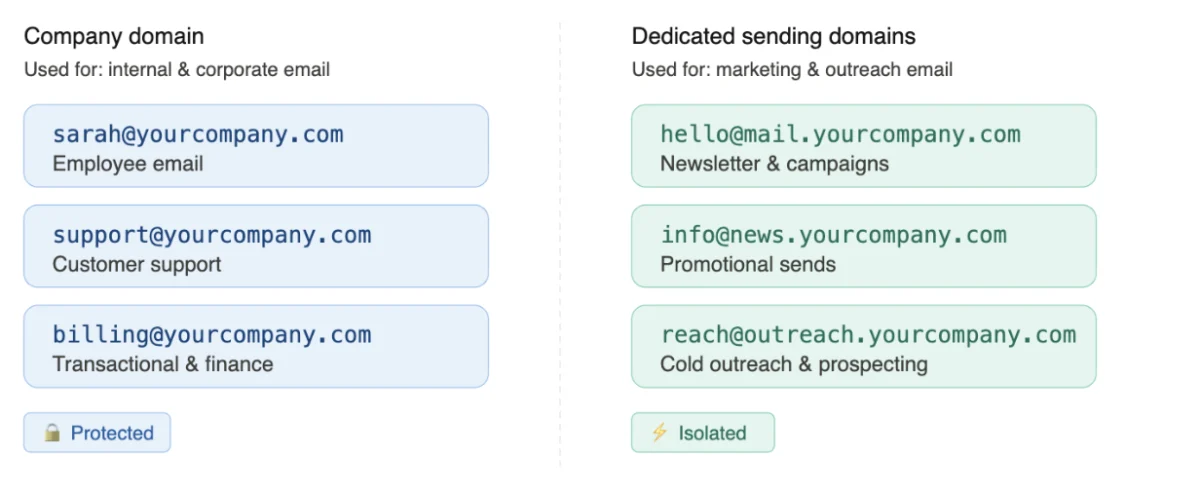
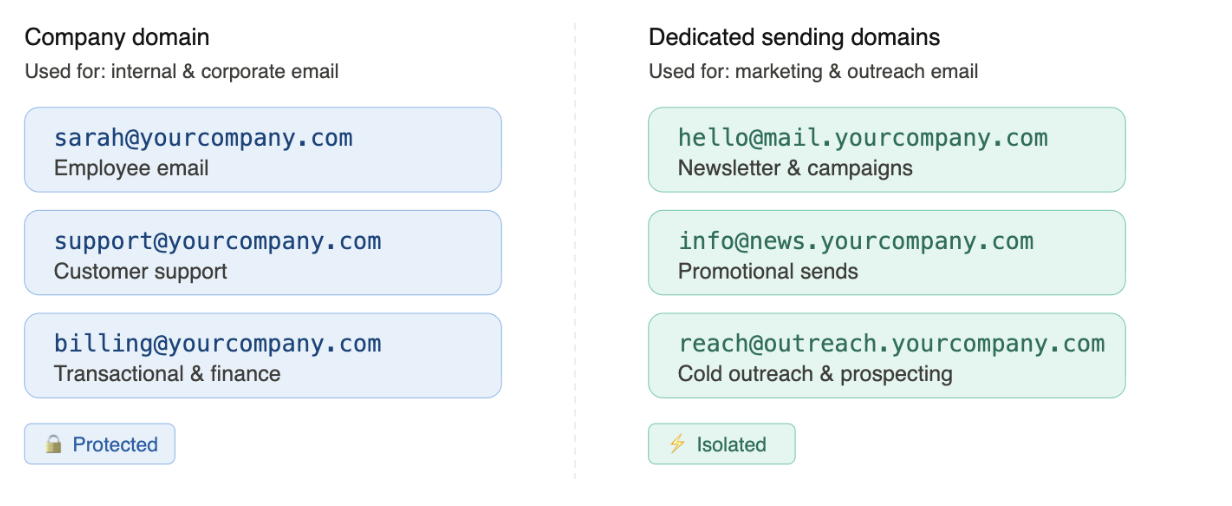
A fundamental principle of sound email infrastructure is the strategic separation of marketing email traffic from core corporate communications. This means refraining from sending marketing emails from the primary company domain. The rationale is simple yet critical: if an issue arises with marketing emails – such as an unexpected spike in spam complaints or a temporary blocklisting – you do not want that incident to adversely affect the domain that underpins your entire business operations (e.g., employee emails, transactional notifications, website functionality).
Instead, the recommended approach is to establish a dedicated domain or a specific subdomain exclusively for outreach activities. For example, if a company’s main domain is yourcompany.com, it should be reserved strictly for business-critical email. Marketing sends could then originate from marketing.yourcompany.com, news.yourcompany.com, or even an entirely separate domain like yourcompany-updates.com. This strategy serves several vital purposes:
- Reputation Isolation: It creates an isolated environment where sender reputation can be carefully built and managed, without risking the integrity of the main corporate domain.
- Risk Mitigation: In the event of a deliverability issue, the impact is contained to the dedicated sending domain, preventing wider business disruption.
- Clear Identification: It helps mailbox providers distinguish between different types of email traffic originating from the same organization.
This separation keeps corporate email pristine and provides a controlled environment to meticulously cultivate a positive sender reputation from the ground up.
3. Mastering Authentication Protocols: Non-Negotiable Requirements
Email authentication has transitioned from a recommended best practice to an absolute requirement. As highlighted by the recent mandates from major mailbox providers like Gmail, Yahoo, and Microsoft, authentication is no longer optional for bulk senders. Skipping this crucial step will not merely result in underperforming campaigns; it will almost certainly lead to emails being blocked outright before they even reach a recipient’s spam folder.
Implementing these protocols typically involves the expertise of an IT team or domain administrator. The three core authentication protocols are:
- Sender Policy Framework (SPF): SPF validates the sender’s identity by checking if the sending server’s IP address is authorized to send emails on behalf of the domain listed in the email’s “Return-Path” header. An SPF record is a TXT record added to the domain’s DNS, listing all authorized sending IP addresses and mail servers.
- DomainKeys Identified Mail (DKIM): DKIM adds a digital signature to the email header. This signature is encrypted and can be verified by the receiving server using a public key published in the sender’s DNS. DKIM ensures that the email content has not been altered in transit and that the email truly originated from the signed domain.
- Domain-based Message Authentication, Reporting & Conformance (DMARC): DMARC builds upon SPF and DKIM by providing a framework for domain owners to specify their email authentication policies and receive reports on email authentication failures. A DMARC record, also a TXT record in DNS, instructs receiving mail servers on how to handle emails that fail SPF or DKIM checks (e.g., “p=none” for monitoring, “p=quarantine” to send to spam, or “p=reject” to block entirely). It also provides valuable aggregate reports that help senders identify and troubleshoot authentication issues.
These protocols act as digital passports and security checks for your emails, proving to receiving servers that your messages are legitimate and have not been spoofed or tampered with. Without them, your emails lack credibility and are treated with extreme suspicion, often leading to immediate rejection.
4. The Art of Domain Warm-up: Cultivating Trust
A brand-new sending domain or subdomain starts with zero reputation in the eyes of mailbox providers. Attempting to send a large volume of emails immediately from a fresh domain is one of the quickest ways to trigger spam filters and be flagged as a malicious sender. Mailbox providers interpret such behavior as characteristic of spammers and will quickly block or severely throttle your sends.
Instead, a critical phase known as “domain warm-up” is required. This involves gradually building a positive sender reputation over time by progressively increasing email volume. A solid warm-up approach typically follows these guidelines:
- Start Small: Begin with a modest volume, perhaps 500-1,000 emails per day during the initial few days.
- Engaged Audience First: Prioritize sending to your most engaged contacts – individuals who have recently opened, clicked, or actively interacted with your emails. This helps demonstrate to MBPs that your emails are valued.
- Gradual Increase: Every couple of days, incrementally double your sending volume, provided that key metrics such as bounce rates and spam complaint rates remain exceptionally low.
- Monitor and Adjust: If bounce rates spike or spam complaints increase, immediately pull back on volume and investigate the underlying cause before attempting to increase sends again.
This meticulous process is not measured in days but in weeks, often taking 4-8 weeks to achieve a fully warmed-up status. While it requires patience, the positive sender reputation forged through a careful warm-up period is an indispensable foundation upon which all future email marketing success rests. It signals to mailbox providers that you are a legitimate sender sending desired content, thereby maximizing inbox placement.
5. Vigilant Monitoring: The Ongoing Battle for the Inbox
Herein lies a truth that often surprises many senders: an email can be technically reported as “delivered” by an ESP, yet still never actually reach the recipient’s primary inbox. It might land in a spam folder, a promotions tab, or even be silently dropped by the receiving server. Data from sources like Validity’s 2026 Email Deliverability Benchmark report reveals a sobering reality: approximately 1 in 7 legitimate, permission-based marketing emails never reach the inbox. This phenomenon underscores why active and continuous monitoring is absolutely crucial.
Effective deliverability monitoring involves a multi-faceted approach:
- Spam Complaint Rate: This is one of the most critical metrics. Aim to keep your spam complaint rate well below 0.3%, with an ideal target of 0.1% or less. High complaint rates are a strong indicator to MBPs that your emails are unwanted, leading to reputation damage and blocking.
- Bounce Rate: Monitor both soft bounces (temporary delivery failures) and hard bounces (permanent failures, indicating an invalid address). High hard bounce rates signal poor list hygiene and can negatively impact sender reputation.
- Blocklisting Status: Regularly check if your sending IP addresses or domains have been added to any major public or private blocklists. Being listed means many MBPs will automatically reject your emails.
- Engagement Metrics: Beyond delivery, track open rates, click-through rates, and conversion rates. High engagement signals to MBPs that your content is valuable and desired.
- Feedback Loops (FBLs): Sign up for free feedback loops offered by major providers such as Google Postmaster Tools, Microsoft SNDS (Smart Network Data Services), and Yahoo Sender Hub. These tools provide invaluable insights into how these dominant inbox providers perceive your sending reputation, including aggregated data on spam complaints, reputation scores, and deliverability issues. They offer a window into the actual inbox placement, not just whether your emails were accepted at the gateway.
Proactive monitoring allows marketers to identify emerging issues, diagnose root causes, and take corrective action before minor problems escalate into major deliverability crises. It transforms the act of sending emails into an ongoing, data-driven optimization process.
The Broader Implications of Deliverability Excellence
The investment in robust email infrastructure and vigilant deliverability management yields significant dividends across various facets of a business.
Financial Impact: The most direct implication of poor deliverability is lost revenue. Email marketing consistently boasts one of the highest returns on investment (ROI) in digital marketing, with estimates often placing it around $42 for every $1 spent, according to studies by organizations like the Direct Marketing Association (DMA) and Litmus. If a significant percentage of emails fail to reach the inbox, this ROI plummets, resulting in wasted marketing spend, decreased conversions, and higher customer acquisition costs. Conversely, optimized deliverability ensures that every dollar invested in content and strategy has the maximum chance of generating returns.
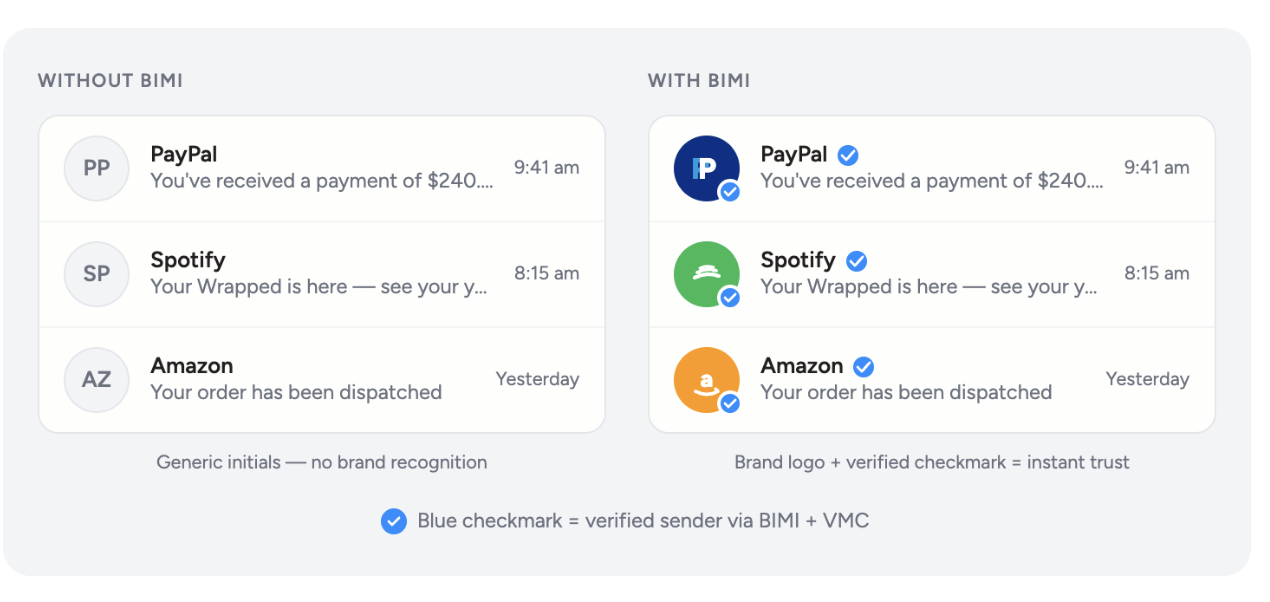
Brand Reputation: A consistent presence in the inbox cultivates trust and reinforces brand professionalism. When emails frequently land in spam folders or are blocked, recipients may perceive the sender as unprofessional, untrustworthy, or even a spammer. This erodes customer loyalty, diminishes brand equity, and makes future communication efforts even more challenging. A strong deliverability record, however, signifies a responsible and respected sender, enhancing overall brand perception.
Competitive Advantage: In a crowded digital marketplace, brands that prioritize and master email deliverability gain a distinct competitive edge. They are more likely to reach their target audience consistently, foster deeper relationships, and drive superior engagement compared to competitors who neglect their email infrastructure. This advantage translates into better customer retention, higher lifetime value, and a more effective communication channel.
Regulatory Compliance: The global landscape of email communication is also governed by increasingly strict privacy and anti-spam regulations, such as the CAN-SPAM Act in the U.S., GDPR in the EU, and CASL in Canada. While infrastructure directly addresses technical deliverability, adhering to best practices in list hygiene and consent management, which often correlate with good deliverability, also helps ensure compliance with these legal frameworks, mitigating risks of hefty fines and legal repercussions.
Conclusion: The Indispensable Investment
Setting up and maintaining solid email infrastructure may not be the most thrilling aspect of email marketing, but it is unequivocally the most critical. As authentication requirements continue to tighten, and mailbox provider algorithms become ever more sophisticated, the chasm between senders who strategically invest in their infrastructure and those who neglect it is widening at an accelerated pace. The days of treating deliverability as an afterthought are definitively over.
For businesses aiming to maximize their email marketing effectiveness, foster strong customer relationships, and protect their brand reputation, a commitment to foundational email infrastructure is no longer optional; it is an indispensable strategic investment. By starting with the right technical foundation, patiently cultivating sender reputation through meticulous warm-up processes, and maintaining a vigilant eye on deliverability metrics, organizations position themselves optimally to consistently reach their intended audience, ensuring their messages resonate and drive tangible business outcomes. The future of successful email communication belongs to those who prioritize the pipes as much as the content.








