rifanmuazin
The TikTok algorithm, a sophisticated recommendation engine, continues to be the primary driver of content discovery and user engagement on the globally dominant short-form video platform. As of 2026, understanding its intricate mechanisms is paramount for creators, brands, and marketers aiming to enhance their visibility and foster genuine connections within its vast ecosystem. This personalized system meticulously analyzes user behavior and content attributes to curate a unique “For You Page” (FYP) for each of its over one billion active users, making it a critical strategic asset in the digital landscape.
Understanding the Core Algorithmic Mechanism
At its foundation, the TikTok algorithm is designed to maximize user satisfaction by presenting a continuous stream of videos it predicts individuals will find most engaging. Unlike traditional social media feeds that prioritize content from followed accounts, the FYP largely features content from accounts a user does not follow, fostering an environment ripe for viral discovery. This highly adaptive feed evolves with a user’s changing preferences, demonstrating the algorithm’s continuous learning capacity.

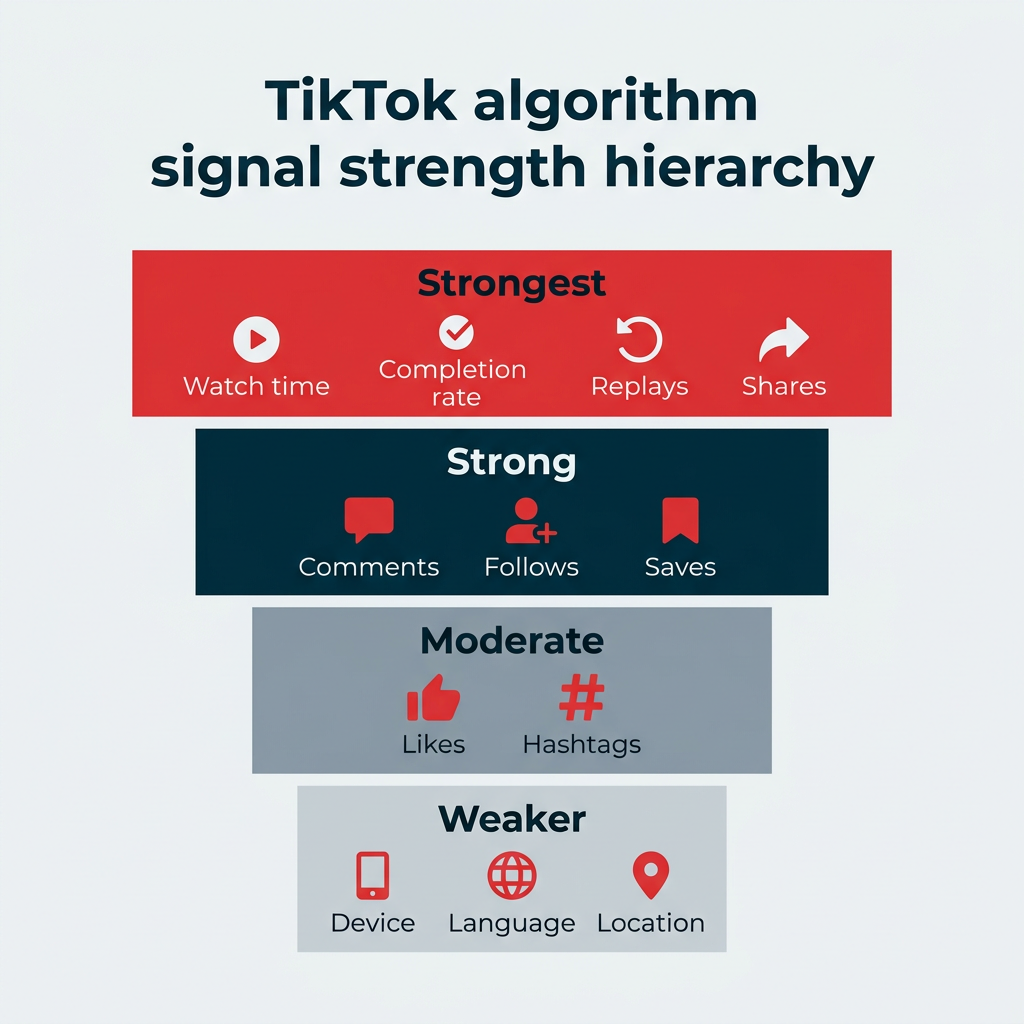
TikTok’s official documentation affirms its reliance on “recommender systems to offer you a personalized experience,” based on “preferences as expressed through interactions on TikTok, such as following an account or liking a post.” In 2026, the algorithm continues to weigh three primary categories of signals, with user engagement remaining the most significant determinant of content ranking.
-
User Interactions (High Weight): These are the most influential signals, directly reflecting a user’s active engagement with content. Critical metrics include watch time (how long a user watches a video), completion rate (whether a user watches a video to the end, or even replays it), likes, shares, comments, and “Not Interested” clicks. High watch time and completion rates are particularly strong indicators of compelling content, signaling to the algorithm that the video should be widely distributed. Conversely, negative signals like skipping or marking content as “Not Interested” inform the algorithm to reduce exposure to similar material.
-
Video Information (Medium Weight): This category encompasses details intrinsic to the content itself, which the algorithm uses for categorization and matching. Key elements include captions, hashtags, trending sounds, popular effects, and alignment with trending topics. Crucially, TikTok’s advanced AI capabilities extend beyond metadata; the algorithm can analyze on-screen text and spoken words within a video, allowing it to discern content themes and relevance even without explicit tags. This underscores the importance of a holistic approach to content optimization.
-
User Information (Low Weight): While less impactful than direct interactions, these background settings provide foundational context for content delivery. Factors include device type, language preferences, geographical location, account settings, and time zone. These settings primarily ensure a smooth user experience and localized content relevance, but their influence on content ranking is secondary to engagement-driven signals.

It is important to note that TikTok has not publicly confirmed a specific “point system” for interactions. Instead, it operates on a weighted signal model, where certain actions, such as a full video watch or a share, inherently carry more algorithmic weight than a simple like. The precise weighting remains proprietary and dynamic, necessitating a focus on creating genuinely engaging content rather than attempting to reverse-engineer a static formula.
Evolving Landscape: Key Algorithm Shifts in 2026
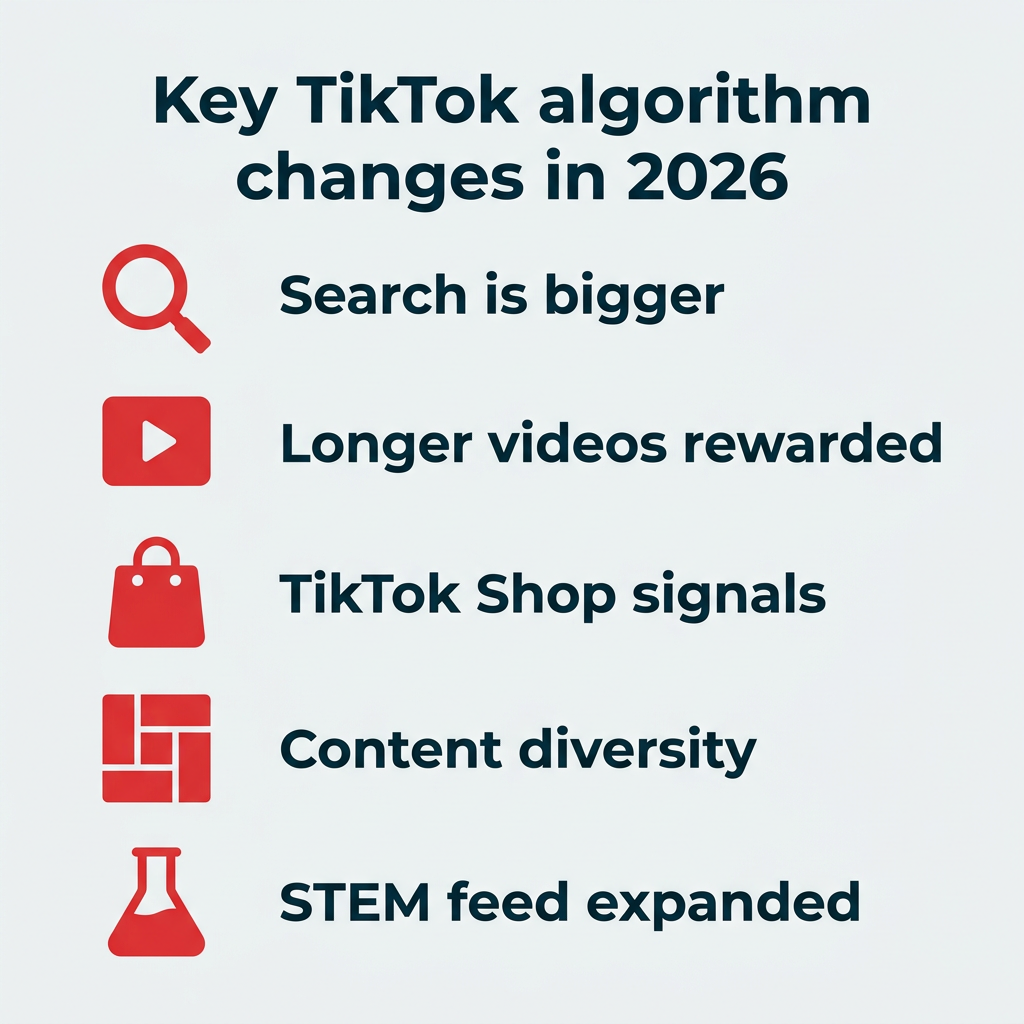
The TikTok algorithm is not static; it undergoes continuous refinement in response to platform growth, technological advancements, and evolving user behavior. For enterprise marketers in 2026, several notable shifts warrant close attention:
- Growth of TikTok Search: The platform’s utility as a search engine, particularly among younger demographics, has surged. This means that keyword optimization within captions, voiceovers, and on-screen text now holds significantly more weight for discoverability. Content creators must think like search engine optimizers, anticipating user queries.
- Emphasis on Longer-Form Content: While TikTok originated with short videos, there’s a discernible trend towards rewarding slightly longer, high-quality content that can sustain user attention. Videos exceeding 30 seconds, or even several minutes, are increasingly supported, provided they maintain high completion rates. This reflects a broader industry trend seen across other platforms.
- Integration with TikTok Shop: The expansion of TikTok Shop has led to the algorithm incorporating e-commerce signals. Videos showcasing products, driving purchases, or engaging with shopping features are now likely to receive preferential treatment for users identified as potential buyers. This represents a direct monetization pathway influencing algorithmic distribution.
- Content Diversity and Niche Communities: While viral trends remain important, the algorithm is increasingly adept at identifying and promoting highly niche content to relevant subcultures. This encourages content creators to delve deeper into specific interests, fostering stronger community bonds rather than solely chasing broad appeal.
- Expansion of STEM Feed: TikTok’s dedicated STEM (Science, Technology, Engineering, and Mathematics) feed, aimed at promoting educational content, continues to expand its reach. This initiative provides a unique opportunity for brands in these sectors to gain visibility through informative and engaging content.
These shifts highlight TikTok’s maturation beyond pure entertainment, embracing roles in information discovery, e-commerce, and education, all mediated by its evolving recommendation engine.
Content Restrictions and Brand Safety: What TikTok Won’t Recommend
A critical aspect of navigating the TikTok algorithm involves understanding its “For You Page” (FYP) eligibility standards. Certain types of content are actively suppressed or entirely removed, which is crucial for brand safety and maintaining algorithmic favor. Content deemed ineligible for FYP recommendation, and often harder to find via search, includes:
- Content containing sexually suggestive material: This covers nudity, implied sexual acts, or content designed to be provocative.
- Graphic or violent content: Videos depicting gore, extreme violence, or self-harm are strictly prohibited.
- Hate speech and discrimination: Content promoting prejudice, discrimination, or hate against protected groups.
- Misinformation and harmful falsehoods: Especially regarding public health, elections, or safety.
- Illegal activities or regulated goods: Content promoting drug use, illegal weapons, or the sale of restricted items.
- Dangerous acts or challenges: Videos that could encourage harmful behavior.
- Spam and inauthentic engagement: Artificially inflated views, likes, or repetitive, low-value content.
- Unoriginal content: Re-uploaded videos without significant transformation or value addition, or content clearly watermarked from other platforms.
- Content not suitable for minors: This may be restricted to users over 18, impacting broad discoverability.
Content that violates TikTok’s comprehensive Community Guidelines will be removed, potentially leading to strikes against an account. For enterprise teams, integrating these restrictions into content creation guidelines is essential to prevent inadvertent reach limitations or brand reputation damage. TikTok Analytics provides data on content performance and any violations, enabling creators to file appeals if necessary.
Strategic Optimization for Enhanced Visibility in 2026

For brands and creators seeking to maximize their presence on TikTok, a multi-faceted approach informed by algorithmic insights is crucial.
-
Cultivate Niche Communities: The algorithm rewards content that resonates deeply within specific communities. Identify relevant subcultures (e.g., #BookTok, #CleanTok, #TechTok) through tools like TikTok’s Audience Insights in the Creative Center. Tailor content to these groups, fostering authenticity and loyalty, which in turn boosts engagement and algorithmic amplification. Industry reports indicate that 76% of TikTok users appreciate brands that genuinely participate in special interest groups.
-
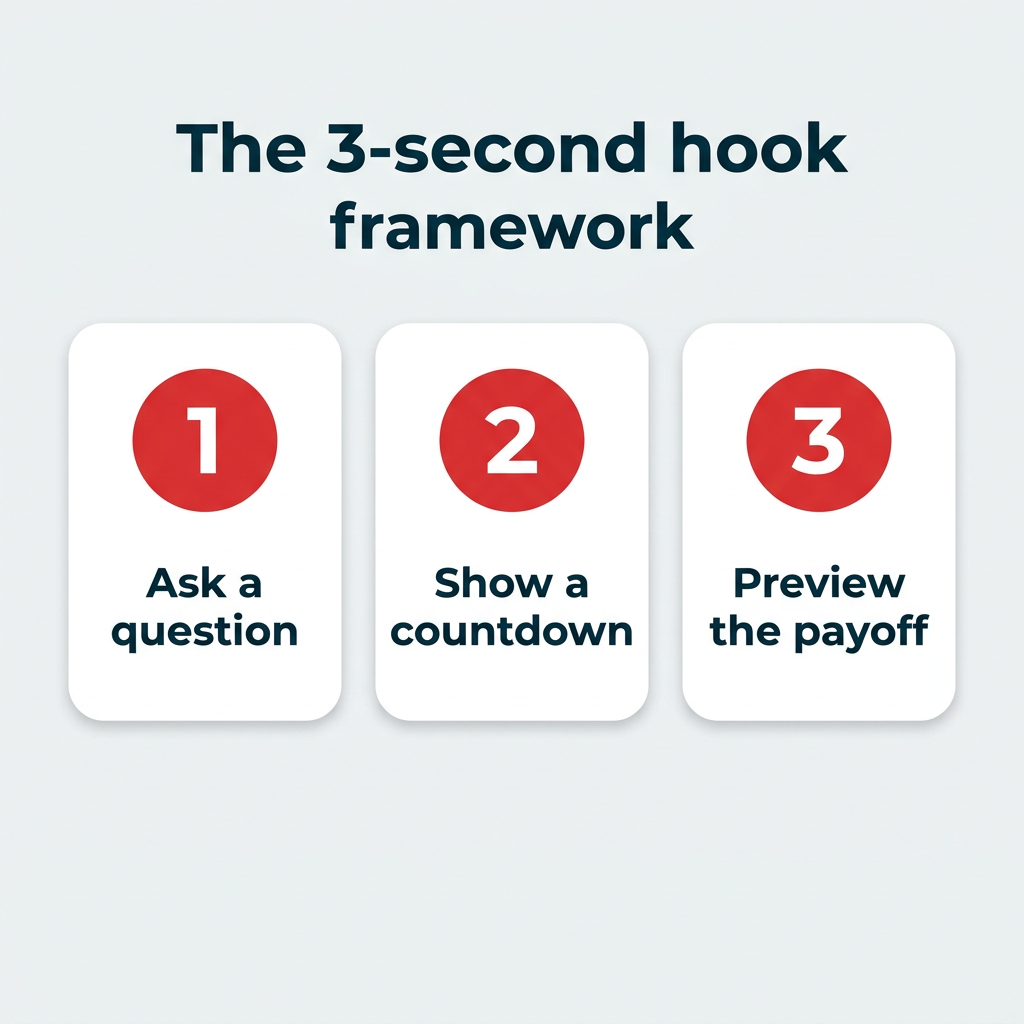
Master the Three-Second Hook: In a fast-scrolling environment, the initial three seconds of a video are paramount. This brief window determines whether a user stops scrolling or moves on. To capture attention and drive crucial watch time, employ compelling visual hooks, ask intriguing questions, present a captivating preview of the video’s payoff, or immediately introduce a problem that the video promises to solve. High completion rates stemming from effective hooks are a strong algorithmic signal.
-
Implement Robust TikTok SEO Strategies: With TikTok’s growing role as a search engine, keyword optimization is indispensable. Utilize relevant keywords not only in captions and hashtags but also in voiceovers and on-screen text overlays. Tools like TikTok’s Creative Center can help identify trending keywords within specific regions and industries. This ensures content is discoverable when users actively search for related topics, providing long-term visibility beyond initial FYP pushes.
-
Prioritize High-Quality, TikTok-First Content: Algorithmic favor is heavily biased towards content that is well-produced, easy to consume, and designed specifically for the platform’s aesthetic. While expensive equipment isn’t necessary—TikTok audiences often prefer an “authentic aesthetic”—clear audio, good lighting, concise editing, and strategic use of on-screen text are critical. Statistics show that high-quality content creators achieve significantly higher watch times and follower growth. Moreover, 79% of TikTok users prefer brands that demonstrate an understanding of native TikTok content creation.
-
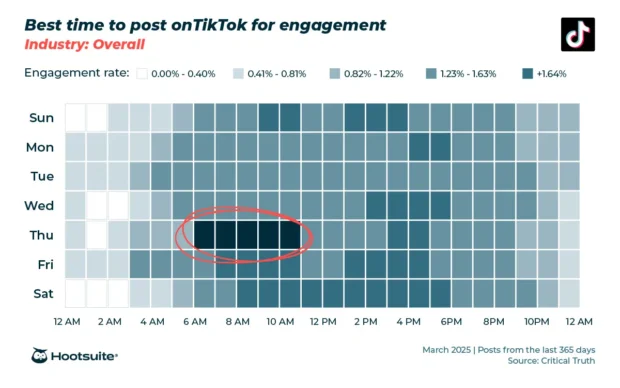
Maintain Consistent Posting and Optimal Timing: Regular posting signals an active and valuable account to the algorithm, contributing to sustained momentum. While daily posting isn’t always necessary, a consistent cadence is. Furthermore, strategic timing is crucial. While general best times exist (e.g., Thursday mornings or Saturday midday for overall engagement), leveraging analytics to identify specific peak activity times for your unique audience is more effective. Tools like Hootsuite’s “Best Time to Publish” feature provide tailored recommendations based on past performance and audience behavior, optimizing for both reach and engagement.
-
Leverage Trending Sounds and Effects: Participating in popular audio trends and using TikTok’s native effects can significantly boost discoverability. The algorithm often favors content that incorporates trending elements, as these align with broader platform activity and user preferences. However, ensure that the use of trends feels authentic and relevant to your brand’s message.
-
Incorporate Interactive Elements: Encourage direct user interaction to generate strong algorithmic signals. Utilize TikTok’s native features such as polls, Q&A stickers, duets, and stitches. Prompt viewers to leave comments, share their opinions, or participate in challenges, directly fueling the engagement metrics the algorithm prioritizes.
-
Include Clear Calls to Action (CTAs): Guide your audience on the next desired step. Whether it’s to “follow for more,” “visit link in bio,” “share with a friend,” or “comment below,” explicit CTAs can convert passive viewers into active participants, thereby increasing valuable interaction signals.
-
Analyze Performance and Iterate: Regular monitoring of TikTok Analytics is indispensable. Track key metrics such as watch time, completion rate, shares, saves, profile views, and follower growth. Identify patterns in content that performs well, discerning which topics, formats, sounds, and posting times yield the strongest algorithmic response. Use these insights to refine and adapt your content strategy continually.
-
Cross-Promotion: While the algorithm primarily drives internal discovery, leveraging other social media platforms to direct traffic to your TikTok content can provide an initial boost. This can increase early views and engagement, signaling to the TikTok algorithm that the content is popular and worthy of wider distribution.
-
Encourage User-Generated Content (UGC): Actively solicit and repost UGC from your community. This not only builds brand loyalty and authenticity but also generates a stream of diverse content that can resonate with various algorithmic segments. UGC often performs well due to its inherent authenticity and relatability.
-
Consider Paid Promotion Strategically: For significant boosts in reach and targeting specific demographics, TikTok Ads can effectively supplement organic strategies. Paid promotion can jumpstart a video’s performance, providing initial engagement that may then be picked up by the organic algorithm.
Broader Implications and Industry Outlook
The sophistication of TikTok’s algorithm in 2026 solidifies its position as a unique and powerful force in digital marketing. Its continued evolution towards deeper personalization, enhanced search functionality, and direct e-commerce integration presents both challenges and unprecedented opportunities for brands. Industry analysts widely agree that adaptability and a commitment to creating platform-native, value-driven content are non-negotiable for success.
Social media strategists emphasize that understanding the algorithm is less about “gaming the system” and more about understanding user psychology and content best practices. The algorithm rewards genuine engagement, making authentic connection and compelling storytelling the ultimate drivers of visibility. As TikTok continues to innovate, remaining agile in content strategy and leveraging its robust analytics will be critical for enterprise teams to maintain and grow their influence on this dynamic platform. The future of TikTok lies in its ability to continuously learn and adapt, and the same must hold true for those seeking to master its algorithmic landscape.