rifanmuazin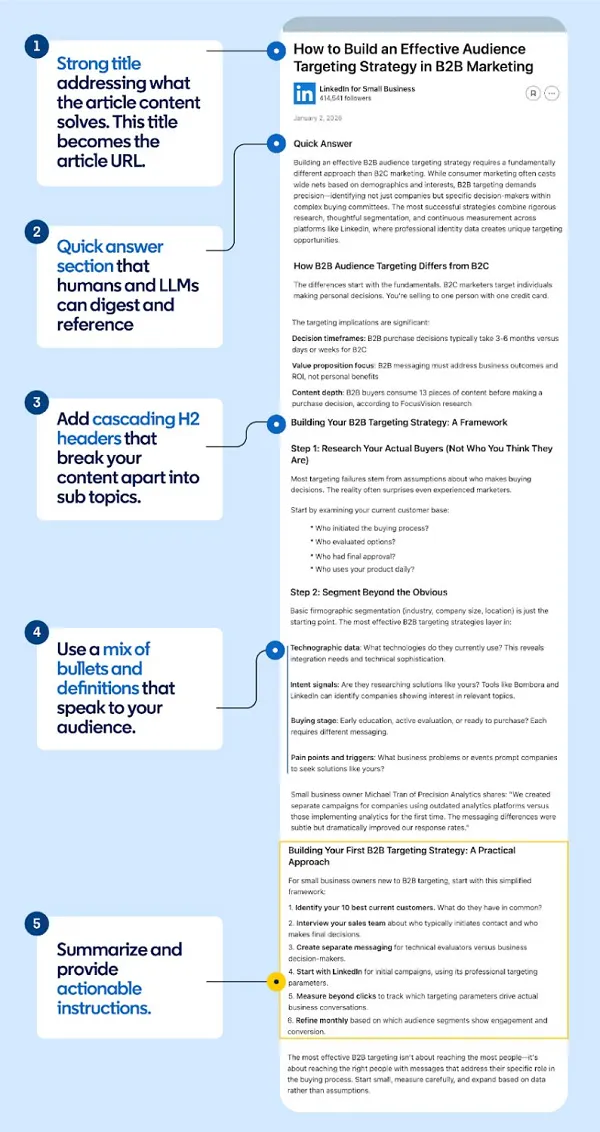
The digital landscape is undergoing a profound transformation, with artificial intelligence (AI) chatbots rapidly reshaping how users discover information and interact with brands. In this evolving environment, LinkedIn consultant Brooke Weller has provided crucial insights into optimizing content for discovery by these AI systems, a strategy poised to significantly enhance brand presence in AI-generated responses and bolster visibility amidst shifting consumption patterns. Her detailed overview underscores the growing importance of a new paradigm in digital marketing: Answer Engine Optimization (AEO) and Generative Engine Optimization (GEO).
The Shifting Tides of Information Discovery: From SEO to AEO
For decades, Search Engine Optimization (SEO) has been the bedrock of online visibility, focusing on algorithms designed to rank web pages for specific keywords. However, the proliferation of sophisticated AI chatbots like ChatGPT, Google’s Gemini, and Microsoft’s Copilot has introduced a fundamental shift. Users are increasingly turning to these conversational AI interfaces for direct, summarized answers rather than navigating through lists of links. Data from various industry reports indicates a significant uptake in AI chatbot usage for information retrieval. For instance, a report by Statista in late 2023 highlighted that millions of users globally are engaging with AI chatbots weekly, with a substantial portion utilizing them for information gathering, surpassing traditional search engines for certain types of queries. This trend suggests that optimizing solely for traditional search engine results pages (SERPs) is no longer sufficient; content creators and marketers must now consider how their information will be processed and presented by AI.
This shift has given rise to AEO and GEO. AEO focuses on structuring content so that AI models can easily extract precise, accurate answers to user queries, making it a primary source for AI-generated responses. GEO, a broader concept, extends this to optimizing content for generative AI models, ensuring that not only answers but also creative outputs, summaries, and analyses produced by AI accurately reflect and cite original sources. These new optimization paradigms are fast becoming central to maintaining and maximizing online exposure in an AI-first world.
LinkedIn’s Ascendancy as a Premier AI Source
Remarkably, LinkedIn has emerged as one of the most highly cited sources for AI chatbots. This is not coincidental but rather a testament to the platform’s strategic content architecture. The company attributes much of its success in this arena to the deliberate structuring of its content, which inherently aligns with how AI systems parse and synthesize information to deliver relevant answers. Unlike the broader web, which can be replete with unstructured data, misinformation, or opinion pieces, LinkedIn’s professional focus, emphasis on verifiable profiles, and structured article format provide a fertile ground for AI models seeking authoritative and credible information.
LinkedIn’s content ecosystem, encompassing articles, posts, company pages, and individual profiles, offers a rich repository of professional knowledge. AI models are trained on vast datasets, and the quality, structure, and perceived authority of the data sources are paramount. LinkedIn’s content often originates from verified professionals, industry leaders, and established organizations, lending it a higher degree of credibility compared to anonymous blogs or less curated platforms. This inherent trustworthiness, coupled with a format that favors clear headings, bullet points, and concise explanations within its article features, makes it an ideal training ground and retrieval source for AI.
Brooke Weller’s Blueprint for AI-Optimized Content
In light of LinkedIn’s strategic advantage, Brooke Weller, a prominent LinkedIn consultant, shared a series of key structural tips designed to improve content’s performance within AI chatbot responses. While some of these tips specifically pertain to LinkedIn articles, the overarching principles offer valuable guidance for broader content planning, enabling creators to align their approaches with how AI chatbots crawl the web for answers. Her insights provide a roadmap for content creators navigating the complexities of AEO and GEO.
1. Structured Content for Algorithmic Clarity:
Weller emphasizes the critical role of structured content. AI models thrive on clarity and organization. This means utilizing:

- Clear Headings and Subheadings (H1, H2, H3): These act as signposts for AI, indicating the hierarchy and main points of your content. A well-structured article with logical headings allows AI to quickly identify and extract key information relevant to a user’s query. For example, using “Key Benefits of X” or “Steps to Implement Y” makes it easy for AI to summarize or list specific points.
- Bullet Points and Numbered Lists: These formats are exceptionally easy for AI to parse and present as direct answers. When a user asks “What are the advantages of…” or “How do I…”, an AI can directly lift a bulleted list from a well-optimized article.
- Concise Paragraphs: Avoid dense blocks of text. Short, focused paragraphs that address one main idea at a time improve readability for both humans and AI. AI models are better at understanding and summarizing discrete pieces of information.
2. Semantic Precision and Natural Language Integration:
Beyond simple keyword stuffing, AI demands semantic understanding.
- Answer the Question Directly: AI chatbots are designed to provide direct answers. Therefore, your content should explicitly answer common questions related to your topic early in the article. Think about the “People Also Ask” section in Google Search – these are prime candidates for direct answers in your content.
- Use Natural Language: Write as if you’re having a conversation. AI models are trained on natural language patterns, so content that flows conversationally and addresses user intent in a human-like manner is more likely to be prioritized. Avoid jargon where simpler terms suffice, or explain complex terms clearly.
- Target Long-Tail Keywords and Conversational Queries: As users increasingly interact with AI via conversational prompts, optimizing for longer, more specific, and question-based queries (e.g., “What are the best practices for B2B content marketing on LinkedIn in 2024?”) becomes vital.
3. Establishing Authority and Credibility:
LinkedIn’s strength lies in its professional nature, which inherently conveys authority.
- Expert Authorship: Content authored by verified experts with strong LinkedIn profiles is naturally perceived as more credible by AI models. Ensuring your profile is complete, showcases your expertise, and connects to relevant industry figures enhances this authority.
- Citations and References: Just as academic papers cite sources, content that references reputable data, studies, or other authoritative voices strengthens its factual basis. While AI might not display every citation, the presence of well-researched information improves its trust score for the model.
- Consistent, High-Quality Content: Regularly publishing insightful, well-researched, and valuable content on your LinkedIn profile or company page signals expertise and reliability to AI algorithms over time.
4. Contextual Depth and Comprehensive Coverage:
While direct answers are crucial, AI also values comprehensive context.
- Address Related Subtopics: Provide a holistic view of the topic. If you’re discussing “AI in Marketing,” also touch upon its sub-elements like “AI in SEO,” “AI in Content Creation,” and “AI in Customer Service.” This allows AI to draw from your content for a wider range of related queries.
- Internal and External Linking: Link to other relevant articles or resources within your LinkedIn ecosystem (e.g., other articles you’ve written, company pages, relevant profiles). Also, link to reputable external sources when necessary. This not only provides further context but also helps AI understand the interconnectedness and depth of your knowledge.
- Multimedia Optimization: If using images or videos within your LinkedIn articles, ensure they are properly captioned with descriptive alt text. While AI’s ability to “see” images is advancing, descriptive text provides crucial context that AI can easily process.
5. Engagement Signals (Indirect AI Factor):
While AI doesn’t directly “engage,” human engagement signals can indirectly influence AI’s perception of content quality and relevance.
- Encourage Discussion: Content that sparks comments, shares, and reactions suggests value and relevance to a human audience. AI models, particularly those that learn from user behavior, might implicitly factor these signals into their ranking or retrieval algorithms.
- Regular Updates: Keeping your content fresh and updated with the latest information ensures its continued relevance. Stale content might be deprioritized by AI models seeking the most current answers.
Broader Implications for the Digital Ecosystem
The move towards AI-driven discovery has significant implications across the digital ecosystem.
- New Metrics for Success: Traditional metrics like page views and click-through rates (CTR) will be complemented by “AI citation rates” or “answer visibility.” Brands will increasingly evaluate their success based on how frequently and accurately their content is referenced by AI chatbots.
- Reimagining Content Strategy: Content strategies will need to pivot from solely attracting clicks to explicitly providing answers. This means content audits will assess not just SEO performance but also AEO readiness.
- Ethical Considerations and Attribution: As AI becomes more sophisticated, the ethical implications of source attribution become paramount. While AI models aim to provide direct answers, the question of how they credit original creators and prevent misattribution is a complex and ongoing discussion. Reputable platforms like LinkedIn, by fostering high-quality, attributed content, are implicitly helping to set a standard for ethical AI sourcing.
- Competitive Advantage: Early adopters of AEO and GEO strategies stand to gain a significant competitive advantage. Brands that successfully optimize their content for AI will likely see increased brand mentions, higher perceived authority, and ultimately, greater trust from consumers who rely on AI for information.
- Democratization of Expertise: While traditional media gatekeepers once controlled information flow, AI has the potential to surface expertise from a broader range of sources, provided that content is structured for AI discoverability. This could empower individual professionals and smaller businesses on platforms like LinkedIn to gain visibility previously reserved for larger entities.
The Evolution of Search: A Chronological Perspective
The journey from rudimentary search to sophisticated AI-driven discovery can be broadly charted:
- Early 1990s – Keyword Matching: Initial search engines relied heavily on exact keyword matches and directory listings.
- Late 1990s – Link Analysis (PageRank): Google revolutionized search by introducing PageRank, emphasizing the importance of backlinks as a measure of authority. This ushered in the era of traditional SEO.
- 2000s – Semantic Search & User Intent: Search engines began to understand the meaning and context behind queries, moving beyond just keywords. Algorithms started considering user intent and related concepts.
- 2010s – Mobile, Local, and Voice Search: The rise of smartphones and virtual assistants (Siri, Alexa) brought conversational queries and localized results to the forefront, further pushing the need for natural language understanding.
- Late 2010s – Machine Learning & AI Integration: Search engines started heavily integrating machine learning for ranking, personalization, and understanding complex queries.
- Early 2020s – Generative AI Chatbots: The widespread public access to powerful generative AI models like ChatGPT marked a paradigm shift, allowing users to receive direct, conversational answers, summaries, and creative outputs, bypassing traditional search results entirely for many queries. This solidified the need for AEO and GEO.
Industry Reactions and Future Outlook
The marketing industry is rapidly acknowledging this seismic shift. Digital marketing agencies are increasingly adding AEO and GEO services to their offerings. Industry analysts from firms like Gartner and Forrester have highlighted the strategic imperative for businesses to adapt their content strategies to be AI-friendly, predicting that a significant portion of online interactions will soon be mediated by AI. LinkedIn itself, by structuring its content and supporting its users in optimizing it, is proactively positioning itself at the forefront of this evolution, effectively becoming a trusted data partner for AI models.
For content creators, marketers, and brands, the message is clear: the future of digital visibility is intertwined with AI. Brooke Weller’s insights provide not just a tactical guide for LinkedIn content, but a strategic framework for rethinking content creation across all platforms. As more people use AI chatbots for search, optimizing for AI discovery will not merely be a competitive advantage, but a fundamental requirement for maintaining relevance and ensuring that valuable information reaches its intended audience in the AI-dominated information landscape of tomorrow. Those who proactively embrace AEO and GEO will be best positioned to thrive in this new era of intelligent information retrieval.