The opioid crisis represents one of the most significant public health challenges of the 21st century, characterized by a staggering increase in addiction, overdose deaths, and socio-economic devastation. While the crisis is often discussed in terms of personal tragedies and localized outbreaks, a comprehensive data-driven analysis reveals a complex global phenomenon with the United States at its epicenter. By examining datasets from the Centers for Disease Control and Prevention (CDC), the United Nations Office on Drugs and Crime (UNODC), and demographic usage statistics, researchers are beginning to map the full trajectory of this epidemic. The catalyst for much of this recent scrutiny was the investigative report "Seven Days of Heroin," published by the Cincinnati Enquirer, which provided a granular look at the toll of addiction over a single week in one American city. This report, along with subsequent data visualizations, highlights a critical reality: words alone cannot convey the magnitude of the problem; only through the rigorous application of data can the patterns of this modern plague be fully understood.
The Historical Context and Chronology of the Crisis
The current opioid epidemic did not emerge in a vacuum but rather through a series of distinct phases, often referred to by public health officials as the "three waves." Understanding this chronology is essential for interpreting current data trends and predicting future shifts in drug-related mortality.
The first wave began in the late 1990s, following a shift in the medical community’s approach to pain management. Pharmaceutical companies assured the medical profession that patients would not become addicted to prescription opioid pain relievers, leading to a massive increase in the prescription of drugs like oxycodone and hydrocodone. This period saw a direct correlation between the volume of prescriptions and the rise in overdose deaths involving prescription opioids.
The second wave arrived around 2010, marked by a rapid increase in overdose deaths involving heroin. As regulations tightened around prescription opioids and the medical community became more aware of the risks of addiction, individuals who had become dependent on pills often turned to heroin, which was cheaper and more readily available on the black market.
The third wave, which began roughly in 2013, is characterized by the surge in deaths involving synthetic opioids, particularly illicitly manufactured fentanyl. Fentanyl is significantly more potent than heroin and is frequently mixed with other drugs—often without the user’s knowledge—leading to a sharp spike in accidental overdoses. Current data suggests we may be entering a fourth wave, defined by the co-use of synthetic opioids with stimulants like cocaine and methamphetamine, further complicating the clinical response and recovery efforts.
Comparative Analysis: Opioids Versus Other Substances
One of the most striking findings in recent data analysis is the disparity between drug usage rates and drug lethality. According to data aggregated by FiveThirtyEight, the prevalence of heroin use is relatively small when compared to other substances such as alcohol, marijuana, or even cocaine. However, the mortality rate associated with heroin and synthetic opioids is disproportionately high.
In examining drug use by age, a distinct pattern emerges. While substances like cocaine and crack maintain a presence across a broad range of age groups, including older demographics, heroin use is most heavily concentrated in the 20-34 age bracket. This concentration may be attributed to several factors, including the high lethality of the drug, which prevents long-term survival for many users, or a "generational cohort" effect where younger populations are more exposed to current distribution networks.
Furthermore, the data indicates that while "soft" drugs may have higher adoption rates, the transition to high-potency opioids represents a terminal point for many users. The lethality of heroin and fentanyl dwarfs that of other illicit substances, making the opioid crisis a unique emergency that requires targeted intervention strategies distinct from general anti-drug campaigns.
The United States in a Global Context
When looking at global overdose statistics, the United States stands out as a significant outlier. Data from the UNODC shows that the U.S. leads the world in overdose deaths, both in absolute numbers and when adjusted for population size (deaths per million people). While other nations face drug-related challenges, the scale of the American crisis is unparalleled.
Certain nations, such as Iceland, show high rates of deaths per million, but these figures are often skewed by very small total populations where a few dozen deaths can significantly impact the statistical average. In contrast, the U.S. maintains a high death rate across a massive and diverse population. Countries like Sweden, Australia, and El Salvador also report concerning levels of drug-related mortality, yet their rates typically remain at less than half of the U.S. average.
The reasons for American exceptionalism in this regard are multifaceted. They include a healthcare system that historically over-prescribed pain medication, a lack of universal access to long-term addiction treatment, and a robust illicit supply chain that has efficiently integrated synthetic opioids into the domestic market. The data suggests that while the opioid problem is global, the crisis in the U.S. is driven by specific domestic variables that require localized, data-informed policy shifts.
Regional Hotspots and Development Trends
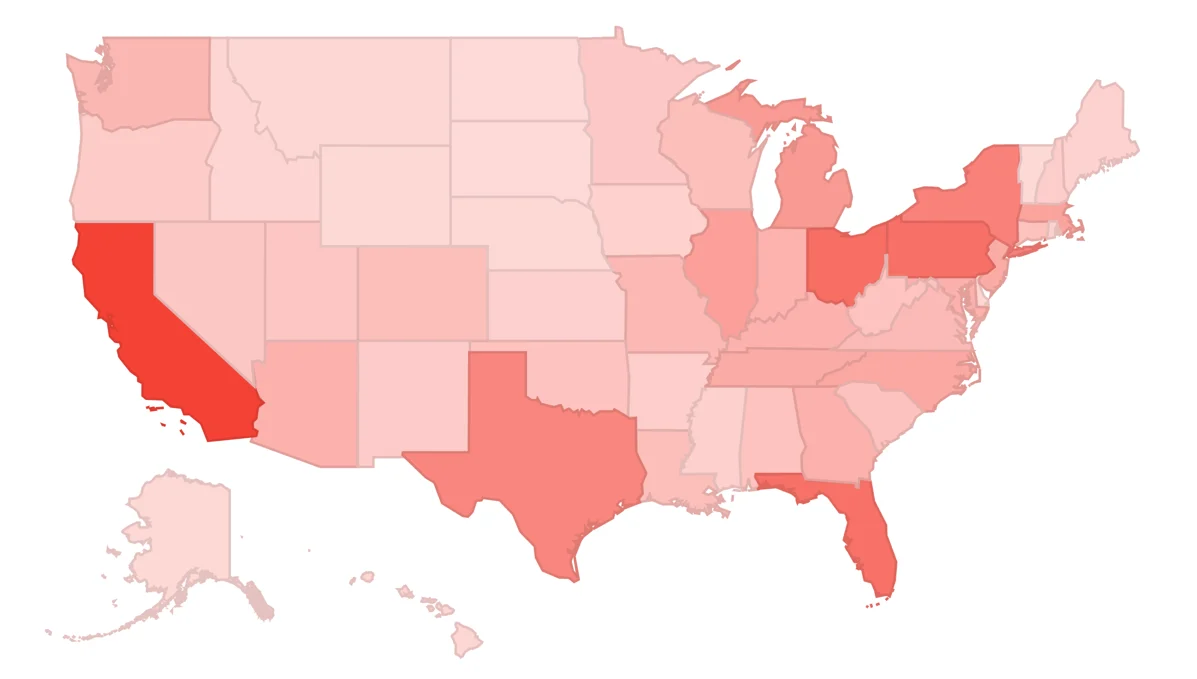
Within the United States, the epidemic is not uniformly distributed. Data from the CDC allows for a state-by-state analysis that identifies both the current "hotspots" and the states where the situation is deteriorating most rapidly.
Historically, the Appalachian region—including states like West Virginia, Ohio, and Kentucky—has been the hardest hit. These areas suffered from the early wave of over-prescription and have struggled with the subsequent shift to heroin and fentanyl. However, recent trends show the crisis expanding into the Northeast and parts of the Midwest. New Hampshire and Maryland, for example, have seen some of the highest rates of fentanyl-related deaths in recent years.
Conversely, some states have shown more resilience or have successfully implemented harm-reduction strategies that have slowed the growth of overdose rates. Analyzing the "development trends" in these states is crucial. By identifying which states are successfully flattening the curve of overdose deaths, public health officials can model national strategies based on localized successes. The data highlights that the crisis is evolving; it is no longer just a rural or "Rust Belt" problem but a national emergency that affects every demographic and geographic region.
Official Responses and Public Health Implications
The response from official bodies has evolved as the data has become more undeniable. The CDC has implemented more rigorous tracking systems, such as the State Unintentional Drug Overdose Reporting System (SUDORS), which provides more timely and detailed data than traditional vital statistics. This allows for a quicker response to emerging "clusters" of overdoses.
International organizations, including the World Health Organization (WHO), have emphasized the need for a "public health first" approach. This includes the expansion of Medication-Assisted Treatment (MAT), the distribution of naloxone (an overdose-reversal drug), and the establishment of supervised injection sites in some jurisdictions.
The economic implications are equally staggering. A report by the Joint Economic Committee (JEC) estimated that the opioid epidemic cost the U.S. economy nearly $1.5 trillion in 2020 alone. This figure accounts for healthcare costs, lost productivity, and the "value of a statistical life" lost to premature death. The data makes it clear that the crisis is not only a moral and medical failure but a profound economic burden that threatens long-term national stability.
The Vital Role of Data in Future Interventions
The transition from viewing the opioid crisis through the lens of individual tragedy to viewing it through the lens of data-driven patterns is essential for long-term solutions. Data provides a level of objectivity that can cut through the stigma associated with drug use, allowing policymakers to treat addiction as a chronic health condition rather than a moral failing.
For data analysts and researchers, the call to action is clear: the skills used to track consumer behavior or market trends must be applied to public health data to identify the next shifts in the epidemic. Predictive modeling can help anticipate where the next wave of synthetic drugs might hit, allowing for the pre-emptive distribution of life-saving resources.
As the global community continues to grapple with the fallout of opioid addiction, the integration of diverse datasets—ranging from law enforcement seizures to emergency room admissions—will be the key to developing a comprehensive strategy. The journey from a simple tweet or a news article to a deep-dive data analysis mirrors the necessary journey of society: from awareness to understanding, and finally, to informed action. The immensity of the problem is undeniable, but through the clarity of data, a path toward mitigation and recovery becomes visible. Only by measuring the problem accurately can we hope to solve it and eventually reclaim the lives and communities currently being lost to this epidemic.