The landscape of digital retail has undergone a seismic shift over the last decade, transitioning from basic transactional websites to complex, data-driven ecosystems that prioritize user experience (UX) and personalization. At the forefront of this transformation is Signet Jewelers, the world’s largest retailer of diamond jewelry. Leading the charge in refining these digital touchpoints is Craig Kistler, Vice President of User Experience, Personalization, and Experimentation at Signet Jewelers. Kistler’s journey from a solo UX designer to a leader of a sophisticated experimentation practice offers a blueprint for how legacy retailers can leverage evidence-based design to maintain market dominance in an increasingly automated world.
The Genesis of Experimentation at Signet Jewelers
Signet Jewelers, the parent company of iconic brands such as Kay Jewelers, Zales, and Jared, operates in a high-stakes retail environment where the average order value is significantly higher than in general e-commerce. In this sector, digital interactions are not merely about convenience; they are about building trust and facilitating emotional milestones. Kistler joined Signet as the organization’s first dedicated UX designer, tasked with establishing a formal practice for understanding how customers navigated their various digital storefronts.

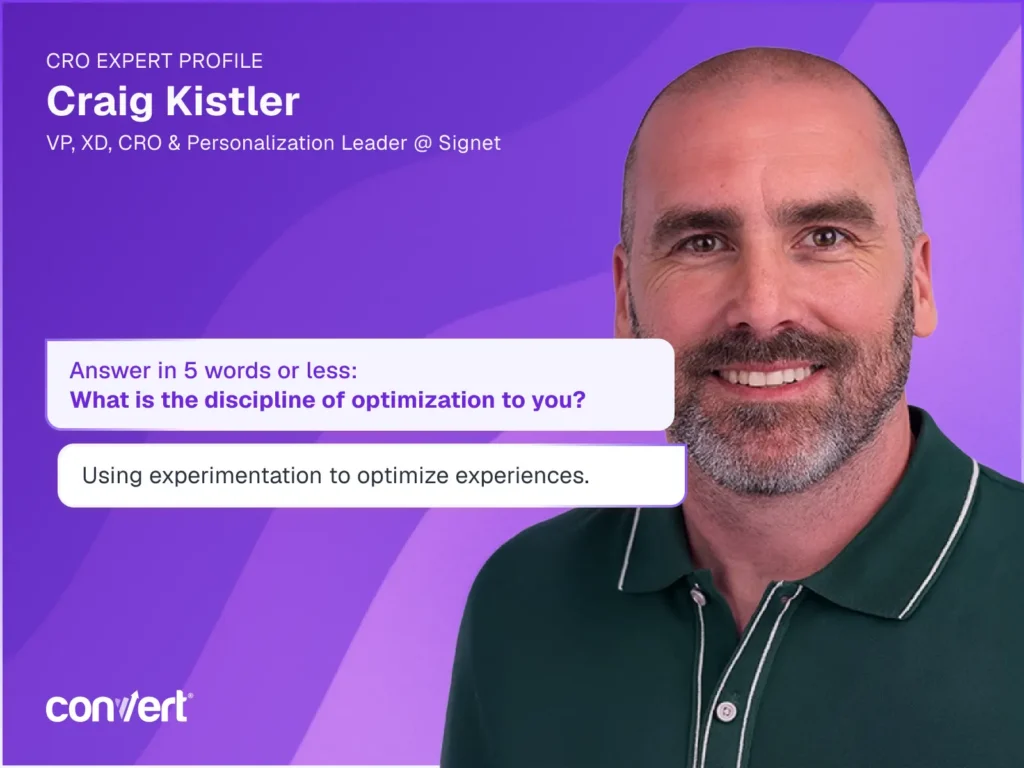
The transition from traditional UX design to a rigorous experimentation framework occurred when the organization integrated A/B testing tools into its workflow. While UX research—consisting of usability studies and direct customer feedback—provided the qualitative "why" behind consumer struggles, experimentation provided the quantitative "what." This synergy allowed Kistler and his team to validate hypotheses at scale. As Kistler notes, UX research identifies the friction points, but experimentation confirms whether a proposed solution actually resolves the issue for a broad audience. This realization sparked a "snowball effect," transforming a single-person design desk into a core pillar of Signet’s corporate strategy.
The Strategic Framework: Problem, Bet, Evidence, and Extension
Under Kistler’s leadership, the experimentation practice at Signet has moved away from the "test everything" approach that often leads to data fatigue. Instead, the team employs a structured four-stage methodology: Problem, Bet, Evidence, and Extension.
1. Problem Identification
The process begins by isolating a specific customer pain point. This is often derived from qualitative UX studies or analytics that show a drop-off in the conversion funnel. By focusing on the problem first, the team ensures that they are not simply testing for the sake of activity, but are targeting areas with the highest potential for impact.

2. The Strategic Bet
Once a problem is defined, the team formulates a "bet"—a hypothesis on what change will improve the experience. This stage requires a deep understanding of consumer psychology. In the jewelry industry, a bet might involve changing how a diamond’s clarity is explained or how a "virtual try-on" feature is positioned.
3. Gathering Evidence
This is the execution phase where A/B or multivariate tests are deployed. The goal is to see how real-world shoppers interact with the change compared to the control group. Kistler emphasizes that evidence must be viewed holistically, looking beyond simple conversion rates to understand long-term customer behavior.
4. Extension and Scaling
The final stage involves deciding the fate of the experiment. If a test is successful, it is rolled out across the production environment. If it fails, the team must decide whether to iterate, personalize the experience for a specific segment, or abandon the idea entirely. Kistler argues that a "failed" test is often more valuable than a "winning" one because it provides definitive evidence against a strongly held internal belief, preventing the company from investing in sub-optimal long-term strategies.
Challenging Retail Orthodoxy: The Value of Guidance over Speed
One of the most significant contributions Kistler has made to the field of conversion rate optimization (CRO) is the debunking of the "frictionless" myth. In mainstream e-commerce, the prevailing wisdom is that fewer clicks and faster checkouts always lead to better results. However, Kistler’s work at Signet has shown that in complex purchasing journeys, "friction" can actually be a form of necessary guidance.
The Paradox of Choice in Jewelry
On category pages featuring thousands of products, shoppers often experience decision paralysis. Kistler observed that when customers were presented with a completely frictionless path to a massive inventory, they would scroll briefly and then bounce. By intentionally adding a step—asking the user what they were looking for or providing a guided search path—the team saw an increase in engagement. This "positive friction" helped narrow the selection, making the shopping experience feel manageable and curated rather than overwhelming.
Reimagining the Value Exchange
Another area where Kistler challenged standard industry practice was in lead generation. Most retailers use an aggressive "email for discount" pop-up immediately upon a user’s arrival. Kistler viewed this as a lopsided value exchange, asking for personal data before the brand had demonstrated any utility.
Signet experimented with replacing this demand for data with an offer of assistance. By asking shoppers about their intent—whether they were shopping for an engagement ring, an anniversary gift, or a self-purchase—the site could adapt in real-time to provide a more relevant journey. This approach not only improved performance but also provided "zero-party data" that allowed for more sophisticated, intent-based personalization without the initial friction of a hard-sell email capture.
The Role of AI: A Thinking Partner, Not an Execution Factory
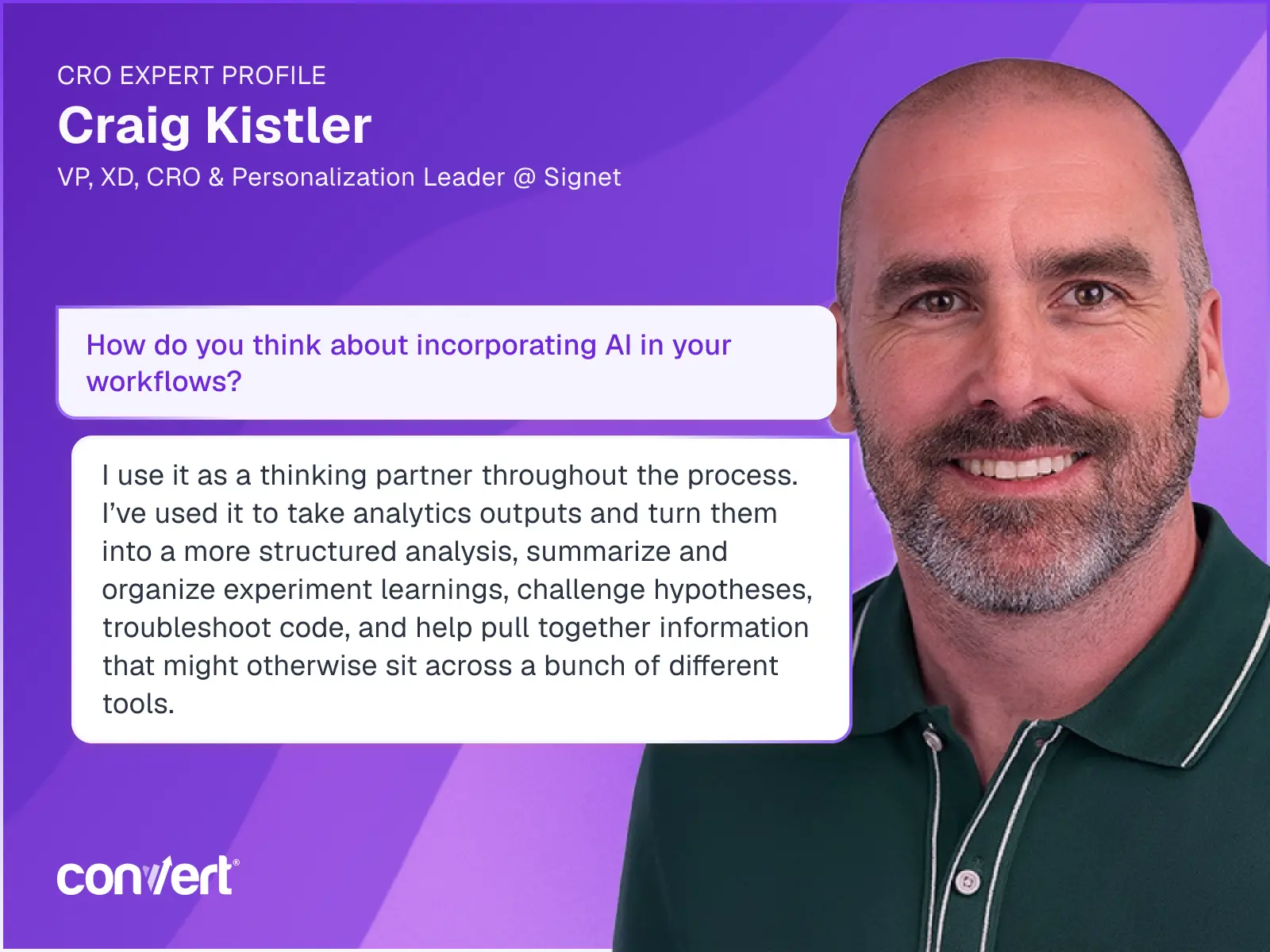
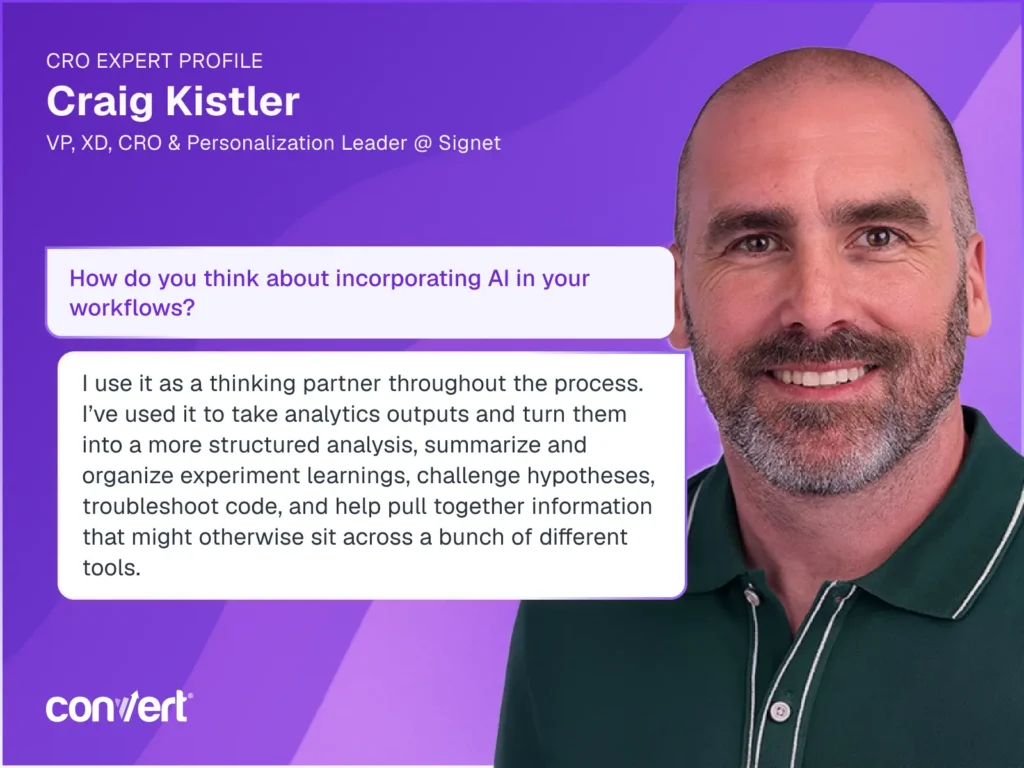
As artificial intelligence becomes commoditized in the tech stack, the role of the experimentation expert is shifting. Kistler views AI not as a replacement for human designers, but as a "thinking partner" that handles the heavy lifting of data synthesis and rapid prototyping.
Efficiency vs. Judgment
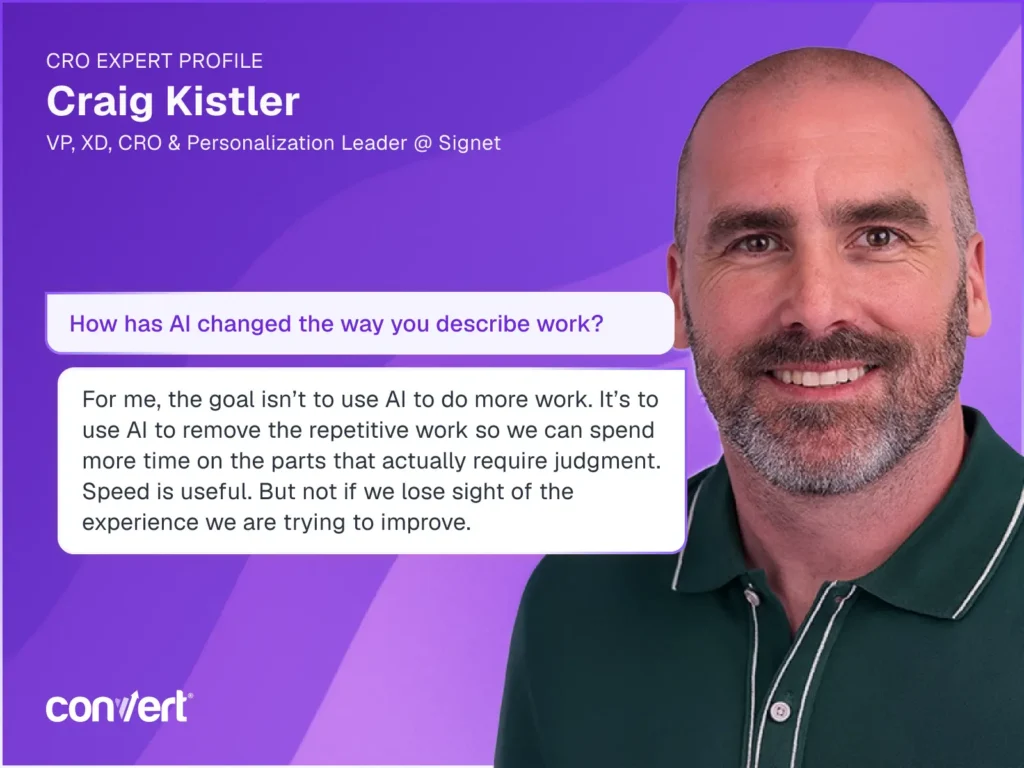
AI has drastically reduced the cost of execution. Tasks that previously took hours—such as summarizing experiment learnings, troubleshooting code for test variations, or organizing unstructured analytics data—can now be completed in minutes. However, Kistler warns against the "experiment factory" mentality. If AI is used to simply launch more tests without a foundational understanding of the customer problem, it only serves to produce "bad ideas faster."
Rapid Prototyping
One of the most effective uses of AI at Signet is in the realm of rapid prototyping. Kistler’s team can now build functional versions of complex ideas to test for user comprehension before committing a full development team to the project. This allows for a "fail fast" approach that protects the company’s engineering resources and ensures that only the most viable concepts reach the experimentation stage.
The Future of Personalization: Dynamic Experiences
For over eight years, Kistler has focused on the evolution of personalization. He suggests that the industry is moving away from static, one-size-fits-all designs toward dynamic pages that assemble themselves based on visitor signals.
While "one-to-one" personalization (creating a unique site for every individual) has been a long-term goal for many vendors, Kistler advocates for a more practical approach based on "needs-based segments." Instead of a static Product Detail Page (PDP) that carries every possible marketing message, the future PDP will be dynamic. The information emphasized, the guidance offered, and the sequence of content will shift in real-time based on whether the user is a high-intent repeat visitor or a first-time browser looking for educational content.

Broader Impact and Industry Implications
The strategies employed at Signet Jewelers reflect a broader trend in the retail industry: the professionalization of experimentation. As digital sales continue to account for a larger share of total revenue—with Signet reporting significant growth in its e-commerce penetration over the last several fiscal years—the ability to make data-backed decisions is no longer a luxury but a requirement for survival.
Signet’s success in this area is particularly notable given the traditional nature of the jewelry business. By proving that high-touch, emotional purchases can be optimized through scientific testing, Kistler has shown that no industry is exempt from the benefits of CRO.
Chronology of Evolution
- Establishment Phase: Kistler joins as the sole UX designer; focuses on qualitative research.
- Integration Phase: A/B testing tools are introduced; UX insights begin to fuel quantitative tests.
- Expansion Phase: The practice grows into a multi-brand strategy, covering Kay, Zales, and Jared.
- AI/Modernization Phase: AI is integrated as a strategic partner to streamline analysis and prototyping while maintaining a human-centric focus on judgment.
Conclusion: The Persistence of Human Judgment
Ultimately, Craig Kistler’s playbook for experimentation serves as a reminder that while tools and technologies change, the core objective remains the same: understanding and solving the customer’s problem. As AI continues to simplify the execution of digital strategy, the true competitive advantage will lie in the quality of human judgment.

The ability to identify which problems are worth solving, to interpret the nuance of customer behavior, and to have the patience to let a strongly held belief fail under the weight of evidence are skills that cannot be automated. For Signet Jewelers, this human-led, data-informed approach ensures that they remain not just the largest diamond retailer in the world, but also one of the most innovative in the digital age.


 Asro
Asro
 Dwi Wanna