

The digital landscape has shifted from simple traffic acquisition to sophisticated conversion rate optimization (CRO), placing user experience (UX) analytics at the center of modern marketing strategies. In this competitive environment, businesses must decide between specialized, all-in-one paid platforms and free, high-volume data collection tools. The current market leaders in this space, Crazy Egg and Microsoft Clarity, offer distinct value propositions that cater to different organizational needs. While Microsoft Clarity has disrupted the industry by providing unlimited session recordings and heatmaps at no cost, Crazy Egg maintains its dominance among small-to-midmarket businesses (SMBs) by integrating qualitative feedback, A/B testing, and advanced technical debugging into a single ecosystem.
Understanding the nuance between these two platforms requires an analysis of how data is not only collected but also translated into actionable business intelligence. For many organizations, the choice between Crazy Egg and Microsoft Clarity is not merely a budgetary decision but a strategic one regarding resource allocation, data retention requirements, and the desired speed of the optimization cycle.
Historical Context and the Evolution of UX Analytics
To understand the current rivalry, one must look at the timeline of the industry. Crazy Egg was founded in 2005 by Hiten Shah and Neil Patel, making it one of the earliest pioneers of heatmap technology. At the time, web analytics were largely limited to the quantitative data provided by early versions of Google Analytics. Crazy Egg introduced the "Confetti" map, which allowed marketers to see exactly where different segments of visitors were clicking, effectively bridging the gap between raw numbers and human behavior.
For over a decade, the market for UX analytics was dominated by paid tools. However, in October 2020, Microsoft entered the fray with the launch of Microsoft Clarity. Microsoft’s entry was a significant market disruption; by offering a tool that was 100% free with no traffic caps, they challenged the per-session pricing models that had become standard. Clarity was designed to integrate seamlessly with the broader Microsoft and Google ecosystems, specifically targeting users who needed high-volume data without the overhead of enterprise contracts.
Since 2020, both platforms have evolved rapidly, incorporating artificial intelligence (AI) and machine learning to help users sift through thousands of hours of session recordings. The current state of the market shows a clear divide: Clarity serves as a powerful entry point and a high-volume recording engine, while Crazy Egg has evolved into a comprehensive "optimization engine" that allows users to act on data within the same interface.
Core Feature Comparison: Data Visualization and Heatmapping
The fundamental goal of both tools is to visualize user intent. Both Crazy Egg and Microsoft Clarity offer the standard suite of heatmaps—click, scroll, and move maps—but their approach to segmentation differs significantly.
Crazy Egg’s Segmentation Advantage
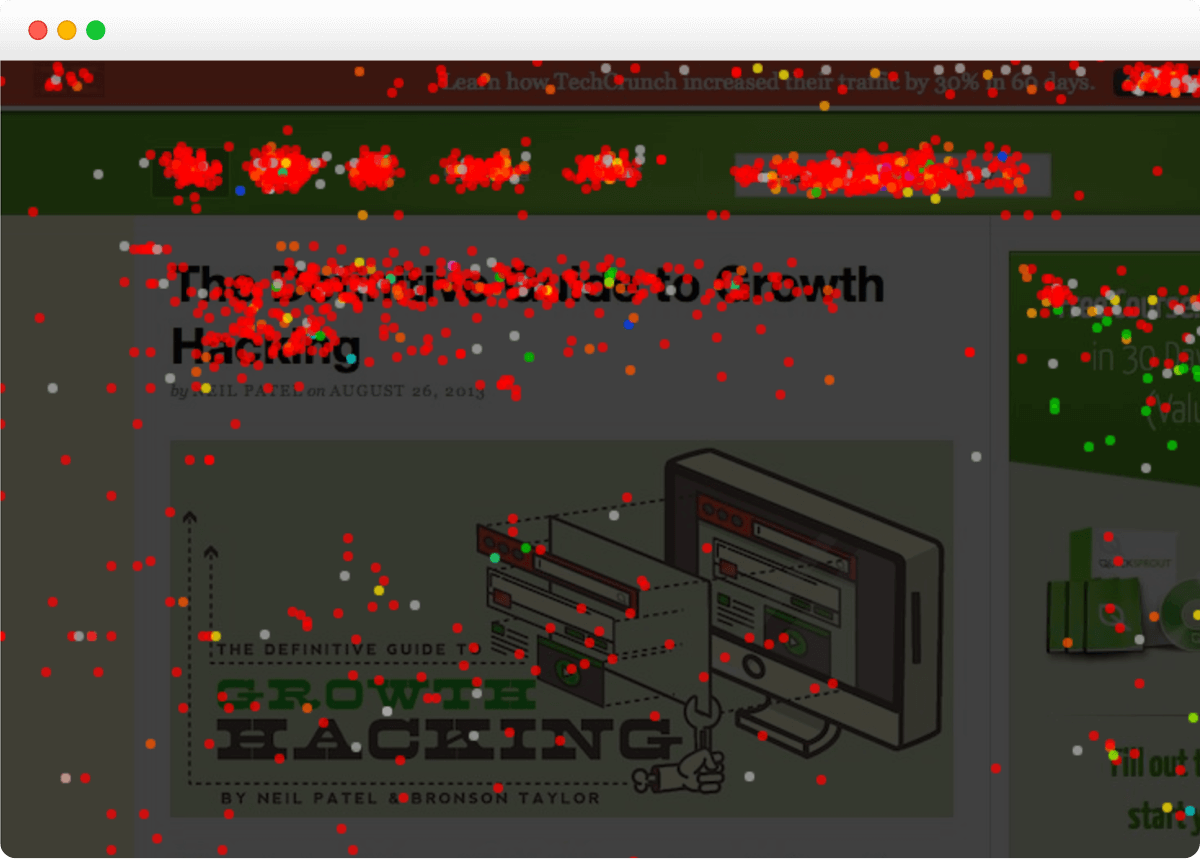
Crazy Egg’s standout feature remains the Confetti Map. Unlike standard heatmaps that show a "glow" over high-activity areas, the Confetti Map displays individual clicks as color-coded dots based on more than 20 variables, such as referral source, search terms, or device type. This allows a marketer to see, for instance, that users coming from a specific Facebook ad are clicking on a non-linked image, while organic search users are navigating directly to the "Pricing" page.
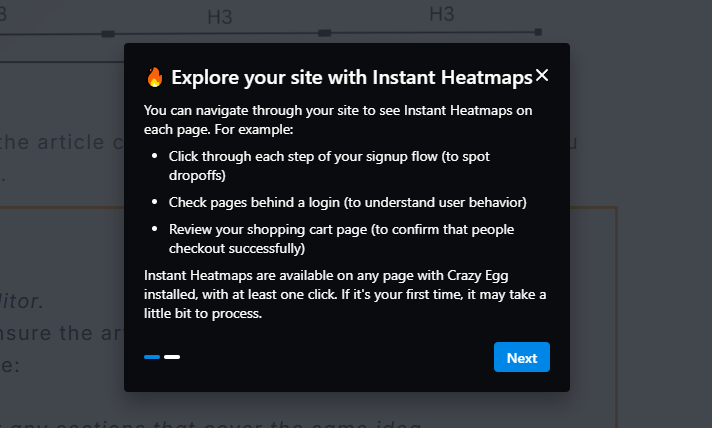
Additionally, Crazy Egg offers "Instant Heatmaps." This feature auto-generates visual data across an entire site without requiring the user to set up individual reports for every page. This is a critical time-saver for e-commerce managers overseeing hundreds of product pages.
Microsoft Clarity’s Attention and Engagement Depth
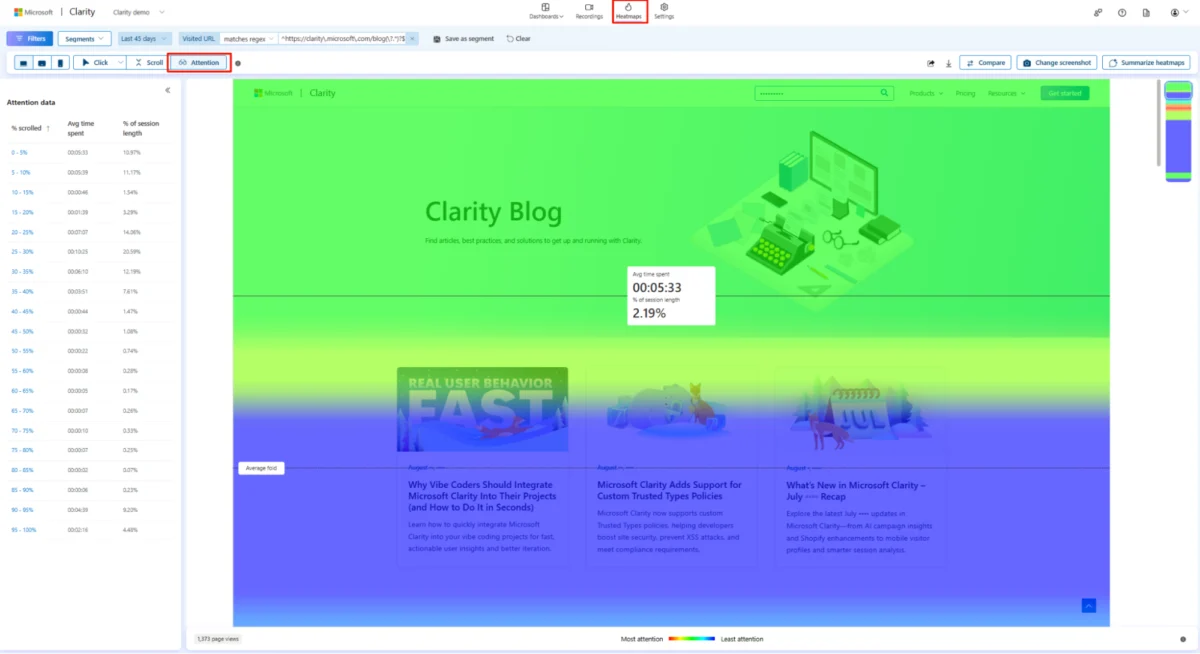
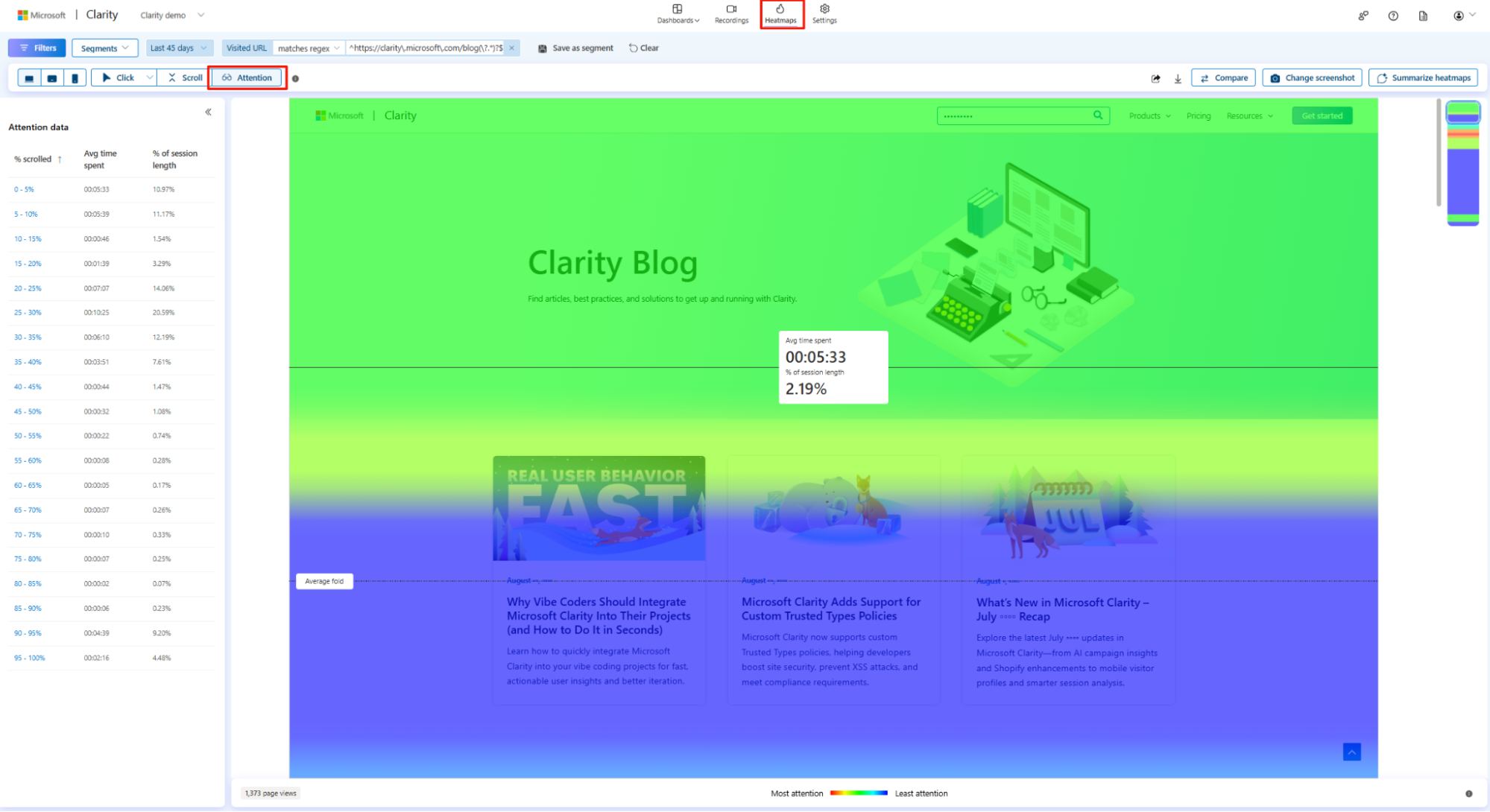
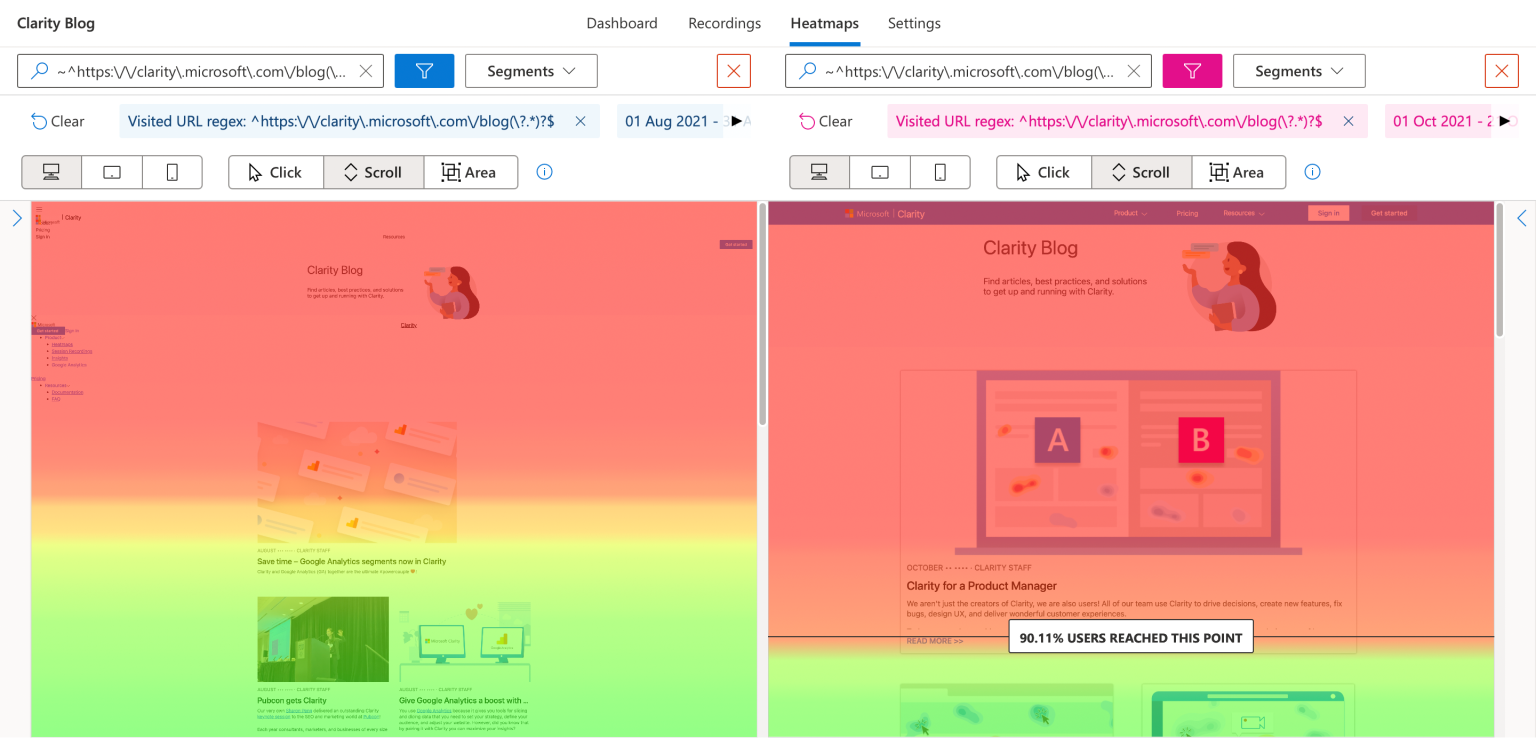
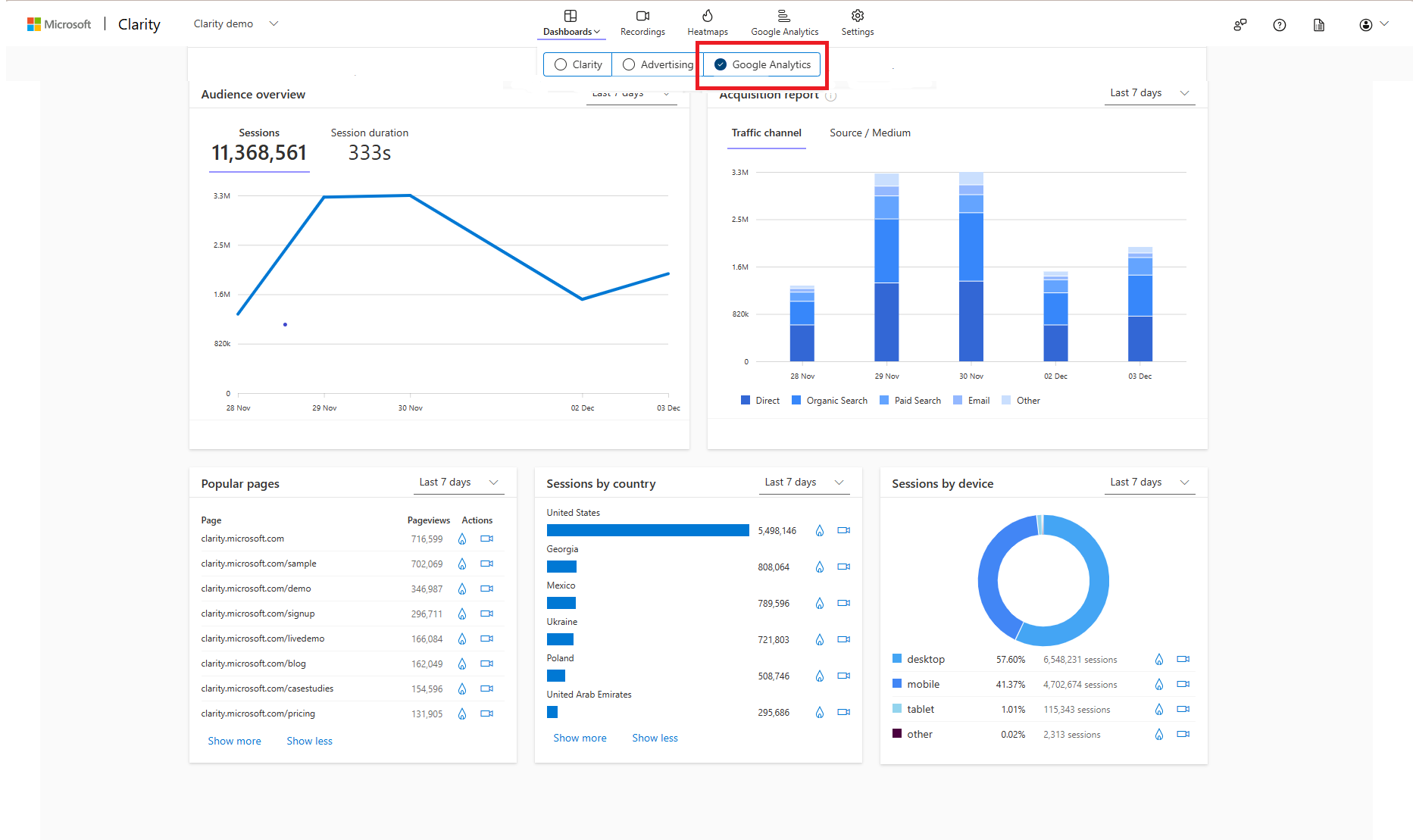
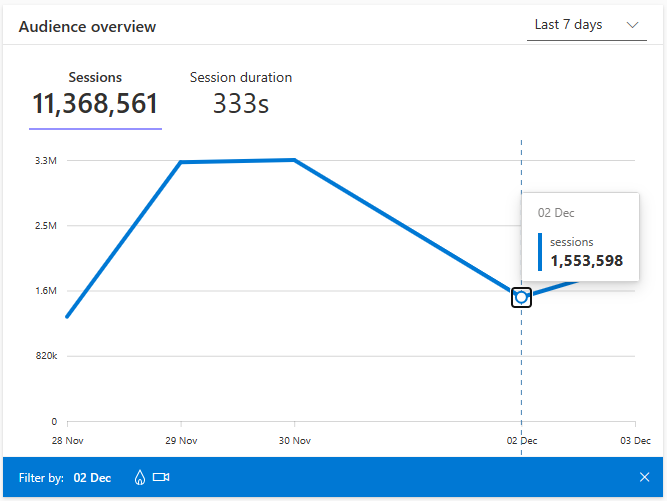
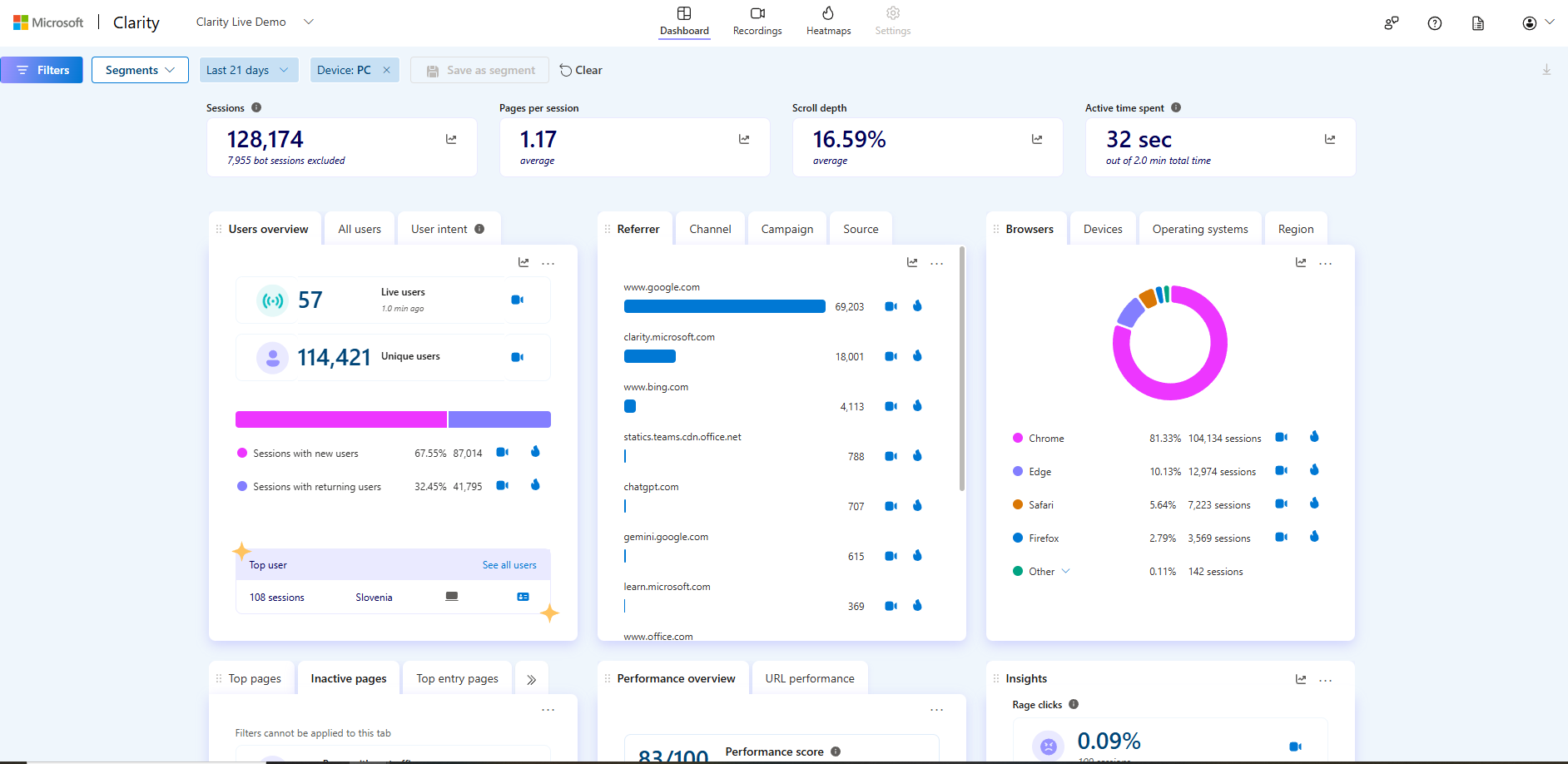
Microsoft Clarity counters with "Attention Maps." These maps measure the "depth of engagement" by calculating how much time users spend on specific parts of a page. This goes beyond simple scrolling; it identifies "hot spots" where users are actually reading or interacting with content versus sections they are skimming. Clarity also benefits from a side-by-side comparison tool that allows users to view two different heatmaps—such as mobile vs. desktop or before vs. after a site redesign—within a single view.
Session Recordings and Technical Debugging
Session recordings allow teams to watch a "movie" of a user’s journey. The divergence here lies in the volume of data versus the longevity and depth of that data.
Volume vs. Retention
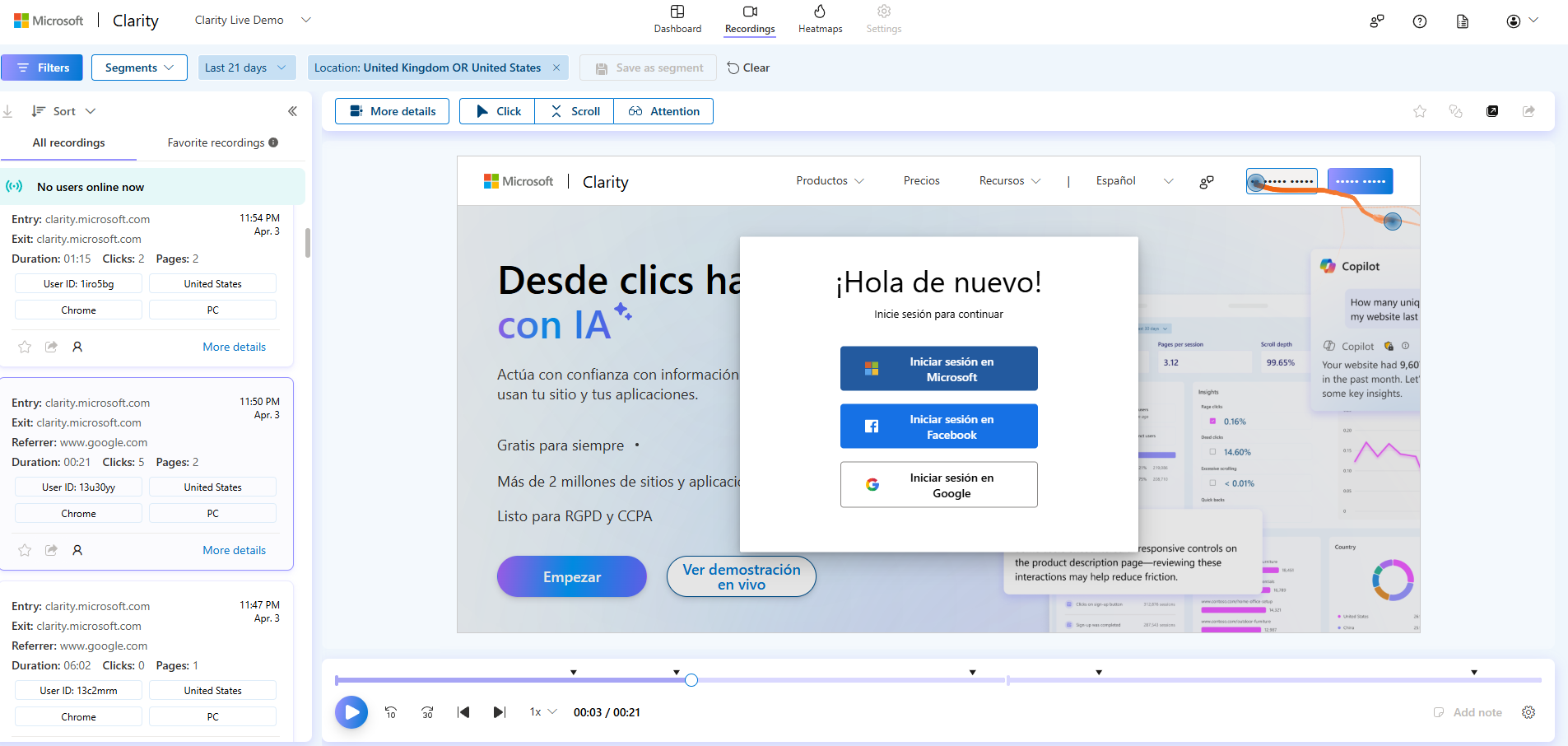
Microsoft Clarity is designed for high-traffic environments. It can record up to 100,000 sessions per day with no sampling, ensuring that even rare user behaviors are captured. However, Clarity only retains this data for 30 days. While a small percentage of "favorited" sessions can be kept for up to 13 months, the vast majority of data disappears after a month.
Crazy Egg takes a more curated approach. While it has monthly caps based on the subscription tier, it retains recordings for six months to two years. For businesses with longer sales cycles—such as B2B SaaS or high-end real estate—the ability to look back at a lead’s behavior from six months ago is a significant advantage that Clarity cannot match.
Visual Debugging and Error Tracking
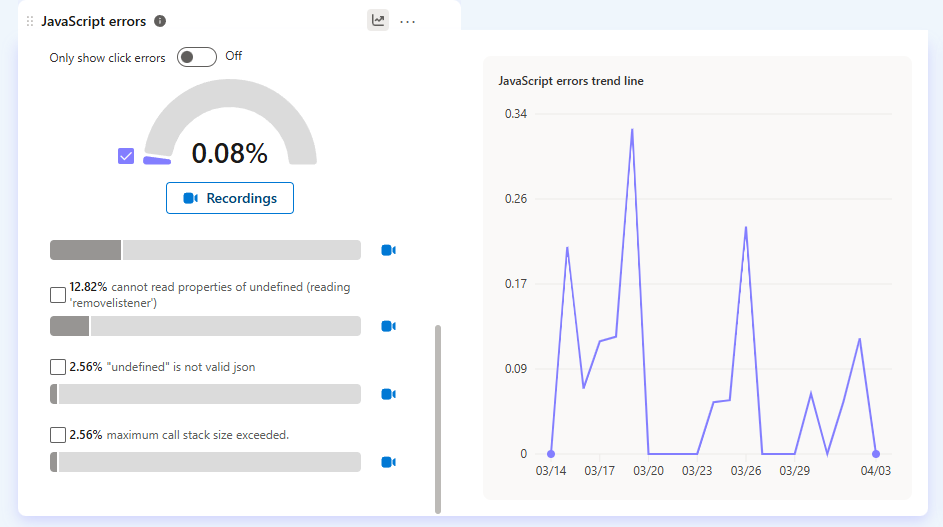
A major evolution in both tools is the integration of error tracking. Microsoft Clarity provides a JavaScript error panel that shows the frequency of errors and allows users to filter recordings to see where they occurred.
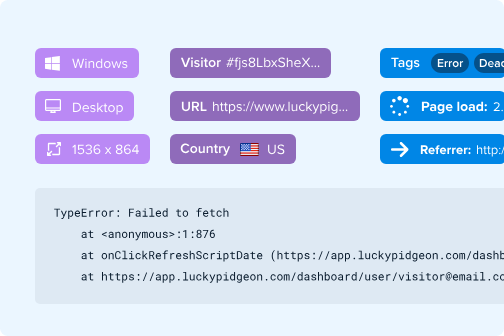
Crazy Egg, however, offers a more robust "Visual Debugging" workflow. When a JavaScript error occurs, Crazy Egg captures the full stack trace and links it directly to the session recording. This allows developers to see exactly what the user did to trigger the crash. Furthermore, Crazy Egg includes a "resolve/ignore" triage system, turning the analytics tool into a basic project management system for the engineering team. This reduces the "Mean Time to Resolution" (MTTR), a key metric for technical teams.
The Integration of Artificial Intelligence
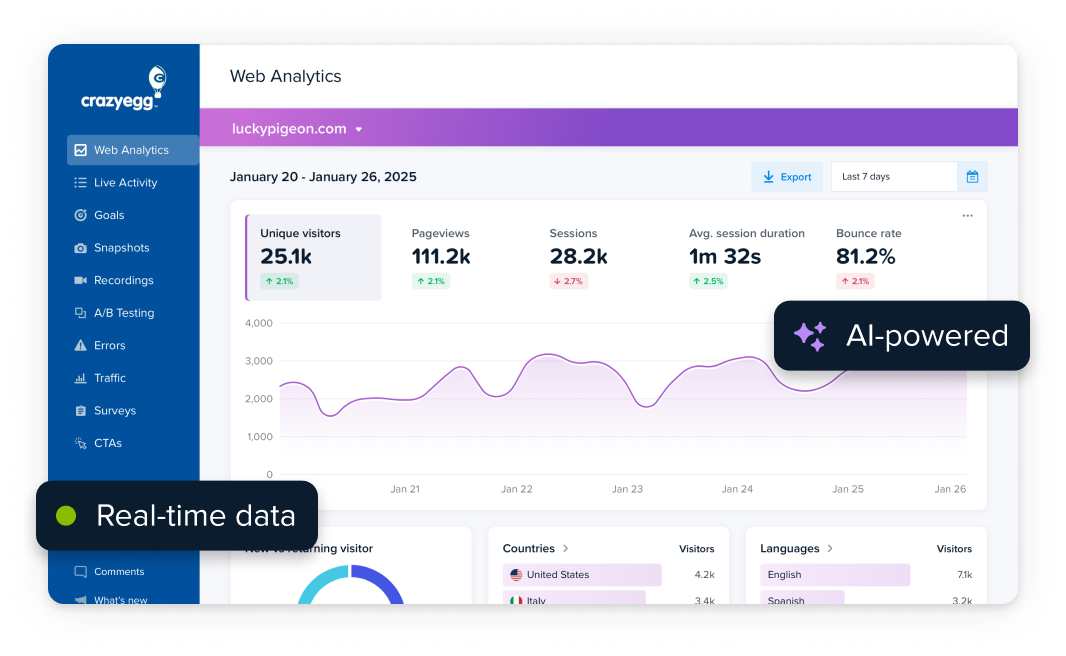
The most significant trend in 2024 and 2025 is the application of Large Language Models (LLMs) to behavioral data. Both companies have integrated AI to solve the problem of "data fatigue"—the phenomenon where users have so much data they don’t know where to start.
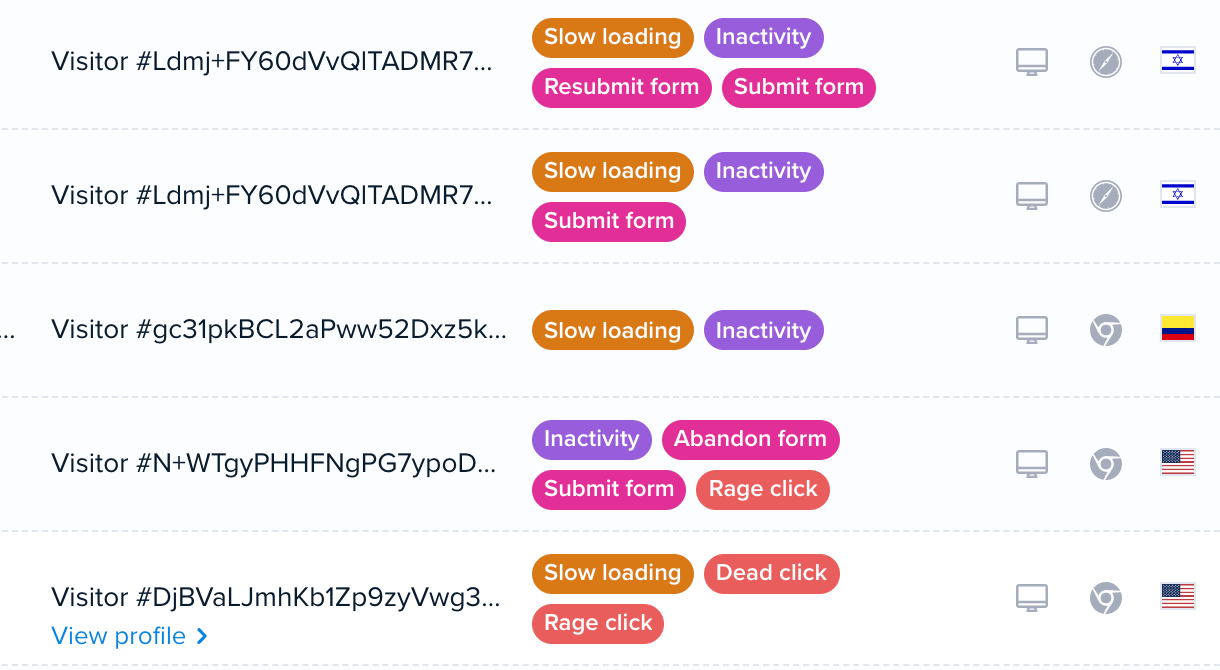
Microsoft’s "Copilot" in Clarity is a conversational AI. Users can ask questions like, "Why are users dropping off on the checkout page?" and the AI will summarize findings from hundreds of recordings. It also provides "Smart Tags," which automatically categorize sessions by "Rage Clicks" (repeated clicking in frustration) or "Dead Clicks" (clicking on non-interactive elements).
Crazy Egg’s AI analysis is more proactive. It runs automatically across heatmaps, recordings, and surveys, surfacing insights without the user needing to prompt the system. A unique feature of Crazy Egg is its "MCP Connector," which allows power users to export their data directly into tools like ChatGPT, Claude, or Gemini. This enables data scientists to perform custom analysis or correlate Crazy Egg data with external business intelligence feeds.
Beyond Analytics: Testing and Feedback Loops
The most distinct difference between the two platforms is what happens after the data is analyzed. Microsoft Clarity is strictly an analytics tool; it tells you what is wrong, but it does not provide the tools to fix it. To act on Clarity’s insights, a user must purchase and integrate third-party tools like Optimizely for A/B testing or SurveyMonkey for user feedback.
Crazy Egg is built as an all-in-one conversion platform. It includes:
- Native A/B Testing: A visual editor that allows marketers to change headlines, images, or button colors and test them against the original version without writing code.
- User Surveys: Built-in tools to ask visitors "Why are you leaving?" or "Did you find what you were looking for?" directly on the page.
- CTA Pop-ups: No-code overlays that can be triggered based on user behavior (e.g., exit intent) to capture emails or offer discounts.
Strategic Analysis: Total Cost of Ownership
While Microsoft Clarity is "free," the total cost of ownership (TCO) may be higher for organizations that require a full CRO stack. If an organization uses Clarity but also pays for a separate survey tool ($50/mo) and an A/B testing platform ($200+/mo), their monthly spend exceeds that of a Crazy Egg "Plus" or "Pro" plan, which includes all those features natively.
Furthermore, the "cost of support" is a factor. Microsoft Clarity relies on community documentation and forums. For enterprise users or SMBs without dedicated data analysts, the priority support offered by Crazy Egg can be the difference between a successful optimization project and a tool that sits unused.
Final Verdict and Industry Implications
The choice between Crazy Egg and Microsoft Clarity depends on the maturity of the organization’s optimization program.
Microsoft Clarity is the ideal choice for:
- Startups and personal projects with zero budget.
- High-traffic sites that need to record every single session for compliance or broad monitoring.
- Teams that already have an established stack of testing and survey tools and only need a "viewer" for user behavior.
Crazy Egg is the superior choice for:
- SMBs and midmarket companies that want a single "source of truth" for conversion optimization.
- Marketing teams that need to move fast and change site elements without waiting for a developer.
- Organizations that require long-term data retention for deep-dive audits of the customer journey.
As the digital economy continues to tighten, the ability to squeeze more value out of existing traffic is becoming more important than simply buying more ads. Both Crazy Egg and Microsoft Clarity provide the "eyes" necessary to see through the user’s perspective. However, the move toward all-in-one platforms like Crazy Egg suggests that the market is shifting away from fragmented data tools toward integrated systems that allow for a seamless transition from insight to action. Organizations that fail to adopt these tools risk falling behind in an era where user experience is the primary driver of brand loyalty and revenue growth.







