The modern business landscape demands agile, scalable, and compliant solutions across all operational facets, and email marketing platforms are no exception. As companies grow, the criteria for selecting an email service provider (ESP) extend far beyond a simple feature comparison. Businesses require platforms that can adeptly support expanding teams, accommodate escalating sending volumes, and consistently meet rigorous standards for performance, collaboration, and regulatory compliance. This comprehensive guide outlines the strategic reasons compelling many organizations to transition from Mailchimp to Sinch Mailjet and provides a detailed, step-by-step methodology for migrating essential data—including contacts, email templates, and historical reporting—with minimal disruption.
The Evolving Landscape of Email Marketing Platforms
The decision to switch email platforms is often a strategic response to shifts in a company’s operational scale, market demands, or regulatory environment. Historically, platforms like Mailchimp have served as accessible entry points for small and medium-sized businesses (SMBs) due to their user-friendly interfaces and robust feature sets. However, as these businesses mature, their needs frequently evolve beyond the offerings of generalist platforms. The increasing complexity of email marketing, driven by advanced segmentation, sophisticated automation, stringent data privacy regulations like GDPR and CCPA, and the imperative for superior deliverability, necessitates a re-evaluation of existing tools.

Many businesses find that their initial platform choice, while suitable for nascent stages, begins to present limitations in areas such as cost-efficiency at high volumes, granular control over sending infrastructure, advanced collaboration features for larger marketing teams, or specialized compliance requirements. This drives a significant portion of the market to explore alternatives that promise greater flexibility, enhanced performance, and a more tailored approach to enterprise-level email communication. Sinch Mailjet, backed by the global communications giant Sinch, has emerged as a compelling option, particularly for organizations prioritizing high-volume sending, deliverability excellence, and robust API capabilities.
Why Businesses Are Shifting from Mailchimp to Sinch Mailjet
The migration trend from established platforms like Mailchimp to alternatives such as Sinch Mailjet is not arbitrary but rather a calculated move based on several critical business considerations.
-
Scalability and Cost-Efficiency at Volume: Mailchimp’s pricing model, which often scales with the number of contacts, can become prohibitive for businesses experiencing rapid growth in their subscriber base or those with high sending frequencies. As contact lists expand into the tens or hundreds of thousands, or even millions, the recurring costs can significantly impact marketing budgets. Sinch Mailjet, in contrast, frequently offers more flexible and competitive pricing structures, particularly for high-volume senders, often based on email volume rather than contact count, or providing generous allowances for unlimited contacts. This model can result in substantial cost savings for enterprises with extensive reach.
-
Performance and Deliverability Expertise: For businesses where email is a critical revenue driver or a core communication channel (e.g., transactional emails, critical notifications), deliverability is paramount. Sinch Mailjet leverages the robust infrastructure of Sinch, a global leader in cloud communications, to offer exceptional deliverability rates. This includes advanced features like dedicated IP addresses, comprehensive real-time analytics, and proactive monitoring to ensure emails consistently reach inboxes. While Mailchimp also focuses on deliverability, Mailjet’s reputation, particularly in transactional email, often translates to a perceived edge for critical communications.
-
Enhanced Collaboration for Growing Teams: As marketing departments expand, the need for seamless team collaboration within an email platform becomes crucial. Mailjet is designed with features that facilitate multi-user access, role-based permissions, sub-accounts, and efficient workflow management. This allows larger teams to collaborate on campaigns, templates, and analytics without friction, ensuring brand consistency and operational efficiency across different departments or regions.
-
Compliance and Data Governance: In an era of escalating data privacy concerns and regulations (e.g., GDPR in Europe, CCPA in California), compliance is non-negotiable. Sinch Mailjet places a strong emphasis on data security and privacy, providing tools and practices that help businesses adhere to global standards. This includes robust data handling policies, clear consent management features, and a commitment to protecting user data, which is a significant factor for international businesses or those operating in highly regulated industries.
-
Advanced Automation and API Integration: While Mailchimp offers automation, Mailjet provides powerful and flexible automation capabilities that cater to complex customer journeys and highly personalized campaigns. Its robust API (Application Programming Interface) is particularly attractive for developers and businesses needing to integrate their email sending with custom applications, CRM systems, e-commerce platforms, and other third-party tools. This level of integration allows for greater customization and automation of the entire communication workflow.
A spokesperson for Sinch Mailjet recently remarked, "We are witnessing a clear trend of businesses, from rapidly scaling startups to established global enterprises, making the strategic move to Mailjet. They are seeking not just an email platform, but a comprehensive, reliable communication partner that can evolve with their needs. Our focus on robust infrastructure, superior deliverability, and flexible collaboration tools resonates deeply with companies that prioritize operational excellence and long-term growth. We are committed to making this transition as smooth as possible, enabling our clients to maximize their email marketing potential without disruption."
Chronology of the Migration Process: A Step-by-Step Overview for Seamless Transition
Migrating an entire email marketing operation requires careful planning and execution to ensure data integrity and continuity of communications. The process, while straightforward with the right guidance, involves several key stages.
Phase 1: Pre-Migration Planning and Assessment
Before initiating any data transfer, it is crucial to perform a thorough assessment. This includes identifying all contact lists, segments, automations, templates, and reporting data that need to be migrated or archived. Businesses should also consider any existing integrations with their current ESP and how these will be re-established or adapted within Sinch Mailjet. This planning phase ensures that no critical data is lost and that the transition aligns with ongoing marketing strategies.

Phase 2: Migrating Your Contacts from Mailchimp to Sinch Mailjet
The contact list is the bedrock of any email marketing strategy, making its accurate and compliant migration paramount. This step requires meticulous attention to detail to ensure all subscriber data, including subscription status, is correctly transferred.
-
Exporting Contacts from Mailchimp:
- Log in to your Mailchimp account.
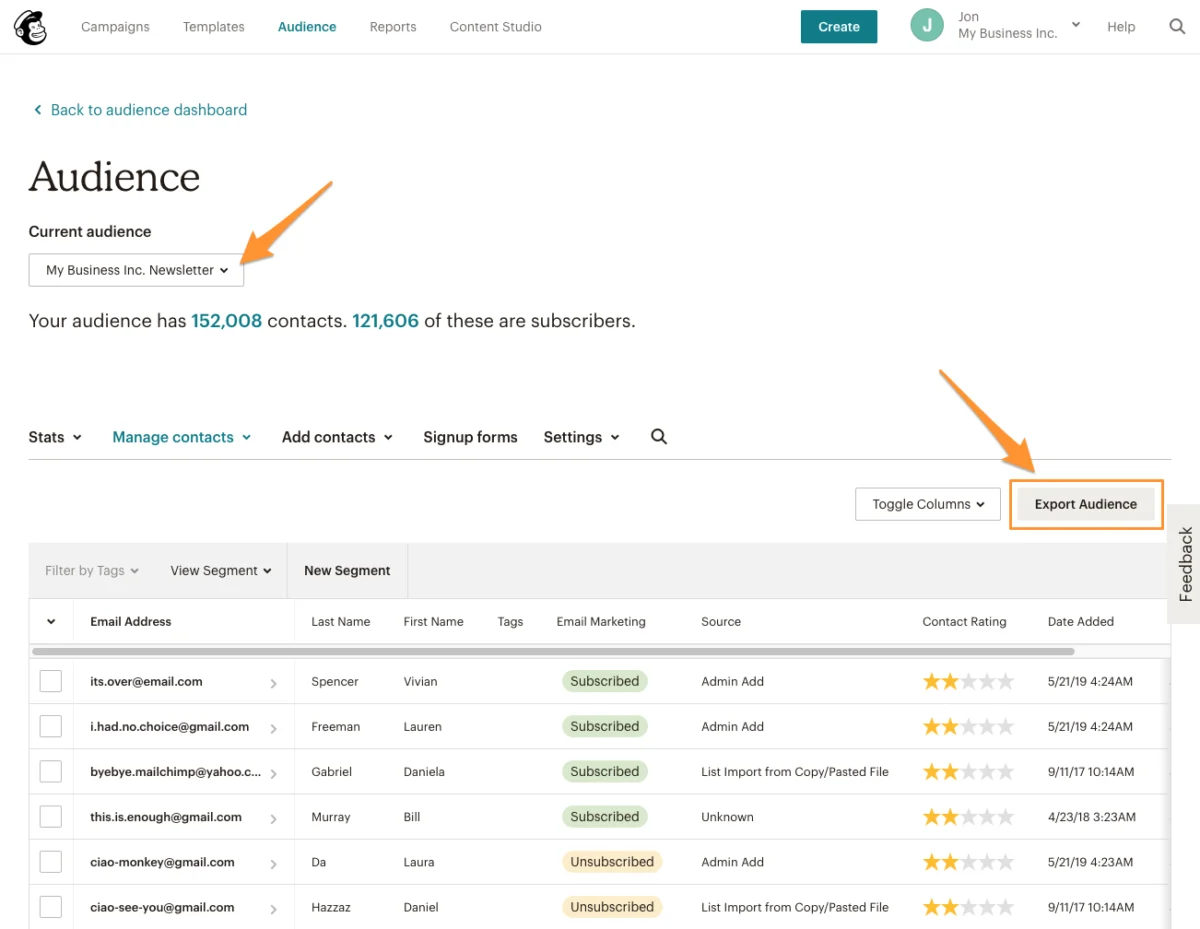
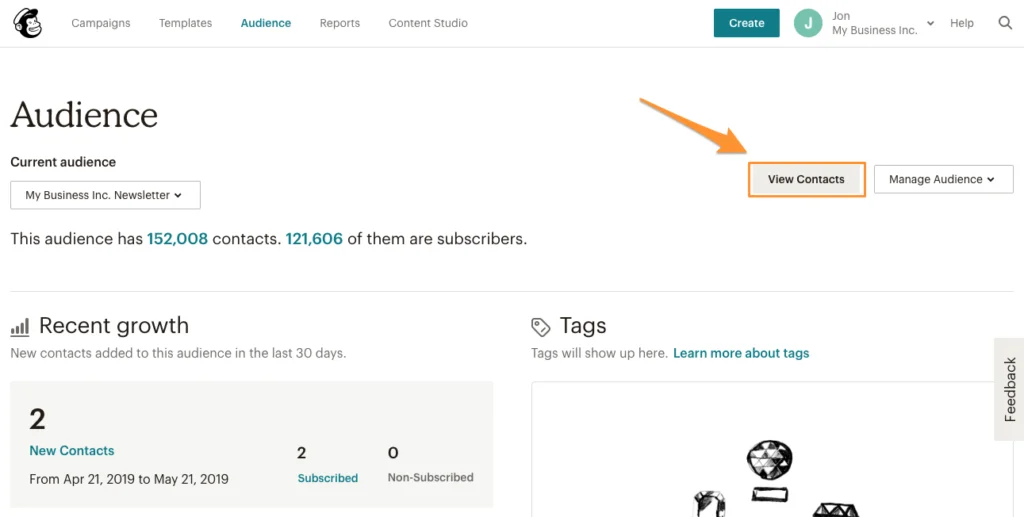
- From the primary menu, navigate to ‘Audience’ and then select ‘View Contacts’.
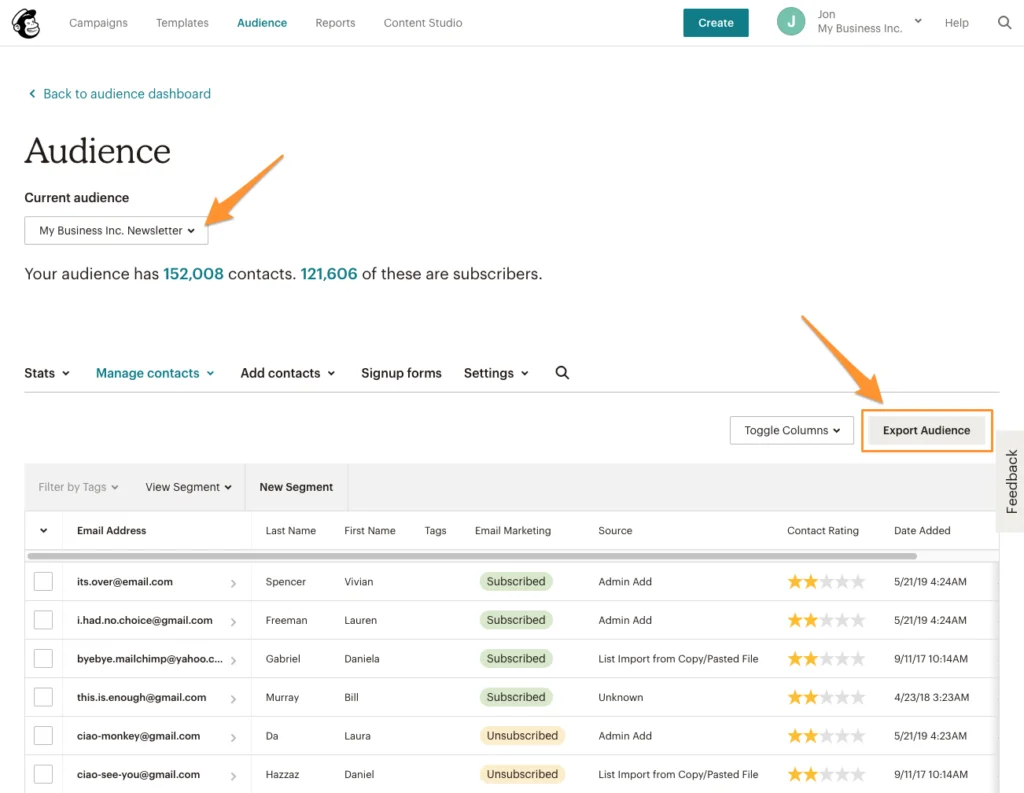
- To initiate the export, click on the ‘Export Audience’ button. If your Mailchimp account utilizes multiple distinct audiences (contact lists), this process must be repeated for each audience you intend to migrate. This ensures that all relevant subscriber data is captured.
- Once the export is complete, download the generated CSV (Comma Separated Values) file. This file will typically be compressed into a ZIP archive, so you will need to unzip it to access the individual CSV files, which usually include ‘subscribed_members.csv’ and ‘unsubscribed_members.csv’.
-
Importing Subscribed Contacts into Sinch Mailjet:
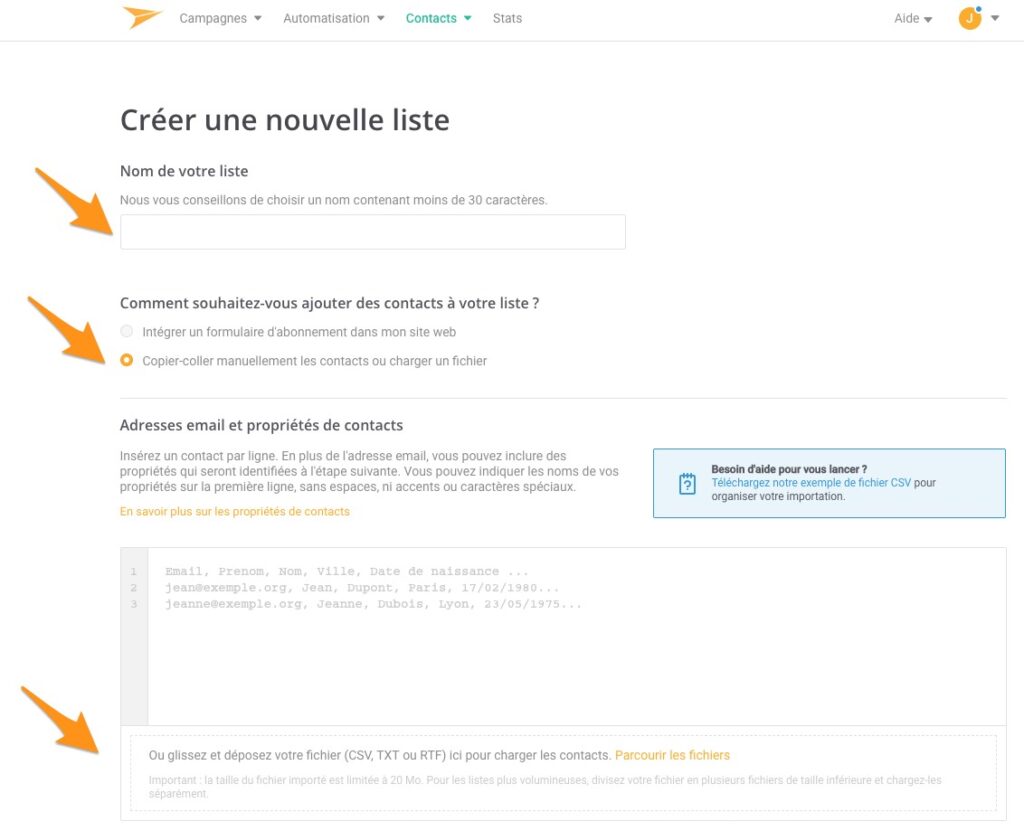
- Log in to your Sinch Mailjet account.
- From the main navigation, proceed to ‘Contacts’ and then ‘Contact Lists’.
- Select ‘Create a new list’. Provide a descriptive name for your new contact list in Mailjet, ideally mirroring the name of the original Mailchimp audience to maintain organizational clarity.
- Choose the option to ‘Paste contacts manually or upload a file’, and then upload the ‘subscribed_members.csv’ file you exported from Mailchimp.
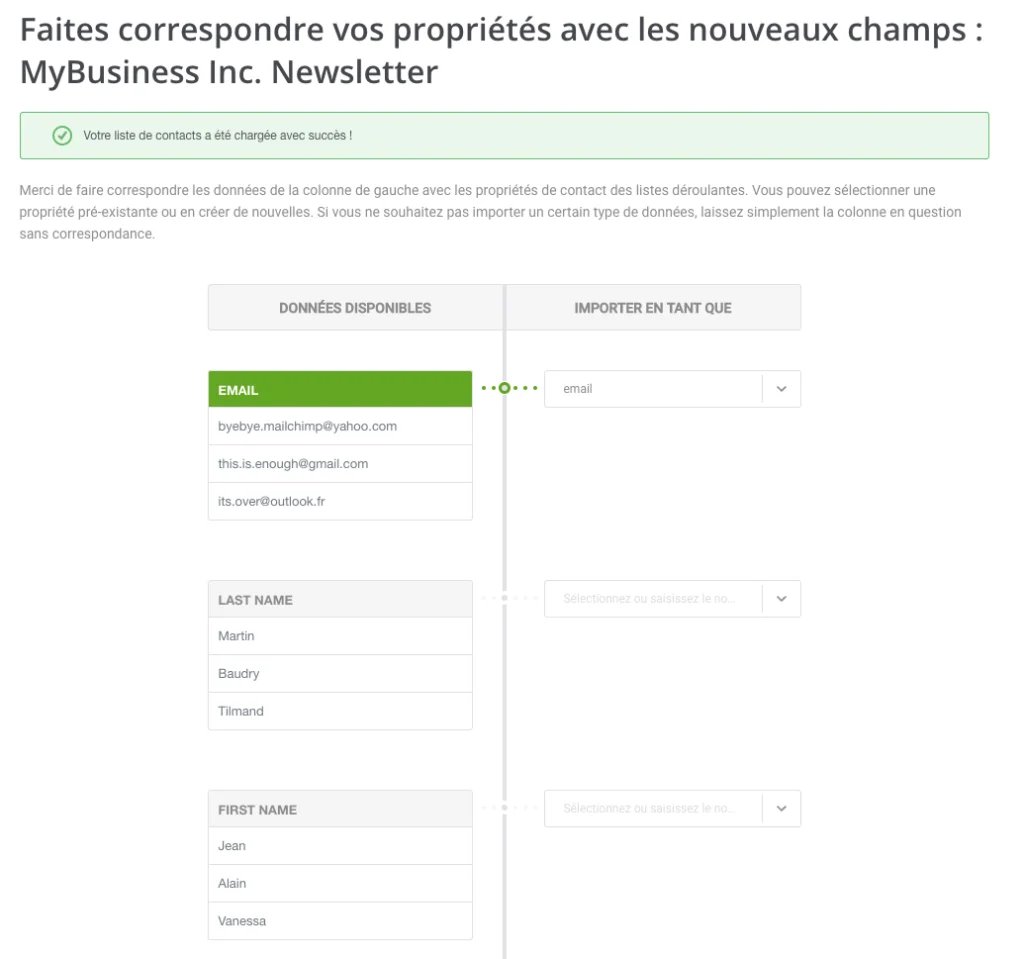
- Mailjet’s interface will prompt you to map the contact fields. This is a crucial step where you align Mailchimp’s data fields (e.g., ‘Email Address’, ‘First Name’, ‘Last Name’, ‘Company’, ‘Birthday’) with their corresponding fields in Mailjet. Mailjet’s intelligent system often auto-detects common fields, but manual verification is essential to ensure accuracy. These mapped properties are vital for future segmentation and personalization efforts within Mailjet. Once mapping is complete, click ‘Save and continue’.
-
Importing Unsubscribed Contacts into Sinch Mailjet:
- This is a critical compliance step. Failing to import unsubscribed contacts can lead to sending emails to individuals who have opted out, potentially resulting in legal issues, damage to your sender reputation, and increased spam complaints.
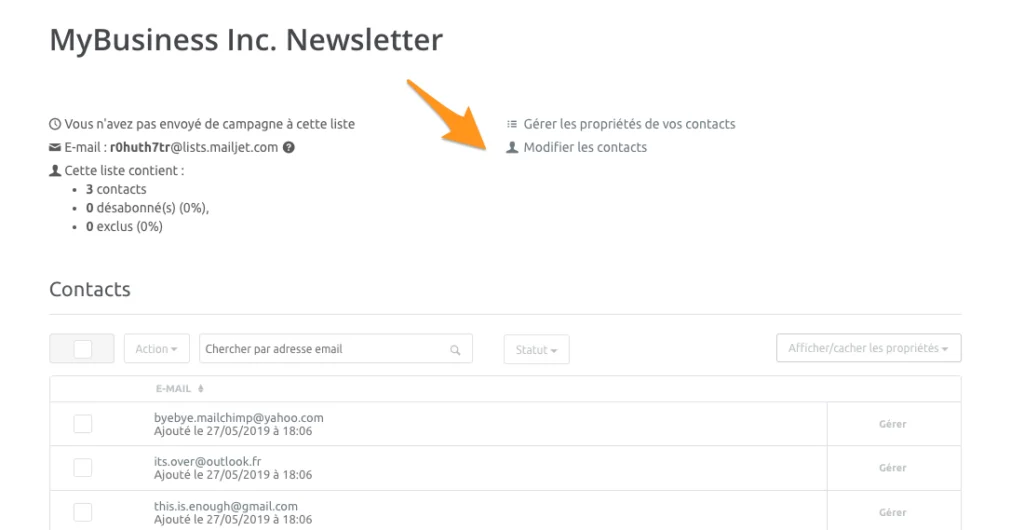
- After your subscribed contacts are imported, locate the newly created contact list in Mailjet and click ‘Manage contacts’.
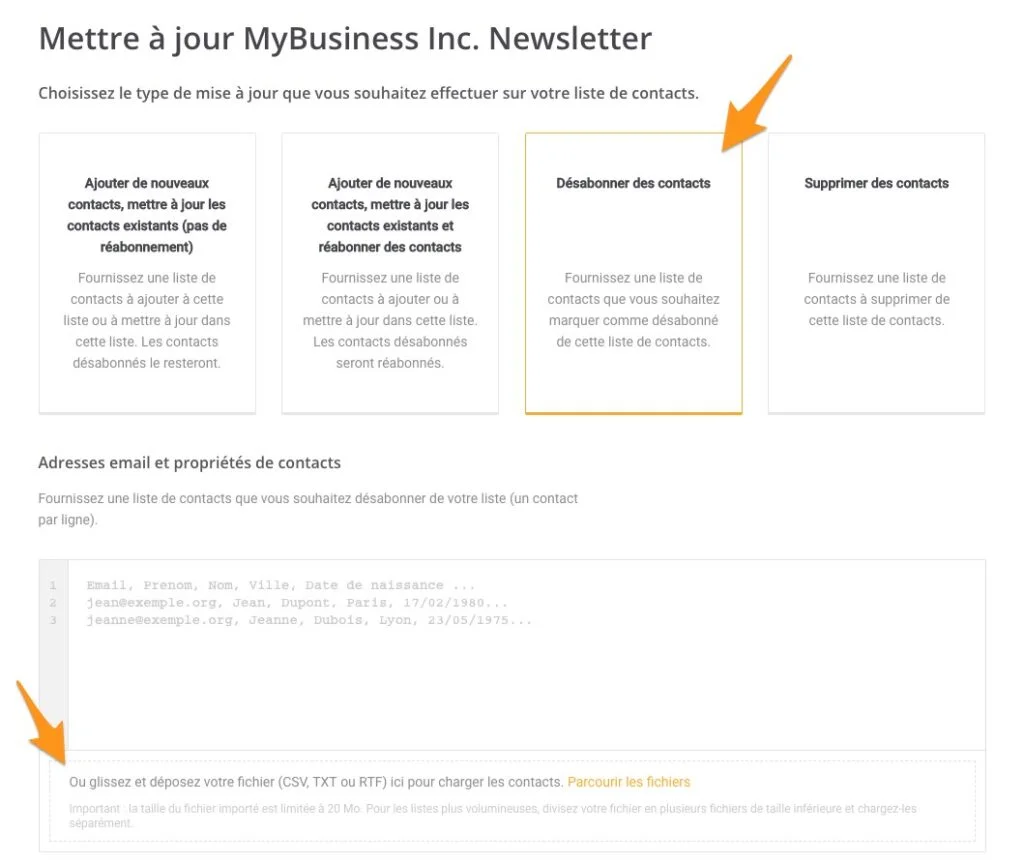
- From the available update types, select ‘Unsubscribe contacts’.
- Drag and drop the ‘unsubscribed_members.csv’ file that you previously unzipped.
- Again, carefully map any necessary fields to ensure that the correct email addresses are identified for unsubscribing within Mailjet. Proceed once mapping is confirmed. This action will effectively flag these contacts as unsubscribed within your new Mailjet list, preventing future mailings to them.
Industry data suggests that businesses often underestimate the complexity of managing unsubscribed lists across platforms, highlighting the importance of this specific step for maintaining good sender reputation and adhering to anti-spam regulations.
Phase 3: Migrating Your Email Templates
The transfer of email templates presents a unique challenge due to the proprietary nature of different ESPs’ email builders. Direct, editable export from Mailchimp to Mailjet’s visual editor is not typically possible. However, there are effective workarounds.
-
Exporting Templates from Mailchimp as HTML:
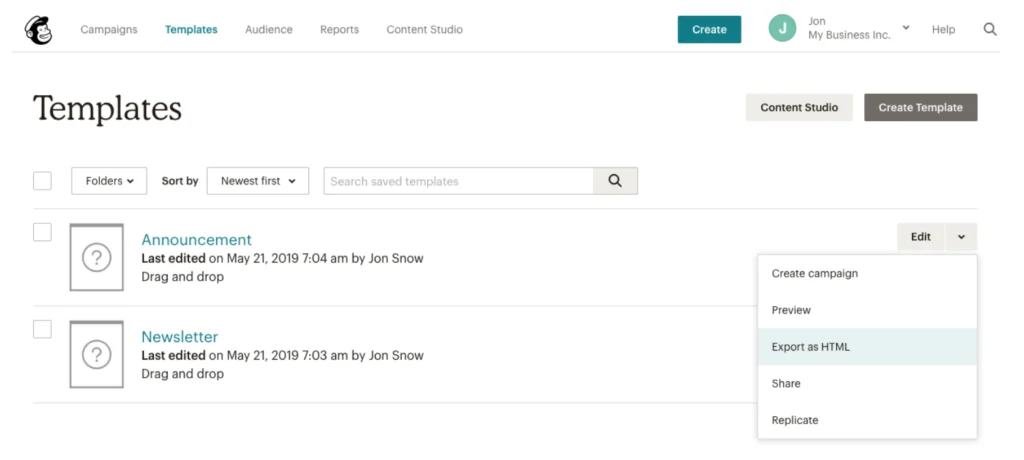
- In your Mailchimp account, navigate to the ‘Templates’ section.
- For each template you wish to transfer, locate the dropdown menu or options associated with that template and select ‘Export as HTML’. This will download an HTML file containing the full code of your email template. Repeat this for all essential templates.
-
Importing HTML Templates into Sinch Mailjet:
- In your Sinch Mailjet account, go to ‘Campaigns’ and then select ‘Create a new template’.
- Choose the option ‘Code it in HTML’. This allows you to directly upload or paste HTML code.
- Upload the HTML file(s) you exported from Mailchimp.
- Important Consideration: While this method preserves the visual design of your templates, they will be imported as static HTML. This means you won’t be able to edit them using Mailjet’s drag-and-drop editor. For ongoing flexibility and to leverage Mailjet’s native features, many businesses opt to rebuild their most frequently used templates directly within Mailjet’s intuitive Email Editor. This allows for easier future modifications, better integration with Mailjet’s dynamic content features, and optimization for its rendering engine.
Phase 4: Exporting Your Reporting Data
While it is not possible to directly transfer historical reporting data from Mailchimp to Sinch Mailjet for seamless integration into Mailjet’s analytics dashboards, retaining this data is crucial for historical analysis, performance benchmarking, and strategic decision-making.
- Downloading Reports from Mailchimp:
- In your Mailchimp account, navigate to the ‘Reports’ section.
- Look for an option to ‘Download All Reports’ or to export individual campaign reports. This will typically provide CSV files or other data formats containing metrics such as open rates, click-through rates, bounce rates, and subscriber activity over time.
- Archive these reports securely. They serve as a vital reference point to compare future campaign performance on Sinch Mailjet and understand long-term trends in your email marketing efforts.
Post-Migration Best Practices and Deliverability Optimization
Completing the data migration is a significant milestone, but the process is not truly finished until your new Mailjet account is fully configured for optimal performance and deliverability.
-
Domain Validation and Sender Address Configuration: Before sending your first campaigns from Sinch Mailjet, ensure that all your sending domains and sender addresses are properly validated within the platform. This confirms to internet service providers (ISPs) that Mailjet is authorized to send emails on behalf of your domain.
-
SPF, DKIM, and DMARC Records: Configuring these critical email authentication protocols is paramount for maximizing deliverability and protecting your sender reputation.
- SPF (Sender Policy Framework): Specifies which mail servers are authorized to send email from your domain.
- DKIM (DomainKeys Identified Mail): Provides a method for validating a domain name identity that is associated with an email message through cryptographic authentication.
- DMARC (Domain-based Message Authentication, Reporting, and Conformance): Builds on SPF and DKIM, allowing senders to indicate that their emails are protected by these protocols, and providing instructions on how to handle messages that fail authentication.
Properly setting up SPF, DKIM, and DMARC significantly reduces the likelihood of your emails being flagged as spam or spoofed by malicious actors.
-
IP Warming (If Applicable): If you are using a new dedicated IP address or a domain with no prior sending history on Mailjet, it’s advisable to engage in a gradual "IP warming" process. This involves slowly increasing your sending volume over several days or weeks to build a positive sending reputation with ISPs. Rapidly sending large volumes from a new IP can trigger spam filters.
-
Continuous Monitoring and Optimization: Once campaigns are launched on Sinch Mailjet, diligently monitor your performance metrics. Pay close attention to open rates, click-through rates, bounce rates, and complaint rates. Use Mailjet’s analytics to identify areas for improvement and refine your email strategies.
Broader Impact and Implications for the Email Marketing Industry
The ongoing trend of businesses migrating between email service providers underscores several key dynamics within the broader email marketing industry. Firstly, it highlights the increasing sophistication of business needs. What once sufficed for basic email blasts is now insufficient for complex, multi-channel marketing strategies. Companies are seeking specialized tools that offer deep functionality in areas like deliverability, automation, and integration.
Secondly, this movement signals intensified competition among ESPs. Providers are continually innovating to offer more robust features, better pricing models, and superior support to attract and retain clients. This competitive environment ultimately benefits businesses, as it drives product development and pushes providers to meet higher standards.
Finally, the emphasis on compliance and data governance in platform selection reflects a maturing digital ecosystem. With global regulations tightening, businesses are making platform choices not just on features but also on a provider’s commitment to security, privacy, and ethical data handling. This focus on trust and compliance is likely to shape the future development and offerings of all major email service providers.
The migration to Sinch Mailjet represents a strategic investment for businesses aiming to optimize their email marketing for scale, performance, and compliance. By meticulously following the outlined migration steps and adhering to post-migration best practices, companies can ensure a smooth transition and unlock the full potential of Sinch Mailjet’s advanced capabilities, positioning themselves for sustained growth and effective customer engagement in the years to come.

 Laily UPN
 Basiran