

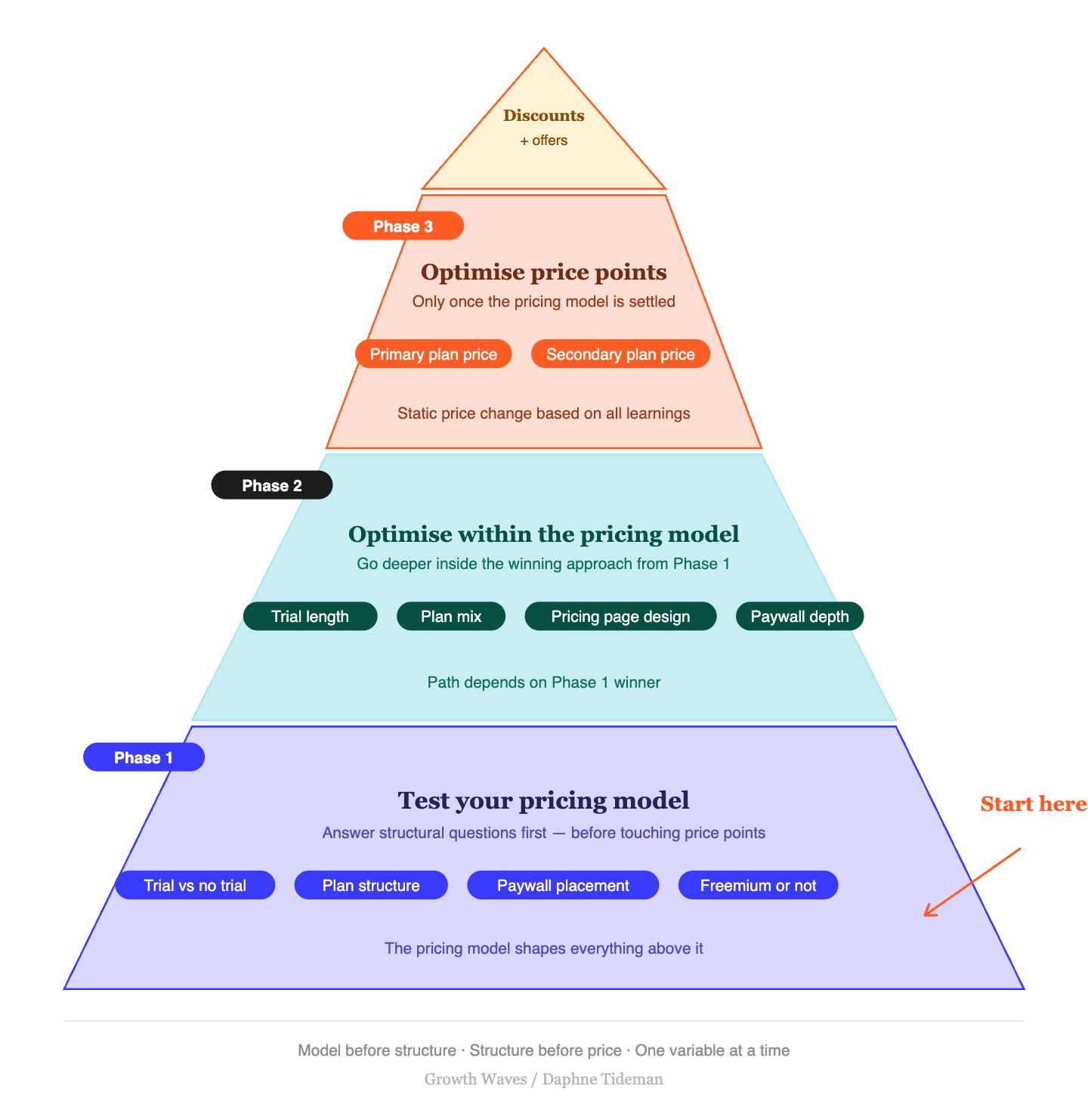
The traditional approach to pricing optimization within the Software-as-a-Service (SaaS) and subscription-based mobile application sectors is undergoing a fundamental shift as growth experts identify a recurring failure in standard A/B testing methodologies. For many organizations, the initial impulse when revenue plateaus is to adjust price points or introduce discount tiers; however, empirical evidence suggests that these are often the least effective levers when the underlying pricing architecture is flawed. Growth strategist Daphne Tideman has introduced a hierarchical mental model known as the "Pricing Pyramid," which posits that pricing decisions must be stacked in a specific sequence to ensure long-term scalability and customer retention. By working from the foundation upward—addressing the value metric and packaging before the actual price point—companies can avoid the common pitfall of concluding that pricing is not a growth lever simply because a poorly sequenced test returned flat results.
The Strategic Misalignment of Modern SaaS Pricing
In the current economic climate, where the cost of customer acquisition (CAC) continues to rise across digital platforms, the ability to maximize the lifetime value (LTV) of a user is paramount. Despite this, data from industry benchmarks indicates that a significant majority of SaaS companies spend fewer than ten hours per year on their pricing strategy. This neglect often leads to a "top-down" testing approach where teams experiment with urgency tactics and paywall aesthetics while the fundamental logic of how they charge remains disconnected from how users derive value.

The "Pricing Pyramid" framework serves as a diagnostic sequence designed to align product value with revenue generation. The model is divided into four distinct layers: the Value Metric, Packaging, Price Point, and Tactical Optimization. The core thesis of this approach is that testing out of order leads to misleading data. For instance, if a company tests a higher price point on a packaging structure that is already too complex for the user to understand, the test will likely fail, not because the product is overvalued, but because the "cognitive load" of the purchase decision was too high.
Layer 1: The Value Metric as the Foundation of Fairness
The base of the pyramid is the value metric—the specific unit of consumption or utility that determines the price a customer pays. Common examples include seats (Slack), storage (Dropbox), or messages (Intercom). According to Tideman, the value metric is the single most critical decision in the pricing journey because it dictates the perceived fairness of the transaction as the customer scales their usage.
In recent years, there has been a significant shift toward usage-based pricing, particularly as Artificial Intelligence (AI) companies grapple with high compute costs. While usage-based models appear logical on a balance sheet, they often create "perverse incentives" for the user. Qualitative research frequently reveals that customers in usage-based models feel "nickeled-and-dimed," leading them to develop workarounds to stay under caps rather than expanding their use of the software. This friction is a primary driver of churn.

To rectify a broken foundation, organizations are encouraged to test whether their value metric grows in lockstep with the customer’s success. A successful value metric ensures that as a customer derives more utility, they are willing to pay more because the ROI remains clear. If the metric instead punishes the user for deep engagement, no amount of price-point testing will fix the resulting retention issues.
Layer 2: Packaging and the Reduction of Cognitive Load
Once a stable value metric is established, the focus shifts to packaging—how features and limits are grouped into tiers. The primary enemy at this stage is complexity. Many subscription apps suffer from "option paralysis," offering an array of tiers and billing cycles that force the customer to perform complex mental mathematics at the point of highest friction: the checkout screen.
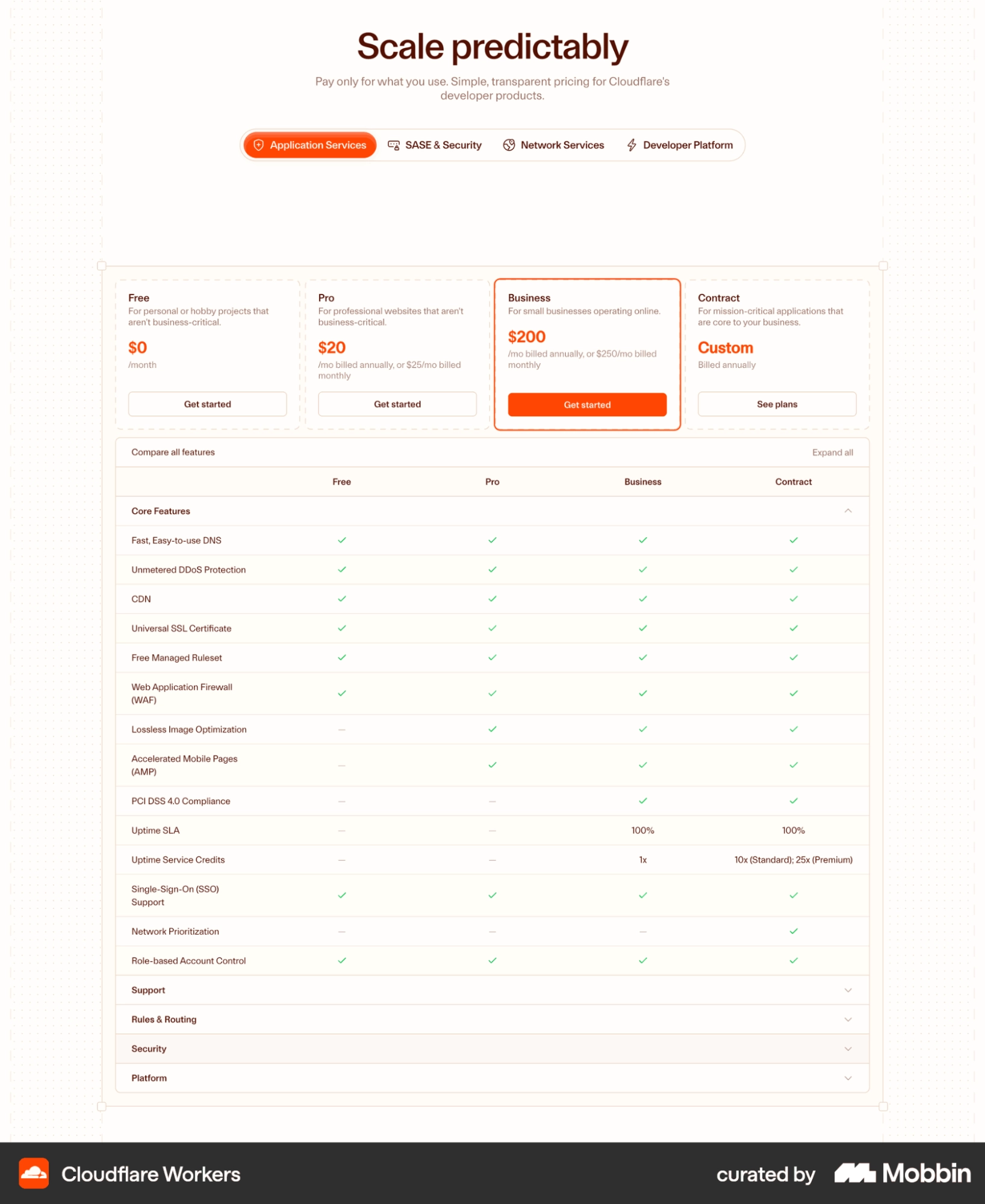
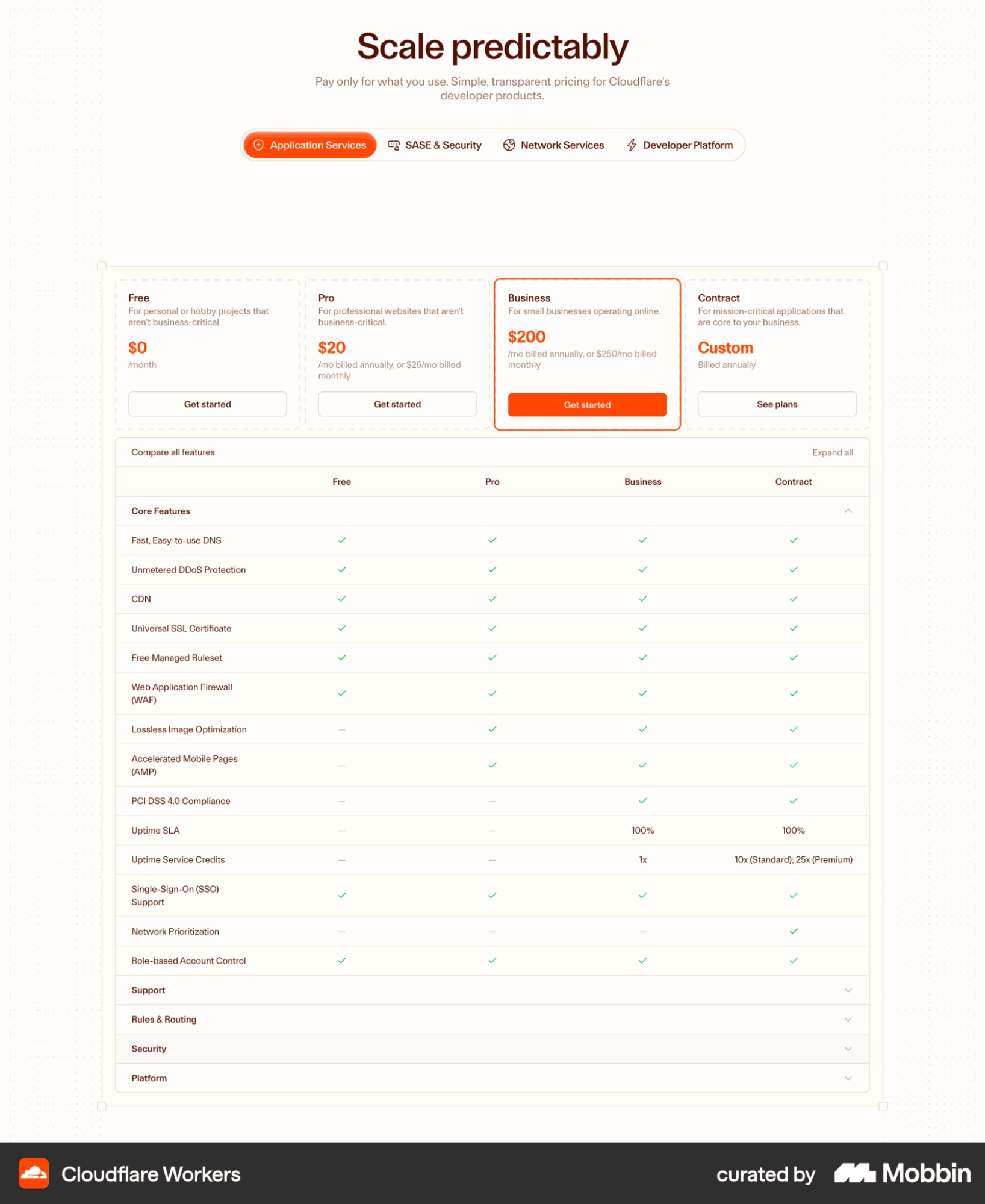
A notable example of packaging complexity can be seen in the developer platform sector. Platforms like Cloudflare Workers have historically faced challenges where pricing pages feature multiple toggles and dozens of named features, requiring users to predict their future technical requirements before they have even integrated the service.
Effective packaging research focuses on "feature-to-tier" alignment. This involves testing which features are truly "pro" level versus which are essential for the "entry" level. The goal of this layer is to ensure that the transition between tiers feels like a natural progression rather than a forced upgrade. Organizations are advised to test the removal of underutilized tiers to streamline the decision-making process, thereby reducing the "leaks" in the conversion funnel caused by consumer indecision.
Layer 3: Empirical Research into Willingness to Pay
Only after the value metric and packaging are solidified should a company address the actual numerical price point. A common error in this phase is "guessing" based on competitor benchmarks rather than measuring the specific "willingness to pay" (WTP) of a company’s own user base.
To bring scientific rigor to this layer, experts recommend two primary research methodologies:
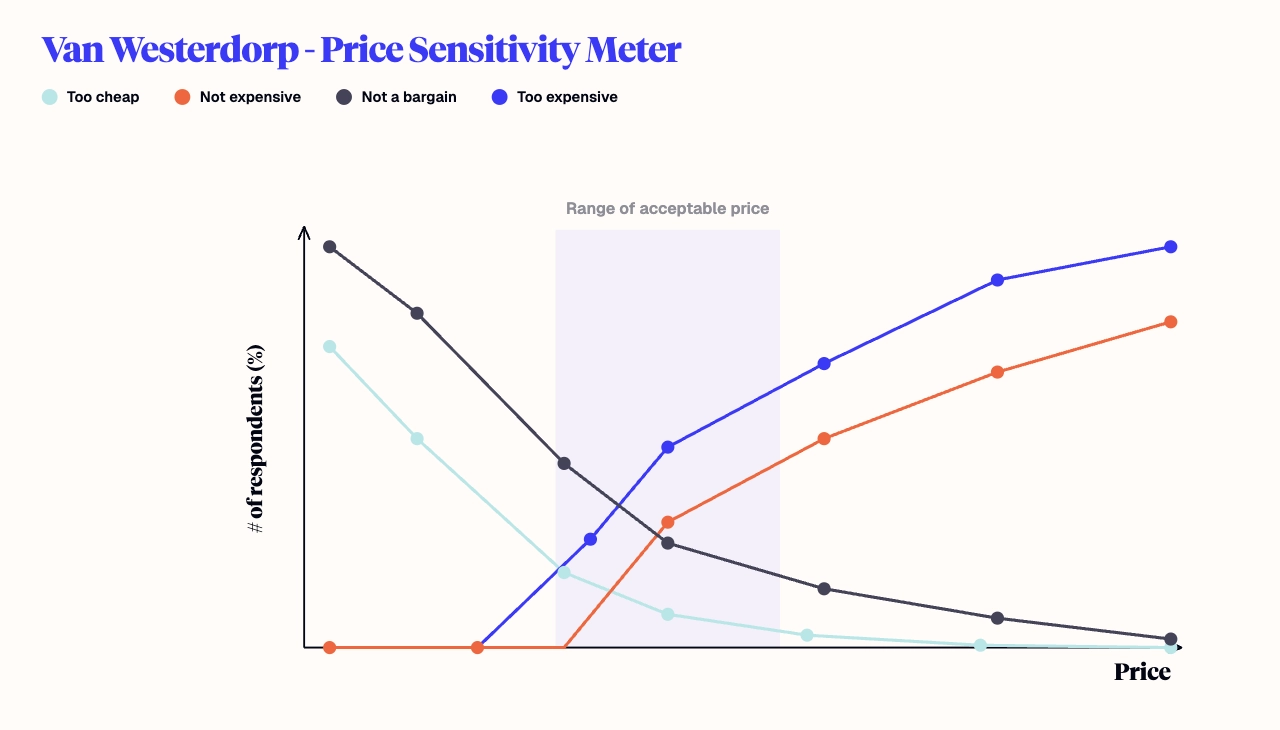
- Van Westendorp Price Sensitivity Meter: This involves asking potential customers four specific questions to identify a "range of acceptable prices," helping the company find the "Optimal Price Point" where the perceived value matches the cost.
- MaxDiff Analysis: This forces respondents to choose the "best" and "worst" options from a set of features or price points, providing a clear hierarchy of what users actually value.
By conducting this research before running A/B tests, companies can establish a baseline of what the market will bear. This prevents the "p-hacking" of results where teams run multiple price tests simultaneously with other variables, such as trial lengths or UI changes. Clean testing at this level is essential; if a price change is bundled with a change in the onboarding flow, the data becomes noisy, and the organization loses the ability to build on the learning.
Layer 4: Tactical Optimization and Paywall Refinement
The apex of the pyramid consists of tactical optimizations—the "nudges" that facilitate the final conversion. This includes psychological triggers such as price anchoring (displaying a high-priced plan next to a target plan to make the latter seem like a bargain), urgency framing (limited-time offers), and discount presentation.
While these tactics are popular because they are easy to implement and provide immediate data, they are refinements rather than foundational shifts. High-performing growth teams use Layer 4 to "grease the wheels" of a strategy that has already been validated by the three layers below. When a paywall tactic like a "free trial countdown" fails to move the needle, it is rarely a failure of the tactic itself; rather, it is usually a sign that the underlying value metric or packaging structure is not resonating with the audience.
Chronology of Pricing Evolution in the SaaS Sector
The necessity of the Pricing Pyramid model can be traced through the historical evolution of the software industry:
- The Flat-Rate Era (2000s-2010s): Early SaaS companies largely used "one size fits all" pricing, focusing on simplicity to encourage adoption.
- The Seat-Based Explosion (2010s-2020): Led by Salesforce and Slack, the "per-user" model became the industry standard, though it eventually began to hinder collaboration in large organizations.
- The Profitability Pivot (2022-Present): As venture capital shifted focus from "growth at any cost" to "unit economics," companies began realizing that pricing is the most effective lever for improving the LTV/CAC ratio. This led to the rise of more sophisticated models like the one proposed by Tideman.
Broader Implications for Market Stability and Investor Relations
The move toward a hierarchical pricing strategy has significant implications for how companies are valued by investors. In the current market, "Net Revenue Retention" (NRR) has become a primary metric for health. A company that has mastered its "Value Metric" (Layer 1) will naturally see high NRR because as customers grow, their spend grows organically without the need for aggressive sales intervention.
Conversely, companies that focus solely on "Tactical Optimization" (Layer 4) often see high initial conversion rates followed by "churn cliffs." This volatility makes it difficult for analysts to predict long-term revenue. By adopting the Pricing Pyramid, organizations can demonstrate a "scientific" approach to revenue growth that is based on customer utility rather than psychological manipulation.

Conclusion: Reversing the Upside-Down Pyramid
The prevailing sentiment among growth practitioners is that most pricing failures are actually failures of sequence. When a team concludes that their users are "price sensitive," they are often misdiagnosing a structural issue with how value is measured or packaged.
By systematically working from the bottom of the pyramid upward, subscription businesses can ensure that their pricing is not just a number on a page, but a reflection of the product’s core value proposition. This diagnostic sequence—starting with the metric, moving to structure, validating with research, and ending with optimization—provides a repeatable framework for sustainable revenue growth in an increasingly competitive digital economy. Organizations that fail to align their pricing foundations with user value risk running endless, inconclusive tests while their more structured competitors capture the market.







