
 rifanmuazin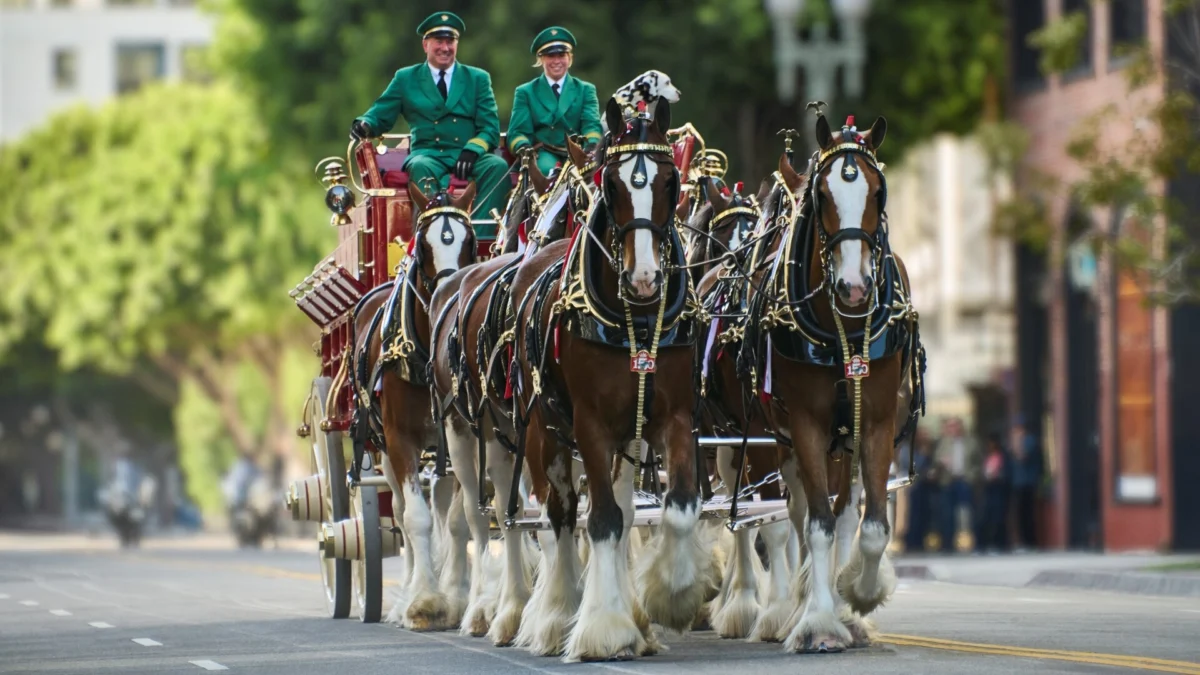
Budweiser, the flagship brand of Anheuser-Busch InBev, has officially launched a comprehensive national campaign to celebrate its 150th anniversary, a milestone that coincides with a pivotal era for the American beer industry. To commemorate a century and a half of production, the brand is deploying a multi-faceted marketing strategy that includes a new national television commercial, the release of limited-edition commemorative packaging, and an extensive cross-country tour featuring the world-famous Budweiser Clydesdales. The "American Summer" campaign is designed to reinforce the brand’s identity as a staple of domestic culture, focusing on themes of heritage, community, and national pride.
The anniversary festivities are scheduled to reach their peak during the summer months, a period traditionally characterized by high beer consumption. Consumers can expect to see the Clydesdales—a symbol of the brand since the end of Prohibition—at local parades, state fairs, and major sporting events across the United States. This traditionalist approach marks a significant strategic effort by Anheuser-Busch to stabilize its market position and reconnect with its core demographic following several years of volatility within the beverage sector.
A Century and a Half of Brewing History
The history of Budweiser began in 1876 when Adolphus Busch, a German immigrant, sought to create a beer that would appeal to a broad American audience across different regions. At a time when most Americans drank heavy, dark ales, Busch introduced a light, crisp lager inspired by the brewing traditions of Bohemia. By utilizing pasteurization—a revolutionary technique at the time—Budweiser became one of the first truly national beer brands, capable of being shipped across the country without spoiling.
Over the last 150 years, Budweiser has survived significant existential threats, most notably the era of Prohibition (1920–1933). During this time, the company pivoted to producing non-alcoholic "near beer," malt extract, and even ice cream to remain solvent. The end of Prohibition in 1933 birthed the legend of the Clydesdales, which were originally a gift from August A. Busch Jr. to his father to celebrate the first bottle of post-Prohibition beer. Since then, the horses have become inseparable from the brand’s public image, appearing in iconic Super Bowl advertisements and serving as "ambassadors" for the company’s commitment to quality and tradition.
The 150th-anniversary campaign seeks to draw directly from this reservoir of nostalgia. Todd Allen, Senior Vice President of Marketing for Budweiser at Anheuser-Busch, emphasized this connection in a recent official statement. “From the farmers and brewers to the drivers and communities we serve, Budweiser has always been about the people and the moments celebrated over our iconic high-quality American Classic Lager,” Allen stated. The campaign’s focus on the "American Classic Lager" phrasing is a deliberate attempt to assert the brand’s status as the definitive domestic beer choice.
Strategic Pivot Following Market Turbulence
The decision to double down on traditional patriotic messaging is not merely a celebration of longevity; it is a calculated response to the most challenging period in the company’s recent history. In 2023, Anheuser-Busch faced an unprecedented consumer backlash following a marketing partnership between its Bud Light brand and transgender influencer Dylan Mulvaney. While the partnership consisted of a single social media post, the ensuing boycott led to a dramatic shift in the beer landscape.
By the end of 2023, Bud Light had lost its long-held title as the top-selling beer in the United States to Modelo Especial, a Mexican lager owned by Constellation Brands. Industry analysts estimated that the controversy cost Anheuser-Busch approximately $1 billion in lost sales and necessitated a massive restructuring of its marketing and leadership teams. The incident served as a cautionary tale for corporate America regarding the complexities of brand positioning in a highly polarized social and political environment.
The current 150th-anniversary campaign for the "Red Label" Budweiser brand appears to be a direct effort to insulate the company from further controversy. A review of the press materials for the anniversary reveals a meticulous adherence to "safe" and unifying language. The words "America," "American," and "Americans" appear nearly three dozen times in the primary press release, while variations of the phrase "bringing people together" are used repeatedly. By leaning into the brand’s 150-year history, Anheuser-Busch is attempting to bypass contemporary cultural debates and return to a foundational identity that resonates with a broad, multi-generational audience.
Aligning with National Milestones
The timing of Budweiser’s 150th anniversary is strategically aligned with several major national events that provide a natural backdrop for patriotic marketing. The summer of 2026 is a landmark period for the United States, as the nation celebrates its Semiquincentennial—the 250th anniversary of the signing of the Declaration of Independence. As millions of Americans participate in July 4th festivities, Budweiser’s "American Summer" campaign is positioned to integrate seamlessly into the national celebration.
Furthermore, the 2026 FIFA World Cup, hosted jointly by the United States, Canada, and Mexico, provides a global stage for the brand. With matches taking place in major U.S. cities, the influx of international tourists and the heightened sense of national pride surrounding the U.S. Men’s National Team create a lucrative environment for a brand that markets itself as "The King of Beers." By aligning its 150-year milestone with the nation’s 250-year milestone and a global sporting event, Budweiser is maximizing its visibility at a time when consumer sentiment is naturally inclined toward heritage and national identity.
Market Data and Consumer Trends
Despite the high-profile nature of its anniversary, Budweiser faces a complex market. The beer industry as a whole has seen a gradual decline in volume sales as consumers migrate toward spirits, ready-to-drink (RTD) cocktails, and non-alcoholic alternatives. According to data from the Beer Institute, domestic beer shipments have faced downward pressure for several years, with younger consumers—particularly Gen Z—showing less brand loyalty to legacy lagers than previous generations.
However, Anheuser-Busch remains a dominant force. Despite the losses incurred by Bud Light, the company’s portfolio—which includes Budweiser, Michelob Ultra, and Stella Artois—still commands a significant portion of the U.S. market share. Michelob Ultra, in particular, has seen consistent growth, appealing to health-conscious consumers. The 150th-anniversary campaign for Budweiser is seen by analysts as an "anchor" strategy: while other brands in the portfolio chase new trends, the core Budweiser brand is tasked with maintaining the company’s traditional base and reinforcing its historical legitimacy.
The limited-edition cans released for the anniversary feature design elements from various eras of the brand’s history, including the 1876 original label and the iconic mid-century designs. This "retro" packaging has proven successful for other consumer packaged goods companies, tapping into the "vintage" trend that appeals to both older drinkers who remember the original designs and younger consumers who value "authentic" brand stories.
Implications for the Future of Brand Marketing
The Budweiser 150th-anniversary campaign serves as a significant case study in crisis management and brand evolution. For Anheuser-Busch, the goal is to prove that a legacy brand can remain relevant without alienating its core audience. The shift away from experimental social media partnerships toward large-scale, traditional physical activations—like the Clydesdale tour—suggests a return to "experiential marketing" that prioritizes face-to-face community engagement over digital clout.
Industry experts suggest that this "back-to-basics" approach may become a blueprint for other legacy corporations navigating a divided consumer base. By focusing on shared history and tangible traditions, brands can create a "neutral ground" that avoids the pitfalls of social media-driven controversies.
However, the long-term challenge remains. While patriotic messaging and nostalgia can stabilize a brand, they do not necessarily solve the problem of an aging consumer base. As Budweiser enters its 151st year and beyond, the company will need to find a way to balance its 19th-century roots with the 21st-century preferences of a more diverse and health-conscious public.
For now, the "King of Beers" is betting on the enduring power of the American flag, the majesty of the Clydesdales, and the simple appeal of a cold lager on a summer afternoon. Whether this strategy can fully restore the brand to its former heights remains to be seen, but the 150th-anniversary campaign ensures that Budweiser will remain a central fixture of the American cultural and commercial landscape for the foreseeable future.










