rifanmuazin
The landscape of B2B purchasing is undergoing a profound transformation, driven by an increasingly complex web of stakeholders and the pervasive influence of artificial intelligence. A recent report from Forrester, "The State of Business Buying, 2026," reveals that the average B2B purchase now involves a staggering thirteen internal decision-makers and nine external influencers. This intricate network underscores the growing need for comprehensive consensus-building within organizations and a reliance on a diverse range of external validation sources.
At the forefront of buyer research is generative AI, which has rapidly become the most frequently cited tool. However, this technological advancement is not without its challenges. The same Forrester report highlights a concerning paradox: nineteen percent of buyers utilizing AI tools report feeling less confident in their purchase decisions due to the unreliability of AI-generated information. This sentiment compels buyers to compensate by broadening their networks, seeking out in-depth analyst reports, consulting subject matter experts, and engaging with peer communities to cross-reference and validate the information gleaned from AI searches.
This evolving dynamic has created a business environment where mere visibility is insufficient; it is the ability to provide the "best answer" that truly resonates. TopRank Marketing has termed this phenomenon the "age of Best Answer Brands," characterizing companies that consistently earn their position as the most credible and relevant sources of information, whether that be in search engine results, AI-powered summaries, online communities, through influencer recommendations, or via industry analyst reports.
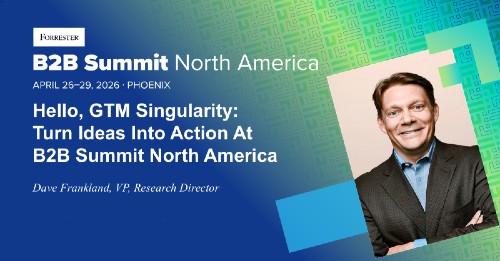
Forrester identifies the overarching force behind these shifts and others impacting the B2B marketing sector as the "GTM Singularity." This concept posits that AI-driven buyer autonomy is fundamentally disrupting traditional go-to-market models across marketing, sales, product, and customer success functions. This critical theme is the organizing principle for Forrester’s B2B Summit North America, scheduled to take place from April 26-29, 2026, in Phoenix, Arizona. The four-day event is meticulously designed to offer research-backed sessions addressing the immediate strategic decisions facing Chief Marketing Officers (CMOs).
Forrester B2B Summit North America: Navigating the GTM Singularity

The B2B Summit North America is a premier industry event that brings together B2B marketing and sales leaders, strategists, and analysts to explore the latest research, trends, and best practices shaping the future of go-to-market strategies. Held annually, the summit provides a critical platform for professionals to gain actionable insights, engage in peer-to-peer learning, and connect with industry experts. This year’s event, centered around the "GTM Singularity," promises to delve into how AI is reshaping buyer behavior and forcing organizations to adapt their entire go-to-market apparatus.
Expert Insights: What CMOs Need to Know for B2B Summit 2026
In preparation for attending the B2B Summit for the first time, and to provide valuable insights to the broader B2B marketing community, a series of interviews were conducted with four senior Forrester analysts who are slated to present at the event. These analysts—Kelvin Gee, Karen Tran, Lisa Gately, and Laura Ramos—shared their perspectives on the critical knowledge CMOs should acquire and the key takeaways from their respective sessions.
Kelvin Gee: The Power of Brand and Demand Synergy
Kelvin Gee, Principal Analyst for Demand and ABM at Forrester, will co-present a keynote session titled "Make Brand + Demand Your Preference Multiplier." His core argument centers on the historical disconnect between brand and demand generation efforts. In an era of self-guided buyers who form preferences long before engaging with sales representatives, Gee asserts that every customer interaction must simultaneously build trust and activate demand. Companies that successfully integrate these disciplines, he explains, create a "preference multiplier"—a compounding pipeline advantage that siloed strategies cannot replicate.
Gee outlined three essential takeaways for CMOs attending his keynote:
- Understanding the buyer’s journey: Buyers are increasingly independent, conducting extensive research and forming opinions before direct vendor engagement.
- The integrated approach: Siloed brand and demand efforts are no longer effective. A cohesive strategy is paramount to capture buyer attention and drive consideration.
- Quantifiable impact: The "preference multiplier" concept offers a framework for measuring the synergistic benefits of aligned brand and demand initiatives, leading to a more robust and predictable pipeline.
Gee emphasized that CMOs should arrive at the summit with specific, pressing decisions in mind, such as aligning brand and demand strategies, integrating AI into their go-to-market workflows, and optimizing buying group engagement. "CMOs will get the most out of Forrester’s B2B Summit by showing up with two or three ‘must-solve’ decisions—brand + demand alignment, AI in the GTM workflow, buying-group engagement—and using the event to pressure-test those decisions through a mix of keynotes, role-based track sessions, and peer conversations," Gee stated. He further noted that his session provides a practical planning tool grounded in buyer behavior data.
Karen Tran: Cultivating Trust Through Authentic Content
Karen Tran, Principal Analyst in Forrester’s Marketing Executive Strategies, Brand and Communications practice, will participate in a panel discussion titled "Authentic Content Builds Buyer And Customer Trust." Her session will address the critical role of genuine and valuable content in establishing credibility with modern B2B buyers. Key practical strategies to be discussed include building credibility through original data and distinct perspectives, fostering co-creation of content with both internal experts and external influencers, and strategically placing content across owned, earned, and paid channels.
Forrester’s 2026 B2B predictions indicate a significant shift, with seventy-five percent of enterprise B2B companies planning to increase their budgets for influencer relations this year. This trend is directly linked to buyers’ increasing reliance on external voices for decision validation. Tran’s session is therefore highly relevant for CMOs involved in budget planning.
"Marketers must provide real, credible value through distinct viewpoints, original data, and knowledge acquired through experience and research. We’ll discuss co-creating content with different influencer types—inside and outside of your organization—and the importance of placement on owned, earned, and paid channels," Tran explained. She also offered a valuable piece of advice for CMOs attending the summit: "Summit is a rare opportunity for human connection. Get business cards, ask questions, and share connections via social media."
Lisa Gately: Leading in the Age of AI-Democratized Work
Lisa Gately, a Principal Analyst at Forrester, will tackle a leadership challenge that often receives less attention than the technical aspects of AI: how leadership evolves when artificial intelligence empowers every team member to create, publish, and adapt content at scale. Gately’s perspective is that leadership’s role shifts from approving output to designing the underlying systems. This includes defining how work gets done, determining who holds ultimate judgment, and ensuring the maintenance of trust within the organization.
Gately’s session promises actionable insights for CMOs, including:
- The system design imperative: Leadership must move beyond managing tasks to architecting the processes and frameworks that govern AI-augmented work.
- Judgment ownership: Clearly defining who is accountable for critical decisions and ensuring human oversight in AI-driven processes is crucial for maintaining quality and ethical standards.
- Cross-functional collaboration: AI’s democratizing effect necessitates a shift in leadership focus from optimizing individual functions to architecting integrated, cross-functional systems that leverage AI effectively across the entire go-to-market spectrum.
"The job of leadership shifts from approving output to designing the system that determines how work gets done, who owns judgment, and how trust is protected. It also moves a leader from optimizing their function to architecting cross-functional systems," Gately stated. Her framework provides a valuable lens for CMOs evaluating their organizational readiness for an AI-integrated future.

Laura Ramos: Reshaping GTM with AI and Understanding AI Agents
Laura Ramos, VP and Principal Analyst at Forrester, is set to present on two crucial panels, focusing on the implications of AI for human roles across go-to-market teams. Her approach to discussing AI’s workforce impact cuts through the prevalent fear-based narratives. Forrester research indicates that AI is poised to positively transform four times as many jobs as it eliminates, provided that leaders make strategic upfront investments in what Ramos terms the "AI tax."
Ramos elaborated on this concept: "You’ve got to be specific about what it is you want AI to do, put the governance in place, and make sure that the data and content to train the AI are proper and in place. That takes a lot more work than people expect. You’ve got to pay that tax up front before you can start harvesting the efficiency."
Her sessions will explore how AI can be leveraged to reshape sales, product, and post-sale experiences to enhance customer value, and will also address the "Humans vs. Robots Showdown," examining the impact of AI agents on human roles.
Ramos also offered a practical framework for attendees to maximize their summit experience, suggesting they organize their learnings into three categories:
- Big Vision Items: Concepts that fundamentally shift the mindset on persistent challenges.
- Tangible Best Practices: Actionable strategies that can be implemented immediately upon return.
- Technology Discoveries: Innovations identified in the exhibit hall or vendor sessions that promise improvements in efficiency, scale, or effectiveness.
Regarding the summit’s core theme, Ramos commented, "Today’s buyers come fully armed to figure out what they need and that puts a lot more pressure on sales, marketing, the product organization, and post-sale to really deliver on their expectations—and to understand and analyze those expectations way earlier before you’re even talking to them.”
The CMO Playbook for Maximizing B2B Summit North America 2026

To derive the greatest benefit from the B2B Summit North America, CMOs are advised to adopt a strategic approach. The consensus among the interviewed analysts points to several key recommendations:
-
Arrive with Specific Decisions in Mind: Each analyst stressed the importance of attendees coming prepared to tackle two to three critical decisions. These might include aligning brand and demand strategies, establishing robust AI governance, ensuring measurement accountability, or undertaking organizational redesign. The summit provides an ideal environment to test assumptions against independent research and connect with peers facing similar challenges. Specificity of intent is crucial for achieving specific, valuable outcomes.
-
Apply for the Executive Leadership Exchange (ELE): Three of the four analysts highlighted the ELE program, an exclusive track for C-level executives. The ELE offers private sessions, priority access to analyst one-on-one meetings, and structured peer networking opportunities. According to Ramos, the ELE specifically focuses on identifying and overcoming internal organizational barriers that hinder go-to-market effectiveness. Prospective attendees are encouraged to apply if they meet the qualification criteria.
-
Utilize Analyst One-on-Ones Strategically: The opportunity to engage directly with Forrester analysts is a cornerstone of the summit experience. Attendees are encouraged to prepare specific questions or present live decision-making scenarios. This could involve discussions about measurement strategies for CFOs, drafting AI governance policies, or resolving brand and demand integration issues.
-
Make Human Connections Intentionally: Beyond the structured sessions, the summit offers invaluable opportunities for networking and forging professional relationships. Karen Tran emphasized this point, stating, "Summit is a great opportunity for CMOs and marketing leaders to make human connections. There is incredible value in both the small moments and the big moments—inspiration from award stories on stage, shared experiences in workshops, learnings over lunch."
A Curated Selection of B2B Summit Recommended Sessions for CMOs

The full agenda for B2B Summit North America 2026 features an extensive array of over fifty speakers delivering more than one hundred presentations and interactive sessions across the four-day event. This includes keynotes, breakout sessions, analyst-led roundtables, workshops, and practitioner case studies. Based on the insights gathered from the Forrester analysts, a short list of recommended sessions for CMOs includes:
Keynotes:
- "Make Brand + Demand Your Preference Multiplier" – A foundational session exploring the integrated approach to building buyer preference.
- Dave Frankland, VP Research Director at Forrester and keynote speaker on the GTM Singularity, will deliver a session that sets the overarching tone for the event, likely delving into the core disruptive forces shaping B2B go-to-market strategies.
Breakout Sessions and Panels:
- "Authentic Content Builds Buyer And Customer Trust" – A vital discussion on leveraging credible content in an information-saturated market.
- Sessions focusing on "Leading When AI Democratizes Work" will provide frameworks for managing AI-empowered teams.
- Discussions on "Using AI To Reshape Sales, Product, And Postsale Experiences To Boost Customer Value" and "Humans vs. Robots Showdown: The Impact Of AI Agents On Human Roles" will offer practical applications of AI in GTM functions.
Practitioner and Case Study Sessions:
- These sessions will offer real-world examples and best practices from companies successfully navigating the evolving B2B landscape, providing tangible insights and inspiration.
Special Programs and Awards:
- The Executive Leadership Exchange (ELE) and other specialized programs offer focused learning and networking opportunities for senior executives.
- Awards ceremonies will likely highlight innovative leaders and groundbreaking strategies in the B2B space.
Looking Ahead: The Future of B2B Marketing at B2B Summit 2026

The B2B Summit North America serves as a crucial barometer for the future of business-to-business marketing and sales. As the industry grapples with the "GTM Singularity," driven by AI-powered buyer autonomy and increasingly complex buying committees, the need for strategic adaptation is paramount. Brands that can consistently deliver the "best answer" – characterized by credibility, relevance, and trust – will be best positioned for success. Forrester’s B2B Summit provides an indispensable platform for CMOs and other B2B leaders to acquire the research, expertise, and peer connections necessary to navigate these transformative times.
For those considering attendance, a special discount code, ODDEN26, is available, offering a 10% reduction on registration fees. The event promises to equip attendees with the insights and strategies needed to thrive in the dynamic and AI-influenced future of B2B commerce.
A forthcoming episode of the "Beyond B2B Marketing" podcast will feature an in-depth conversation with Dave Frankland, VP Research Director at Forrester, who will further explore the GTM Singularity and its implications for B2B marketing leaders.
Disclosure: Forrester has provided the author with an event pass to this year’s B2B Summit.