

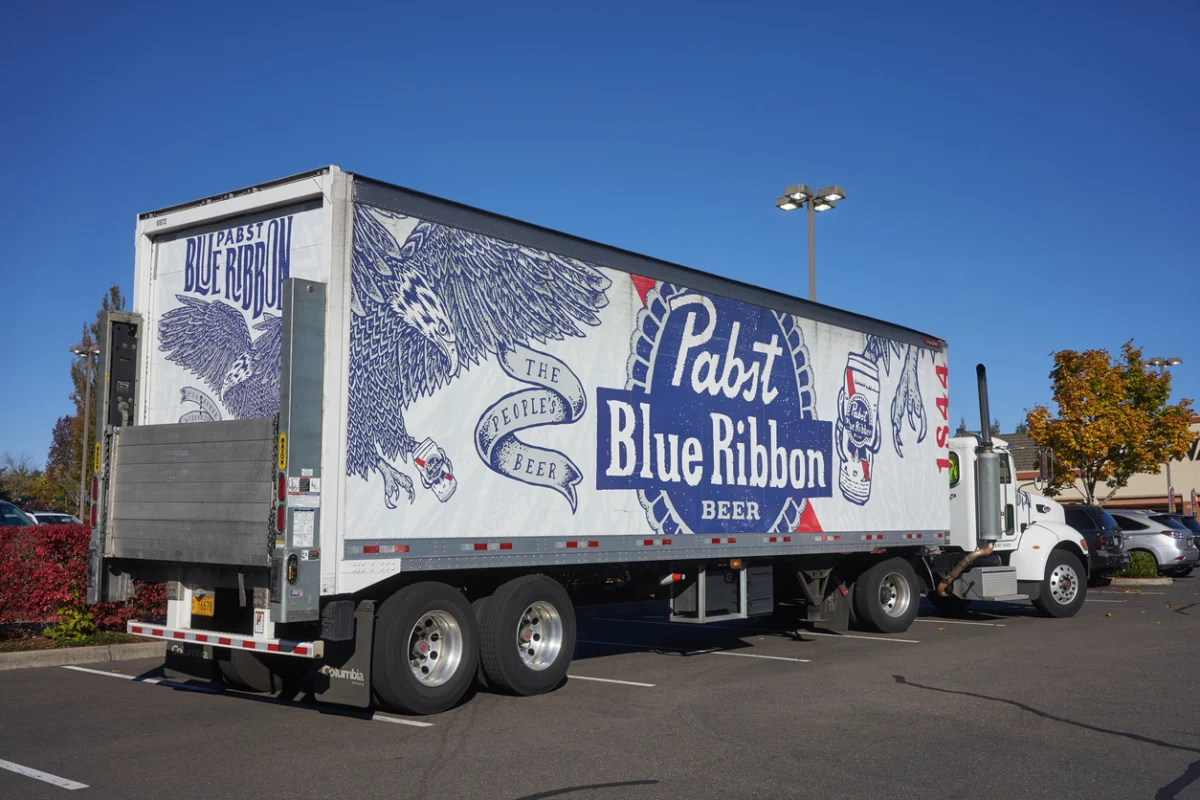
The Pabst Brewing Company has turned a significant logistical loss into a high-value marketing opportunity following the theft of a massive shipment of its flagship Pabst Blue Ribbon (PBR) beer. In late August, authorities in Montclair, California, reported the theft of a truckload containing 40,000 pounds of PBR. In a departure from traditional corporate crisis management, which typically involves sober press releases and insurance claims, the brand opted for a "no-questions-asked" public appeal on social media, blending humor with a deadline-driven ultimatum for the return of the stolen goods.
The theft, which occurred in the San Bernardino County city, involved the disappearance of the beer cargo itself rather than the vehicle. In response, Pabst Blue Ribbon launched a digital campaign across its social platforms, most notably Instagram, offering a specific window for the return of the 20 tons of beer. The brand set a deadline of 18 days and 44 minutes—a deliberate nod to 1844, the year the brewery was founded in Milwaukee, Wisconsin. The "amnesty" offer promised that if the beer was returned within this timeframe, the company would grant the perpetrators full forgiveness without legal pursuit.
The Strategy of Brand Vulnerability and Earned Media
The social media post announcing the "forgiveness" period was characterized by a self-aware, cheeky tone that resonated with the brand’s core demographic. The post featured a disclaimer stating that the image of the truck used was "not of the actual truck… because we can’t find that one," and admitted that the Montclair Police Department logo used in the graphic was a recreation intended to "look legitimate so you would pay attention."
This strategy of "brand vulnerability" has proven highly effective in the modern attention economy. Within days, the post garnered over 45,000 likes and was picked up by major national outlets, including The New York Times. Marketing analysts suggest that the earned media value (EMV) generated by this coverage likely far exceeds the wholesale value of the 40,000 pounds of beer. While a truckload of beer is a tangible loss, the resulting brand visibility and consumer engagement serve as a powerful offset.
This incident mirrors a successful campaign by KitKat earlier this year. Following a "heist" of KitKat bars in Europe, the brand issued a statement assuring the public that "there are no concerns for consumer safety and supply is not affected." The subsequent wave of memes and community engagement eventually earned the brand several Cannes Lions, the highest honor in the creative marketing industry. By refusing to take the incident too seriously—and knowing the inventory was insured—Pabst is following a proven blueprint for turning a negative event into a community-building moment.
Instagram Redefines Transparency for AI-Generated Profiles
While Pabst navigates the physical world of logistics and theft, Meta-owned Instagram is overhauling its digital landscape to address the rise of synthetic media. In a recent policy update, the platform announced it is changing how it labels accounts that were formerly categorized as "AI creators." Moving forward, these accounts will be labeled as "AI-generated profiles" to provide users with greater clarity regarding the nature of the content they are consuming.
The distinction is subtle but significant for the influencer marketing industry. An "AI creator" could be interpreted as a human artist who utilizes artificial intelligence tools to enhance their work. However, an "AI-generated profile" specifically identifies an entity that is entirely synthetic—a digital avatar with no human counterpart. Instagram’s internal data suggests that users feel a sense of betrayal when they interact with a profile they believe to be human, only to discover later that the persona is entirely computer-generated.
Regulatory Pressure and Reach Limitations
Instagram’s blog post regarding the change emphasized that this labeling is part of a broader effort to maintain trust on the platform. To enforce these standards, Instagram plans to limit the organic reach of synthetic profiles that fail to adopt the voluntary label. This policy does not apply to human creators who use AI for editing or creative assistance; it is strictly targeted at fully synthetic entities.
This move comes at a time when the "dead internet theory"—the idea that the majority of web traffic and content is generated by bots rather than humans—is gaining traction in cultural discourse. By enforcing transparency, Instagram aims to appease both users and advertisers who are increasingly wary of the authenticity of digital engagement. For brands, this means a higher level of due diligence is required when partnering with digital influencers to ensure they are compliant with Meta’s evolving disclosure requirements.
Retailers Leverage Tariff Refunds as Consumer Goodwill
On the economic front, a different kind of transparency is taking hold in the retail sector. Following a series of court rulings that determined many of the Section 301 tariffs imposed during the Trump administration were improperly applied, the U.S. government has been tasked with refunding billions of dollars to American importers. Rather than quietly absorbing these windfalls into their profit margins, several major retailers are using the refunds as a public relations tool to combat "inflation fatigue" among consumers.
Tractor Supply Co. and e.l.f. Beauty are among the leaders in this trend. During a recent earnings call, Tractor Supply CFO Kurt Barton stated that the company is committed to utilizing tariff refunds to provide "great value back to our customer." By reinvesting the returned funds into price cuts, the retailer aims to maintain its margins while simultaneously strengthening customer loyalty in a strained economic environment.
The Impact of Price Reductions on Brand Loyalty
E.l.f. Beauty has taken an even more aggressive stance, announcing permanent price reductions on approximately 10% of its product line, supported by the tariff refunds. CFO Mandy Fields noted that "the consumer is telling us, they’re voting with their dollar," and that the price reductions have resonated strongly with their target audience.
From a strategic standpoint, these moves serve two purposes. First, they provide immediate relief to consumers who have seen the cost of goods rise steadily over the past three years. Second, they act as a defensive PR maneuver against accusations of "greedflation"—the perception that corporations are using inflation as a cover to hike prices unnecessarily. By explicitly linking price cuts to the government refunds, these companies are positioning themselves as allies to the consumer.
Walmart Taps into "Kitsch Marketing" with Rotisserie Chicken Accessories
In a final example of the current trend toward unconventional marketing, Walmart has launched a limited-edition fashion accessory that has quickly become a viral sensation. To celebrate National Chicken Month in September, the retail giant introduced a purse designed to look exactly like the plastic bag used for its rotisserie chickens.
Retailing for $5.97—the exact price of the chicken itself—the bag comes in "Original" and "Lemon Pepper" variants. According to Kim Tunick, Walmart’s group director of brand experiences and partnerships, the stunt was born out of social media data. The retailer tracked more than 15,000 social mentions of its rotisserie chicken over the past year, identifying a cult-like "fandom" surrounding the product.
The Mechanics of Low-Cost Viral Stunts
The rotisserie chicken bag is a prime example of "kitsch marketing," where brands create intentionally silly or absurd products to generate social media conversation. The goal is not necessarily to drive significant revenue from the product itself, but to turn customers into "walking billboards." When the bags launched on September 1, they were expected to sell out almost instantly, creating a sense of scarcity and "fear of missing out" (FOMO) that drives further digital engagement.
These types of stunts allow massive corporations like Walmart to appear approachable and in tune with internet culture. By pricing the item at under six dollars, the brand lowers the barrier to entry, ensuring that the campaign reaches a wide audience rather than just a niche group of collectors.
Analysis: The Convergence of Humor, Economics, and Technology
The common thread across these four disparate stories—PBR’s theft response, Instagram’s AI labels, tariff-funded price cuts, and Walmart’s chicken bags—is the recognition that traditional corporate communication is no longer sufficient in a fragmented media landscape.
- Authenticity over Polished PR: PBR’s refusal to use a "corporate" tone allowed them to capture national news attention that a standard police report never would.
- Transparency as a Commodity: Instagram’s labeling shift shows that in an era of deepfakes and AI, "realness" is a premium asset that platforms must protect to remain viable for advertisers.
- Economic Empathy: Retailers like e.l.f. Beauty and Tractor Supply are realizing that in a post-pandemic economy, showing "how the steak is made" (or in this case, how the tariffs are refunded) builds a deeper level of trust than simple discount codes.
- Community through Absurdity: Walmart’s chicken bag demonstrates that brands can build community by leaning into the "memification" of their own products.
As 2024 progresses, the boundary between marketing, technology, and economic policy continues to blur. Whether navigating the loss of 40,000 pounds of beer or the complexities of international trade law, the most successful brands are those that can pivot quickly, communicate transparently, and maintain a sense of humor in the face of uncertainty. The shift from "selling" to "engaging" is no longer a choice but a necessity for survival in the modern marketplace.









