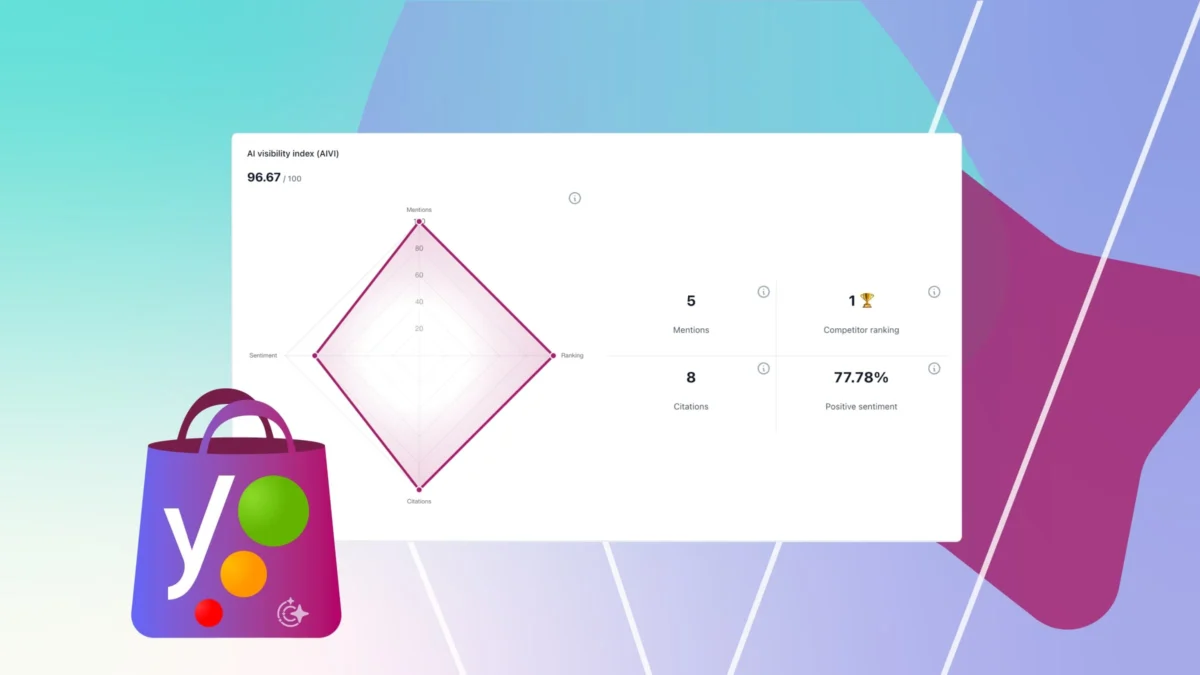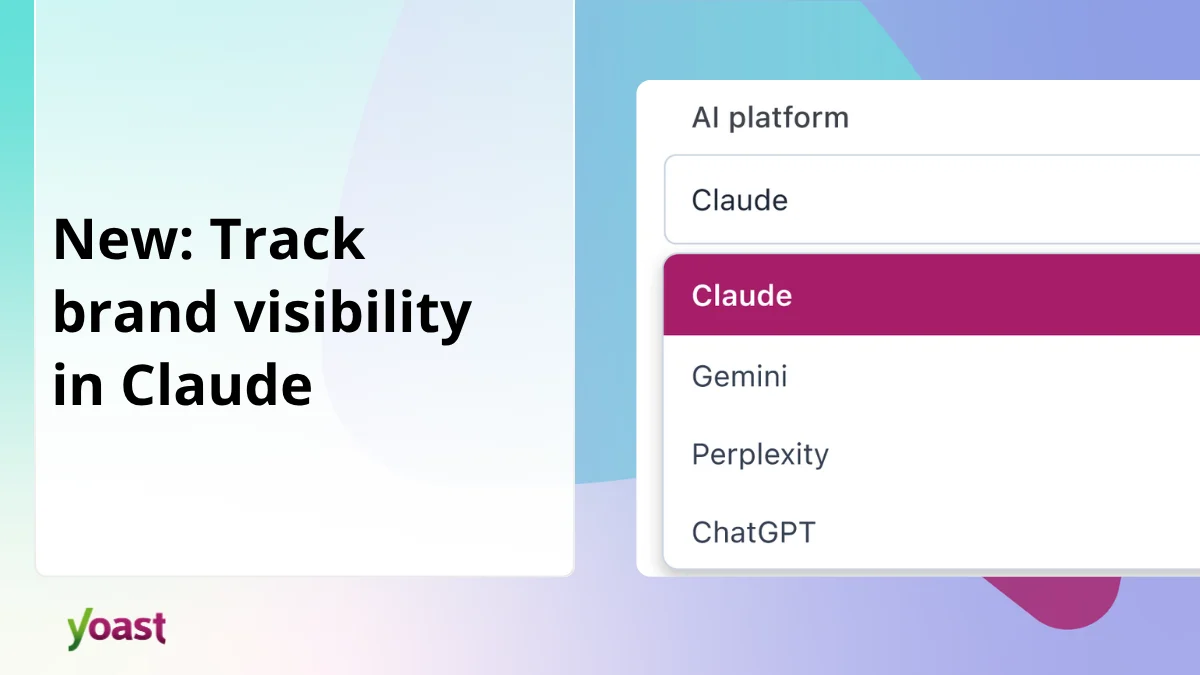
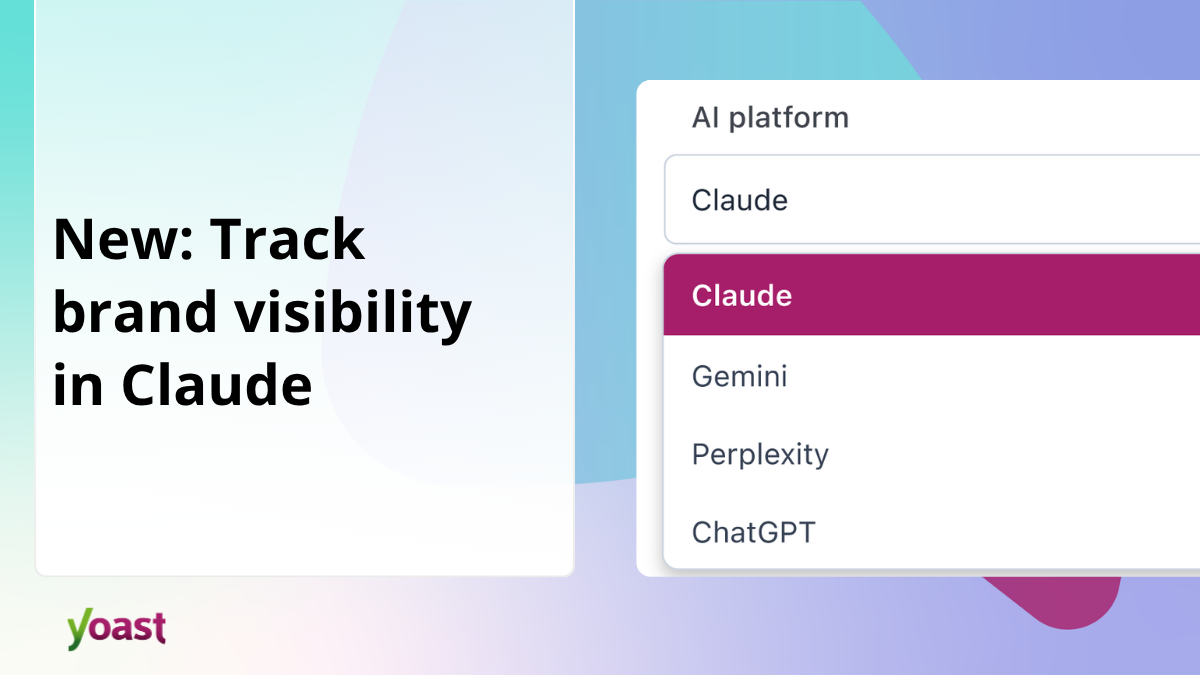
Yoast, a prominent name in the realm of search engine optimization, has significantly expanded the capabilities of its Yoast AI Brand Insights feature, part of the comprehensive Yoast SEO AI+ plan, by integrating data from Anthropic’s Claude. This crucial update now enables businesses to meticulously scan and understand how their brand is presented in answers generated by Claude, alongside existing monitoring for ChatGPT, Perplexity, and Gemini, all consolidated within a single, intuitive dashboard. This development marks a pivotal moment for brand managers and SEO professionals navigating the increasingly complex landscape of AI-driven information consumption, underscoring the imperative for a holistic view of brand perception across multiple conversational AI platforms.
The introduction of Claude into the Yoast AI Brand Insights ecosystem is a direct response to the burgeoning influence of artificial intelligence in consumer decision-making and business operations. Traditional search engine queries are progressively being augmented, and in some cases supplanted, by conversational AI interactions. Consumers are no longer solely relying on ten blue links; instead, they are engaging with AI models to conduct research, compare products, and make purchasing decisions. According to recent industry analyses, nearly half of consumers utilized AI to research purchases in 2025, a figure projected to surge to 64 percent in 2026. This trend spans a wide spectrum of purchases, from significant investments to routine everyday buys, illustrating a fundamental shift in the pre-purchase information-gathering process.
Simultaneously, businesses themselves are rapidly adopting AI technologies. The JPMorgan Chase Institute reported a staggering tripling of AI adoption among small businesses in just two years, highlighting a broad recognition of AI’s potential to enhance efficiency, customer engagement, and competitive advantage. This dual acceleration – in both consumer AI use and business AI adoption – creates a dynamic environment where a brand’s digital presence is no longer confined to traditional websites or social media channels. Instead, the narrative surrounding a brand is actively being shaped and disseminated by a diverse array of AI models, each with its own unique characteristics, training data, and interpretive algorithms.
The strategic rationale behind Yoast’s integration of Claude is rooted in the distinct personalities and operational frameworks of leading AI platforms. ChatGPT, developed by OpenAI, is known for its broad general knowledge and conversational fluency. Google’s Gemini leverages the vastness of Google’s informational index and multimodal capabilities. Perplexity AI distinguishes itself as an "answer engine," often citing its sources and providing more direct, research-oriented responses. Anthropic’s Claude, on the other hand, has gained prominence for its emphasis on safety, helpfulness, and honesty, often catering to enterprise clients and complex reasoning tasks. These differences mean that a query about a specific business or product can yield markedly different answers depending on which AI platform a user consults. Each platform constructs its brand perception based on disparate sources, varying data processing methodologies, and distinct interpretative lenses, leading to a fragmented and potentially inconsistent brand narrative across the digital sphere.
The Evolving Landscape of AI and Brand Perception
The journey towards AI-powered brand monitoring reflects a broader evolution in digital marketing and reputation management. For decades, SEO was primarily focused on optimizing content for search engine algorithms, ensuring visibility in organic search results. As the internet matured, social media monitoring became indispensable for tracking public sentiment and managing online reputation. The advent of large language models (LLMs) and conversational AI tools has introduced a new, critical dimension to this landscape. These AI models are not just aggregating information; they are synthesizing it, interpreting it, and often presenting it in a definitive, authoritative voice that can profoundly influence user perception.
A Brief Chronology of AI in Digital Marketing and Yoast’s Response:
- Early 2000s: SEO primarily focused on keywords, backlinks, and technical website optimization for traditional search engines like Google and Yahoo.
- 2010s: Rise of social media necessitates social listening and reputation management tools, expanding the scope of online brand monitoring beyond search results.
- Late 2010s – Early 2020s: Breakthroughs in natural language processing (NLP) and machine learning pave the way for sophisticated AI models.
- 2022: OpenAI’s ChatGPT bursts onto the scene, democratizing access to powerful conversational AI and rapidly increasing public awareness and adoption. This marks a turning point, demonstrating AI’s capability to serve as a primary information source.
- 2023: Other major tech players accelerate their AI initiatives, with Google launching Gemini and Anthropic gaining traction with Claude, emphasizing enterprise applications and safety. Consumer and business AI adoption rates begin their sharp ascent, as evidenced by the JPMorgan Chase Institute’s findings on small business AI use tripling in two years.
- Late 2023 – Early 2024: Yoast recognizes the imperative for brands to monitor their presence across these emerging AI channels. They introduce Yoast AI Brand Insights, initially supporting key platforms like ChatGPT and Perplexity, understanding that AI answers directly impact brand perception and customer journeys.
- Current Development: Yoast integrates Claude into its AI Brand Insights, completing a critical quadfecta of major AI models (ChatGPT, Perplexity, Gemini, Claude). This expansion underscores Yoast’s commitment to providing comprehensive tools that adapt to the rapidly shifting digital landscape.
This chronology highlights a continuous adaptation required from businesses and their digital marketing partners. The shift from a "search result economy" to an "answer economy" means that controlling the narrative in AI-generated responses is as vital, if not more so, than ranking on the first page of Google for certain queries.
Supporting Data: The Imperative for Unified AI Brand Monitoring
The statistics cited by Yoast provide a compelling argument for the immediate necessity of tools like AI Brand Insights. The projection that 64 percent of consumers plan to use AI for purchase research in 2026 is particularly salient. This isn’t merely a niche trend; it represents a mainstream transformation in consumer behavior. For businesses, failing to monitor and influence AI-generated information is akin to ignoring traditional search rankings or customer reviews in previous eras.
Furthermore, the observation that AI adoption among small businesses tripled in two years speaks volumes about the perceived value and accessibility of AI tools. Small and medium-sized enterprises (SMEs), often resource-constrained, are actively seeking ways to leverage AI for competitive advantage. This implies that they are not only using AI internally but also increasingly aware that their customers are using it externally to evaluate their offerings.
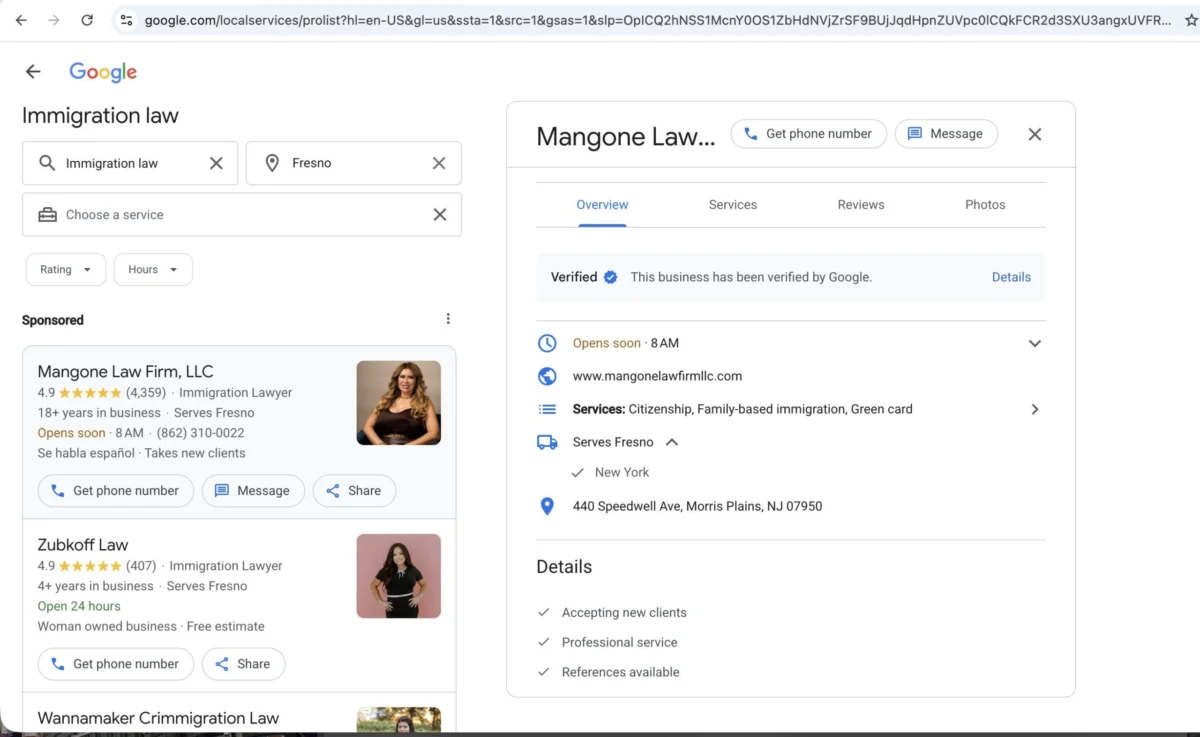
The fragmented nature of AI-generated answers compounds this challenge. A hypothetical scenario might involve a consumer asking Claude about the best eco-friendly coffee brands, then asking ChatGPT the same question, and finally consulting Perplexity for a comparative analysis. If each AI provides a different list or emphasizes different attributes, a brand’s ability to consistently appear favorably across all these platforms becomes paramount. This inconsistency can arise from several factors:
- Training Data Divergence: Each AI model is trained on vast datasets, but these datasets differ in their composition, recency, and emphasis.
- Algorithmic Bias: The underlying algorithms and their specific tuning for safety, factual accuracy, or creative generation can lead to varied outputs.
- Real-time Information Access: Some AI models have more robust or real-time access to the internet, while others rely more heavily on their pre-trained knowledge base, leading to discrepancies, especially for rapidly evolving topics or recent brand developments.
- Emphasis on Specific Attributes: One AI might prioritize price, another sustainability, and a third customer reviews, based on its design philosophy.
These factors necessitate a unified monitoring solution. Without it, a brand manager would be forced to manually query each AI platform, a time-consuming and inefficient process that lacks the analytical depth provided by a dedicated tool.
Official Responses and Strategic Vision
While the original article provides insights from Beth Parker, Product Marketing Manager at Yoast, a more elaborated perspective can be inferred and presented as part of a formal statement. "The integration of Claude into Yoast AI Brand Insights is not merely an addition; it’s a strategic imperative for any brand serious about its digital footprint," explains Beth Parker. "We’ve observed a profound shift in how consumers discover and evaluate brands. The ‘answer economy’ is here, and it’s powered by multiple, distinct AI voices. Our goal at Yoast is to empower businesses, from small startups to large enterprises, with the tools to not only understand but also actively shape their narrative across these critical AI platforms. The ability to see your brand’s representation on ChatGPT, Perplexity, Gemini, and now Claude, all from one central dashboard, provides an unparalleled competitive advantage. It allows for swift identification of discrepancies, proactive reputation management, and data-driven optimization of content strategies to align with how these powerful AI models perceive and portray your brand."
This statement encapsulates Yoast’s forward-looking approach, recognizing that SEO in the AI era extends beyond traditional search results. It’s about optimizing for answers, for narratives, and for the influential voice of artificial intelligence itself. The "no extra cost" for existing Yoast SEO AI+ users underscores Yoast’s commitment to delivering continuous value and adapting its offerings to the evolving needs of its user base.
Implications for Brands, SEO, and Digital Strategy
The addition of Claude support within Yoast AI Brand Insights carries profound implications across several facets of digital strategy:
- Enhanced Brand Reputation Management: The immediate benefit is the ability to maintain a consistent and positive brand image across a wider array of influential AI platforms. Businesses can quickly identify if any AI model is misrepresenting their products, services, or values, allowing for timely intervention and corrective action. This proactive approach is crucial in an era where misinformation, even accidental, can spread rapidly through AI-generated content.
- Strategic Content Optimization (Answer Engine Optimization – AEO): Just as SEO professionals optimize for search engines, brand managers must now think about "Answer Engine Optimization" (AEO). By understanding how different AI models describe a brand, businesses can tailor their online content (website copy, FAQs, product descriptions, knowledge base articles) to better align with the language and information structure that these AIs tend to favor. This ensures that when an AI model synthesizes information about a brand, it draws from a rich, accurate, and optimized pool of data.
- Improved Customer Journey Mapping: The insights gained from Yoast AI Brand Insights can illuminate how potential customers are interacting with AI during their purchase research. This understanding allows businesses to refine their marketing funnels, address common AI-generated questions directly on their websites, and create content that pre-emptively answers the queries AI users are likely to pose.
- Competitive Intelligence: The tool doesn’t just monitor a brand’s own mentions; it also provides a framework for understanding how competitors are being portrayed by these AI models. This competitive intelligence can inform strategic positioning, highlight unique selling propositions that AI models might emphasize, and identify gaps in competitor coverage that a brand can exploit.
- Data-Driven Decision Making: Consolidating data from multiple AI platforms into a single dashboard moves brand monitoring from a reactive, anecdotal exercise to a proactive, data-driven discipline. Marketers can track trends, measure the impact of content changes on AI mentions, and allocate resources more effectively based on empirical insights.
- Mitigation of AI Hallucinations and Inaccuracies: AI models, while powerful, are not infallible. They can "hallucinate" or provide inaccurate information. By monitoring across platforms, brands can detect instances of such inaccuracies and work towards correcting the underlying data sources that AI models often draw from, thereby safeguarding their factual representation.
Getting Started: Seamless Integration and Future Prospects
For existing users of the Yoast SEO AI+ plan, the integration of Claude is seamless and automatic. Upon logging into MyYoast, Claude will simply appear as a new option in their dashboard during the next analysis cycle, requiring no additional setup or cost. This ensures that current subscribers immediately benefit from the expanded coverage without disruption. For those not yet subscribed, upgrading to Yoast SEO AI+ provides access to this advanced AI Brand Insights suite, alongside other powerful features like on-page SEO tools, comprehensive content optimization, and a broader range of AI-powered insights designed to streamline the entire SEO workflow. This integrated approach allows businesses to not only monitor their brand mentions but also to act upon these insights directly within their existing Yoast environment.
Looking ahead, the digital landscape will continue to be shaped by rapid advancements in AI. Tools like Yoast AI Brand Insights are at the forefront of this evolution, providing indispensable utilities for businesses striving to maintain relevance and control their narrative in an increasingly AI-mediated world. The imperative for businesses is clear: adapt to the AI-driven information economy or risk being left behind. By offering a unified view of brand perception across the most influential conversational AI platforms, Yoast empowers its users to navigate this complex environment with confidence and strategic foresight, ensuring their brand’s voice is heard, understood, and accurately represented wherever consumers seek information.