

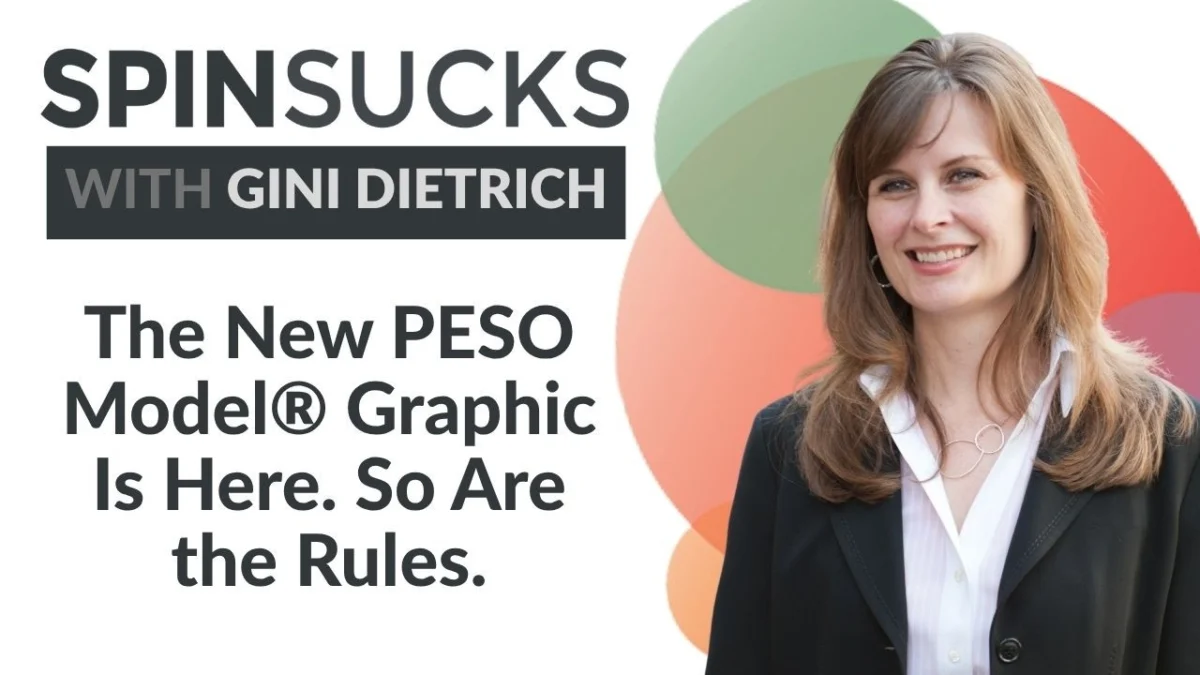
The communications industry is witnessing a significant transformation in how integrated marketing strategies are structured and protected as Spin Sucks announces a comprehensive refresh of the PESO Model®. This latest iteration marks a departure from tactical and strategic frameworks, pivoting instead toward an outcome-based "operating system" designed to address the complexities of an AI-driven information environment. Alongside the visual and conceptual update, new licensing protocols have been established to safeguard the intellectual property of the model, which has served as a foundational pillar for public relations and marketing professionals for over a decade.
The Shift to an Outcome-Based Operating System
For twelve years, the PESO Model—encompassing Paid, Earned, Shared, and Owned media—has functioned as the industry standard for integrated communications. However, the 2026 update signals a fundamental change in philosophy. Rather than focusing on what tools a communicator uses (tactics) or how those tools interlock (strategy), the new framework is organized around the specific results each media type is designed to produce.
The model is now categorized into four primary outcomes:
- Authority (Owned Media): Focusing on the establishment of proprietary expertise and thought leadership.
- Credibility (Earned Media): Leveraging third-party validation to build trust and industry standing.
- Discovery (Shared Media): Utilizing social and community platforms to ensure brand visibility and audience engagement.
- Growth (Paid Media): Driving measurable expansion through targeted investments in reach and conversion.
According to the framework’s architects, this shift is a response to changing demands from corporate boards and executive leadership. Modern organizations are increasingly moving away from vanity metrics, such as impressions or follower counts, in favor of deeper questions regarding AI visibility, narrative dominance, and contribution to the sales pipeline. By reframing PESO as an operating system, the model emphasizes how these four pillars compound to create a holistic business impact rather than functioning as siloed departments.
A Chronological History of the PESO Model
To understand the necessity of the 2026 refresh, it is essential to trace the evolution of the PESO Model since its inception. The framework has undergone several major revisions, each reflecting a specific era of digital communication.
The Tactical Era (Circa 2014)
The earliest version of the PESO Model was primarily a list of platforms and tactics. It included specific references to then-relevant platforms such as Google+ and Vine. At this stage, the model served as a "checklist" for communications directors to ensure they were checking the boxes across different media types. It was a tool for execution rather than high-level planning.
The Strategic Era (Circa 2020)
As the digital landscape matured, the model evolved to remove specific platform names, acknowledging that audiences were now fragmented across various channels. The focus shifted to the "integrations" between the four circles. This version taught a generation of professionals that Paid, Earned, Shared, and Owned media must reinforce one another to be effective. It was during this period that the model became a staple in agency pitch decks and MBA curricula.
The Outcome-Based Era (2026)
The current version represents the most sophisticated iteration to date. It acknowledges that in a saturated content market, strategy alone is insufficient. The "Outcome-Based" model is designed to answer "What does this produce?" The center of the graphic, where all four media types overlap, is no longer just an integration point; it is defined as the "operating system" where the compounding effect of all activities generates maximum enterprise value.
Detailed Analysis of Compound Outcomes
The richness of the new PESO Model lies in its overlapping segments, which define six specific compound outcomes. These pairings are designed to help organizations identify where their strategy is succeeding and where it is lacking.
- Trust (Owned + Earned): When an organization’s proprietary content is validated by third-party media or influencers, it creates a foundation of trust that is difficult for competitors to disrupt.
- Pipeline (Owned + Paid): The integration of proprietary assets with paid distribution is the primary driver of lead generation and customer acquisition.
- Visibility (Earned + Shared): When third-party validation is amplified through social channels, it increases the brand’s footprint within a specific category.
- Reputation (Earned + Paid): Using paid media to amplify earned media successes (such as a major news feature) serves to solidify a brand’s reputation in the eyes of stakeholders.
- Influence (Shared + Paid): The combination of community engagement and paid promotion creates a powerful mechanism for shifting public or industry opinion.
- Community (Owned + Shared): This pairing focuses on retention and loyalty, turning audiences into brand advocates through direct engagement on shared platforms.
New Intellectual Property and Licensing Standards
A central component of the 2026 announcement is the formalization of licensing requirements for the PESO Model®. For years, the framework has been widely adopted, but also frequently plagiarized or rebranded without attribution. Spin Sucks has now established clear boundaries between "Free Use" and "Commercial Use" to protect the integrity of the intellectual property.
Guidelines for Free Use
The PESO Model remains free for non-commercial, educational, and internal purposes, provided proper attribution is given. This includes:
- Internal team training and corporate reporting.
- Classroom slides and academic research.
- Non-paid conference talks and panel discussions.
- Journalistic references, blog posts, and podcast episodes.
Users are now required to download the graphic directly from the official source, agreeing to terms that include using the registered trademark (®) on first mention and providing a backlink to the Spin Sucks website.
Commercial Licensing Requirements
The organization has identified a "line in the sand" regarding the commercialization of the model. Entities that generate revenue specifically by teaching or selling the PESO framework must now obtain a commercial license. This applies to:
- Paid online courses and certification programs.
- Books and published manuscripts.
- Software products or SaaS platforms that incorporate the PESO framework.
- Paid workshops and commercial training programs.
- Public speaking engagements where the speaker is compensated to teach the model.
This move is intended to prevent "dilution," where various agencies and consultants sell modified, unauthorized versions of the model that may offer conflicting or inaccurate advice to clients.
Supporting Data and Industry Context
The shift toward an outcome-based model is supported by broader trends in the marketing and communications industry. According to recent data from Gartner, 71% of CMOs report that they lack the budget to fully execute their 2024 strategies, leading to a heightened focus on high-impact, measurable outcomes. Furthermore, the rise of "Search Generative Experience" (SGE) and AI-driven answer engines has changed the value of content.
Industry analysis suggests that AI models prioritize "Authority" and "Credibility"—two core pillars of the new PESO Model—when deciding which brand narratives to surface in AI-generated summaries. Content that lacks third-party validation (Earned) or deep topical expertise (Owned) is increasingly being buried by algorithms. By focusing on these specific outcomes, the PESO Model provides a roadmap for brands to remain relevant in an automated information ecosystem.
Implications for the Communications Profession
The formalization of the PESO Model as an operating system has several long-term implications for the industry. First, it forces a reconciliation between marketing and PR departments. Historically, PR has owned "Earned" while Marketing owned "Paid." The new model argues that these functions cannot operate independently if they wish to achieve "Reputation" or "Pipeline" outcomes.
Second, the introduction of a formal Certification path, credentialed through partnerships with institutions like the Newhouse School of Public Communications at Syracuse University, suggests a move toward greater professionalization. As the model becomes more complex, the "telephone game" of misinterpreted tactics can lead to strategic failure. Certification ensures that practitioners are operating with the most current and effective version of the framework.
Finally, the move to protect the trademark highlights a growing trend in the "creator economy" of professional services. Thought leaders are increasingly seeking legal protections for their frameworks to prevent large agencies from "absorbing" intellectual property into their own branded offerings without compensation or credit.
Conclusion and Future Outlook
The refresh of the PESO Model® serves as both a strategic update for the digital age and a legal reset for the communications industry. By pivoting to an outcome-based structure, the model aligns itself with the performance-driven demands of modern business leadership. Simultaneously, the new licensing rules aim to ensure that as the model continues to be adopted globally, its core principles remain intact and its creators are appropriately recognized.
This announcement is the first in a series titled "The PESO Operating System," which will continue to explore the impact of AI on content and the necessity of integrated media strategies. As the industry moves into 2026, the adoption of such frameworks will likely determine which brands successfully navigate the transition from traditional search to AI-driven discovery. Professionals are encouraged to audit their current strategies against the new "Authority, Credibility, Discovery, and Growth" pillars to ensure their efforts are compounding toward meaningful business results.









