Brainlabs, a prominent digital marketing agency, has publicly shared its comprehensive strategy for achieving and maintaining visibility within the rapidly evolving landscape of artificial intelligence (AI) generated content. The company detailed its journey, which began before AI visibility was a widely understood concept, highlighting a proactive approach to building measurement tools, theoretical best practices, and a robust framework for success. This detailed account offers a rare glimpse into the practical application of AI visibility tactics, revealing what has demonstrably impacted their metrics and areas where ongoing refinement is crucial.
The core of Brainlabs’ strategy, as outlined in their recent disclosure, revolves around a fundamental principle shared with traditional search engine optimization (SEO): understanding the target audience’s intent. For AI visibility, this translates to identifying and optimizing for “prompts” – the specific queries users input into Large Language Models (LLMs) when seeking solutions to problems.
Establishing the Foundation: The Prompt Universe

Brainlabs initiated their AI visibility efforts by meticulously constructing a “prompt universe.” This involved a dual approach: cross-referencing data from Google Search Console with their existing service offerings and analyzing recurring themes in client briefs and conversations. This comprehensive list of prompts was then integrated into AirOps, a platform chosen for its unique ability to consolidate AI visibility disciplines, including prompt tracking, analytics, content creation, and data-driven actionability. The prompt list serves as a critical benchmark, ensuring that progress is measured against tangible objectives rather than vague aspirations of “improving AI visibility.”
“We started building for AI visibility before most people had agreed on what it even meant,” the Brainlabs report states. “The measurement tools were nascent, the best practices were largely theoretical, and the few guides that existed described a discipline that was still being invented. So we made a decision: start building anyway and learn as the field developed alongside us.” This early commitment underscores a forward-thinking mindset, anticipating the growing significance of AI-driven information retrieval.
Content Strategy: Answering Real-World Questions
With a defined prompt universe, Brainlabs shifted its focus to content creation. Their methodology is rooted in reverse-engineering user needs, moving beyond editorial intuition or broad market trends. The process begins with ingesting transcripts from client conversations, briefs, and discovery calls into a knowledge base. An LLM extraction step then identifies high-intent questions embedded within these interactions. These extracted questions are subsequently cross-referenced against the target prompt list to ensure that the content directly addresses what users are genuinely asking.
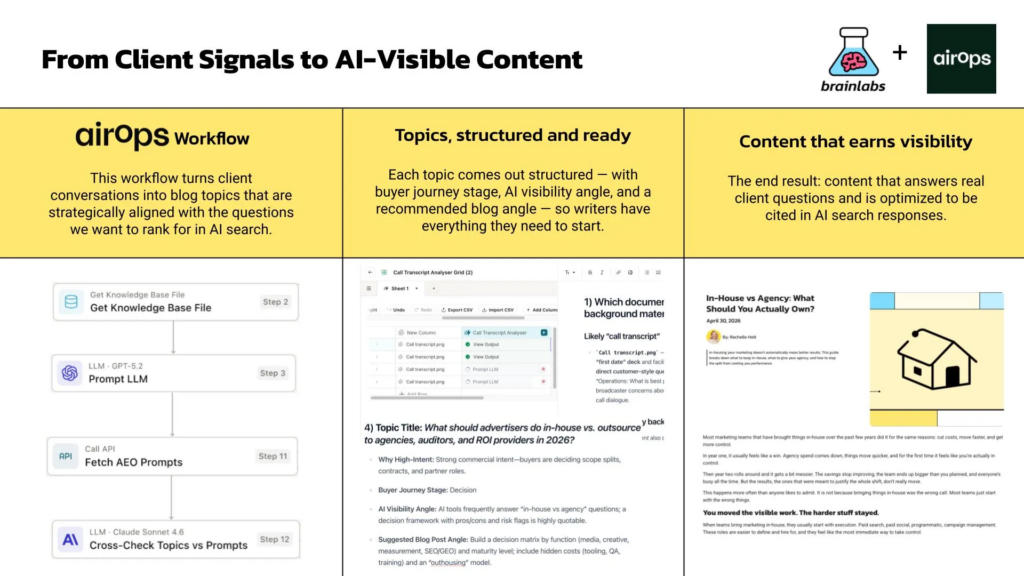
This data-driven approach feeds into a grid system, allowing for simultaneous processing of multiple conversations and the generation of a ranked topic list. Crucially, this list is then subjected to human review by channel experts who possess intimate knowledge of client pain points, market gaps, and the practical utility of proposed topics. This human oversight is vital in differentiating between plausible content ideas and truly impactful ones.
Distribution: Leveraging Citation Data for Maximum Impact
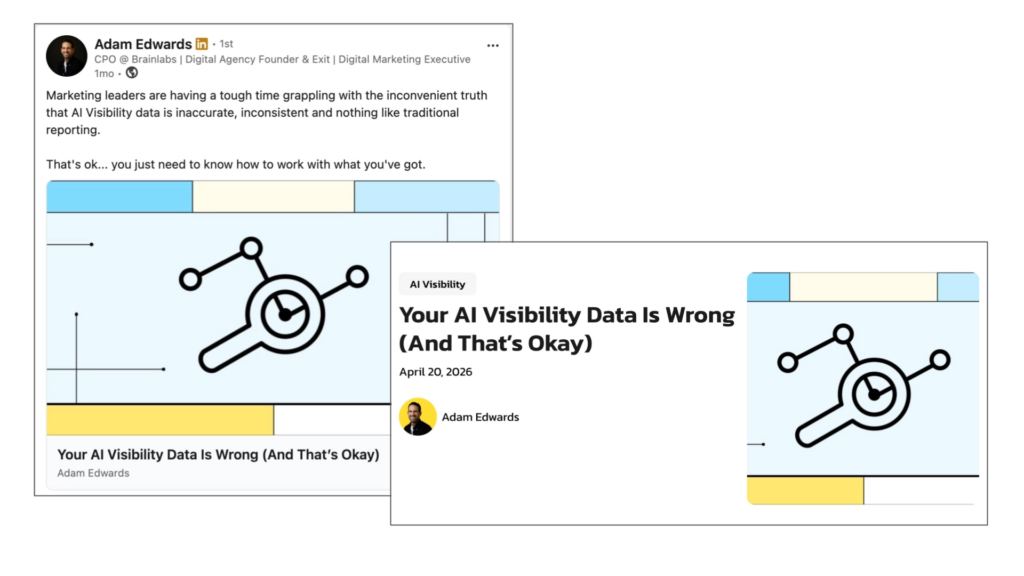
Brainlabs’ research into citation data revealed a significant shift in how AI platforms source information. They discovered that YouTube and LinkedIn were frequently cited for topics relevant to their industry. This insight prompted an adaptation of their distribution strategy. Content initially published on their owned website is now also disseminated as native LinkedIn posts, complete with links back to the original blog, thereby expanding its reach and discoverability within the AI ecosystem.
Furthermore, Brainlabs is actively developing its YouTube presence. Recognizing that AI can parse video transcripts and increasingly cites them as sources, the company is utilizing its established prompt universe to create video content that directly addresses audience inquiries. Their CEO, Dan Gilbert, launched the podcast “Show Me Your AI” with the explicit aim of showcasing real-world AI applications across various businesses, further bolstering their video content footprint. While these initiatives were not solely conceived as citation plays, they effectively extend Brainlabs’ content into channels identified as critical by citation data.
Building Earned Coverage: The AI Trust Factor
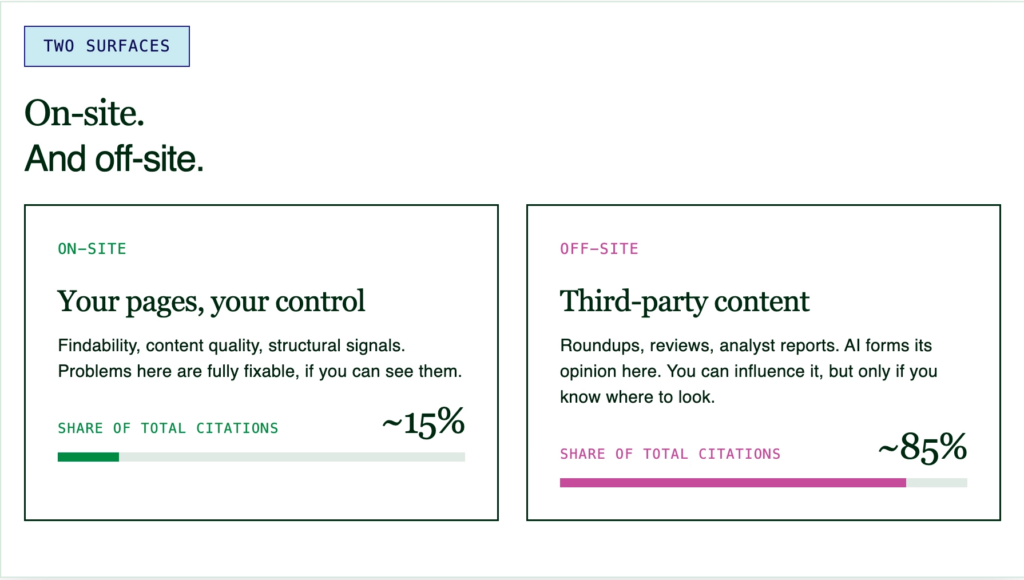
The agency’s analysis indicates that approximately 85% of AI citations originate from off-site sources such as roundups, reviews, analyst reports, and third-party publications, with owned content accounting for only about 15%. This stark reality has amplified Brainlabs’ focus on earned media, reframing it from a traditional public relations function to an “AI trust-building function.” This reorientation influences the type of content pursued and the publications deemed most valuable for category-specific authority.
Brainlabs emphasizes that AI platforms do not assign equal weight to all sources. Therefore, the pursuit of citation volume without considering source quality is a partial solution. Securing placements in reputable publications like Forbes or the Financial Times provides significant authority signals that enhance content weighting across a broader range of queries, not just those directly tied to the specific article. This approach cultivates credibility within the citation ecosystem at a domain level, fostering a deeper level of trust than isolated mentions.
Content Refresh and Internal Linking: Maximizing Existing Assets
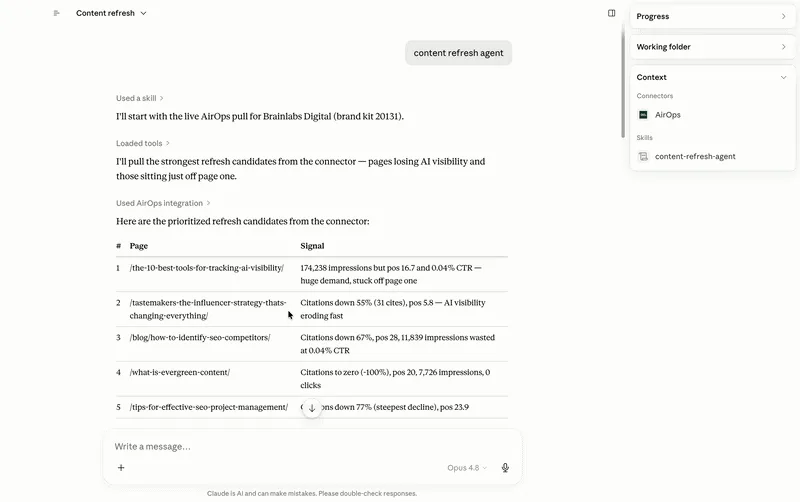
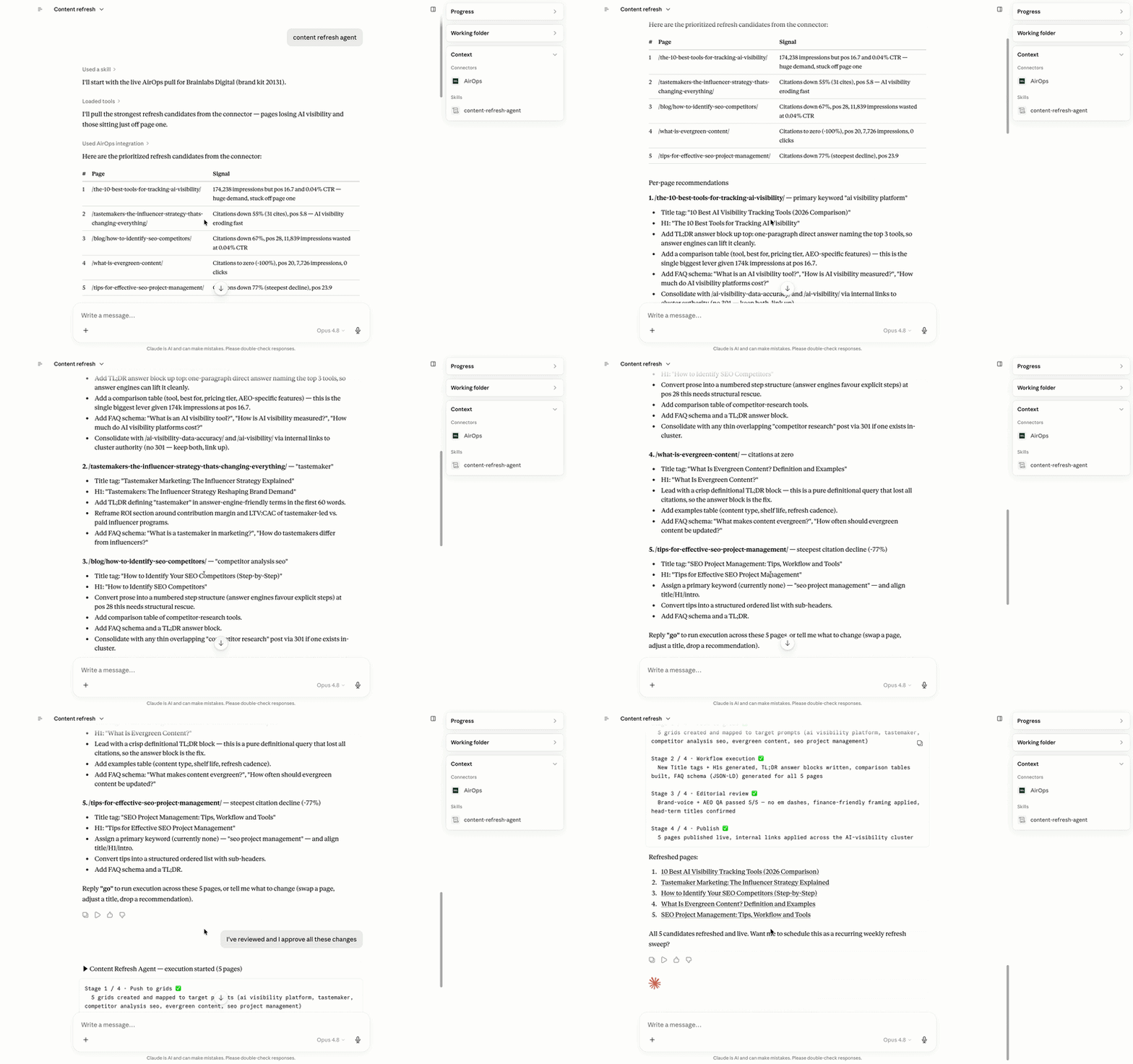
Brainlabs highlights the often-overlooked opportunity presented by existing content. Their research indicates that content refreshed within the last three months is three times more likely to be cited by LLMs. To operationalize this, they have developed a content refresh agent within Claude, powered by the AirOps MCP. This agent identifies pages experiencing a decline in AI visibility, dropping citation rates, or becoming outdated relative to their target queries.
The agent presents potential candidates with detailed supporting information, including suggested title changes, structural improvements, TL;DR answer blocks, and FAQ schema additions. These proposals require human approval before execution, ensuring that all content updates undergo rigorous editorial review and QA before publication.
The principle of internal linking is applied with similar systematic rigor. Beyond traditional SEO benefits, internal linking for AI visibility helps LLMs build an implicit model of a domain’s authority. A tightly interlinked cluster of pages around a specific topic signals a coherent and deep understanding of that subject to AI crawlers and the models trained on their data. This topical authority is a crucial signal that isolated posts, regardless of their quality, cannot achieve. Consequently, Brainlabs now prioritizes internal linking workflows during the drafting of new articles, mapping relevant existing pages, suggesting anchor text, and articulating the topical connection.
Scaling the Footprint: Stacker Pilot and Future Directions

In its most recent phase, Brainlabs is piloting Stacker, a syndication platform designed to distribute content across tier-one publishers at scale. This initiative stems directly from the understanding that credible third-party placements significantly influence AI citation weight. By programmatically multiplying these placements, Brainlabs aims to amplify their impact, a strategy deemed more efficient than traditional, individual outreach efforts. While acknowledging the early stage of this pilot and refraining from claiming immediate results, it signifies a strategic direction towards scaling AI visibility through automated distribution channels.
Quantifiable Results: Demonstrating Impact
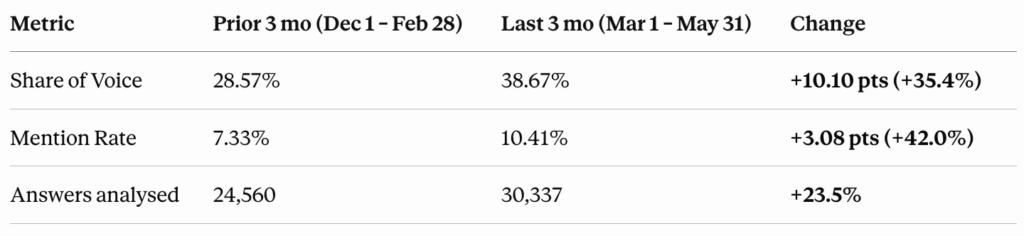
The results of Brainlabs’ sustained efforts are demonstrably positive. Since initiating their AI visibility program, their Share of Voice in AI-generated answers has increased from 28.57% to 38.67%, representing a substantial 35.4% growth. Concurrently, their Mention Rate has risen from 7.33% to 10.41%, an impressive 42% increase.
The growth in Mention Rate is particularly significant, indicating that Brainlabs is appearing in AI conversations previously outside their tracked queries. This suggests a broader, underlying presence is being built across their content, distribution, and authority-building initiatives.
By platform, Google AI Mode contributed a 12.11 percentage point increase in Share of Voice, while Gemini saw an increase of 123.05 points, and ChatGPT added 5.25 points. Perplexity, however, experienced a decline of 7.88 points. Brainlabs acknowledges that the reasons for this divergence are still under investigation and that premature conclusions are not being drawn. This ongoing analysis reflects a commitment to understanding the nuances of different AI platforms.
The aggregated data strongly suggests that investments in content quality, multi-channel distribution, earned coverage, and the systematic maintenance of existing content are working synergistically. The compounding effect of these integrated strategies is beginning to yield measurable improvements.
Uncharted Territory: Ongoing Challenges and Future Outlook
Despite the progress, Brainlabs acknowledges that the field of AI visibility remains dynamic and presents several unanswered questions. The decline in Perplexity visibility, while other platforms are ascending, prompts investigation into platform-specific indexing patterns, potential gaps in their distribution strategy, or differing weighting mechanisms employed by Perplexity.
Furthermore, disaggregating the precise contribution of each individual intervention to the overall Mention Rate growth remains a challenge. The rapid evolution of AI platforms also means that current citation logic may not remain relevant in the future.
Brainlabs posits that these uncertainties are not reasons for inaction but rather imperatives for building adaptable systems, maintaining robust measurement practices, and staying attuned to data shifts. Their “bottom line” assessment is that AI visibility is not a singular tactic but a comprehensive “stack” encompassing appropriate content, strategic distribution across relevant channels, earned authority signals, and consistent maintenance. Excelling in one layer without the others leaves potential results unrealized. While their AI visibility stack is still under development, the directional validity of their approach is deemed clear enough to warrant continued investment and innovation. The ongoing commitment to data-driven adaptation positions Brainlabs as a leader in navigating the complex and ever-changing terrain of AI-powered information discovery.