Azzam Bilal Chamdy
Automated emails, particularly well-crafted onboarding sequences, are proving to be a cornerstone of modern e-commerce success, generating nearly a third of all e-commerce email revenue and consistently achieving open rates exceeding 50%. This compelling data, highlighted in Omnisend’s 2026 Ecommerce Marketing Report, underscores a critical shift in digital marketing strategies: moving beyond singular welcome messages to comprehensive, multi-touch engagement journeys that guide new subscribers towards their first—and subsequent—purchases.
The contemporary digital landscape is characterized by intense competition and ever-increasing customer acquisition costs. In this environment, the initial interaction a new subscriber has with a brand is paramount. While a simple welcome email serves as a foundational first touchpoint, it is the strategic, automated onboarding sequence that unlocks the full potential of email marketing efforts. This sequence transforms an initial expression of interest into tangible customer value, fostering education, engagement, and ultimately, conversion.
Understanding the Onboarding Email: More Than Just a Welcome
An onboarding email is an automated message designed to help a new subscriber or first-time buyer derive value from a store, progressively moving them towards a first or repeat purchase. It bridges the crucial period between a customer sharing their email address and actively engaging with the brand’s offerings. These emails are meticulously crafted to fulfill three primary objectives: to educate the subscriber about the brand and its products, to engage them with relevant content and offers, and to convert them into loyal customers.
It is essential to differentiate between a welcome email and an onboarding sequence. A welcome email is typically the single, immediate message a new subscriber receives, confirming their subscription, delivering any promised incentives (like a discount code), introducing the brand, and setting initial expectations. It is the first handshake. The onboarding sequence, conversely, is a series of automated messages that follows this initial welcome, strategically designed to nurture the relationship and drive conversion if the welcome email alone wasn’t sufficient. While many marketing platforms may group both under a ‘welcome automation,’ their distinct roles and extended timelines make the distinction crucial for optimized performance.
| Feature | Welcome Email | Onboarding Sequence |
|---|---|---|
| Goal | Deliver sign-up incentive | Drive a first or repeat purchase |
| Timing | Immediately upon sign-up | Paced over two to four weeks |
| Number of Emails | One | Three to five (or more for complex products) |
| Typical Content | Discount code, brand intro | Product education, social proof, FAQs, purchase nudges |
The Strategic Imperative: Why Onboarding Sequences Matter Now
The importance of a robust onboarding sequence has escalated due to several market dynamics. Firstly, customer acquisition costs have surged across various channels, making it imperative for businesses to maximize the value of each new subscriber. Secondly, the sheer volume of digital content and brand communications means that consumers have shorter attention spans and higher expectations for personalized, relevant interactions. A well-executed onboarding sequence cuts through the noise, providing focused guidance and value.
Industry experts emphasize that a proactive, guided journey for new subscribers significantly reduces the likelihood of early churn and enhances customer lifetime value (CLTV). "In today’s crowded e-commerce space, simply collecting an email address isn’t enough," states Dr. Evelyn Reed, a leading e-commerce strategist. "Brands must immediately demonstrate value and guide the customer through their initial interaction, or risk losing them to competitors. Onboarding sequences are a non-negotiable component of a sustainable growth strategy."
Deconstructing the Onboarding Sequence: Types and Purpose
An effective onboarding sequence is not a one-size-fits-all solution; it comprises various types of emails, each with a specific function in moving a new subscriber closer to a purchase. By mixing and matching these, brands can build a dynamic and responsive customer journey.
-
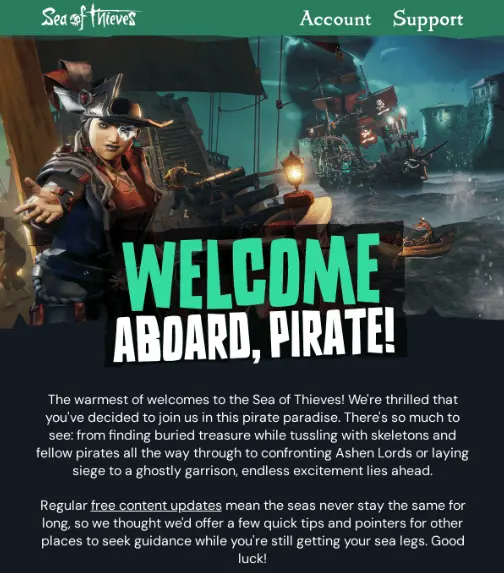
Welcome Email: This is the initial touchpoint, confirming subscription and delivering the promised incentive. For instance, a brand like Sea of Thieves uses its welcome email not just to say hello, but to clearly articulate what new players can expect—regular free content updates and pointers to essential resources—setting clear expectations and offering immediate value.

-
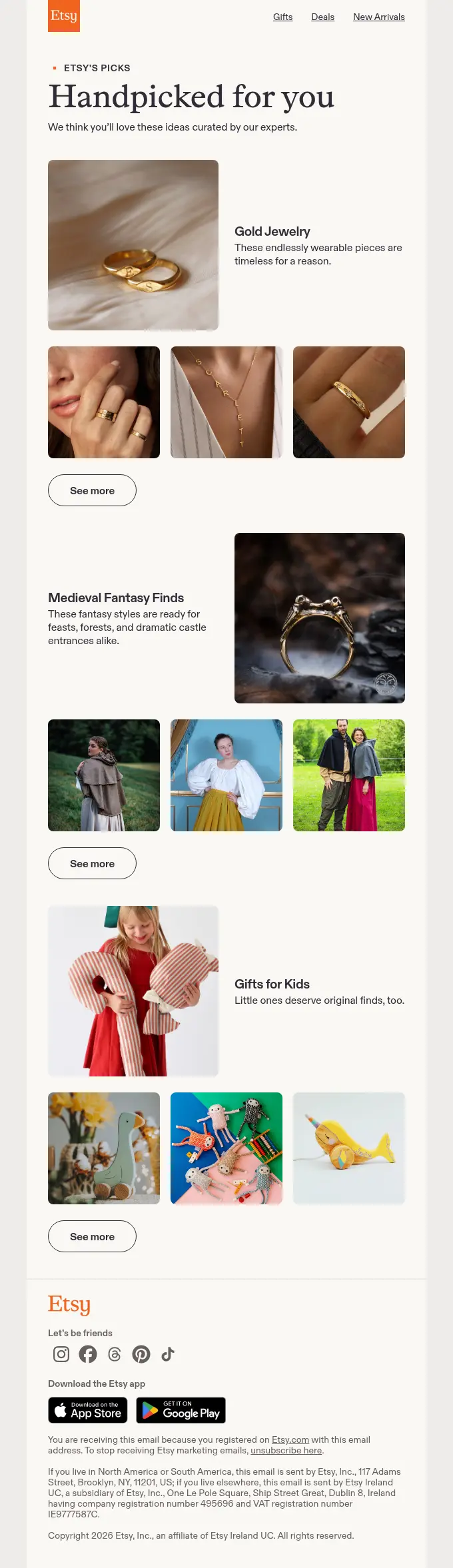
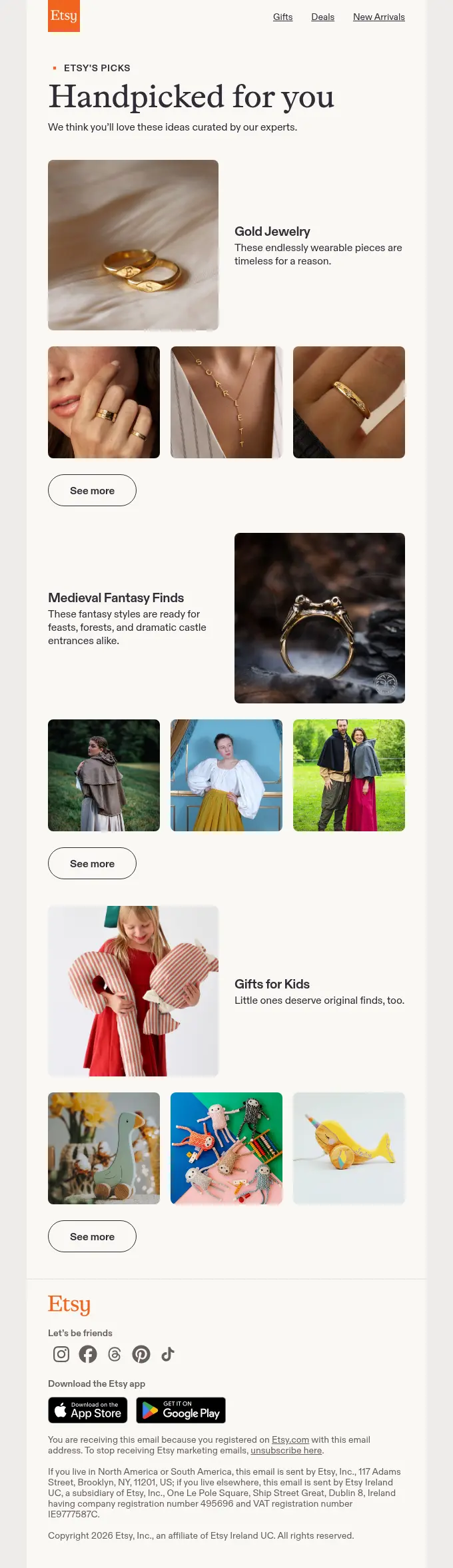
Product Introduction Email: Rather than a generic link to the homepage, this email guides new subscribers to popular categories or best-selling items, reducing decision fatigue. Etsy, for example, excels at this by showcasing curated categories like "gold jewelry" or "medieval fantasy finds," providing specific entry points that are far more effective than an undifferentiated product catalog.
-
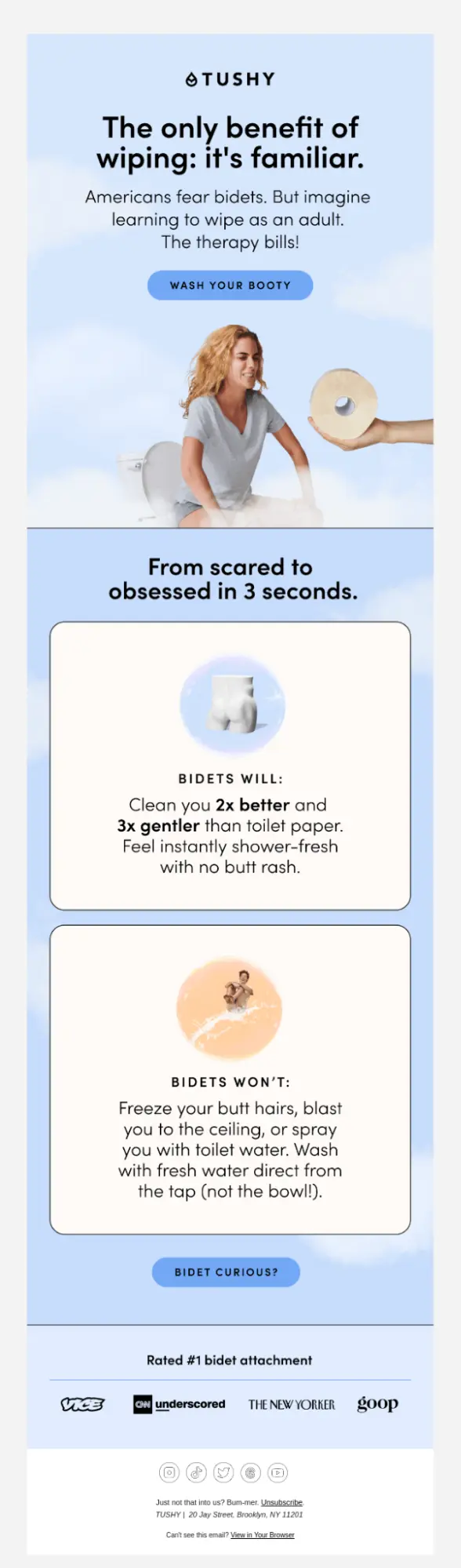
Value Proposition Email: This message articulates how the product solves a customer’s problem better than alternatives, focusing on benefits rather than technical specifications. TUSHY masterfully employs this by positioning its bidet against traditional toilet paper, highlighting improved hygiene and a fresher feeling, bypassing installation details to focus purely on lifestyle enhancement.
-
How-To-Use Email: Crucial for products with a learning curve, this email provides steps for usage or care, preempting frustration and support inquiries. Kizik, known for its hands-free shoes, uses this email type to demonstrate the unique step-in mechanism, reducing customer confusion and ensuring a positive first experience. This proactive approach minimizes user error and friction.
-
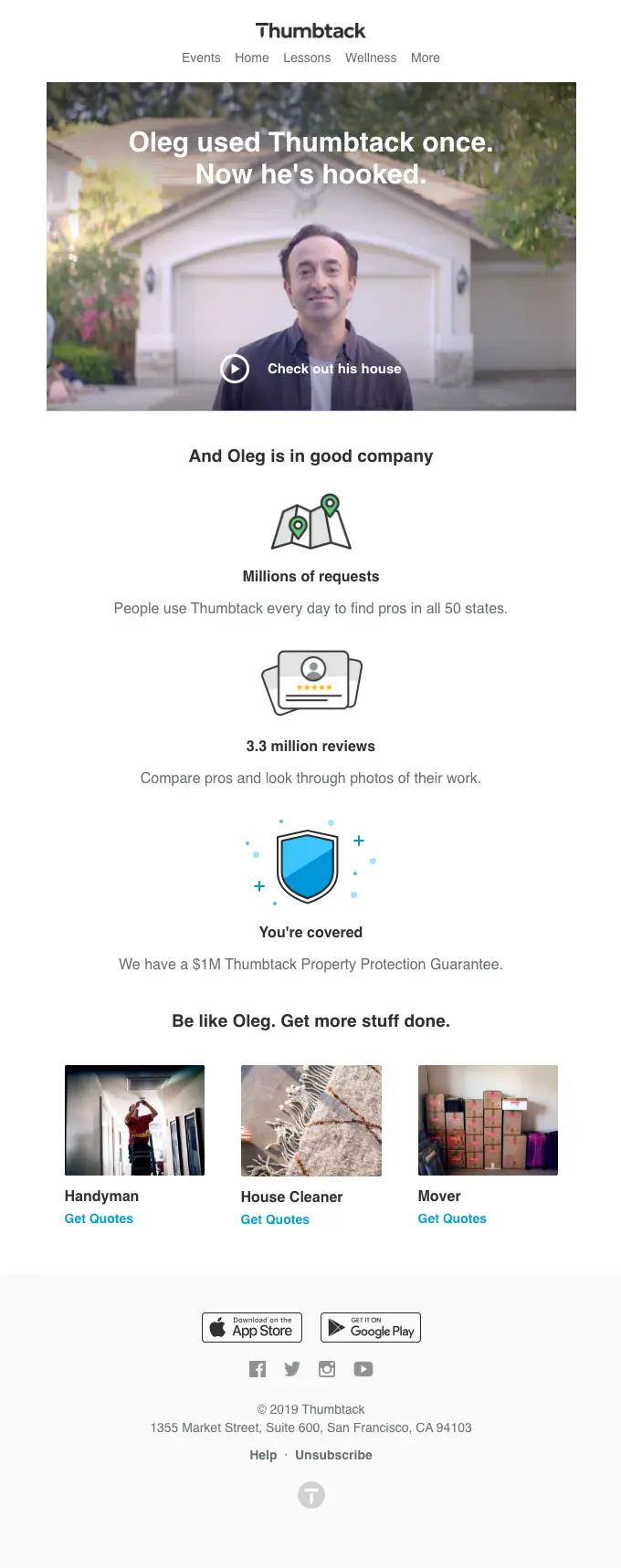
Social Proof Email: Building trust is paramount for new buyers. This email leverages customer reviews, testimonials, or case studies to validate the purchase decision and lower perceived risk. Thumbtack effectively integrates video testimonials from real professionals, such as Oleg, showcasing the platform’s value and enhancing credibility through authentic user experiences.
-
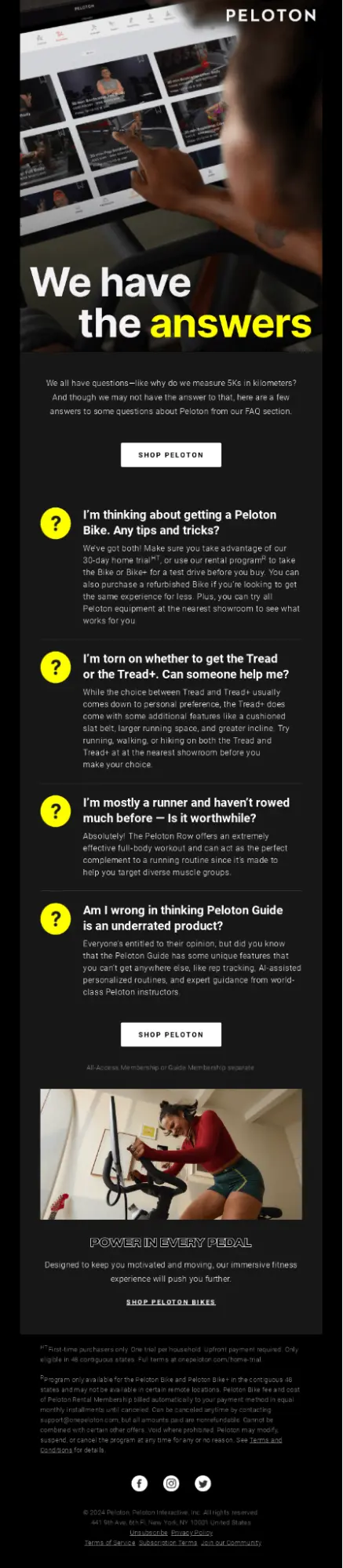
FAQ Email: Addressing common pre-purchase hesitations, such as shipping times, return policies, or product variations, before customers even have to ask. Peloton, for example, proactively answers questions about trial periods and model differences, removing friction points that might otherwise delay or prevent a purchase. This demonstrates a brand’s commitment to transparency and customer support.
-
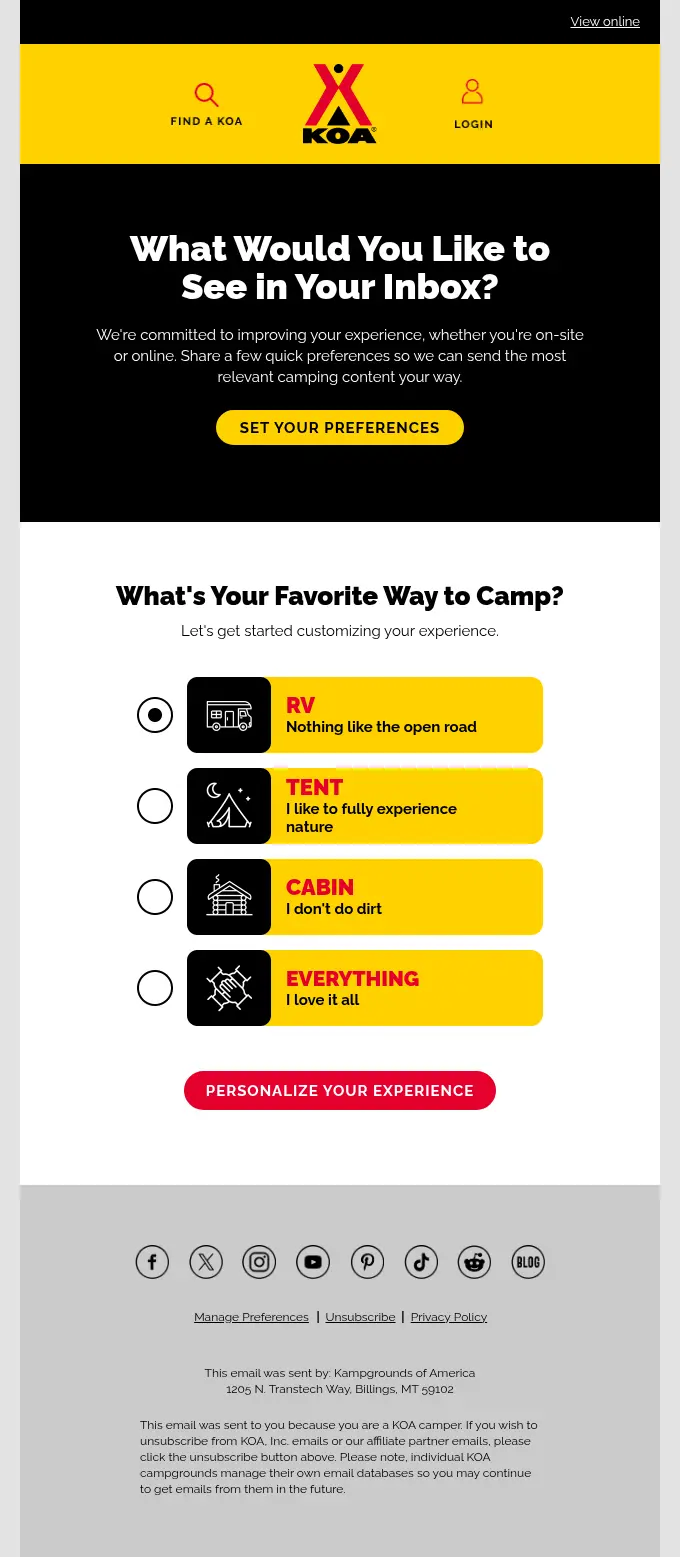
Preference Email: This email actively seeks first-party data by asking subscribers about their interests or preferred product categories. This information is invaluable for segmentation and personalization. KOA, a camping brand, asks subscribers to identify their preferred camping style (RV, tent, cabin, or "everything"), laying a solid foundation for highly targeted future campaigns and offers.
-
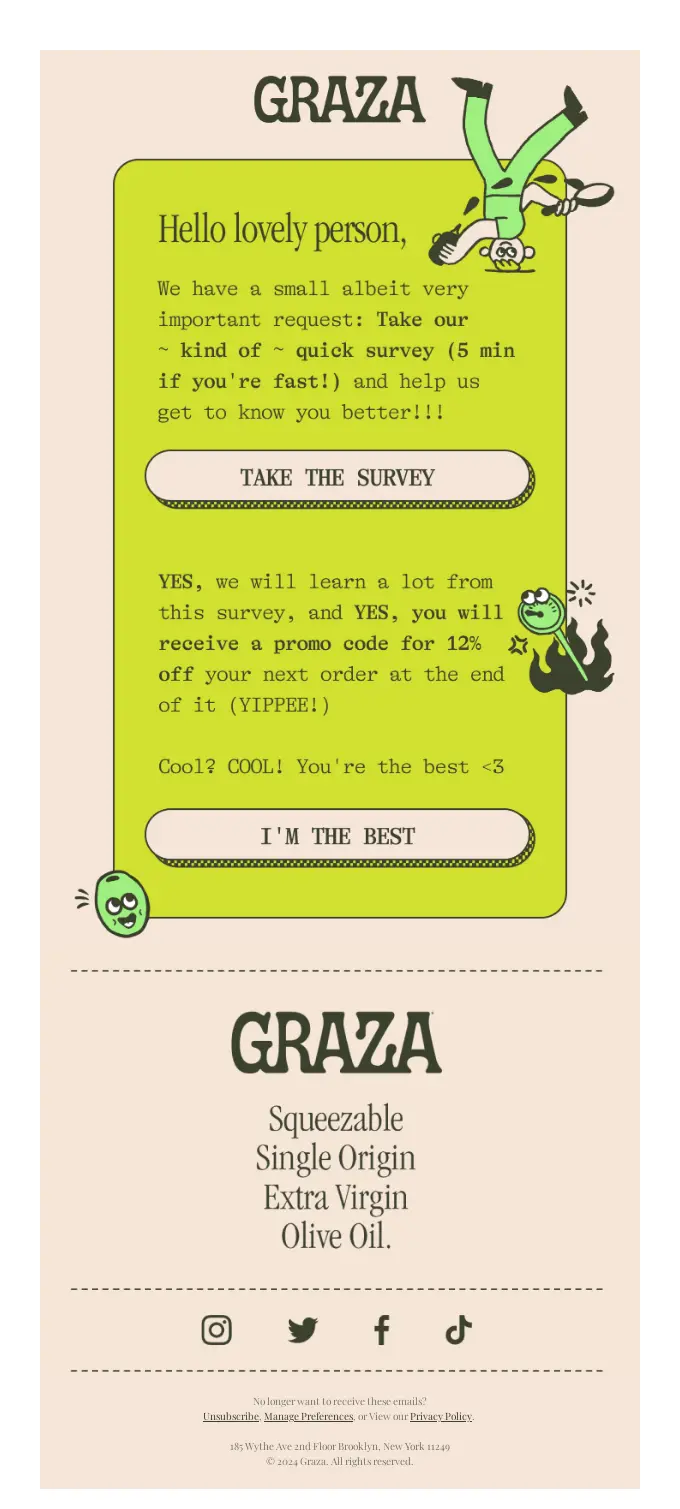
Feedback Email: Triggered after a first purchase, this email captures initial impressions of the product and shopping experience. It’s often the final step in the onboarding journey before transitioning to post-purchase engagement. Graza, an olive oil brand, encourages survey completion by offering a 12% discount on the next order, ensuring a high response rate and gathering valuable insights for continuous improvement.
Crafting an Optimized Onboarding Journey: Timing and Flow
A standard e-commerce onboarding sequence typically comprises three to five emails, strategically spaced to maintain engagement without overwhelming the subscriber. For high-ticket items or complex products, the sequence might extend to five or more emails to adequately address objections and provide detailed information.
The timing of these emails is as critical as their content, and modern automation platforms allow for dynamic sequencing based on subscriber behavior rather than rigid time delays.
| Email Number | Timing/Trigger | Goal | Content |
|---|---|---|---|
| Email 1 | Immediately upon sign-up | Deliver sign-up incentive | Discount code, brand introduction, setting expectations |
| Email 2 | 3 days after sign-up | Introduce the product catalog | Bestselling categories, curated collections, product highlights |
| Email 3 | 7 days after sign-up | Build trust and provide social proof | Customer reviews, user-generated content, testimonials |
| Email 4 | 14 days after sign-up | Remove purchasing friction | Shipping FAQs, return policy details, sizing guides, guarantees |
| Email 5 | 21 days after sign-up (if no purchase) | Nudge the first purchase | Reminder of unused discount, targeted product recommendations |
This blueprint emphasizes a gradual approach, recognizing that new subscribers need time to explore and build trust. The initial excitement of the welcome is followed by discovery (product intro), validation (social proof), reassurance (FAQs), and finally, a gentle prompt to convert. Crucially, the workflow should automatically remove a buyer from the onboarding sequence the moment they complete their first order, seamlessly transitioning them into post-purchase flows focused on product education and feedback.
Best Practices for Sustained Success
To maximize the efficacy of onboarding sequences, e-commerce brands should adhere to several best practices:
- Segment by Sign-up Source: New subscribers arrive from various channels (website pop-ups, Instagram giveaways, checkout boxes, QR codes). Tailoring the initial sequence based on their entry point ensures relevance. Sending a discount-focused workflow to someone expecting product information, for example, can lead to disengagement.
- Personalize Based on Browse and Purchase History: Leverage customer data to personalize content. If a user browsed running shoes but didn’t purchase, the next email should feature those specific shoes or top-rated alternatives. Generic emails are increasingly ineffective, as digitally savvy consumers expect a personalized experience.
- Trigger Emails by Behavior, Not Just Time: The most sophisticated onboarding sequences are event-driven. If a subscriber uses their sign-up discount on day two, any subsequent purchase nudges scheduled for day five should be suppressed. This dynamic approach respects customer actions and prevents irrelevant communications.
- Pace Your Sequence Thoughtfully: Avoid "list fatigue" by spacing out emails. One to two emails per week over the first two to four weeks keeps the brand visible without becoming intrusive, balancing engagement with respect for the subscriber’s inbox.
- Track Comprehensive Metrics: While open and click rates indicate initial engagement, true success is measured by conversion rate, time to first purchase, revenue per recipient, and unsubscribe rate. Monitoring these metrics allows for continuous optimization and ensures the sequence is driving tangible business outcomes. Omnisend data consistently shows that automated messages generate around 30% of all e-commerce email revenue, underscoring the importance of optimizing these flows for maximum impact.
Technological Enablement: Streamlining Automation
Implementing sophisticated onboarding sequences, particularly with dynamic personalization and behavioral triggers, requires robust marketing automation platforms. Solutions like Omnisend offer pre-built workflows and intuitive builders that simplify this process. These platforms connect natively with major e-commerce platforms such as Shopify, WooCommerce, and BigCommerce, syncing store data instantly. This allows businesses to:
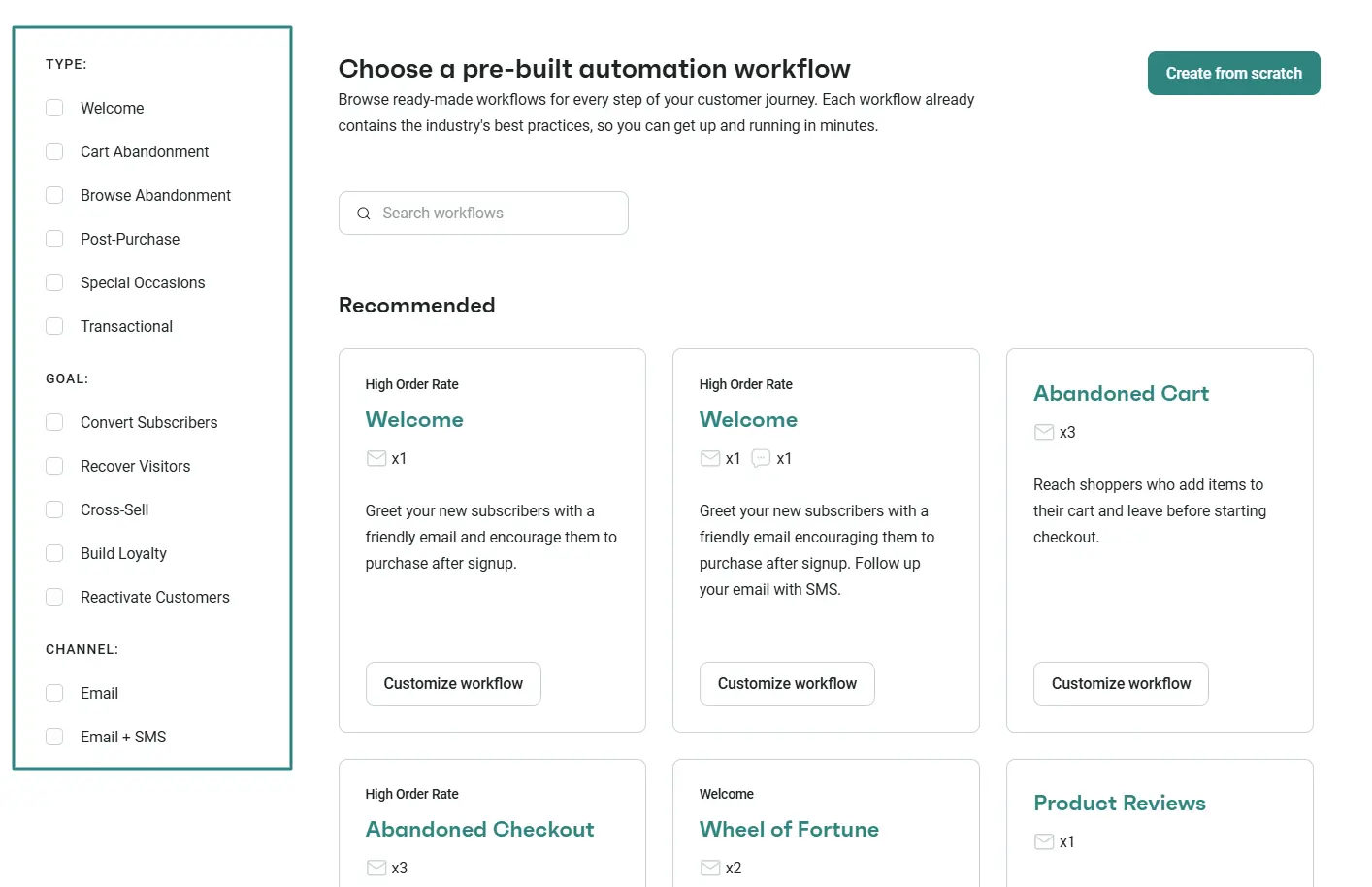
- Select Pre-built Workflows: Utilize templates for welcome, abandoned cart, and other essential automations.
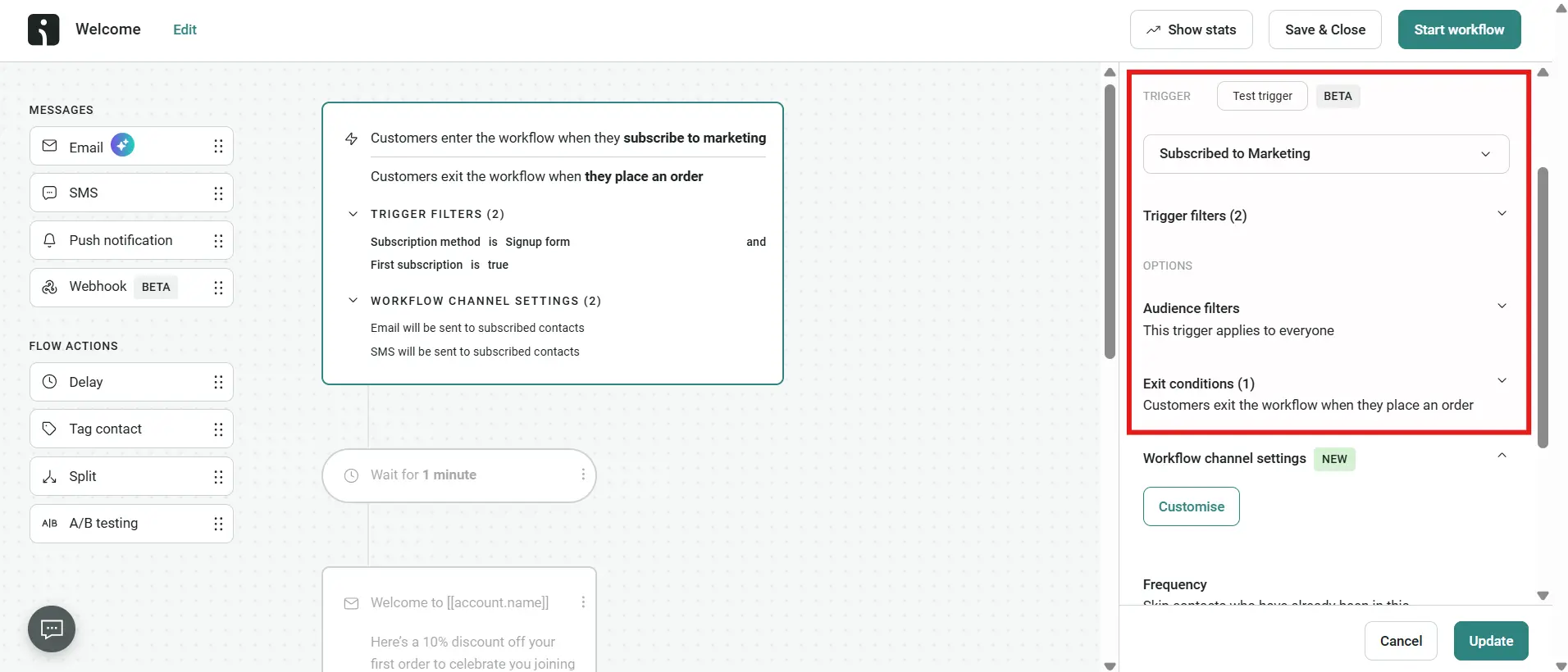
- Define Entry Triggers: Easily configure when a sequence begins (e.g., "subscriber signs up," "first purchase made").
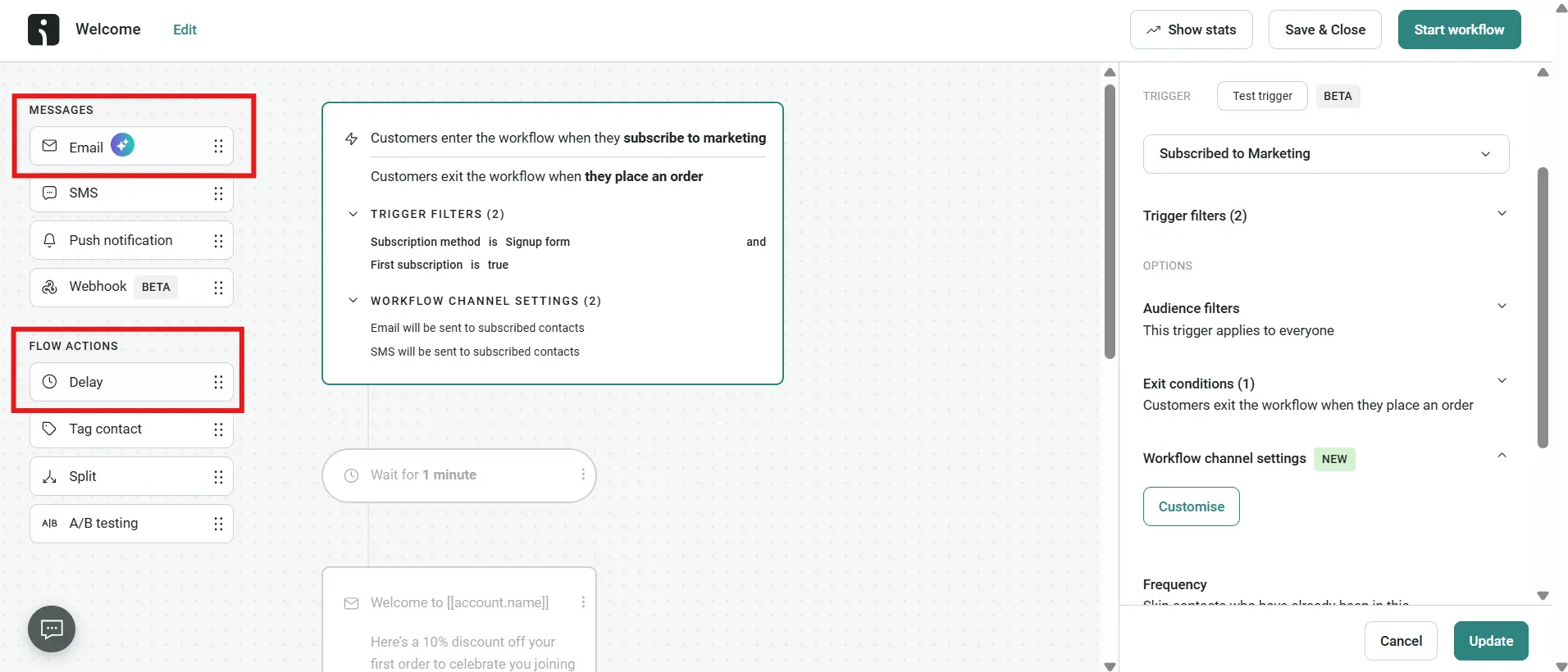
- Drag-and-Drop Email Design: Create compelling email content with ease, incorporating dynamic elements.
- Configure Time Delays and Conditional Splits: Build complex, behavior-driven paths within a single automation, ensuring relevance for every subscriber.
- Leverage Dynamic Product Recommenders: Automatically populate emails with personalized product suggestions based on browsing history or popular items.
- Activate and Monitor: Launch workflows with confidence and track performance to refine strategies.
This technological backbone makes advanced email marketing accessible to businesses of all sizes, democratizing the ability to create highly effective customer journeys.
Broader Impact and Strategic Implications
The rise of sophisticated onboarding email sequences represents a strategic imperative for e-commerce brands. Beyond immediate conversion, these sequences are instrumental in:
- Boosting Customer Lifetime Value (CLTV): A positive, guided initial experience lays the groundwork for long-term customer relationships and repeat purchases.
- Enhancing Brand Loyalty: Proactive communication, personalized recommendations, and a frictionless experience foster trust and affinity for the brand.
- Gaining Competitive Advantage: Brands that invest in superior onboarding stand out in a crowded market, offering a more engaging and supportive customer journey.
- Driving Operational Efficiency: Automated sequences reduce the manual effort required for customer nurturing, freeing up marketing teams to focus on broader strategic initiatives.
Looking ahead, the integration of artificial intelligence (AI) and advanced analytics will further refine onboarding strategies. AI-driven personalization will enable hyper-targeted content delivery, predicting customer needs and preferences with unprecedented accuracy. The evolution of onboarding sequences is not merely a tactical adjustment but a fundamental shift towards more intelligent, customer-centric e-commerce.
Conclusion
The Omnisend 2026 Ecommerce Marketing Report clearly illustrates the profound impact of automated onboarding email sequences on e-commerce revenue and engagement. By transforming generic welcome messages into strategic, multi-touch journeys that educate, engage, and convert, brands can bridge the gap between new subscribers and loyal, high-value customers. Embracing these advanced automation techniques and best practices is no longer an option but a critical component of sustainable growth and competitive differentiation in the dynamic world of online retail.
FAQs
How often should you send onboarding emails?
It is recommended to send one to two onboarding emails per week over the first two to four weeks of a new subscription. This pacing keeps your brand visible without causing list fatigue or driving up unsubscribe rates, allowing subscribers adequate time to engage with each message.
How do you send an onboarding email?
Onboarding emails are sent by setting up an automated workflow within an email marketing platform. This workflow is triggered by a specific customer action, such as signing up or making a first purchase. Users typically select a pre-built automation template, define the entry action, and then design and drop their drafted messages into the workflow builder.
Is an onboarding email a transactional or marketing email?
In e-commerce, an onboarding email that includes product recommendations, brand introductions, or discount codes is legally classified as a marketing email. While SaaS onboarding emails might be transactional if they solely focus on account setup or service usage instructions, e-commerce onboarding sequences are designed to drive revenue and therefore require explicit subscriber consent.
What is a good open rate for onboarding emails?
A good open rate for an automated onboarding email is typically above 50%. Omnisend data indicates that welcome and automated introductory messages consistently achieve this benchmark. This high engagement is largely due to new subscribers’ expectation of hearing from a brand immediately after providing their contact information, making the initial messages highly anticipated and relevant.

 Reynand Wu
 Basiran