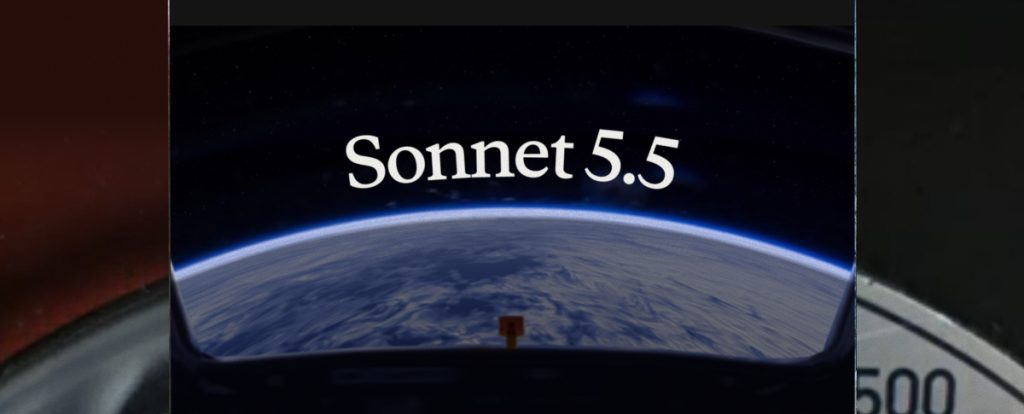
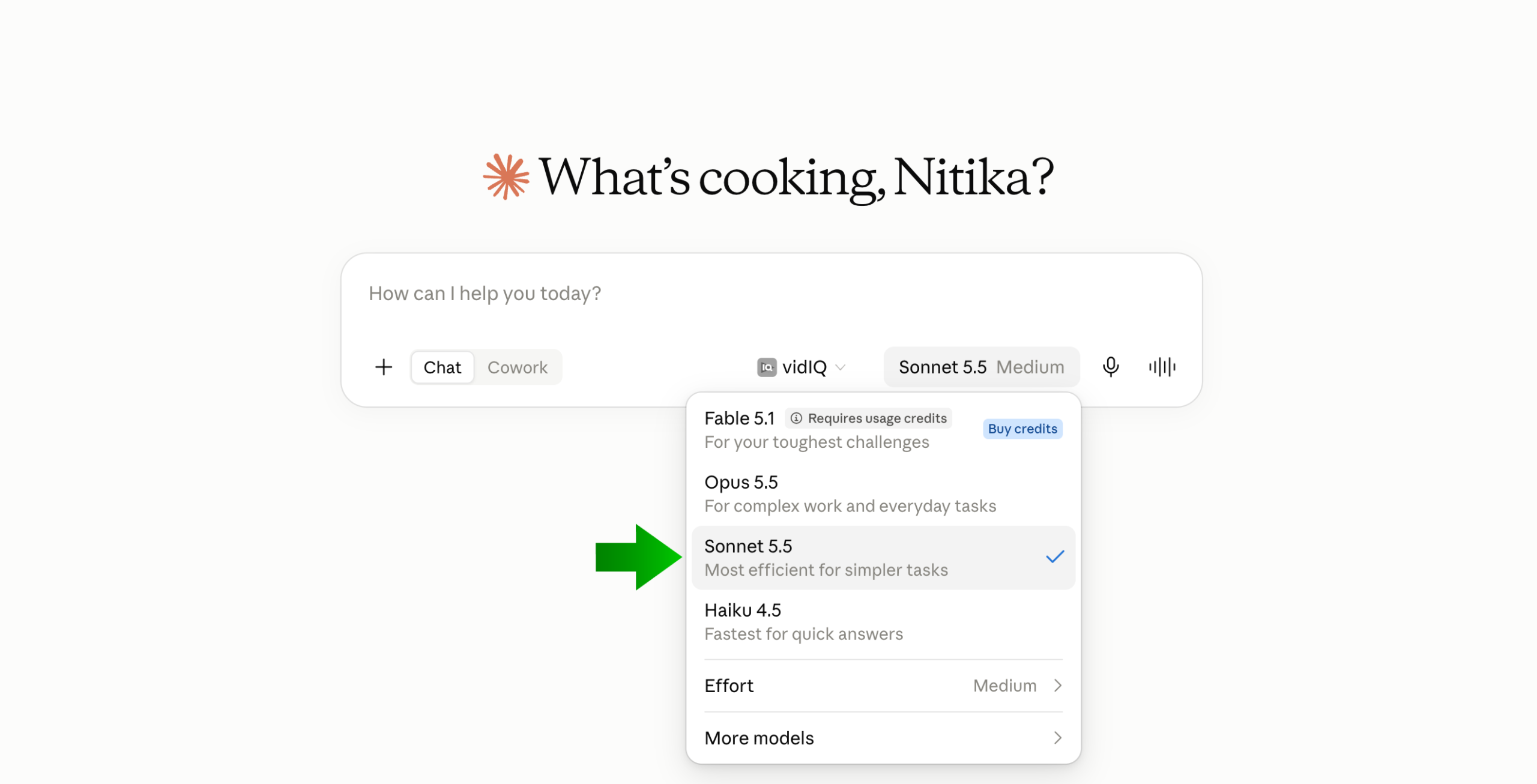
Anthropic, the San Francisco-based artificial intelligence safety and research company, has officially announced the release of Claude Sonnet 5.5, a major iteration of its mid-tier AI model. Positioned as the successor to Sonnet 5, this latest version represents a strategic pivot for Anthropic, prioritizing "agentic" capabilities—the ability of an AI to perform multi-step tasks autonomously—and multimodal visual reasoning. Unlike the high-end Opus 5.5, which remains behind a subscription paywall for the most complex open-ended reasoning, Sonnet 5.5 has been made the default model for all users, including those on the free tier. This move signals a significant escalation in the competitive landscape of large language models (LLMs), as Anthropic aims to capture the developer and enterprise market with a model that balances high speed, low cost, and state-of-the-art performance.
The Strategic Evolution of the Claude Family
The release of Sonnet 5.5 marks a turning point in Anthropic’s development timeline. Historically, the Claude family has been divided into three distinct tiers: Haiku (the fast, lightweight model), Sonnet (the balanced workhorse), and Opus (the high-intelligence flagship). By upgrading Sonnet to version 5.5, Anthropic is challenging the industry standard that mid-tier models must compromise on reasoning power.
Industry analysts suggest that Sonnet 5.5 is designed to compete directly with OpenAI’s GPT-4o and Google’s Gemini 1.5 Pro. While Opus 5.5 is reserved for the "hardest open-ended work," Sonnet 5.5 is optimized for tasks that are well-scoped, repeatable, and tool-heavy. This includes software engineering, data extraction, and autonomous web navigation. The deployment of this model for free users is a calculated move to broaden Anthropic’s user base and gather real-world data on how "agentic" systems interact with everyday users.
Technical Specifications and Architectural Levers
While Anthropic remains proprietary regarding the specific parameter counts and internal architecture of Sonnet 5.5, the model introduces several "levers" that allow technical leaders to fine-tune performance. The model features a default 1-million-token context window, allowing it to process entire codebases or hundreds of documents in a single prompt. Furthermore, it supports a maximum output of 128,000 tokens for specialized requests, a feature essential for long-form content generation and complex coding projects.
One of the most significant technical additions is the introduction of "Effort Controls." On the Claude Platform, developers can now toggle between Medium and High effort levels. These settings change the model’s latency, token consumption, and verification behavior. High effort encourages the model to verify its own work through internal loops, which is critical for reducing "hallucinations" in technical documentation and code. This architectural view—comprising input context, reasoning budgets, tool loops, and verification behavior—provides developers with the granularity needed to build reliable production-grade AI agents.
Pricing and Economic Efficiency in Production
In the current AI economy, the cost per task is becoming a more vital metric than the cost per token. Anthropic has maintained the pricing structure of the previous Sonnet model while significantly increasing efficiency. Sonnet 5.5 is priced at $2 per million input tokens and $10 per million output tokens. However, Anthropic claims that the model’s increased intelligence allows it to complete complex tasks with fewer tool calls and fewer total tokens, potentially lowering the effective bill for developers by up to 30%.
The model also features an advanced caching system. Cache writes are priced between $2.50 and $4 per million tokens depending on the duration of the cache, while cache reads are significantly discounted at $0.20 per million tokens. This pricing model incentivizes developers to build applications that reuse large datasets, such as persistent chatbots that reference a company’s entire internal wiki or coding assistants that "remember" a specific project’s architecture.
Benchmarking the Agentic Leap
The performance data released alongside Sonnet 5.5 indicates a dramatic improvement in "agentic coding" and "computer use." These benchmarks measure an AI’s ability to use software tools, navigate operating systems, and write functional code that passes unit tests.

- Terminal-Bench 4.0: Sonnet 5.5’s score rose from 10.3% in previous versions to a dominant 70.6%. This benchmark tests the model’s ability to interact with a command-line interface to solve real-world engineering problems.
- OSWorld 2.1: The model moved from 57.0% to 80.1%, showcasing its ability to navigate a computer’s desktop environment, open files, and interact with various software applications as a human would.
- CursorBench 4.0: In a test of integrated development environment (IDE) efficiency, the model improved from 34.1% to 55.5%.
A notable caveat in the benchmark data is the "overthinking" phenomenon. Anthropic reported that at the "Max" effort level, the model occasionally scored lower than at "Xhigh" on certain coding benchmarks. This suggests that excessive internal review can sometimes lead to timeouts or out-of-scope edits—a critical insight for developers building autonomous agents who must find the "Goldilocks zone" of AI reasoning.
Multimodal Capabilities: Visual Bug-Fixing and QA
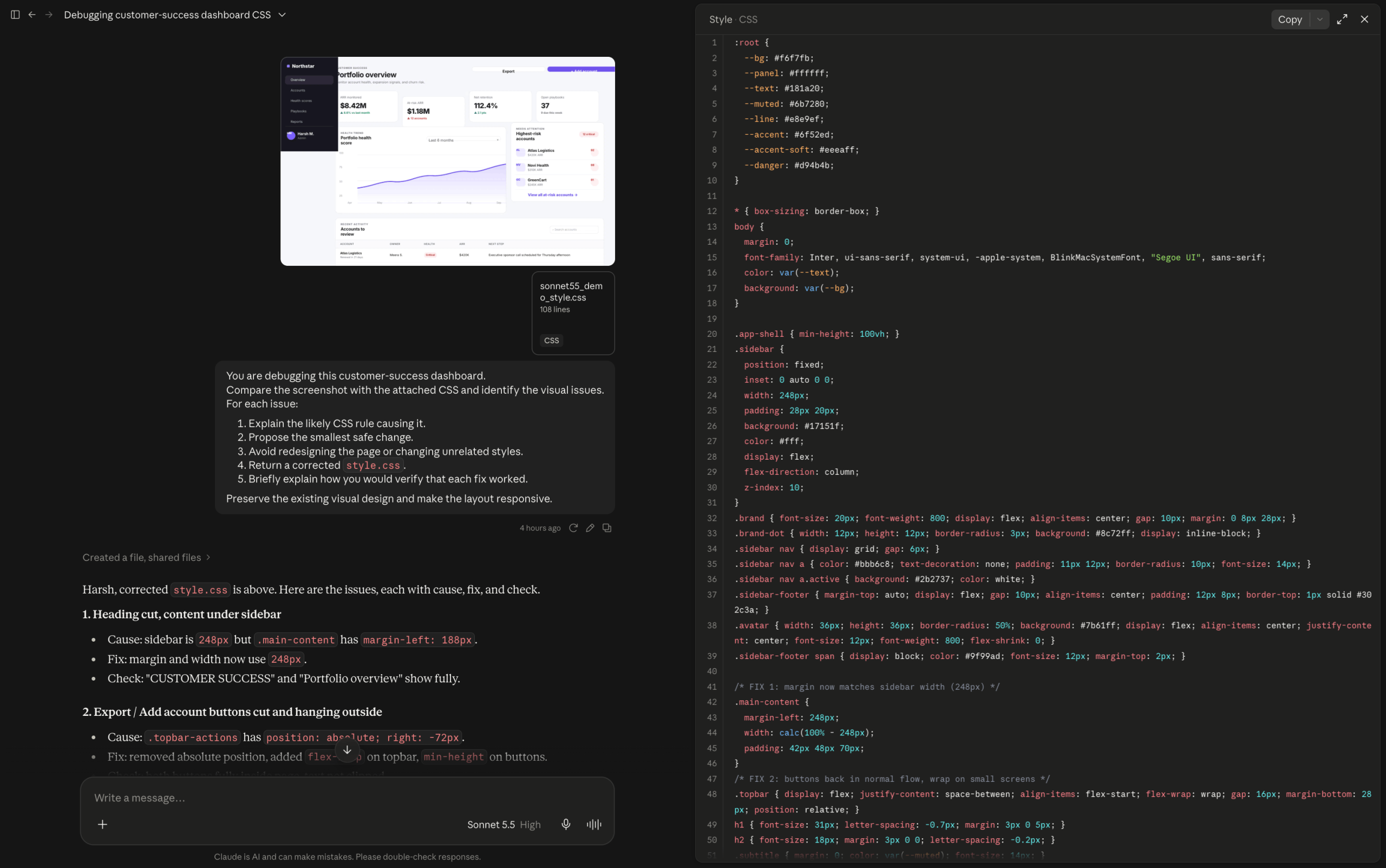
Sonnet 5.5 represents a major leap in vision-language integration. Unlike earlier models that treated images as separate data points, Sonnet 5.5 can reason across code and visuals simultaneously. A primary use case demonstrated by Anthropic is "Visual QA."
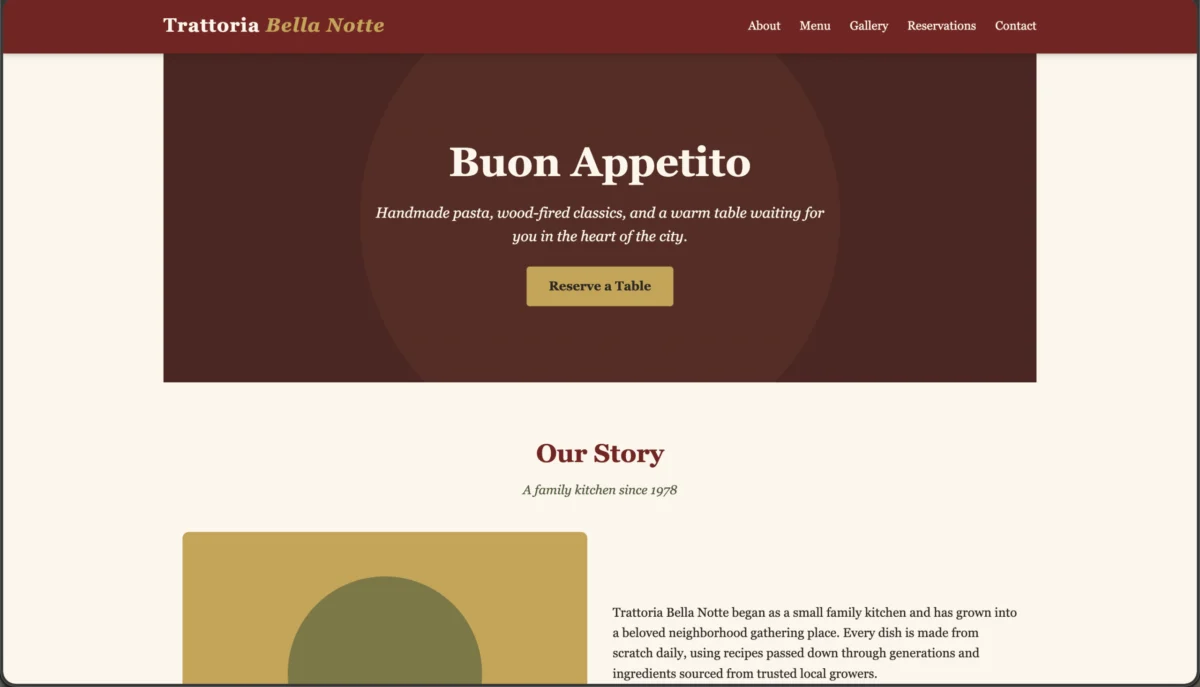
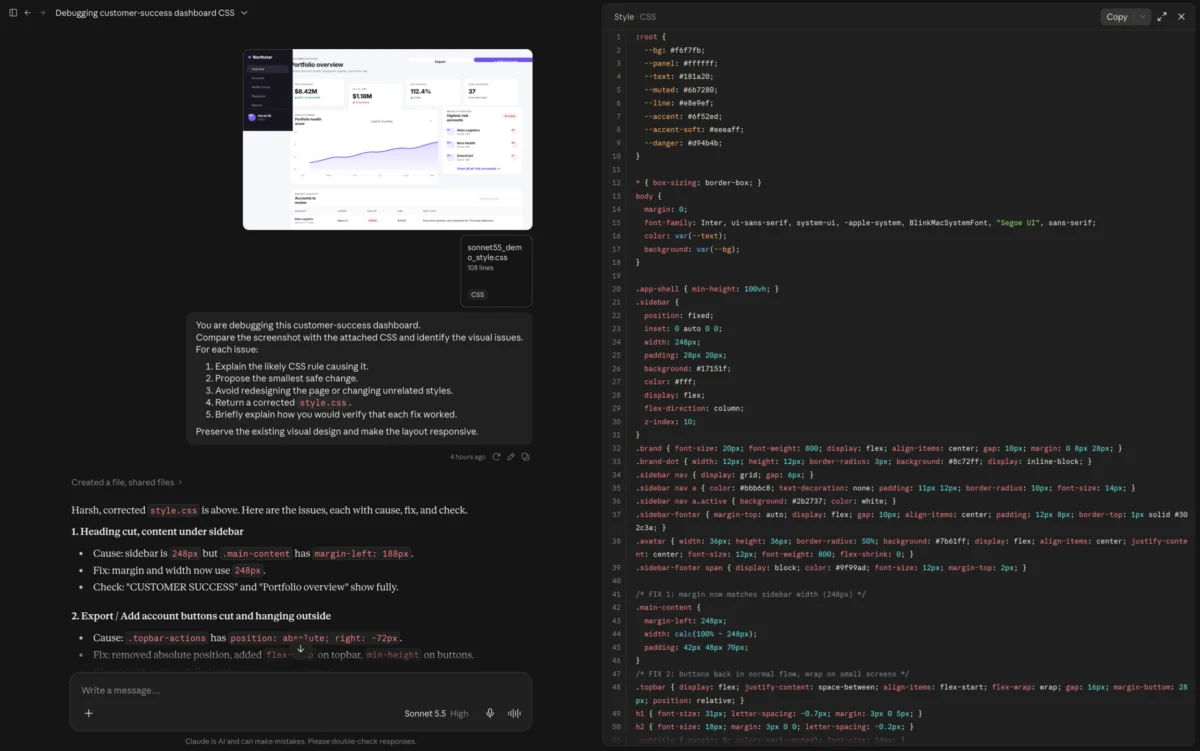
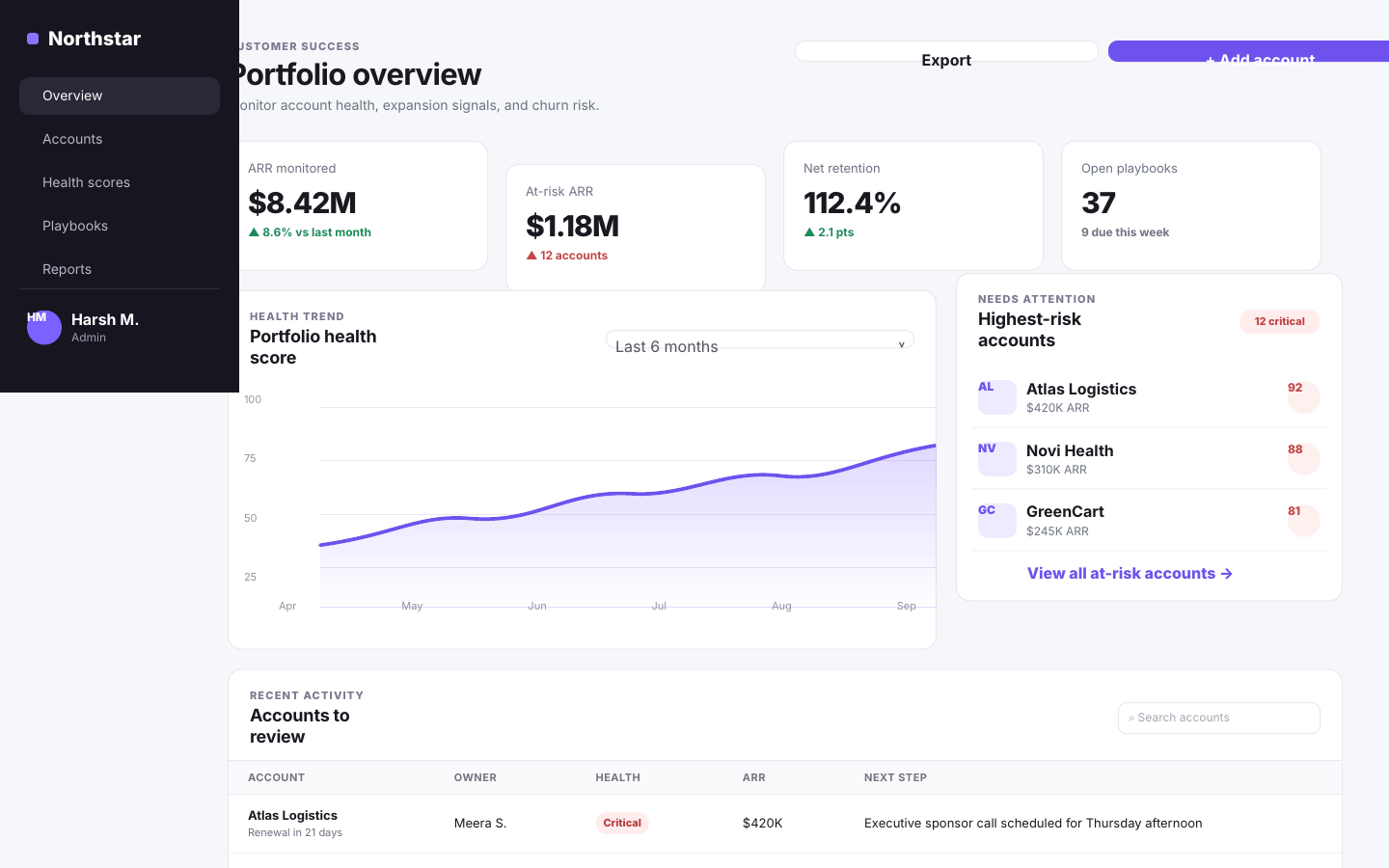
In a practical demo, Sonnet 5.5 was tasked with debugging a customer-success dashboard. By analyzing a screenshot of a broken webpage alongside the page’s CSS file, the model was able to identify visual mismatches—such as misaligned margins or non-responsive elements—and produce the smallest safe code fix. The model completed this task in approximately 10 seconds, mapping visual errors to specific lines of code and suggesting verification steps. This ability to combine screenshot understanding with code-level reasoning makes it an invaluable tool for frontend developers and quality assurance teams.
Creative and Startup Workflows
Beyond technical debugging, Sonnet 5.5 is being positioned as a creative partner. The model’s ability to interpret subjective prompts—such as "modern," "slick," and "punchy"—allows it to assist in the conceptualization of marketing materials and motion graphics. In tests involving video generation prompts for startups, the model demonstrated an ability to avoid generic tropes (such as the "AI glowing brain") in favor of clean motion graphics and confident typography. By providing strong anchors for creative interpretation, Sonnet 5.5 allows non-technical users to generate high-fidelity briefs and scripts that were previously the domain of specialized agencies.
Implications for the AI Industry and Enterprise Adoption
The release of Sonnet 5.5 is likely to accelerate the adoption of "coding agents" in the enterprise. As the model becomes more adept at using tools and navigating operating systems, the role of the AI shifts from a passive chatbot to an active collaborator. For teams building document workflows or tool-using assistants, Sonnet 5.5 offers a compelling balance of performance and cost.
However, the industry remains cautious. The shift toward agentic AI brings new security risks, specifically regarding "prompt injection" where a model might be tricked into executing malicious commands in a terminal. Anthropic has addressed this through its "Constitutional AI" framework, but the company emphasizes that human verification remains essential before production deployment.
Chronology of Anthropic’s Major Model Releases
- March 2023: Launch of Claude 1, establishing Anthropic as a safety-focused competitor to OpenAI.
- July 2023: Claude 2 is released with an expanded 100k context window.
- March 2024: The Claude 3 family (Haiku, Sonnet, Opus) debuts, with Opus briefly taking the top spot on the LMSYS Chatbot Arena leaderboard.
- Mid-2024: Release of Sonnet 5, introducing significant speed improvements.
- Current: Launch of Sonnet 5.5, prioritizing agentic performance and making high-tier reasoning free for all users.
Frequently Asked Questions
Is Sonnet 5.5 more expensive than its predecessor?
No. The per-token price remains identical to Sonnet 5 ($2/MTok input, $10/MTok output). However, because the model is more efficient and requires fewer tool calls to complete a task, the total cost per project can be up to 30% lower.
What is the maximum context window for Sonnet 5.5?
The model supports a 1-million-token context window by default, allowing it to process vast amounts of data. For standard API requests, the maximum output is 128,000 tokens.
Should Sonnet 5.5 replace Opus 5.5 in my workflow?
Not necessarily. Anthropic still positions Opus 5.5 as the premier model for high-stakes, open-ended work that requires sustained judgment and the highest level of nuance. Sonnet 5.5 is the preferred choice for well-defined, tool-based, or latency-sensitive tasks.
What is the "effort level" setting?
Effort levels allow developers to control how much the model "thinks" before responding. "Medium" is the default for general use, while "High" is recommended for complex coding or agentic tasks where accuracy is more important than immediate speed.
Conclusion
Claude Sonnet 5.5 is a testament to the rapid maturation of the AI sector. By delivering a model that is faster, cheaper per task, and significantly more capable at interacting with the digital world, Anthropic is moving the conversation beyond simple text generation. The focus is now on utility—how these models can act as agents within a broader technical ecosystem. For developers and businesses, the challenge now lies in building the right architecture around these models to harness their "agentic" potential while maintaining rigorous safety and verification standards.