Nana Muazin

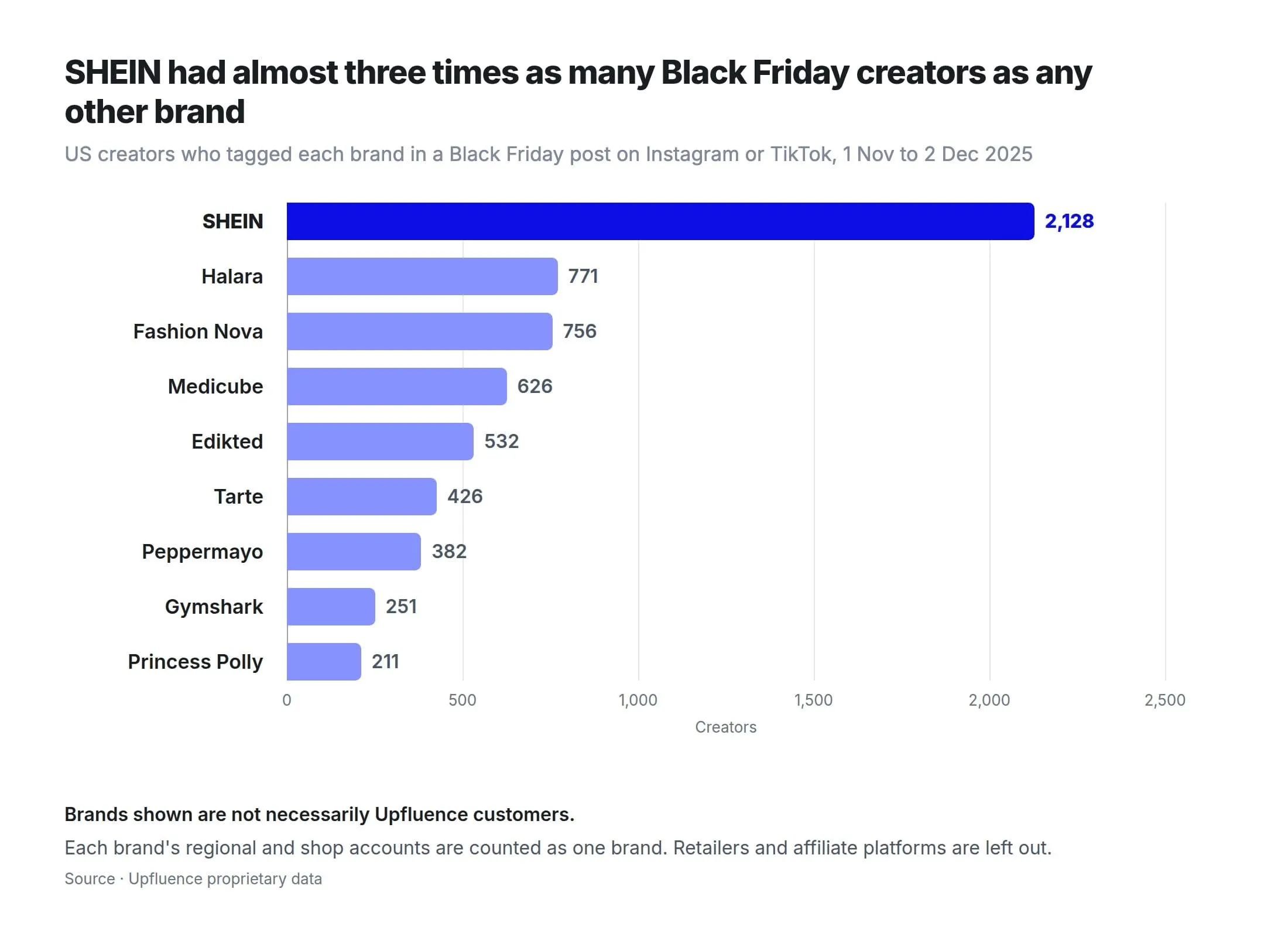
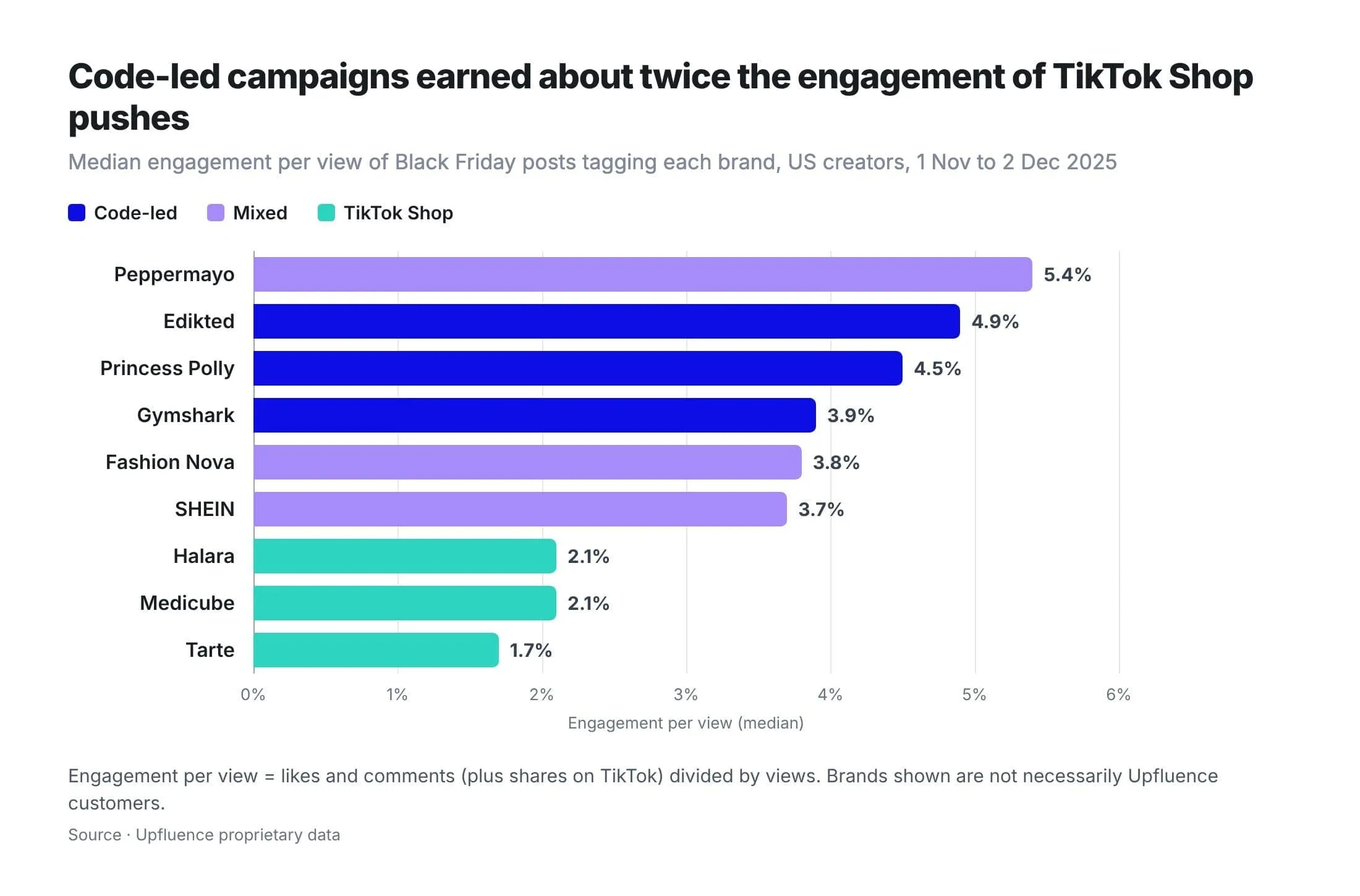
The landscape of retail marketing underwent a significant transformation during the most recent Black Friday and Cyber Monday (BFCM) season, as creator-led campaigns solidified their position as the primary driver of consumer attention. According to comprehensive data analyzing over 508,000 posts by United States creators across Instagram, TikTok, and YouTube, three fashion brands—Peppermayo, Edikted, and Princess Polly—emerged as the definitive winners in terms of audience engagement. These brands achieved engagement-per-view rates ranging from 4.5% to 5.4%, significantly outperforming the industry average. While the fast-fashion giant SHEIN dominated the market in terms of sheer scale, deploying 2,128 US-based creators, the data suggests that engagement and reach are no longer synonymous in the evolving world of social commerce.
The Strategic Shift Toward Micro-Influencers and Authenticity
The primary takeaway from the recent holiday season is the overwhelming success of "small" creators—those with fewer than 100,000 followers. In the campaigns for Peppermayo and Edikted, 82% of the participating creators fell into this category. This shift reflects a broader consumer trend: the preference for perceived authenticity over high-production celebrity endorsements. Micro-influencers often maintain a more intimate, trust-based relationship with their followers, leading to higher conversion rates and more meaningful interactions.

The data reveals a stark contrast in performance based on creator size. For SHEIN, creators with fewer than 100,000 followers earned a median engagement per view of 4.5%, whereas those with larger followings saw that figure drop to 2.7%. This "engagement gap" highlights a critical challenge for major brands: as they scale their influencer programs, maintaining the "organic" feel that drives social media algorithms becomes increasingly difficult. The exception to this rule was Gymshark, where fitness creators with over 100,000 followers actually outperformed their smaller counterparts (4.5% vs. 3.1%), likely due to the highly specialized and aspirational nature of the fitness community.
Content Format as a Driver of Success
Beyond the choice of creators, the format of the content proved to be a decisive factor in campaign performance. The most successful brands avoided "plain deal announcements"—static posts or videos simply stating a discount percentage. Instead, they leaned heavily into "try-on," "outfit," and "haul" videos. Approximately one-third of the top-performing posts for the leading three brands utilized these formats.
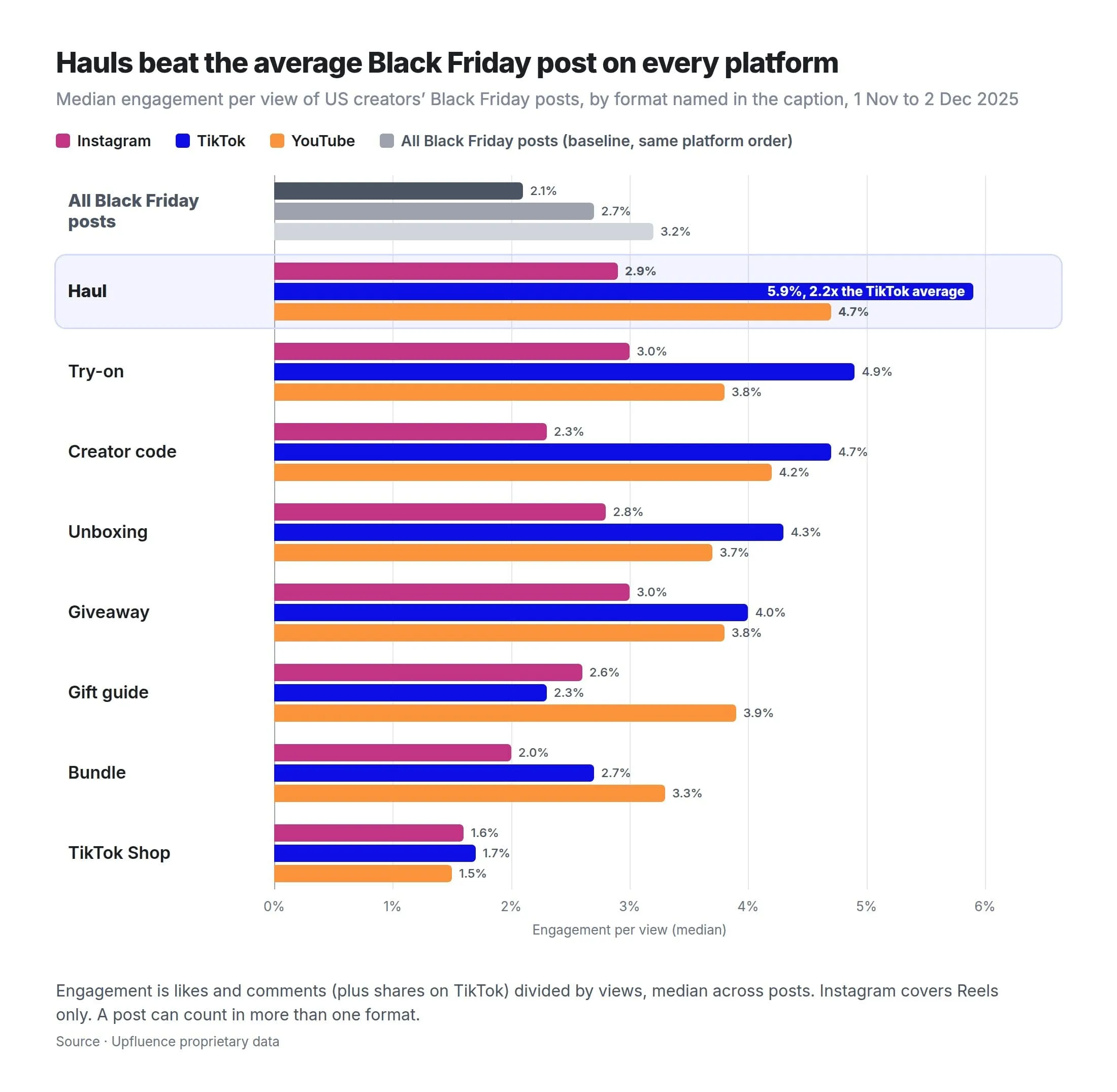
On TikTok, haul videos reached a median engagement per view of 5.9%, more than double the platform’s general Black Friday average of 2.7%. Try-on videos followed closely at 4.9%. These formats are effective because they provide social proof and utility; consumers can see how a garment fits, moves, and styles before making a purchase decision. Conversely, posts specifically categorized as "TikTok Shop listings" saw the lowest engagement across all platforms, hovering around 1.7% on TikTok and 1.5% on YouTube. This suggests a growing "commercial fatigue" among users who prefer content that feels like a recommendation rather than a direct sales pitch.
Chronology of the Black Friday 2025 Campaign Cycle
The 2025 Black Friday season was characterized by an increasingly early start, with the traditional "Black Friday" day serving more as a climax than a commencement. The analysis period, spanning from November 1 to December 2, showed a strategic distribution of content:
- Early November (The Tease): Brands like Tarte and SHEIN began their pushes as early as November 7. Tarte launched the #tarteholidaychallenge, giving creators a reason to post multiple times before the sale even began. This period was used to build "cart intent" and brand familiarity.
- Mid-November (The Launch): Princess Polly and SHEIN deployed their primary campaign hashtags during this window. By November 12, SHEIN’s creators were consistently using #sheinblackfriday and #sheinbigsale, ensuring the brand dominated the "For You" pages well ahead of the holiday.
- Black Friday Week (The Conversion): Brands like Edikted opted for a "late-push" strategy. Only 19% of Edikted’s creator posts appeared before Black Friday week. This strategy relied on the urgency of the deadline and the high concentration of personalized discount codes (used in 63% of their posts) to capture shoppers who were ready to buy immediately.
- Cyber Monday (The Final Push): The cycle concluded with a shift toward Cyber Monday deals, often utilizing "stacked" codes where a creator’s personal discount was added on top of existing sitewide sales.
Comparative Analysis of Leading Brand Strategies
The strategies employed by top brands offer a blueprint for future creator-led marketing:
- SHEIN (The Volume Model): SHEIN’s approach was one of total market saturation. By utilizing over 2,100 creators, they ensured a constant presence. Their success relied on strict adherence to campaign hashtags; 93% of their posts used #sheinbigsale. This allowed for seamless tracking and massive brand awareness, even if individual engagement rates were lower than smaller, more curated brands.
- Princess Polly (The Ambassador Model): Princess Polly leveraged its existing ambassador program, with 77% of posts featuring the #pp_partner tag. This strategy rewarded long-term relationships, as these creators already had a history of promoting the brand, making their Black Friday recommendations feel more sincere.
- Medicube and Halara (The TikTok Shop Model): These brands focused on high-volume affiliate sales through TikTok Shop. While this resulted in lower engagement (2.1%), it facilitated a frictionless "see it, buy it" user journey. They often utilized "Super Brand Days" to concentrate sales volume into 24-hour windows.
Classic Formats and Their Modern Resilience
Despite the constant evolution of social media algorithms, several "classic" campaign styles continued to perform exceptionally well during the last season:
- Gift Guides: Curated by influencers, these guides saw an engagement rate of 2.6% on Instagram, higher than the 2.1% average. Brands like L’Occitane used this to position their products as the "perfect gift," moving away from the aggressive "buy for yourself" messaging of traditional Black Friday ads.
- Unboxings: This format remains a powerhouse for luxury and beauty brands. Dior’s unboxing of the Le 30 Montaigne Advent Calendar, featuring creator Léna Situations, exemplifies how to sell "the experience" rather than just the discount. Unboxings outperformed platform averages on Instagram (2.8%), TikTok (4.3%), and YouTube (3.7%).
- Giveaways: Often used as an entry point to the sales funnel, giveaways maintained a 3.0% engagement rate on Instagram. By requiring tags or follows for entry, brands were able to grow their owned audiences while promoting their holiday deals.
Regulatory Environment and Ethical Disclosures
A critical component of the 2025 season was the high level of compliance with Federal Trade Commission (FTC) guidelines. In the United States, 75% of Black Friday posts tagging SHEIN explicitly carried the #ad disclosure. The data indicates that modern consumers are not deterred by the #ad tag, provided the content remains high-quality and relevant. Professional creators have become adept at integrating disclosures into their captions or video overlays without breaking the flow of the content. For brands, ensuring these disclosures are present is not only a legal necessity but also a means of maintaining long-term consumer trust.
Broader Implications for the Retail Industry
The results of this data study suggest that the "democratization of influence" is complete. The era where a single celebrity could drive a brand’s entire holiday revenue is being replaced by a fragmented model where hundreds of micro-influencers drive niche communities toward specific products.
Furthermore, the divide between "engagement" and "conversion" is becoming more pronounced. While TikTok Shop provides a direct path to purchase, it currently lacks the high-engagement "stickiness" of code-led campaigns that prioritize storytelling. Brands in the future will likely need to adopt a hybrid approach: using micro-influencers for "top-of-funnel" engagement and storytelling, while utilizing TikTok Shop and affiliate links for "bottom-of-funnel" conversion.
Conclusion and Future Outlook
As marketing teams begin planning for the 2026 season, the data serves as a clear directive. The winning formula involves recruiting creators under the 100,000-follower mark, briefing them to create authentic "try-on" or "haul" content, and providing them with personalized tracking codes to incentivize their audience. By focusing on content that shows the product in use rather than just the price tag, brands can navigate the noise of the busiest shopping season of the year and build lasting connections with their target demographics.
The success of Peppermayo, Edikted, and Princess Polly proves that even in a crowded market dominated by giants like SHEIN, agility and a focus on high-quality, creator-led storytelling can yield superior results. As social commerce continues to mature, the brands that prioritize the creator-audience relationship will likely remain at the forefront of the retail industry.


 Evan Lee Salim