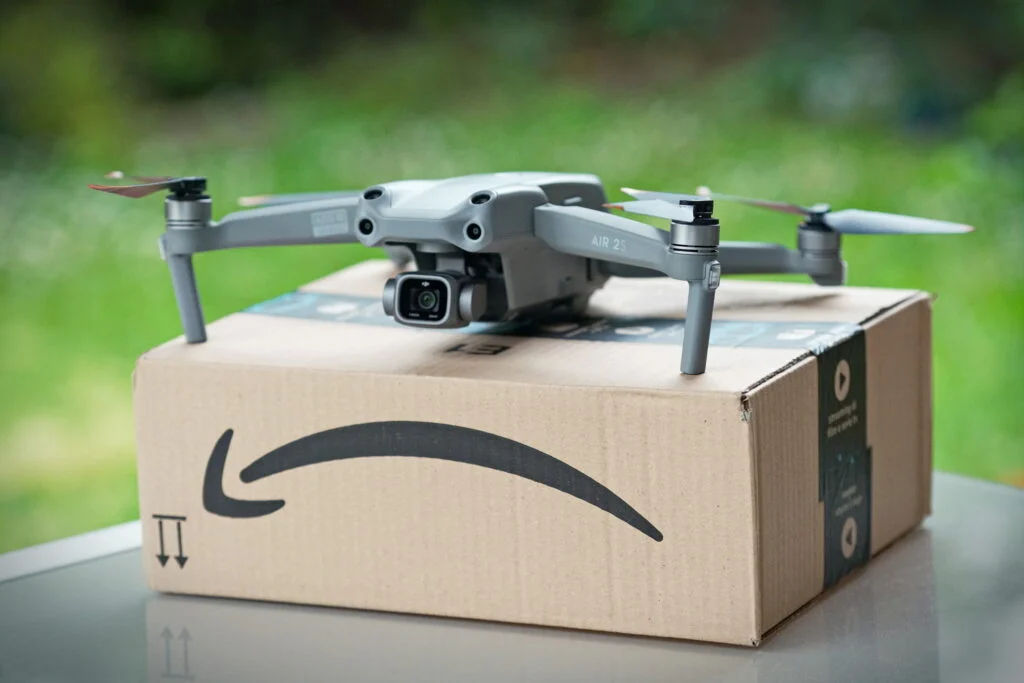
Amazon.com Inc. is significantly broadening the reach of its Prime Air drone delivery service, announcing on August 19th its expansion into five additional major U.S. metropolitan areas: Chicago, Syracuse, Cleveland, Atlanta, and Boise. This strategic move, slated to commence "soon," represents a substantial acceleration in Amazon’s ambitious plan to establish a drone delivery footprint capable of serving nearly 500 U.S. cities and towns by the close of 2026. This target footprint would be six times larger than its current operational scale, underscoring the e-commerce giant’s commitment to revolutionizing last-mile logistics through aerial autonomous vehicles.
The current iteration of Prime Air is already operational in 10 U.S. metro areas, a number that has seen steady growth since the service’s commercial launch. This expansion is not merely about increasing the number of locations but also about scaling operations to meet what Amazon describes as a persistent and growing customer demand for faster delivery times. David Carbon, vice president of Amazon Prime Air, highlighted the service’s recent achievements, stating in a company blog post that Prime Air has facilitated "hundreds of thousands of packages" delivered so far this year. Amazon claims its existing delivery sites are currently making thousands of deliveries daily, positioning them as having the highest average delivery volumes in the United States for drone services.
The expansion into these new markets is a critical step in Amazon’s long-term vision for Prime Air. By the end of 2026, CEO Andy Jassy informed shareholders in his April letter that Amazon anticipates Prime Air will be serving communities with a potential customer base of 30 million people. Looking further ahead, Jassy articulated an even more ambitious target: delivering 500 million packages annually by drone by the end of the current decade. This aggressive scaling is being pursued in parallel with a significant evolution of the technology itself. The company is actively deploying its newer MK30 drone, an advancement designed to be lighter, quieter, and capable of flying twice as far as its predecessor, with a range of approximately 7.5 miles. Critically, the MK30 is also engineered to operate in light rain, addressing a key environmental limitation that had previously impacted drone operations.
How Amazon Prime Air Operates and Its Customer Experience
The operational mechanics of Amazon Prime Air are designed for speed and convenience. Drones launch from dedicated sites that cover an area of approximately 175 square miles. The promise to customers is swift delivery, with orders potentially arriving in as little as 30 minutes, although the average delivery time from checkout to doorstep is typically around 60 minutes. The service offers a vast selection of "millions" of products, encompassing categories such as groceries, cosmetics, medications, and electronics. To be eligible for drone delivery, items must weigh no more than 5 pounds and be small enough to fit within a large shoebox, a criterion that Amazon states covers "more than 60% of the items customers are most frequently purchasing."
For Prime members, the cost structure is designed to incentivize adoption. Orders totaling at least $50 qualify for free drone delivery. For smaller Prime orders, a nominal fee of $2.99 is applied, while non-Prime members face a $4.99 charge. The integration of drone delivery into the customer’s shopping journey is seamless. Eligible products are automatically flagged with a drone delivery option during browsing and at checkout. The entire process—from order placement and payment to returns—leverages Amazon’s existing app and standard customer service infrastructure.
A key element of the Prime Air experience is the initial setup for delivery. Upon placing their first order, customers are required to designate a secure outdoor delivery point, such as a driveway or yard. This location can be saved for subsequent deliveries or updated at any time. Safety protocols are paramount; the drone is equipped with sophisticated systems to detect and avoid obstacles, including people, pets, and vehicles, before releasing the package. To further enhance its capabilities, Amazon is reportedly testing a "gentle delivery" system utilizing a tether for more delicate cargo, as indicated by remarks from David Carbon to employees in March.
Prime Air complements Amazon’s existing suite of expedited delivery options, which include its 30-minute Amazon Now service and various one-hour, three-hour, and same-day delivery options in eligible markets. Carbon’s assertion that "customers continue to demand faster delivery times" and that "we have yet to reach diminishing returns when it comes to how fast we deliver to our customers" underscores the strategic imperative behind this ongoing investment in aerial logistics.
Timeline of Prime Air’s Development and Regulatory Milestones
The journey of Amazon Prime Air from concept to widespread deployment has been a long and complex one, marked by significant technological advancements and regulatory hurdles. The initial vision was articulated by Amazon founder Jeff Bezos in 2013, who predicted that drone delivery could become a reality within four to five years. However, commercial U.S. deliveries did not commence until late 2022, with initial launches in Lockeford, California, and College Station, Texas.
A pivotal moment in the service’s trajectory occurred in May 2024, when the Federal Aviation Administration (FAA) granted Prime Air authorization to operate beyond the visual line of sight of a remote operator. This approval was a major regulatory milestone, removing a significant barrier to scalability and wider deployment.
The introduction of the MK30 drone in late 2024 marked another technological leap. This new model’s enhanced capabilities, including weather resilience and extended range, were crucial for expanding service areas and improving reliability. However, the path to seamless operation has not been without its challenges. In January 2025, Amazon temporarily paused U.S. deliveries for two months. This pause was initiated after flight data revealed potential interference of dust with the MK30’s altitude sensor. The company responded by deploying a software update and subsequently resumed deliveries after securing renewed FAA approval, demonstrating a commitment to addressing technical issues proactively.
Further scrutiny came in October 2025, when two MK30 drones were involved in an incident, colliding with a crane near Amazon’s launch site in Tolleson, Arizona. This event prompted investigations by both the FAA and the National Transportation Safety Board (NTSB). While Amazon stated that its internal review found no issues with the drones or supporting technology, the company acknowledged the need for enhanced safety measures. In response, they implemented improved visual inspection protocols to better monitor moving obstructions like cranes.
Amazon emphasizes its robust safety systems that underpin Prime Air’s expansion. The drones are equipped with onboard cameras and sensors for autonomous navigation, complemented by a "detect-and-avoid" system that continuously monitors the airspace and environment for potential obstacles. This advanced system allows the drones to "independently see and make real-time decisions while in flight." From a privacy perspective, Amazon asserts that camera data is processed on the aircraft, with no live video feeds monitored by employees. The company also states that its drones do not track individuals or record their movements, addressing potential privacy concerns among the public.
The Competitive Landscape of Drone Delivery Intensifies
Amazon’s aggressive expansion of Prime Air occurs within an increasingly dynamic and competitive drone delivery market. Several major players are investing heavily in aerial logistics, signaling a broader industry trend towards this innovative delivery method.
Walmart, a significant competitor to Amazon and the second-largest online retailer in North America according to Digital Commerce 360’s Top 1000 Database, has also made substantial strides. In May 2026, Walmart announced that its drone delivery service, operating in partnership with companies like Wing and Zipline, had successfully completed over one million deliveries. This milestone underscores Walmart’s commitment to integrating drone technology into its customer service offerings. Looking ahead, Walmart and Alphabet Inc.’s Wing are collaborating to establish a network of over 270 drone delivery locations by 2027. This ambitious project aims to provide service to more than 40 million Americans across nearly 20 U.S. markets, potentially forming the nation’s most extensive drone network.
Zipline, a company initially known for its critical role in delivering medical supplies in Africa, is now expanding its operations significantly within the United States. On August 17th, Zipline announced a strategic partnership with Uber Technologies Inc. The collaboration is designed to scale drone deliveries across the U.S., with initial Uber Eats drone deliveries scheduled to commence later this year. As part of this alliance, Uber is making a strategic investment in Zipline, and together, the companies have set a target of achieving one million daily drone deliveries by late 2029.
Another prominent competitor, DoorDash, entered the drone delivery arena in July by announcing DoorDash Air. This in-house drone program, developed by its DoorDash Labs robotics unit, received FAA air carrier certification. According to a company spokesperson, commercial deliveries are anticipated to begin in the fall of 2026. While initial launch markets have not yet been disclosed, DoorDash has indicated that its drones will be capable of handling "mid-range" orders, typically covering distances of three to five miles.
These competitive moves suggest a burgeoning race among major retail and logistics companies to dominate the emerging drone delivery sector. The strategic investments, technological advancements, and expanding operational footprints of Amazon, Walmart, Zipline, and DoorDash indicate that aerial logistics are poised to become a significant component of the future of e-commerce and on-demand delivery. The race is not just about speed but also about reach, cost-effectiveness, and the ability to integrate drone services seamlessly into existing consumer habits and preferences.
Amazon’s position as No. 1 in Digital Commerce 360’s Top 1000 Database, which tracks North America’s largest online retailers by annual e-commerce sales, provides a strong foundation for its expansion efforts. However, the company’s ranking at No. 158 in the newly introduced AI Rankings, also available within the Top 1000 Pro with AI Database, suggests areas for continued development in leveraging artificial intelligence across its operations, which could further enhance the efficiency and capabilities of its drone delivery program. Similarly, its No. 3 ranking in the Global Online Marketplaces Database highlights its dominance in facilitating third-party sales, a segment that could also benefit from faster, more efficient delivery solutions.
The ongoing development and deployment of drone delivery services by these major entities will likely shape consumer expectations for delivery speed and convenience in the coming years. The successful integration of this technology into everyday commerce hinges on continued innovation, robust safety protocols, regulatory clarity, and the ability to scale operations efficiently to meet growing consumer demand. Amazon’s latest expansion is a clear signal that it intends to remain at the forefront of this transformative logistics revolution.