The landscape of website creation has undergone a profound transformation, evolving from a domain primarily accessible to skilled coders and well-funded enterprises to one now open to virtually anyone with an idea. A decade ago, the ability to construct a professional online presence often hinged on proficiency in HTML, CSS, or JavaScript, or the significant financial investment required to hire professional developers. Today, the advent of Artificial Intelligence (AI) website builders has fundamentally altered this paradigm, enabling users to generate sophisticated, functional websites in mere minutes with just a few intuitive prompts. This shift marks a pivotal moment in digital accessibility, empowering entrepreneurs, small businesses, and individuals to establish their online footprint with unprecedented ease and efficiency.
The Evolution of Web Development: From Code to Context
The journey of web development has seen several significant milestones. Initially, websites were meticulously hand-coded, a process demanding deep technical knowledge and considerable time. The emergence of Content Management Systems (CMS) like WordPress democratized this process by providing graphical interfaces and pre-built themes, reducing the reliance on direct coding. Subsequently, drag-and-drop website builders further simplified design, offering visual editors that allowed users to arrange elements without touching code. However, even these tools often presented users with a blank canvas, requiring significant design acumen and time to craft a truly professional aesthetic and functional structure.
The latest evolution, AI website builders, represents a leap forward by integrating generative AI capabilities. These platforms transcend simple automation; they are purpose-built generative AI systems designed specifically for web creation. Unlike traditional tools that merely streamline existing tasks or offer templates, AI builders actively interpret user intent described through natural language prompts. They generate entire web pages, including layouts, placeholder content, relevant imagery, and design suggestions, all tailored to the user’s specified business, style preferences, and objectives. This process significantly accelerates the initial development phase, moving users from a conceptual idea to a ready-to-refine draft almost instantly.
Operational Mechanism: The Three-Step AI-Powered Process
At its core, an AI website builder operates on principles similar to other generative AI tools: instruction, interpretation, and generation. However, its output is a comprehensive website foundation rather than just text or images. The typical workflow involves three primary stages:
- Prompt and Response: The journey begins with the user providing detailed instructions. This involves answering a series of questions or describing the desired website, encompassing elements such as industry, target audience, brand aesthetic, and necessary pages. The more contextual information provided, the more precisely the AI can tailor the initial website draft.
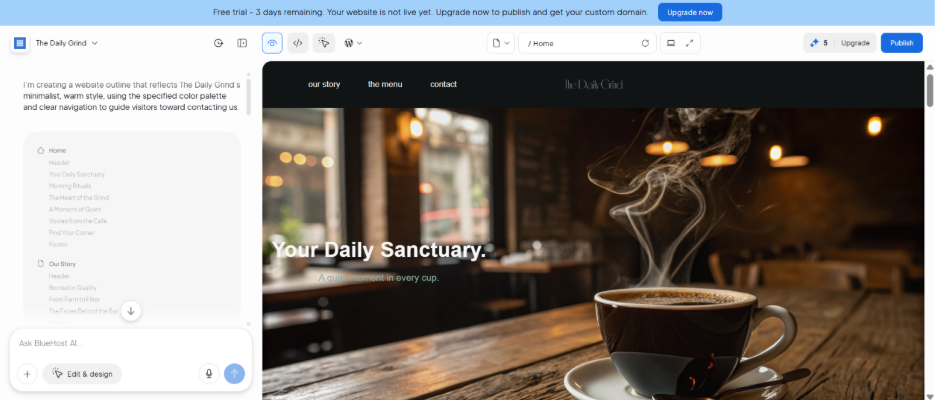
- Automated Generation: Upon receiving the requirements, the AI algorithm processes the input and automatically constructs the website. This includes creating page layouts, drafting initial copy, suggesting pertinent images, and organizing content into a coherent site structure. This entire generation process typically concludes within minutes, delivering a functional first draft.
- Visual Editing and Refinement: The generated website is not a final product but a highly advanced starting point. Users retain full control to customize and fine-tune every aspect using an intuitive visual editor. This allows for updating text, swapping or generating new images, rearranging sections, modifying color palettes and fonts, and refining the overall design to perfectly align with brand identity. The AI handles the initial heavy lifting, but the human touch remains crucial for personalization and final approval.
Market Dynamics and Accelerating Adoption
The burgeoning market for AI-powered website builders underscores their increasing relevance and demand. According to market research by Custom Market Insights, the global AI-powered website builder market is projected to grow from an estimated $3.41 billion in 2026 to a substantial $14.78 billion by 2035. This represents a compound annual growth rate (CAGR) indicating rapid expansion and widespread adoption. Another projection from Precedence Research is even more optimistic, estimating the market could reach $17.4 billion by 2035. These figures reflect a global trend towards seeking faster, more cost-effective, and no-code solutions for establishing an online presence.
This exponential growth is not coincidental; it directly addresses long-standing challenges in web development, particularly for small to medium-sized enterprises (SMEs) and individual entrepreneurs. Traditionally, prohibitive costs, technical complexities, and extended development timelines have been significant barriers. AI website builders mitigate these issues by drastically reducing development time, lowering initial investment, and democratizing access to professional web design. Industry analysts suggest that this trend is further fueled by the increasing digital literacy of the general population and the imperative for virtually every business to maintain a robust online presence in an interconnected world. The efficiency gains offered by AI are becoming a competitive necessity, not just a luxury.
Key Advantages Driving Adoption: The "Vibe Coding" Revolution
Several distinct advantages are propelling the rapid adoption of AI website builders:
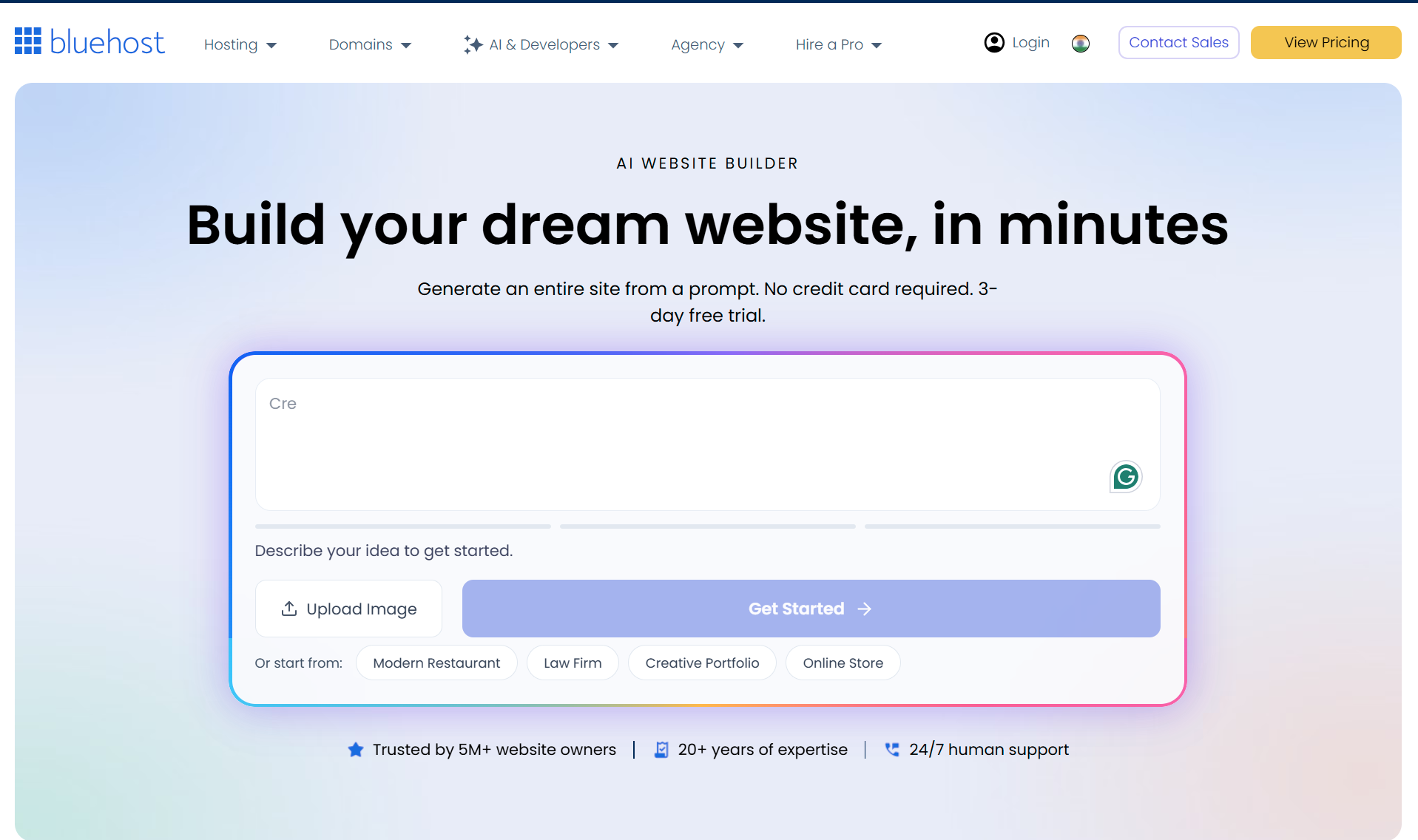
- No-Code "Vibe Coding": The most significant benefit is the complete elimination of coding requirements. Instead of writing complex scripts, users simply articulate their vision in plain English. This "vibe coding" approach allows creators to focus on their ideas and brand messaging, while the AI translates these concepts into functional web elements, effectively bridging the technical skill gap.
- Faster Launches with Less Effort: Traditional website projects can span weeks or even months. AI builders compress this timeline dramatically, generating comprehensive layouts, draft content, and site structures within minutes. This allows businesses to launch their online presence much faster, accelerating market entry and reducing opportunity costs associated with prolonged development cycles.
- Smarter Context Awareness: Modern AI platforms move beyond generic templates. They leverage the contextual information provided by the user—such as industry specifics, business goals, target demographics, and design preferences—to generate a highly relevant and customized starting point. This intelligent tailoring ensures that a restaurant website, for instance, will possess a distinct look and functionality compared to a photographer’s portfolio or an e-commerce store, minimizing subsequent editing.
- Significant Cost Efficiency: By drastically reducing the labor and time required for initial design and content generation, AI website builders offer a highly cost-effective alternative to hiring freelance developers or full-service agencies. This makes professional-grade websites accessible to budget-conscious startups and small businesses.
The Blueprint for AI-Powered Website Creation: A Step-by-Step Overview
While AI simplifies the creation process, the foundational elements of a website remain crucial. A typical AI-powered website build integrates these prerequisites seamlessly:
1. Essential Prerequisites:
- Domain Name: The unique address (e.g., yourbusiness.com) for online identification.
- Web Hosting: The digital space where website files are stored and served to visitors.
- SSL Certificate: Encrypts data transmission, ensuring security and trust (indicated by HTTPS).
- Website Builder: The primary tool, enhanced with AI, for creating and customizing the site.
- Content Management System (CMS): A platform, often WordPress, for managing website content and functionality post-launch, offering flexibility and scalability. WordPress, being highly extensible and user-friendly, remains the preferred CMS for its robustness and vast ecosystem.
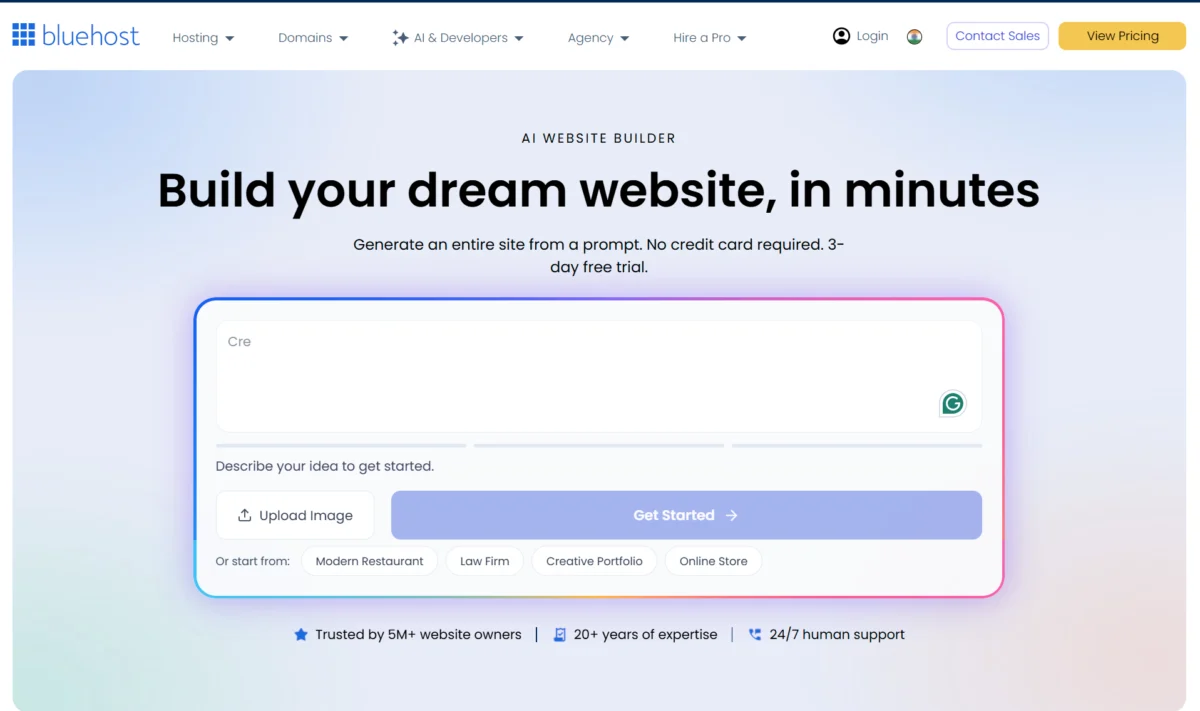
2. Choosing an AI Website Builder: The selection of the right platform is paramount. Leading solutions, such as the Bluehost AI Website Builder, aim to consolidate these essentials into a single, integrated environment, streamlining the entire process. Key features to look for include:
- All-in-One Integration: Platforms that bundle website creation, managed WordPress hosting, and domain registration simplify setup and management, eliminating the need to juggle multiple providers.
- Intelligent Prompting: Builders that ask industry-specific questions to gain a deeper understanding of the business, goals, and audience ensure a more relevant and refined initial draft.
- AI Image Generation and Editing: The ability to generate or modify images directly within the builder saves time and ensures visual consistency without external tools or extensive stock photo searches.
- Built-in SEO Tools: Integration with industry-leading SEO plugins like Yoast SEO Premium (as offered by Bluehost on paid plans) allows for foundational optimization from day one, ensuring the website is discoverable by search engines. This proactive approach to SEO is critical for long-term visibility.
- Robust Security and Support: Essential for ongoing website health, features like SSL certificates, malware scanning, backups, CDN integration, and 24/7 expert support provide peace of mind and ensure operational continuity.
3. The User Journey with Bluehost AI Website Builder (Illustrative Example):
- Initiate Website Creation: Begin by accessing the builder, often through a free trial or direct sign-up.
- Define Brand Identity: Input essential brand details such as business name, preferred color scheme, location, and desired design style. This contextual information guides the AI’s generation process.
- Account Setup: Create or log into a platform account to link the website to the user’s profile.
- Review and Personalize: The AI rapidly generates the initial website draft. Users then leverage the visual editor to customize text, replace or generate new AI-powered images, adjust layouts, add or remove pages, and modify design elements. This stage emphasizes the critical human oversight and personalization.
- Domain Selection and Publication: Choose from AI-suggested domain names or connect an existing one. Upon completion of the checkout process, the platform automates hosting configuration, SSL certificate activation, security features, and WordPress installation, bringing the website live.
Best Practices for Maximizing AI-Generated Websites
Launching an AI-generated website is the first step; sustained success depends on ongoing refinement and strategic management.
- Focus on Context, Not Just Keywords: When prompting the AI, prioritize comprehensive descriptions of your business, audience, goals, and desired tone. For content, conduct thorough keyword research to understand audience intent, then integrate keywords naturally into high-quality, problem-solving content.
- Embrace the Human Touch: While AI provides a solid foundation, infuse your website with unique brand voice, authentic customer stories, original imagery, and genuine expertise. These human elements build trust and differentiate your site from generic AI outputs.
- Ensure Uniqueness and Verify Accuracy: AI learns from existing data, which can sometimes lead to generic designs or content. Rigorously review all AI-generated material for accuracy, originality, and alignment with your brand’s specific values. Adhere to SEO-friendly content practices to create genuinely valuable and unique pages.
- Regular Testing and Optimization:
- Pre-Launch: Conduct a thorough technical SEO audit. Verify crawlability, ensure no accidental blocks to search engines, and confirm XML sitemap availability. Manually review metadata, internal links, and page structure.
- Post-Launch: Implement a routine of ongoing review. Test site performance across devices, fix broken links, update outdated information, and continuously improve page speed. For blog content, regularly revisit and optimize older articles for enhanced search visibility and user engagement.
- Prioritize Accessibility: Design for inclusivity. Use descriptive alt text for images, maintain sufficient color contrast, structure content with proper headings, and ensure keyboard navigation. Accessibility plugins for WordPress can significantly aid in meeting best practices.
- Create Valuable Content: A visually appealing website attracts visitors, but truly valuable content retains them. Focus on addressing audience questions and solving their problems through informative blog posts, service pages, and product descriptions. Effective content SEO and blog SEO strategies are paramount for organic traffic generation.
Building Smarter, Launching Faster: The Future of Digital Presence
The advent of AI website builders signals a paradigm shift in how individuals and businesses approach their online presence. The era of complex coding requirements and protracted development cycles is rapidly giving way to an intuitive, prompt-driven process that empowers creators of all technical backgrounds. As Sachin Puri, CEO of Bluehost, aptly observes, "the real power of AI lies in removing complexity for users." This simplification is not merely a convenience; it’s a catalyst for entrepreneurial growth and digital inclusion.
By abstracting away the technical intricacies, modern AI website builders enable entrepreneurs, small businesses, and creators to channel their energy into brand building and growth strategies rather than grappling with code. This democratization of web development fosters a more dynamic and accessible digital economy. While the technology continues to evolve, the core principle remains clear: AI provides an unprecedented starting point, but strategic human oversight, personalization, and continuous optimization are key to transforming an AI-generated draft into a thriving, impactful online destination. The time is opportune for anyone seeking to establish a robust and professional web presence to leverage the transformative power of AI.