Nana Muazin
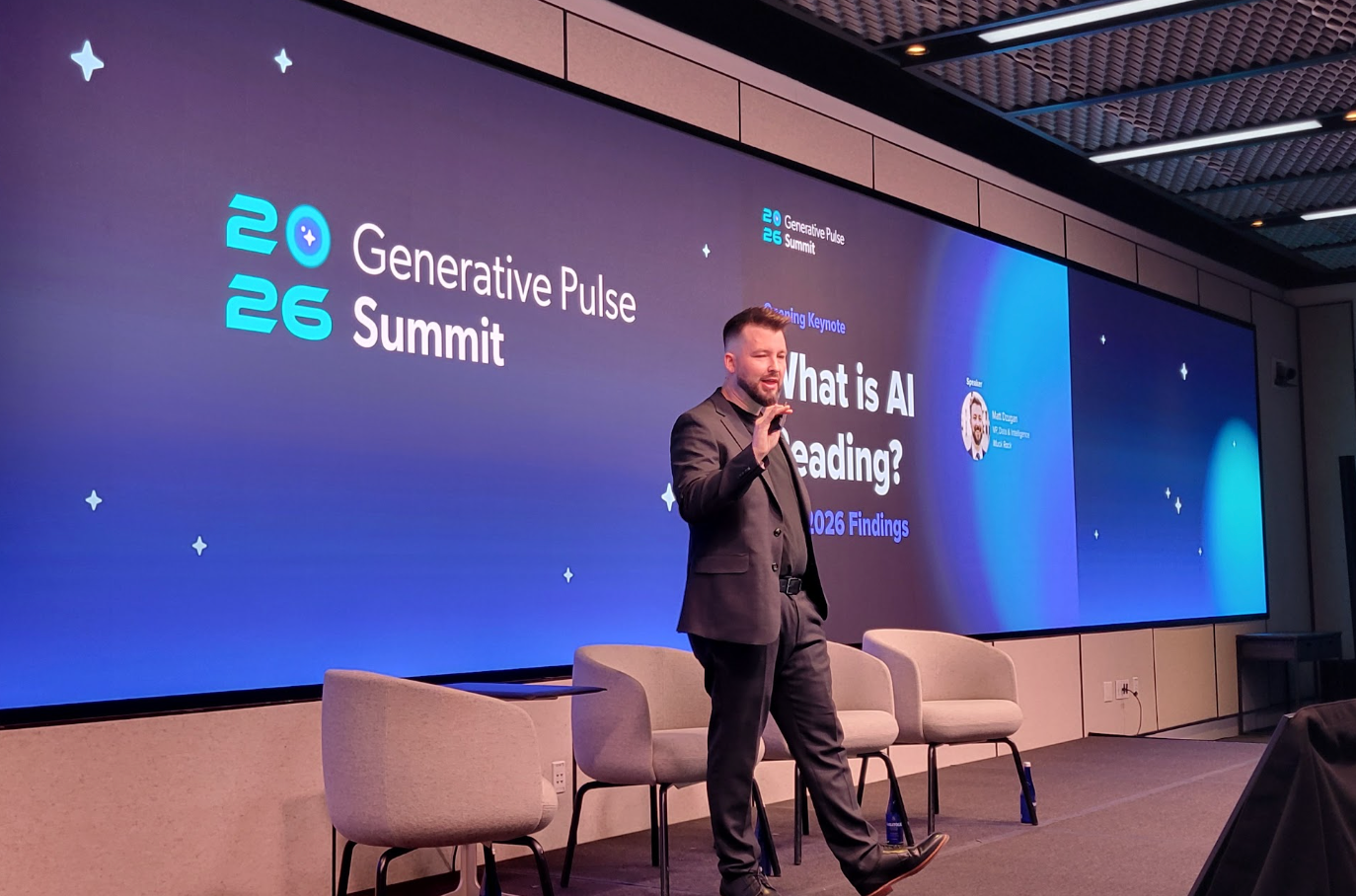
The second annual Muck Rack Generative Pulse Summit, held on October 28, 2026, served as a landmark event for the communications and public relations industry, providing a comprehensive look at how artificial intelligence is fundamentally reshaping the information ecosystem. The summit opened with the release of Muck Rack’s highly anticipated "What Is AI Reading?" report, a data-driven analysis that underscores a significant shift in how generative AI models consume and prioritize content. The report’s primary finding revealed that earned media—content published by third-party sources rather than brand-owned channels—remains the lifeblood of AI training and response generation, cited in 84% of AI-generated answers. However, the data also pointed to a concerning trend for the news industry: direct citations of journalism have dropped to 22%, down from 27% in May 2026.
This shift suggests that while AI still relies heavily on the work of journalists and professional communicators, it is increasingly filtering that information through a complex "food chain" of secondary and tertiary sources. The summit, which gathered leaders from across the technology and media sectors, focused on the transition from traditional Search Engine Optimization (SEO) to Generative Engine Optimization (GEO). The overarching consensus among speakers was that while communicators may have lost direct control over the specific phrasing of AI outputs, they retain a powerful ability to influence the foundational data that these models utilize.
The Information Ecosystem and the Media Food Chain
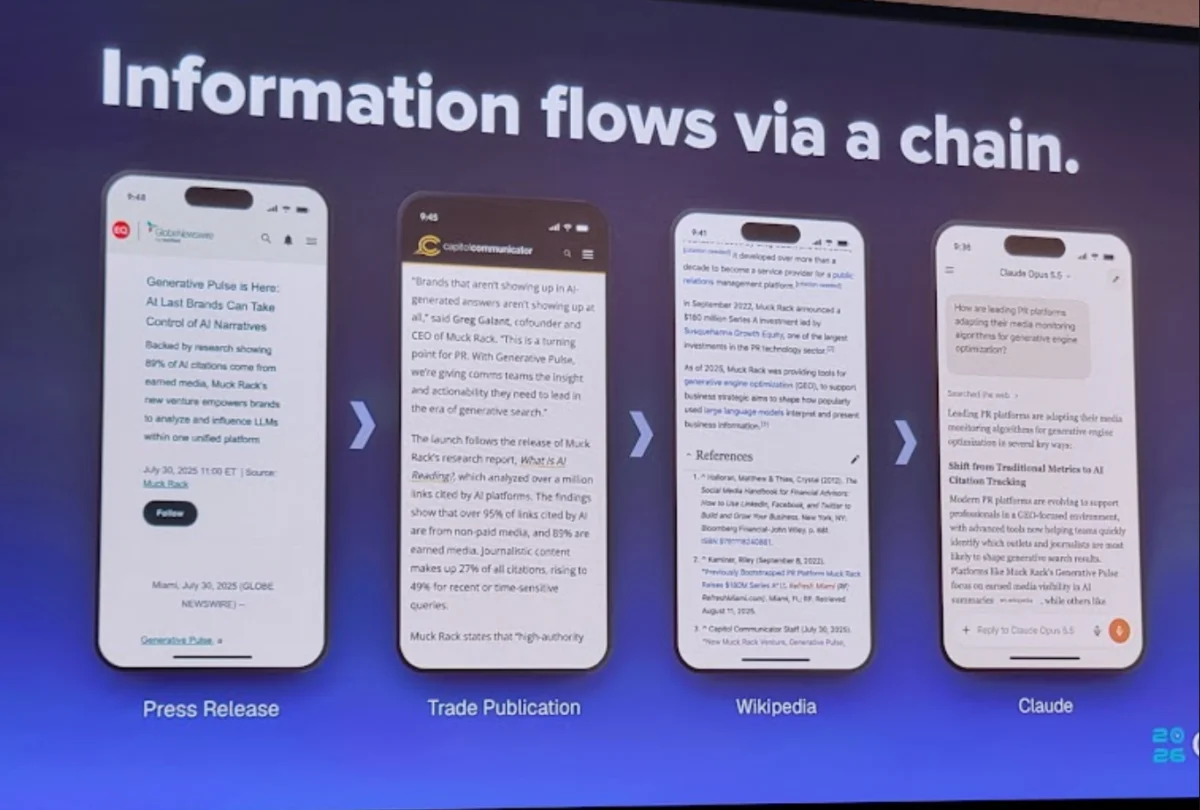
A central theme of the summit was the concept of the "media food chain," a term used to describe the path information takes from a primary source to an AI’s final response. Matt Dzugan, Vice President of Data and Intelligence at Muck Rack, illustrated this phenomenon with a real-time analysis of how the AI model Claude handled a query about Muck Rack itself. In the example, Claude cited Muck Rack’s Wikipedia page, which in turn cited a trade publication article, which had originally sourced its information from a Muck Rack press release.
Crucially, the AI never directly cited the original press release. This demonstrates that for modern PR professionals, the "bottom of the food chain" is no longer the end of the journey but the beginning of a ripple effect. Dzugan emphasized that Wikipedia has emerged as one of the most influential nodes in this ecosystem. It is currently a top-cited source on Claude and remains a top-10 source for Perplexity, Gemini, and ChatGPT. Furthermore, Muck Rack’s data shows that 60% of reference links on the Wikipedia pages of S&P 500 companies are third-party editorial content rather than corporate websites. This reality necessitates a strategic pivot for communications teams, who must now view Wikipedia and trade publications not just as platforms for visibility, but as the primary data repositories for AI search.
Comparative Performance of Generative AI Models
The summit provided a detailed breakdown of how different Large Language Models (LLMs) behave, highlighting the lack of uniformity in the AI landscape. For communicators, this variability means that a "one size fits all" strategy is no longer viable.
According to Dzugan’s research:
- ChatGPT: Tends to rely on a consistent set of "favorite" sources, making it more predictable but harder to break into if a brand is not already established in its training data.
- Perplexity: Cites the widest range of sources, acting more like a traditional search engine that aggregates diverse perspectives.
- Google Gemini: Shows a distinct preference for brand-owned sites, offering companies a greater opportunity to influence answers through their own web properties.
- Claude: Favors academic, statistical, and high-authority sites, prioritizing data-heavy content.
Michael Lamp, Chief Digital and Transformation Officer at HUNTER, cautioned against the futility of trying to "game" any single engine. He noted that AI responses are highly dynamic; asking ChatGPT the same question twice often yields different cited links. Lamp introduced the concept of a "new PR pipeline," suggesting that the metric of success should not just be whether a brand is mentioned, but where it appears in the hierarchy of an answer and how long that citation remains stable.
Internal Content Hygiene: The Return of the Brand Newsroom
One of the most significant risks identified during the summit was "friendly fire"—the phenomenon of AI models pulling outdated or incorrect information directly from a company’s own website. As brands evolve, they often leave behind a digital trail of obsolete fact sheets, old press releases, and superseded executive bios.
To combat this, Ellen Murphy, Executive Vice President at Syneos Health, advocated for the return of the "brand newsroom." She urged companies to prioritize structured data formats that AI can easily parse, such as FAQs, Q&A sections, and executive interview transcripts. "I’m going to FAQ everything now," Murphy stated, highlighting the need for clarity and directness in owned content.
Margot Edelman, Global Tech Practice Lead at Edelman, echoed this sentiment, noting that while LLMs may not always cite press releases directly, they still ingest them. By packing press releases with factual, high-density information, brands can ensure that the "DNA" of their message survives the journey through the media food chain. Edelman also stressed the importance of global monitoring, as AI citations can vary significantly by geographic location, reflecting different regional media landscapes and training sets.
Crisis Management in the Age of AI Hallucinations
The potential for AI to generate misinformation—or "hallucinate"—presents a new frontier for crisis communications. During a live simulation, experts addressed a fictional scenario where an AI model invented a controversial quote from a CEO regarding remote work.
Molly McPherson, a crisis communications expert, and Jesse Dwyer, Head of Communications at Perplexity, provided a framework for responding to AI-generated crises. The primary advice was to investigate internal sentiment and facts before issuing a public rebuttal. McPherson noted that "being silent is different than being quiet," suggesting that brands should maintain an open line with journalists while gathering data, rather than issuing a premature denial that could further fuel the story.
Dwyer emphasized that in the age of AI, fighting the specific "frame" of an AI’s error is often less effective than overwhelming the ecosystem with fresh, accurate context. By providing reporters with new, highly quotable information, brands can effectively "reset" the public opinion that AI models eventually reflect. The takeaway for organizations is the necessity of updating crisis playbooks to include AI monitoring and designating specific "AI crisis owners" within the communications team.
The Human Premium: EQ and the ‘Last Mile’ of Journalism
As AI automates the "first mile" of communications—tasks such as media clipping, initial drafting, and data aggregation—the value of human skills is expected to rise. Emma Cosgrove, Editorial Director of AI Innovation at Business Insider, argued that the "last mile" of storytelling—fact-checking, editing, and providing human nuance—remains the exclusive domain of people.
The summit participants expressed concern that the automation of entry-level tasks might lead to a "learning gap" for junior staff. Alem Tedeneke, Senior Manager at Accenture, reflected on her early career experience of manually clipping newspapers, noting that the process taught her the rhythm of media and the preferences of specific reporters. To prevent this loss of institutional knowledge, leaders were encouraged to use AI as a "sounding board" rather than a replacement for first drafts, ensuring that staff continue to engage deeply with the content they produce.
Elana Widmann of OpenAI and Alyssa Bernstein of TelevisaUnivision both emphasized that Emotional Intelligence (EQ) and a strong point of view are the ultimate differentiators in an AI-saturated market. "The higher the EQ, the better the comms," Widmann remarked, suggesting that the ability to understand human motivation and build authentic relationships is more critical than ever.
Broader Impact and Future Implications
The findings from the Muck Rack Generative Pulse Summit suggest that the public relations profession is undergoing its most significant transformation since the advent of the social media era. The transition from SEO to GEO requires a fundamental shift in mindset: from controlling the message to influencing the environment.
The decline in direct journalism citations, while concerning for traditional media outlets, underscores the importance of a diverse media strategy. If AI models are increasingly reading "the thing that read the thing," then the role of trade publications, niche blogs, and collaborative platforms like Wikipedia becomes central to corporate reputation management.
As we move toward 2027, the success of a communications strategy will likely be measured by its "AI visibility"—the degree to which a brand’s core messaging is accurately reflected in the synthesized answers provided by generative search engines. This will require a dual focus on high-quality earned media and rigorous internal content hygiene, all while maintaining the human-centric storytelling that AI cannot replicate. The summit concluded with a clear mandate for the industry: embrace the tools of AI to handle the manual labor, but double down on the human expertise that ensures accuracy, ethics, and emotional resonance in the global information exchange.


 Dwi Wanna

 Pevita Pearce