

The trajectory of a typical optimization program often begins with a "quick win"—a simple headline change or a button color adjustment that yields a measurable lift in conversions. This initial success frequently triggers a behavioral loop where teams default to testing isolated elements rather than addressing systemic user experience issues. As the industry has matured, the reliance on these micro-adjustments has become a hallmark of low-maturity teams, while industry leaders like Microsoft, Netflix, and Amazon have moved toward a more complex, multi-faceted experimentation ecosystem.
The Cultural Normalization of the A/B Default
The rise of A/B testing as the industry standard can be traced back to the early 2010s, popularized by the success stories of major tech giants. One of the most cited examples is Microsoft’s Bing team, which famously tested a change in how ad headlines were displayed. By merging two ad title lines into a single, longer headline, the team generated an additional $100 million in annual revenue. Today, Microsoft conducts upwards of 20,000 controlled experiments annually across its Bing platform alone.
This culture of "testing everything" was further cemented by the emergence of user-friendly experimentation platforms. Tools like Optimizely, VWO, and FigPii democratized data science, allowing marketers to launch variants without requiring deep statistical expertise. However, this convenience has led to a significant skew in how experimentation is conducted. Industry data indicates that approximately 77% of all digital experiments are simple A/B tests involving only two variants. This preference for simplicity often comes at the expense of depth, as teams ignore multivariate or multi-treatment designs that could provide more nuanced insights.
The Statistical Barrier: Why Most Tests Fail Before They Start
A primary reason for the failure of A/B testing programs is a fundamental misunderstanding of statistical power. For an A/B test to be valid, it requires a sufficient sample size to distinguish between a genuine performance lift and random statistical noise. For many small-to-medium-sized e-commerce brands, the traffic required to detect a 1% or 2% lift is often far beyond their monthly reach.
To detect a 2% change with 95% confidence, a site might need hundreds of thousands of visitors per variant. When teams attempt to run tests on lower-traffic pages, they often fall into three common failure modes:
- Premature Termination: Ending a test as soon as a "winner" appears, ignoring the fact that early results are often skewed by the novelty effect or regression to the mean.
- P-Hacking: Checking results daily and stopping the test only when the desired p-value is reached, which invalidates the statistical foundation of the experiment.
- Inconclusive Stagnation: Running tests for months in a desperate bid to reach significance, which slows organizational learning and leaves the site in a state of perpetual "beta."
The Survivorship Bias in User Behavior
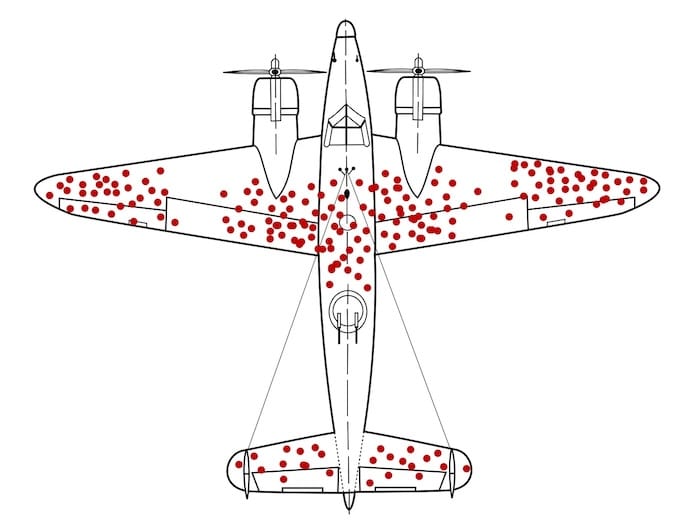
The limitations of A/B testing are perhaps best illustrated by the historical concept of survivorship bias. During World War II, the statistician Abraham Wald was tasked with determining where to add armor to Allied bombers. Initial data showed that returning planes were riddled with bullet holes in the fuselage and wings. While the military’s instinct was to reinforce those areas, Wald realized the data only represented the "survivors"—the planes that were hit but still managed to fly home. The planes that were hit in the engines never returned to be measured.
A/B testing operates under a similar bias. It provides data on the users who "survive" the funnel—those who interact with the page and proceed toward a conversion. It rarely offers insight into the users who dropped off entirely. A variant might "win" by increasing the conversion rate of existing high-intent users while simultaneously alienating a broader segment of the audience that never makes it to the checkout page. Without qualitative data to explain the "why" behind the "what," teams risk reinforcing the "bullet holes" in their user experience while the "engines"—the fundamental value propositions—remain compromised.
The Conflict Between Short-Term Uplift and Long-Term Value
A significant risk in over-relying on A/B tests is the focus on immediate session-based metrics, such as click-through rates (CTR) or add-to-cart actions. These metrics often clash with long-term business health indicators like Customer Lifetime Value (LTV), profit margins, and repeat purchase rates.
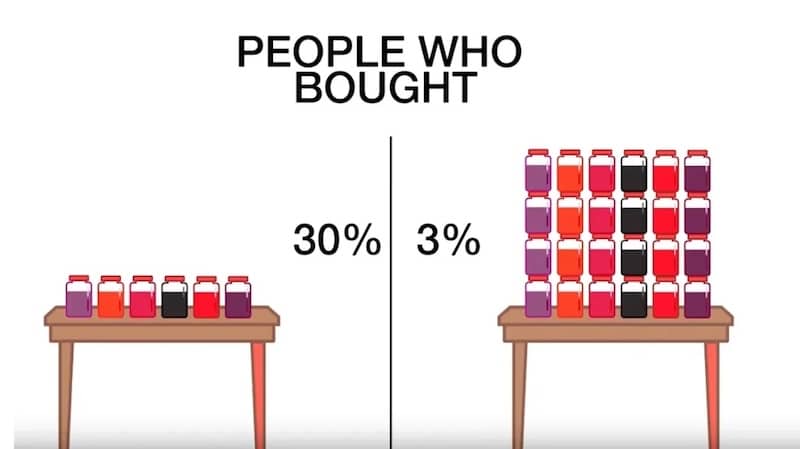
A classic example of this conflict is the "Paradox of Choice," famously demonstrated in the 2000 "Jam Experiment" by psychologists Sheena Iyengar and Mark Lepper. The study found that while a display of 24 varieties of jam attracted more shoppers (higher engagement), a display of only six varieties led to a 10-fold increase in actual purchases. In a modern e-commerce context, a team might run an A/B test that increases "clicks" by adding more product options to a landing page, only to find that actual revenue drops because users are overwhelmed by choice.
Furthermore, aggressive tactics—such as countdown timers, intrusive pop-ups, or misleading "low stock" alerts—often produce short-term conversion "wins" in A/B tests. However, these tactics can erode brand trust and reduce long-term retention, a metric that is rarely captured in a standard 14-day split test.
How High-Maturity Teams Architect Experimentation
Organizations that have successfully moved beyond the A/B testing trap utilize a broader toolkit of experimental methodologies. These high-maturity teams do not view A/B testing as the sole solution but as one component of a larger strategy.
1. Advanced Experimental Designs
- Sequential Testing: Allows for data monitoring in real-time with adjusted confidence intervals, enabling teams to stop tests early if a result is overwhelmingly positive or negative without compromising statistical integrity.
- Holdout Groups: A small percentage of users are kept away from all new features or changes for a period of six months or more. This allows the business to measure the cumulative, long-term impact of its optimization program.
- Switchback Tests: Common in marketplace businesses (like Uber or DoorDash), these tests switch variants back and forth over specific time intervals within the same geographic area to account for network effects.
- Quasi-Experiments: Used when random assignment is impossible or unethical, such as testing a new pricing model across different regional markets.
2. The Research-Driven Hypothesis
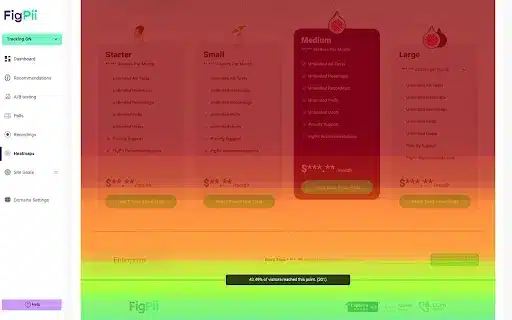
Mature teams spend significantly more time on research than on the actual execution of the test. A weak hypothesis—such as "changing the button to red will increase clicks"—is essentially a coin toss. A high-maturity hypothesis is grounded in multi-source evidence, including session recordings, heatmaps, customer support tickets, and exit surveys.
The industry-standard framework for an evidence-led hypothesis follows a strict four-part structure:
- Because: (Insight from research/data)
- We believe: (Specific user problem identified)
- So we will: (Proposed solution/change)
- And expect: (Metric, direction, and specific user segment)
For example: "Because support tickets indicate users are confused about shipping times, we believe uncertainty is causing checkout abandonment. So we will display estimated delivery dates on the product page, and we expect the mobile checkout completion rate to increase by 5%."
3. Focusing on High-Leverage Levers
Instead of testing cosmetic changes, sophisticated programs focus on "big levers" that influence core human behavior. This includes testing the value proposition, the clarity of the pricing model, and the reduction of perceived risk (such as return policies or security guarantees).
A study of primary metrics in experimentation reveals a significant gap in where teams focus versus where the impact lies. While 34.8% of experiments focus on CTA clicks, these tests have a low expected impact on revenue. Conversely, experiments focused on navigation and information architecture show a much higher potential for business growth but are selected as primary goals in less than 2% of tests.
The Path to Strategic Experimentation
The transition from a "testing culture" to an "experimentation culture" requires a shift in organizational mindset. It involves moving away from the pursuit of "wins" and toward the pursuit of "learnings." In this model, a "losing" test is not a failure if it provides a deep insight into user psychology that can inform future product development.
To build a robust program, organizations must integrate their experimentation pipeline with their broader business goals. This means selecting metrics that reflect profitability and customer loyalty rather than just clicks. It also requires the humility to acknowledge that not every problem can be solved with a split test; some require a fundamental rebuilding of the user experience based on qualitative feedback.
As the digital landscape becomes increasingly competitive, the brands that thrive will be those that use A/B testing as a scalpel for refinement, rather than a hammer for every problem. By embracing advanced methodologies, rigorous research, and a focus on long-term value, businesses can break through the CRO plateau and achieve sustainable, compounding growth.







