rifanmuazin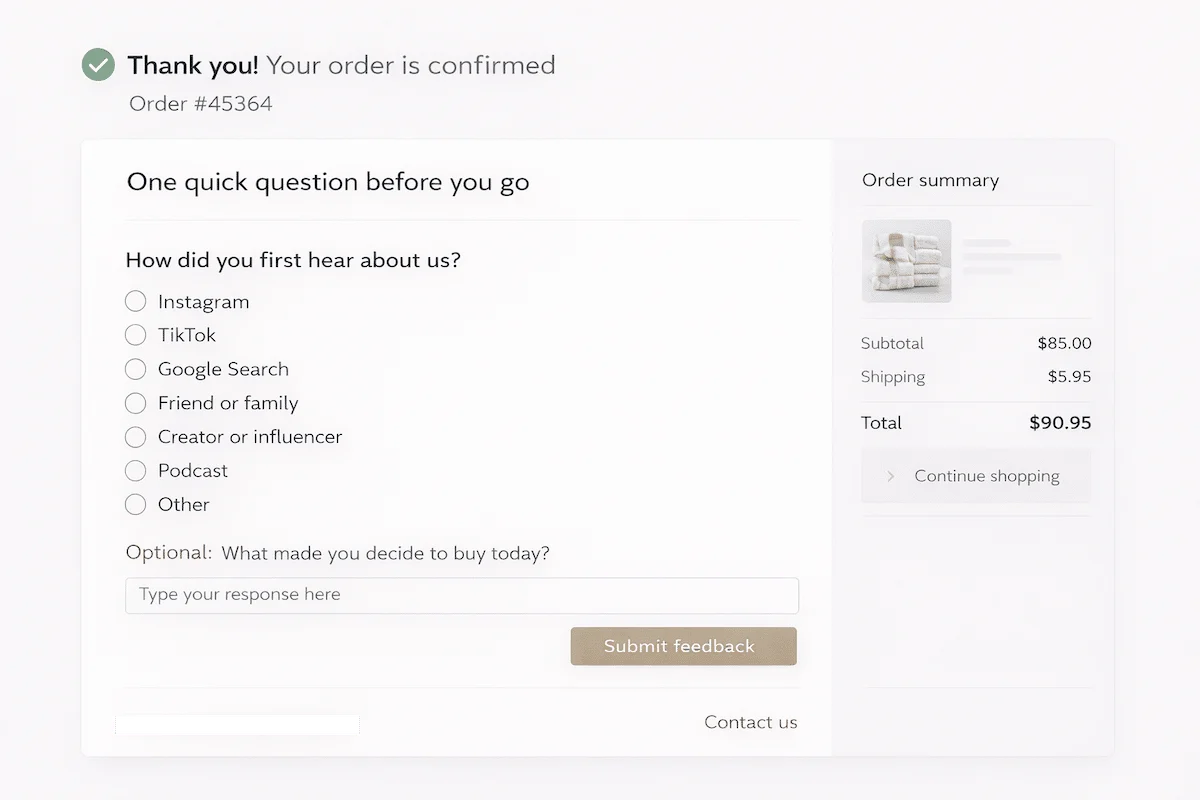
In the contemporary digital economy, data analytics platforms provide a comprehensive overview of "what" is happening on a website, but they frequently fail to explain "why." A shopper may land on a high-resolution product page, engage with multiple image galleries, and examine shipping policies, only to exit the site without further action. Another may initiate the checkout process, reaching the final payment screen before abruptly abandoning the transaction. For software-as-a-service (SaaS) providers, the "ghosting" phenomenon is equally prevalent: a user signs up for a free trial, explores the dashboard for minutes, and never logs in again. While quantitative data captures these drop-off points, qualitative customer feedback surveys are required to diagnose the underlying psychological friction, doubts, and unanswered questions that stall the conversion funnel.
The shift toward qualitative insights comes at a critical juncture for e-commerce and digital marketing. As privacy regulations tighten and third-party cookies are phased out, brands are increasingly relying on "zero-party data"—information intentionally and proactively shared by the consumer. By implementing strategic survey types at specific touchpoints, businesses can transform vague feedback into actionable conversion rate optimization (CRO) strategies.
The Product Page Barrier: Addressing Pre-Purchase Friction
The product page is often the first significant hurdle in the customer journey. According to recent benchmarks from the Baymard Institute, the current state of e-commerce user experience (UX) is surprisingly fragile, with 52% of desktop sites and 62% of mobile sites ranked as "mediocre" or worse. When a visitor fails to add an item to their cart, the issue is rarely a lack of interest; rather, it is usually a failure of the page to provide essential information.
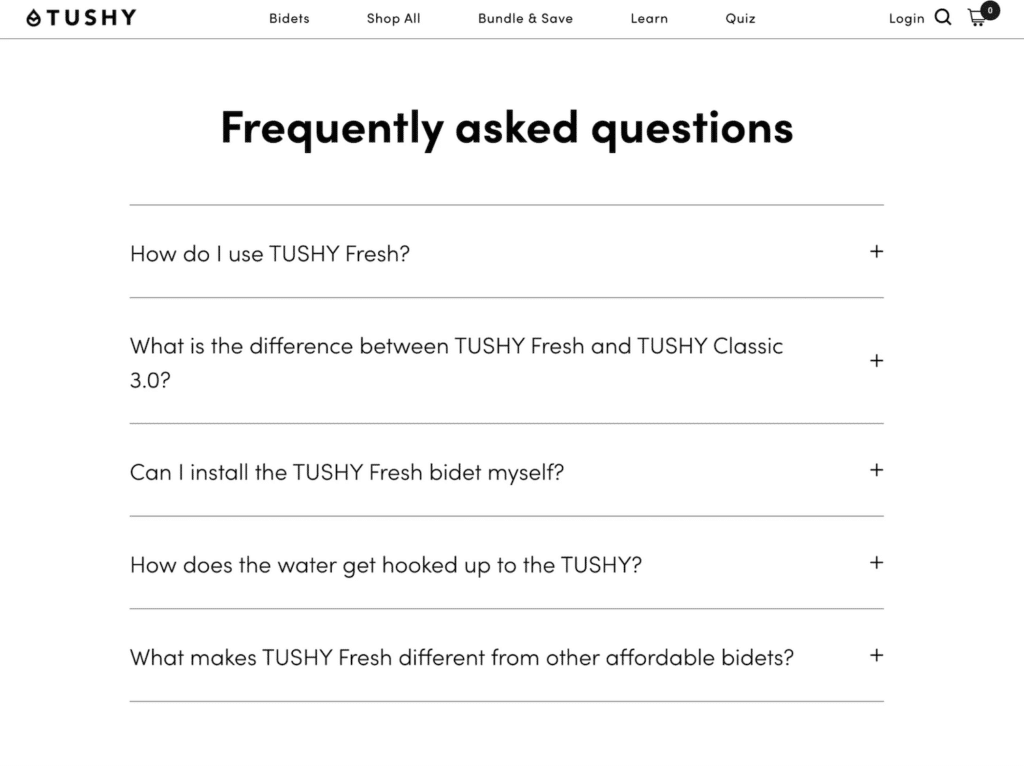
Research indicates that shoppers typically hesitate for five primary reasons: concerns over product fit or compatibility, lack of specific technical details, uncertainty regarding shipping costs or timelines, questions about return policies, and price sensitivity relative to competitors. Brands like TUSHY have mitigated these issues by integrating frequently asked questions (FAQs) directly onto product pages, addressing installation and compatibility concerns before the user feels the need to leave the site to search for answers.
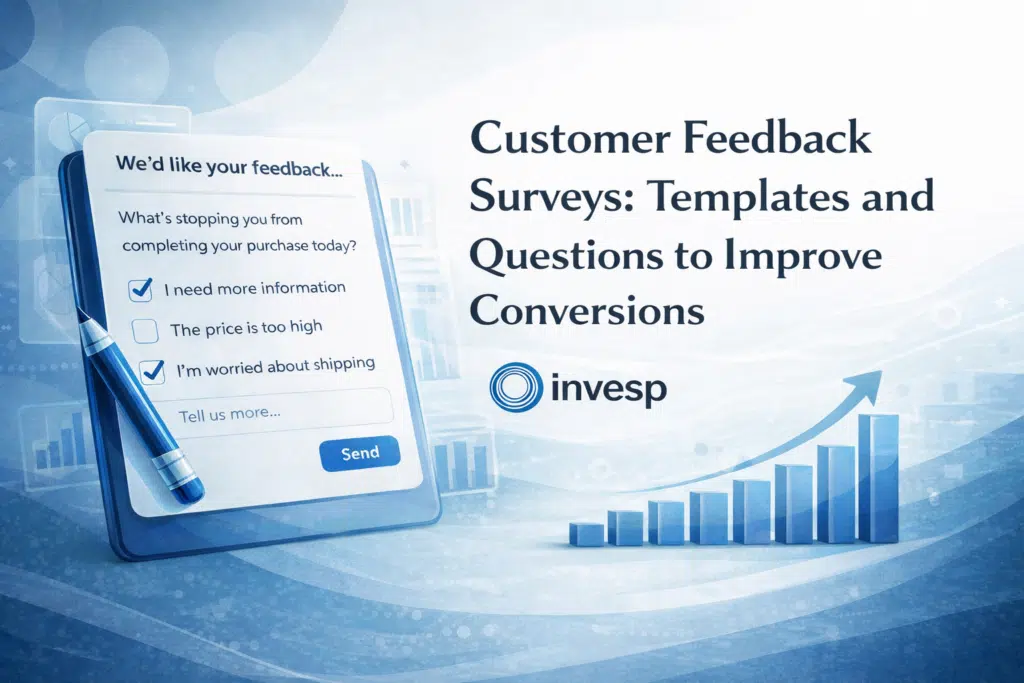
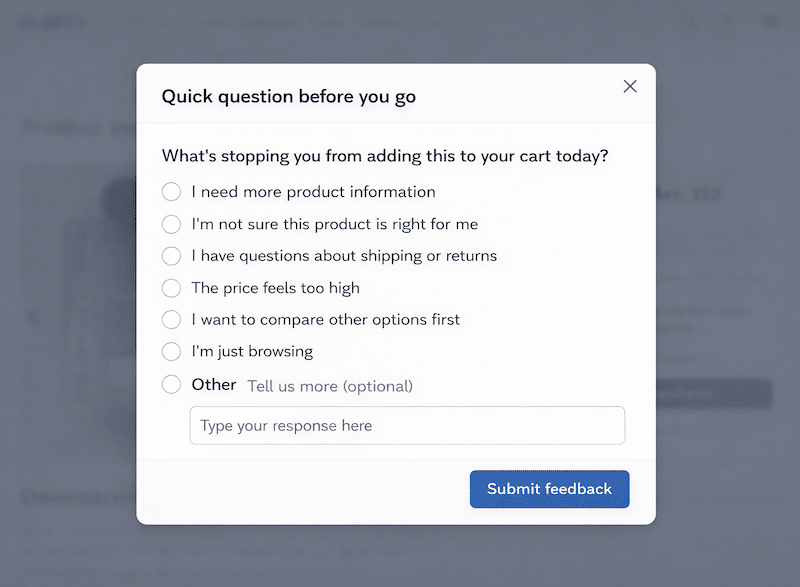
To capture this data, the most effective tool is a "non-converter" survey. The optimal question—"What’s stopping you from adding this to your cart today?"—is designed to be specific and low-friction. By providing multiple-choice options such as "I’m worried about fit/size," "I need more technical details," or "I’m just looking for now," brands can categorize friction points. This approach yields cleaner data than open-ended text boxes, though an optional "tell us more" field remains vital for uncovering nuanced issues like specific missing measurements or confusing shipping terminology.
The Checkout Abandonment Crisis: Solving Final-Stage Friction
While product page exits may signal low intent, checkout abandonment is a far more costly phenomenon. At this stage, the consumer has already demonstrated high intent by selecting an item and initiating the purchase. However, the Baymard Institute reports an average global cart abandonment rate of 70.19%. This suggests that the majority of potential revenue evaporates at the final hurdle.
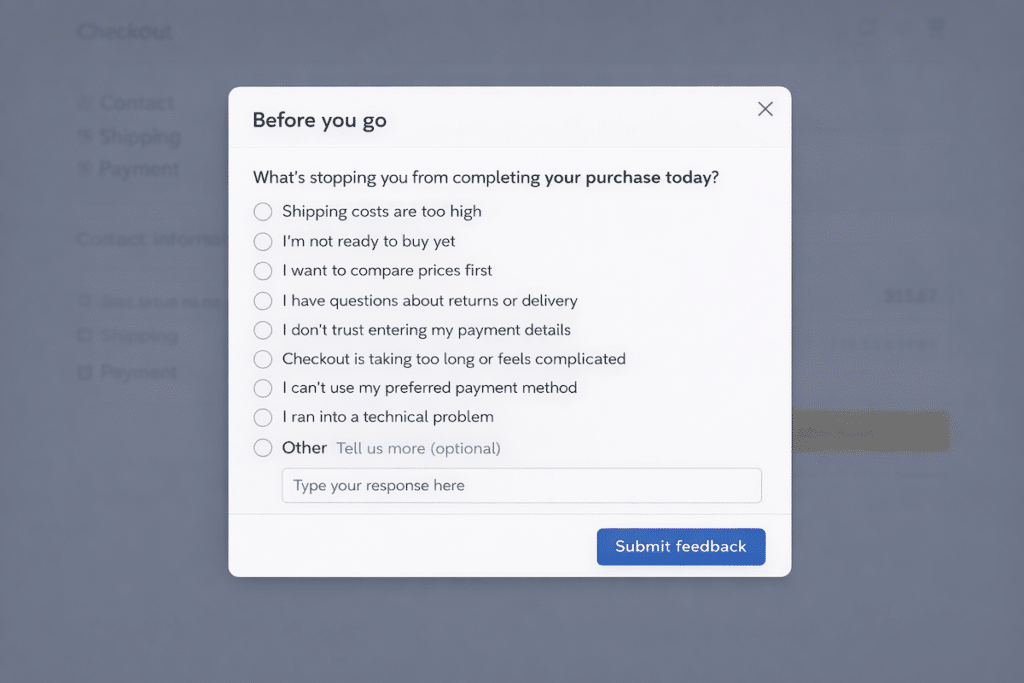
The chronology of checkout abandonment usually points to three systemic issues: unexpected costs (shipping, taxes, and fees), forced account creation, and overly complex checkout flows. Shopify’s internal guidance reinforces this, noting that consumers are increasingly sensitive to "delivery speed" and "payment method availability."
To combat this, checkout surveys must be "tighter" and more urgent. The question "What’s stopping you from completing your purchase today?" allows businesses to identify whether the barrier is a technical glitch, a lack of a preferred payment method (such as Apple Pay or Klarna), or sticker shock from shipping fees. By identifying these barriers in real-time, companies can implement "save" strategies, such as offering a one-time shipping discount or simplifying the form fields to reduce cognitive load.
Post-Purchase Attribution: Understanding the "Why" Behind the "Buy"
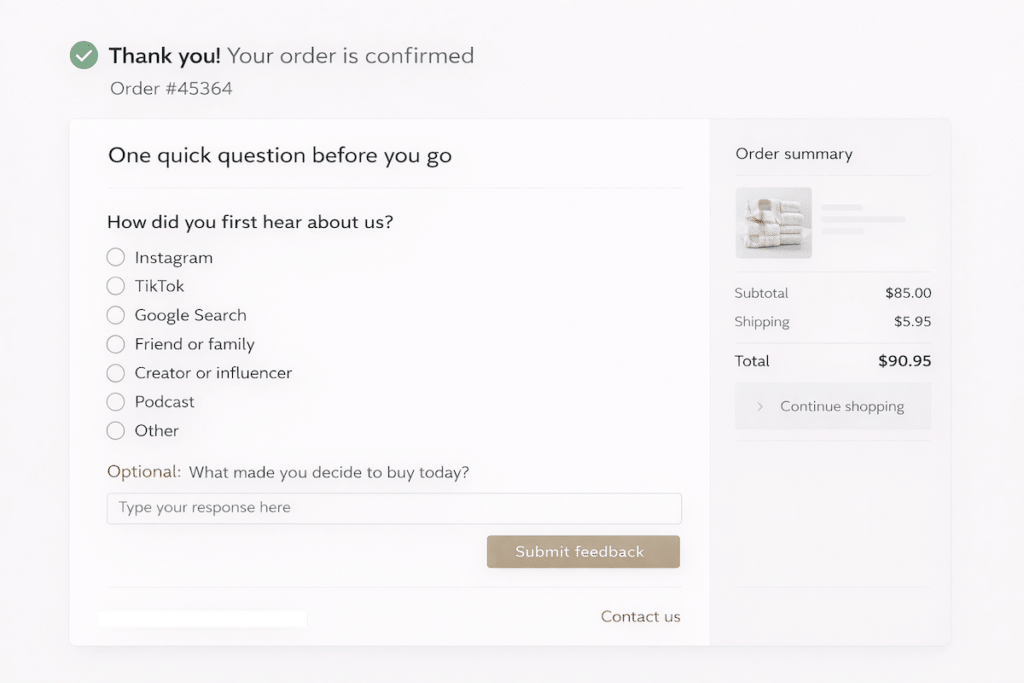
Once a transaction is completed, a unique window of opportunity opens. The customer’s motivation is at its peak, and their memory of the decision-making process is fresh. Post-purchase surveys are essential for understanding attribution—identifying which marketing channels are actually driving revenue versus those that simply claim credit in a digital dashboard.
This is particularly relevant for "dark social" and offline channels. Standard analytics often struggle to track word-of-mouth, podcasts, and organic social mentions. Weezie, a luxury towel brand, utilized post-purchase surveys to discover that 35% of its business originated from word-of-mouth recommendations. This insight allowed the brand to reallocate marketing budgets toward community-building rather than just paid search.
The standard "How did you hear about us?" (HDYHAU) question remains the gold standard for post-purchase surveys. When paired with a follow-up question like "What made you decide to buy today?", brands can uncover the "tipping point" for a purchase—be it a specific influencer recommendation, a timely email promotion, or a friend’s referral.
SaaS Activation: Bridging the Gap Between Signup and Value
In the SaaS sector, the primary conversion challenge is not the signup, but the "activation." Data from Amplitude’s product benchmark report indicates a staggering drop-off in user engagement: by day 14, the median product retains only 2% of its new users. Even top-tier products struggle to keep more than 9% active. This suggests that the "Time to Value" (TTV)—the time it takes for a user to realize the product’s utility—is often too long.
When a trial user signs up but fails to perform a key action, the problem is usually rooted in setup complexity or a lack of clarity. A targeted survey asking "What’s stopping you from getting started today?" can reveal if the user is overwhelmed by the interface, lacks the technical integration skills, or simply forgot why they signed up.
Responses such as "I don’t know what to do first" or "I don’t have time to set this up right now" signal a need for improved onboarding flows, such as interactive walkthroughs or "quick-start" templates. If users indicate they are "just exploring," marketing teams can adjust their email drip campaigns to focus more on educational content rather than aggressive sales pushes.
Retention and Churn: Analyzing the Expectation Disconnect
The final stage of the customer lifecycle—retention—is where long-term profitability is secured. However, returns and cancellations remain a significant drain on resources. The National Retail Federation (NRF) projected that 16.9% of annual sales would be returned in 2024, with online return rates expected to climb to 19.3% in 2025.
Returns and churn are rarely random; they are typically the result of an "expectation mismatch." Research from PowerReviews highlights that "poor fit" is the leading cause of retail returns, while other drivers include damaged items and products that do not match their online descriptions. In the subscription economy, "price vs. value" and "lack of usage" are the primary drivers of cancellation.
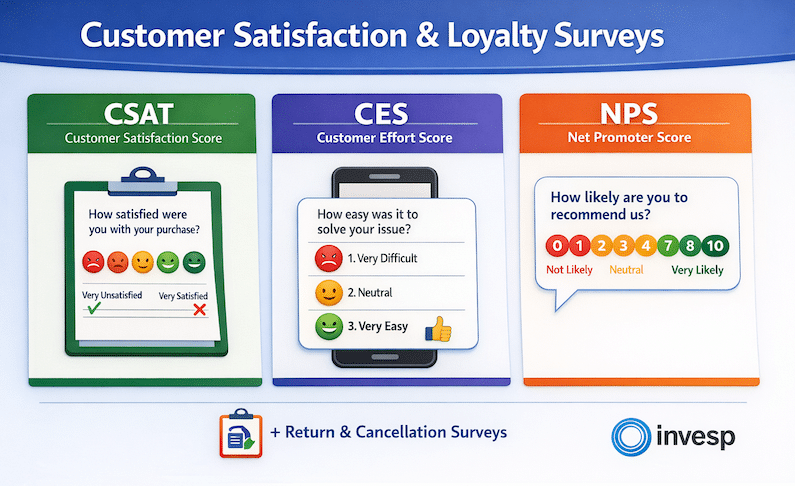
Exit surveys or return-reason surveys are vital for closing this feedback loop. By asking "What is the main reason for your return or cancellation?", brands can identify systemic product flaws. For example, if a clothing brand sees a spike in "too small" responses for a specific item, they can update the product description with a "runs small" warning, immediately reducing future return rates and improving the conversion experience for the next customer.
Methodology: Writing Survey Questions That Yield Actionable Data
The utility of a customer feedback survey is directly proportional to the clarity of its questions. Vague inquiries like "How was your experience?" often result in "vanity metrics" that provide no clear path for improvement. To generate CRO insights, survey design must follow several journalistic and psychological principles:
- Specific Timing: Triggering a survey at the moment of friction (e.g., when a mouse moves toward the exit button or after a user has spent 60 seconds on a checkout page) ensures the feedback is contextual.
- Reduced Cognitive Load: Multiple-choice answers are preferable to open-ended boxes for the initial question. This makes it easier for the user to respond quickly, increasing response rates.
- Single-Topic Focus: Each survey should aim to solve one specific problem. Mixing attribution questions with UX feedback dilutes the quality of the data.
- Action-Oriented Follow-ups: Always include an optional open-ended field to capture the "why" behind a selected multiple-choice answer.
Implications for the Future of Digital Commerce
The integration of qualitative feedback into the CRO process represents a move toward a more "human-centric" digital experience. As the digital landscape becomes more saturated and customer acquisition costs (CAC) continue to rise, the ability to diagnose and fix friction points becomes a competitive necessity.
By systematically deploying surveys at the product page, checkout, post-purchase, activation, and churn stages, businesses can move beyond the "what" of their analytics and master the "why." This data-driven approach not only improves immediate conversion rates but also fosters long-term brand loyalty by ensuring that the customer’s voice is the primary driver of product and website evolution. In a world of automated tracking, the brands that listen to their customers are the ones that will ultimately convert them.