rifanmuazin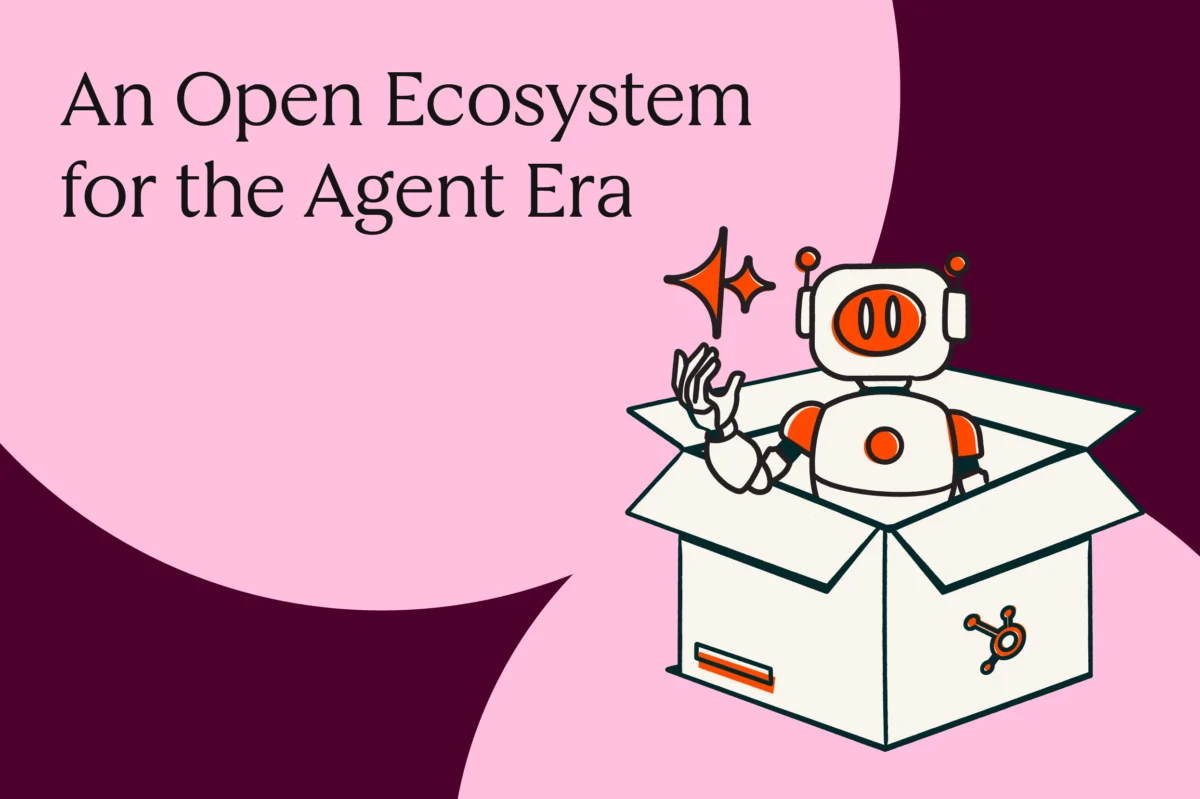
HubSpot, a leading provider of customer relationship management (CRM) and marketing automation software, has announced a significant strategic pivot towards becoming an "agentic customer platform," a move poised to redefine how businesses leverage artificial intelligence across their go-to-market (GTM) functions. This evolution shifts the company’s focus from merely providing tools for human teams to building a platform where AI agents autonomously perform tasks, drive outcomes, and interact with the ecosystem, underpinned by a newly opened "intelligence layer" derived from its vast network of over 280,000 customers.
For years, HubSpot’s core mission revolved around creating a robust platform that empowered marketing, sales, and service teams with best-in-class tools to execute their strategies. This foundation, built on principles of inbound methodology and customer-centric growth, established HubSpot as a formidable player in the SaaS landscape, competing with giants like Salesforce, Adobe, and Oracle. However, the rapid advancements in generative AI and large language models (LLMs) have ushered in a new era, prompting HubSpot to reimagine its platform’s capabilities. The company’s latest vision centers on AI agents that can not only assist but actively do the work for teams—qualifying leads, resolving customer tickets, saving deals, and driving measurable business outcomes across the entire customer lifecycle.
The Paradigm Shift: From Human-Centric to Agentic AI
The concept of an "agentic customer platform" represents a profound departure from traditional software design. Historically, enterprise software has been engineered with human users in mind, featuring dashboards, intuitive interfaces, and workflows that facilitate human interaction and decision-making. In contrast, agentic systems are designed for AI agents, which don’t "click" through menus but rather communicate via Application Programming Interfaces (APIs), process structured data outputs, and execute actions programmatically. This necessitates a fundamental re-architecture of how software exposes its functionalities and data.
HubSpot acknowledges this critical shift, stating that software built for humans must now evolve to be genuinely accessible and actionable for agents. This evolution is not merely about providing access; it’s about furnishing these agents with the necessary "substance"—contextual understanding that goes beyond raw data. An AI agent reasoning solely over isolated records lacks the crucial insight into what constitutes normal business operations, industry benchmarks, or successful past strategies for companies of similar size and type. As HubSpot has previously articulated, the true competitive advantage in the AI race will not be won through superior models or sheer data volume, but through context.
Unlocking Growth Context: The Data and Intelligence Layers
This conviction forms the bedrock of HubSpot’s development strategy. The company has been at the forefront of integrating AI, launching its Marketing Campaign Performance (MCP) server early on and continuously expanding the scope of what agents can read, write, and act upon within its ecosystem. The overarching vision is two-fold: agents can run on HubSpot, leveraging its foundational data and context, and agents can run HubSpot, operating the platform end-to-end through its comprehensive suite of APIs, MCP server, and command-line interface (CLI).
To realize this vision, HubSpot is opening up what it terms "growth context" to its extensive ecosystem of customers, partners, and developers. Growth context is defined as the specific, dynamic understanding that AI requires to deliver tangible results across the GTM spectrum. It encompasses everything about a company’s unique business, its teams, operational processes, and customer interactions, crucially bolstered by aggregated patterns and insights gleaned from HubSpot’s network of over 280,000 global customers. This context is derived from two distinct but interconnected layers: the data layer and the intelligence layer.
The data layer forms the foundational bedrock. This layer comprises core entities such as contacts, companies, deals, conversations, tickets, and activity logs. HubSpot has long maintained an open and accessible data layer, powering thousands of integrations that allow businesses to connect their various tools and synchronize critical information. A cornerstone of HubSpot’s philosophy, reiterated in this announcement, is that bringing data into HubSpot remains free, and, critically, customer data unequivocally belongs to the customer. If a customer ever chooses to migrate away from the platform, their data goes with them, a commitment that fosters trust and aligns with global data privacy regulations like GDPR and CCPA.
The more innovative and differentiating aspect of this announcement lies in the intelligence layer, which HubSpot is actively building and making available. This layer transcends raw data to provide actionable insights and automated actions. It covers "insights that inform decisions," such as pre-computed scores, assessments, and industry benchmarks that can be directly queried via API calls. Furthermore, it encompasses "actions that drive outcomes," mirroring the capabilities of HubSpot’s internal "Breeze" agents—automating tasks like qualifying leads, resolving support tickets, or proactively addressing at-risk deals. These sophisticated functionalities, currently operating within HubSpot, are slated for broader availability wherever teams and agents operate, whether inside or outside the HubSpot environment.
Consider the example of deal intelligence. A sales manager might pull their team’s open pipeline data—amount, stage, close date, last activity—into a large language model and inquire about potential risks. While a generic LLM could calculate basic averages from the provided data, it would lack critical context. It wouldn’t know if "30 days in-stage" is fast or slow for this specific industry. It wouldn’t recognize that a key champion on a particular deal went silent following a recent corporate reorg. It wouldn’t recall that a similar deal at a comparable company stalled last quarter due to an identical objection.
With HubSpot’s intelligence layer, a single API call can return a pre-computed risk score, leveraging patterns identified across hundreds of thousands of HubSpot customers. This intelligence would reveal that the industry’s typical sales cycle is 90 days, not 30, thereby flagging the 30-day deal as potentially progressing too slowly. It would identify the champion’s silence post-reorg as a critical risk factor. It would surface the historical data on similar deals stalling on the same objection. Crucially, it would then be able to act on this intelligence by recommending a specific next step, flagging the deal for a manager’s review, or automatically triggering a follow-up action. This demonstrates how the intelligence layer provides not just raw material (data) but a significant "head start"—a contextual advantage that standalone models or platforms without HubSpot’s scale cannot easily replicate.
A Foundation of Principles: Openness, Trust, and Customer Value
HubSpot’s strategic direction is underpinned by a set of core principles that address the shifting landscape of enterprise software, particularly as AI agents become more autonomous. While some platforms might respond to the AI revolution by closing down, constructing proprietary "walled gardens," and restricting access to their ecosystems, HubSpot champions the opposite approach. The company asserts that when AI agents can access sensitive data, act on behalf of customers, and automate critical business processes, openness and trust become paramount.
Firstly, customer value above all is a guiding principle. HubSpot believes customers should retain the freedom to choose the best agents, integrations, and partners to fuel their growth. While HubSpot remains committed to investing in its own world-class first-party agents, it explicitly welcomes contributions from its ecosystem, acknowledging that specialized agents tailored for niche industries or unique workflows will often emerge from its broader partner network. This stance fosters a vibrant marketplace of AI solutions built around the HubSpot platform.
Secondly, open by design dictates HubSpot’s development ethos. The company is working towards a simple yet ambitious standard: "anything you can do inside HubSpot, you should be able to do through an API." This commitment ensures that HubSpot’s intelligence and capabilities reach users wherever they work, whether directly within the platform or through third-party applications and agents built upon its infrastructure. By providing builders with access to the same foundational tools and APIs that HubSpot uses internally, the company aims to democratize innovation and accelerate the development of agentic solutions.
Finally, trusted by default addresses the critical need for governance and security in an agent-driven world. HubSpot is treating trust and data governance as core infrastructure, not an afterthought. When customers connect a partner tool, deploy an AI agent, or build custom solutions, they must have clear visibility into what data the agent can access, what actions it can perform, and how it operates. The utility of autonomous agents hinges entirely on the customer’s ability to trust their actions and ensure compliance with their business rules and ethical guidelines. This focus on transparency and control is crucial for widespread enterprise adoption of AI agents.
These are not merely aspirational statements; they represent a deliberate strategic choice about the kind of platform HubSpot intends to be in the AI era—a choice that directly influences its product roadmap, developer relations, and competitive positioning.
The Journey So Far and What Lies Ahead
HubSpot is not merely envisioning this future; it is actively building it. Today, the company offers an open, agent-ready platform. Its robust APIs and MCP server are live, enabling developers to begin integrating and building. Connectors for major large language models such as Claude, ChatGPT, Gemini, and Copilot are already delivering tangible value to customers, demonstrating the immediate benefits of AI integration. The HubSpot ecosystem currently boasts over 2,000 apps, with new agents and integrations being developed and deployed on the platform every week, underscoring the early momentum of this agentic shift.
Looking ahead, HubSpot’s immediate priority is achieving "full API parity." This means continuing to expand its public API surface to ensure that every capability of the platform—every workflow, every action, and every piece of growth context—is accessible to the applications and agents built on top of it. The goal is clear: no capability should remain exclusively behind a user interface; everything should be programmatically accessible. This commitment is vital for fostering a truly open and extensible agentic ecosystem.
Market Implications and Broader Impact
HubSpot’s strategic move is timely, arriving amidst a burgeoning global market for AI in business applications. The CRM market alone is projected to reach over $100 billion by the mid-2020s, with AI-driven automation expected to be a primary growth driver. By focusing on agentic AI, HubSpot aims to capture a significant share of this evolving landscape, differentiating itself through its unique "growth context."
This announcement carries significant implications for various stakeholders. For businesses, it promises a future of unprecedented efficiency and personalization across their GTM operations. AI agents, powered by HubSpot’s intelligence layer, could automate routine tasks, identify critical opportunities or risks far more quickly than human teams, and deliver highly personalized customer experiences at scale. This could free up human teams to focus on more strategic, creative, and empathetic interactions.
For developers and partners, the opening of HubSpot’s intelligence layer presents a vast new canvas for innovation. The ability to tap into anonymized, aggregated insights from hundreds of thousands of businesses, combined with comprehensive API access, empowers them to build highly specialized, context-aware agents that address specific industry needs or complex workflows. This could foster a new wave of entrepreneurial activity within the HubSpot ecosystem, leading to richer, more diverse solutions for customers.
In the competitive arena, HubSpot’s emphasis on openness stands in stark contrast to the strategies of some larger competitors that might favor more closed, proprietary AI environments. While Salesforce continues to integrate AI deeply into its Sales Cloud and Service Cloud with Einstein, and Microsoft pushes its Copilot across its Dynamics 365 suite, HubSpot’s explicit commitment to an open, agent-ready platform with a shared intelligence layer seeks to carve out a distinct competitive advantage. The scale of its customer network provides a unique data moat, allowing it to generate "growth context" that is difficult for smaller players or those without a similar installed base to replicate.
However, challenges remain. The successful adoption of agentic AI will depend heavily on robust data security and privacy measures, clear governance frameworks, and user-friendly tools for managing and overseeing AI agents. Ensuring that customers feel in control of these autonomous systems and understand their actions will be crucial for building and maintaining trust. Integration complexity, while mitigated by open APIs, will still require careful management to ensure seamless operation across diverse tech stacks.
Conclusion: Building the Foundations for the Future of GTM
The shift to agents is already underway, impacting every GTM team grappling with evolving workflows and every developer deciding where to invest their efforts. HubSpot posits that the ultimate success of these agents will hinge on their understanding of a business—what’s normal, what’s working, what’s changing, and what has proven effective for similar companies. This deep, contextual intelligence, cultivated over two decades across more than 280,000 businesses, is precisely what HubSpot is now opening up.
HubSpot’s vision for an agentic customer platform represents a bold bet on the future of enterprise software. By prioritizing openness, customer value, and trust, and by leveraging its unique "growth context" through newly accessible data and intelligence layers, HubSpot aims not to build every answer itself, but to provide the essential foundations and intelligence that every future answer will require. This strategic evolution positions HubSpot as a key enabler of the next generation of AI-powered business operations, inviting its entire ecosystem to co-create the future of go-to-market strategies.