
 rifanmuazin
Email marketing’s efficacy in the modern digital commerce landscape is increasingly tied to the strategic deployment of automated messages, precisely orchestrated by customer behavior, engagement patterns, and predefined temporal cues. This sophisticated approach hinges on the meticulous configuration and continuous refinement of email automation triggers, which serve as the foundational mechanism for timely and relevant communication. Recent analyses underscore the profound impact of these automated systems, revealing that in 2025, a mere 2% of email sends, constituted by automated messages, were responsible for generating a substantial 30% of total revenue. Furthermore, these automated communications demonstrated remarkable efficiency, with nearly one in three clicks translating directly into a purchase, highlighting their unparalleled effectiveness in driving conversion.
Understanding the Mechanics of Email Automation Triggers
At its core, an email automation trigger is a predefined rule within an email marketing platform that dictates when a specific automated workflow, or "flow," should initiate. Unlike scheduled broadcasts, which operate on fixed calendars, triggers are event-driven. They respond to specific actions or inactions by a customer, such as abandoning a shopping cart, completing a purchase, or signing up for a newsletter. When such an event occurs, the marketing automation tool registers it and, if all accompanying conditions and audience filters are met, proceeds to dispatch the relevant email sequence.
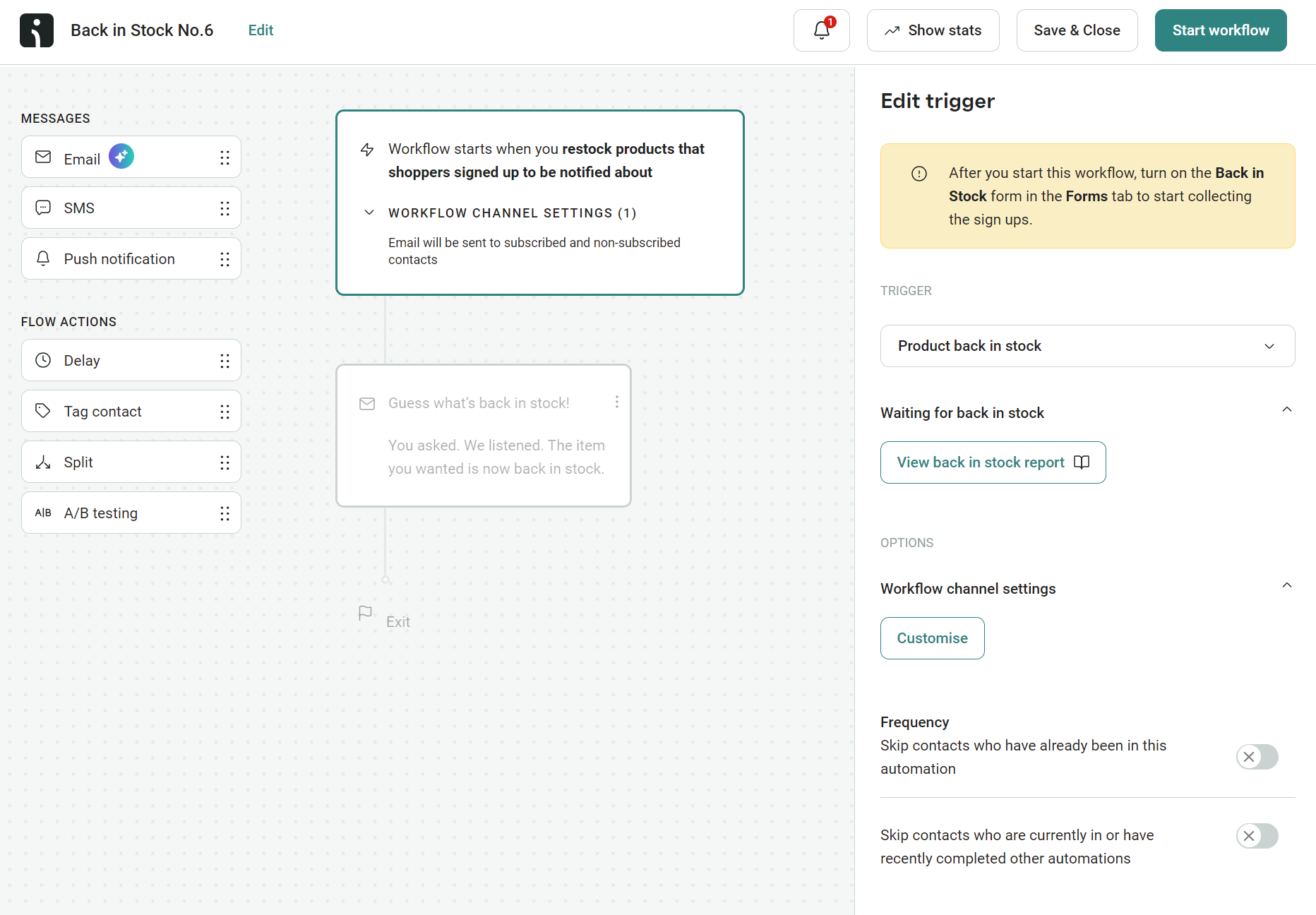
For instance, a common scenario involves a customer adding items to their online shopping cart but failing to complete the purchase. This "cart abandonment" event acts as the trigger. The automation system then verifies that the customer meets certain criteria—perhaps they haven’t completed a purchase recently, or they haven’t received a similar email within a specified timeframe. If these conditions are satisfied, a cart recovery email, dynamically populated with the abandoned items and a direct link back to the cart, is dispatched. This combination of an event-driven trigger and carefully constructed conditions ensures that messages are not only timely but also contextually appropriate, avoiding inundation and enhancing the customer experience.
Mainstay Triggers for E-commerce Revenue Generation
E-commerce businesses typically prioritize a set of fundamental automation triggers that target critical junctures in the customer journey, recognizing their significant potential for revenue generation and customer engagement.
-
Signup and List Entry: This trigger activates when an individual subscribes to an email list, often through a website popup, embedded form, or checkout opt-in. It is the gateway for the crucial welcome series, which introduces new subscribers to the brand, its values, and its offerings. It also facilitates the delivery of lead magnets, such as discount codes or exclusive content, promised upon signup. Beyond initial engagement, smart signup forms can capture zero-party data—information willingly provided by the customer about their preferences—allowing subsequent welcome flows to be highly personalized. Case studies, such as one involving a marketing agency, have shown personalized welcome emails, built on such data, achieving click-to-order conversion rates as high as 68.8%.
-
Purchase Completion: The moment a customer successfully completes a transaction marks a pivotal trigger point. This initiates a sequence that typically includes an immediate order confirmation, followed by a request for product reviews a week or two later. More strategically, this trigger can launch cross-sell or upsell sequences based on the purchased items, or a longer post-purchase journey designed to nurture loyalty and encourage repeat business. Some brands leverage this trigger for unique storytelling, moving beyond mere transactional messages to deepen brand connection, which has been observed to significantly boost email-driven revenue.

-
Cart Abandonment: This universally recognized trigger fires when a customer adds items to their cart but exits the site without completing the checkout process within a predetermined timeframe. The automation tool then initiates a recovery flow, dynamically inserting details of the abandoned items, their prices, and a direct link to the saved cart. Industry reports consistently highlight the immense value of this trigger, with abandoned cart emails, alongside welcome emails, accounting for a staggering 76% of all automation-based email orders in 2025. This underscores their critical role in recouping potentially lost sales.
-
Browse and Product Abandonment: Positioned earlier in the sales funnel than cart abandonment, this trigger activates when a customer views a product page but does not add the item to their cart. Since the intent is less firm, the email’s objective shifts from convincing to reminding and offering gentle encouragement. These emails often include the browsed product, similar items, or social proof to re-engage the undecided shopper. Retailers leveraging this approach have reported notable increases in conversions, demonstrating the power of timely, personalized recommendations even at the consideration stage.
Unlocking Hidden Potential: Overlooked Automation Triggers
While the primary triggers form the backbone of an effective email strategy, a host of less commonly utilized triggers can significantly enhance engagement and revenue, often yielding exceptional conversion rates. Many marketing platforms offer pre-built flows for these, yet businesses frequently underutilize them.
-
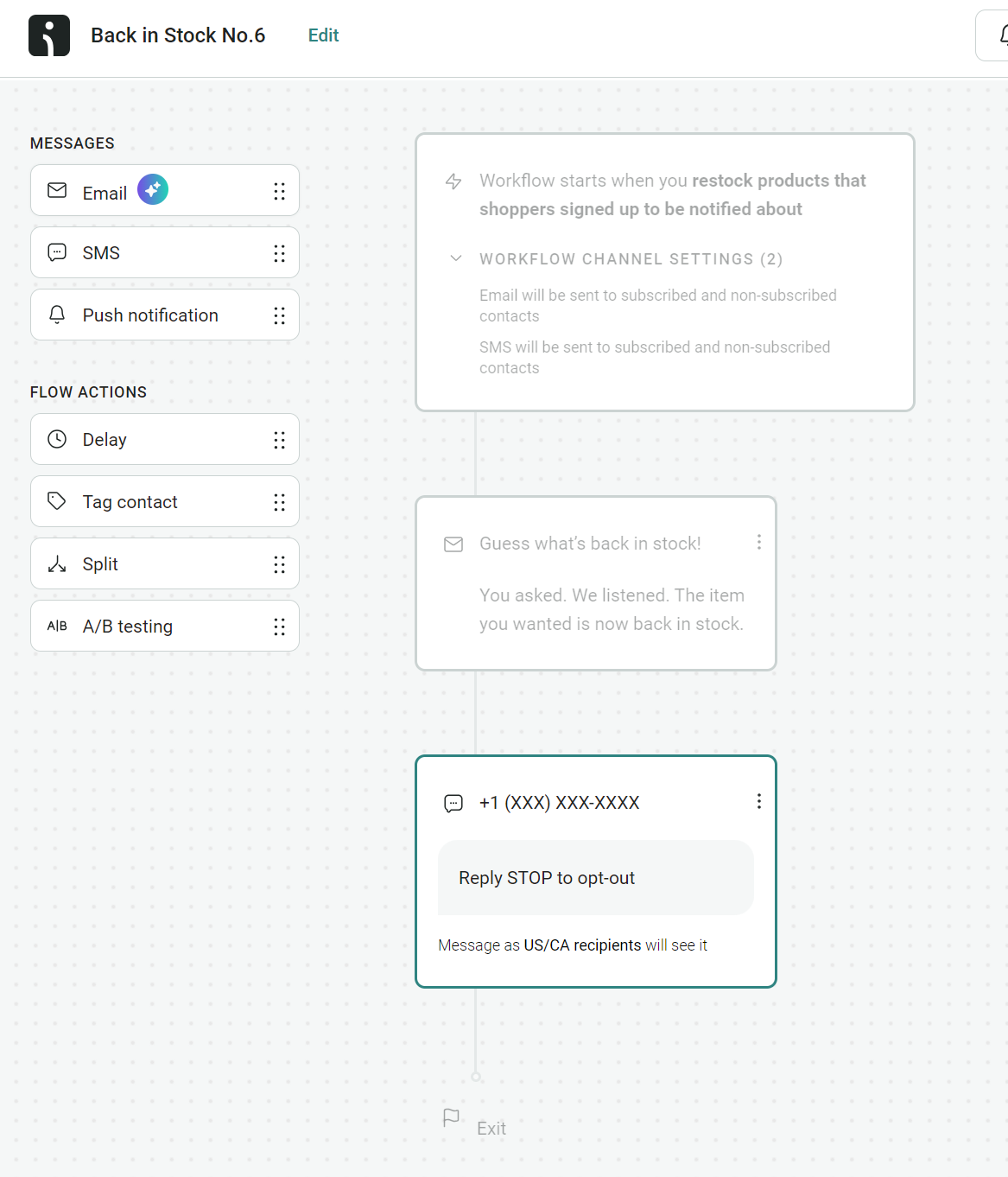
Back-in-Stock Trigger: This trigger activates when a previously out-of-stock product, for which customers have requested notifications, becomes available again. Despite their relative infrequency for some businesses, back-in-stock emails demonstrated the highest conversion rate (6.46%) and revenue per email ($8.46) among all automation types in 2025. Proactive setup of these alerts, even before stockouts occur, is crucial for maximizing sales recovery. Given their time-sensitive nature, integrating SMS notifications into these flows for opted-in customers can further amplify their impact, creating a robust multi-channel recovery strategy.
-
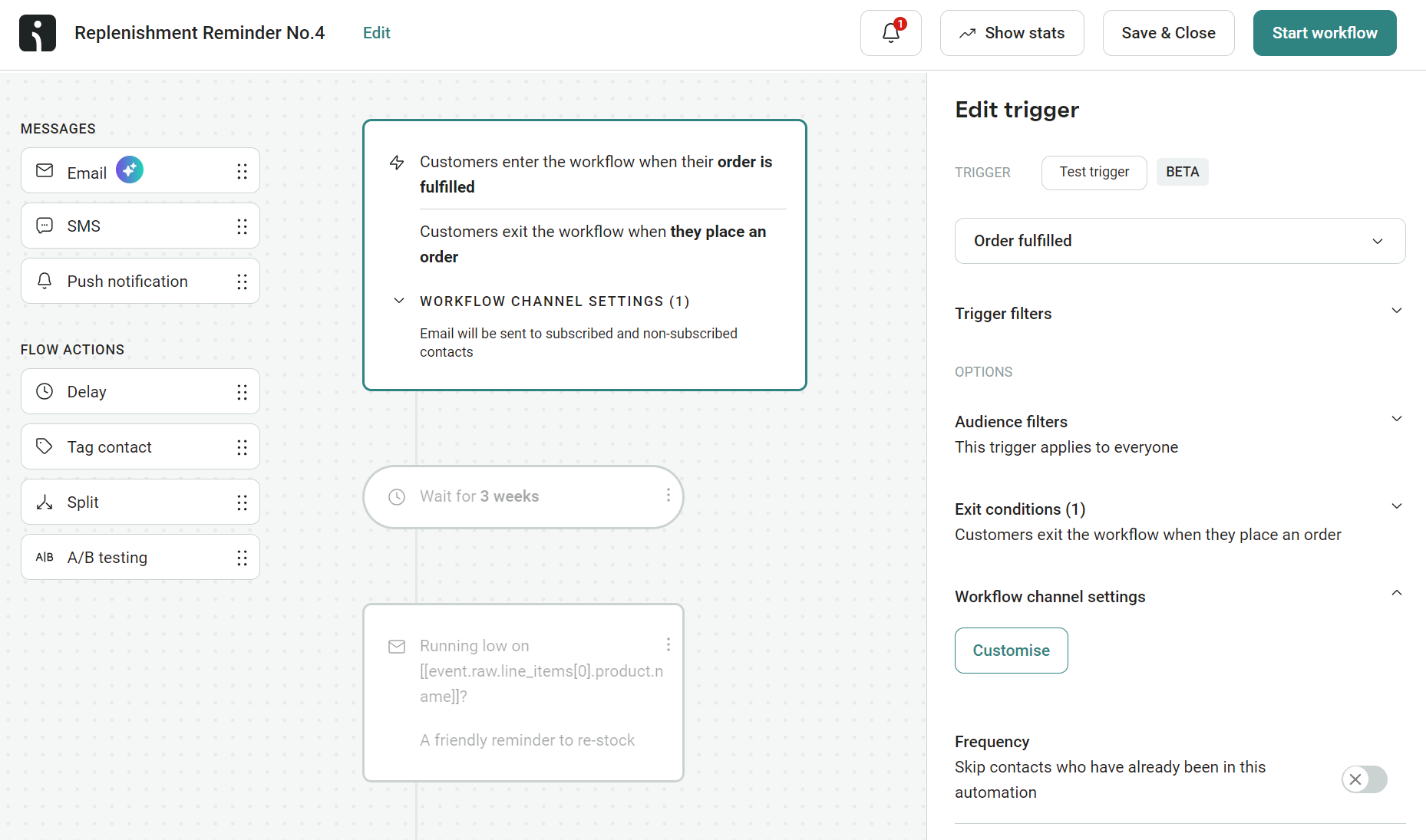
Date-Elapsed-Since-Purchase Trigger: Rather than being tied directly to the purchase event, this trigger initiates a set number of days after a customer’s last order. This flexibility allows businesses to target customers at specific post-purchase intervals that standard sequences might miss. A prime application is replenishment reminders for consumable products, such as coffee, skincare, or supplements, timed precisely to when a customer might be running low. It also serves for loyalty point reminders, repurchase nudges, or introducing complementary products once the initial purchase has been received and used. Successful implementations have shown impressive results, with campaigns achieving high open rates and generating substantial revenue by aligning messages with the customer’s product lifecycle.
-
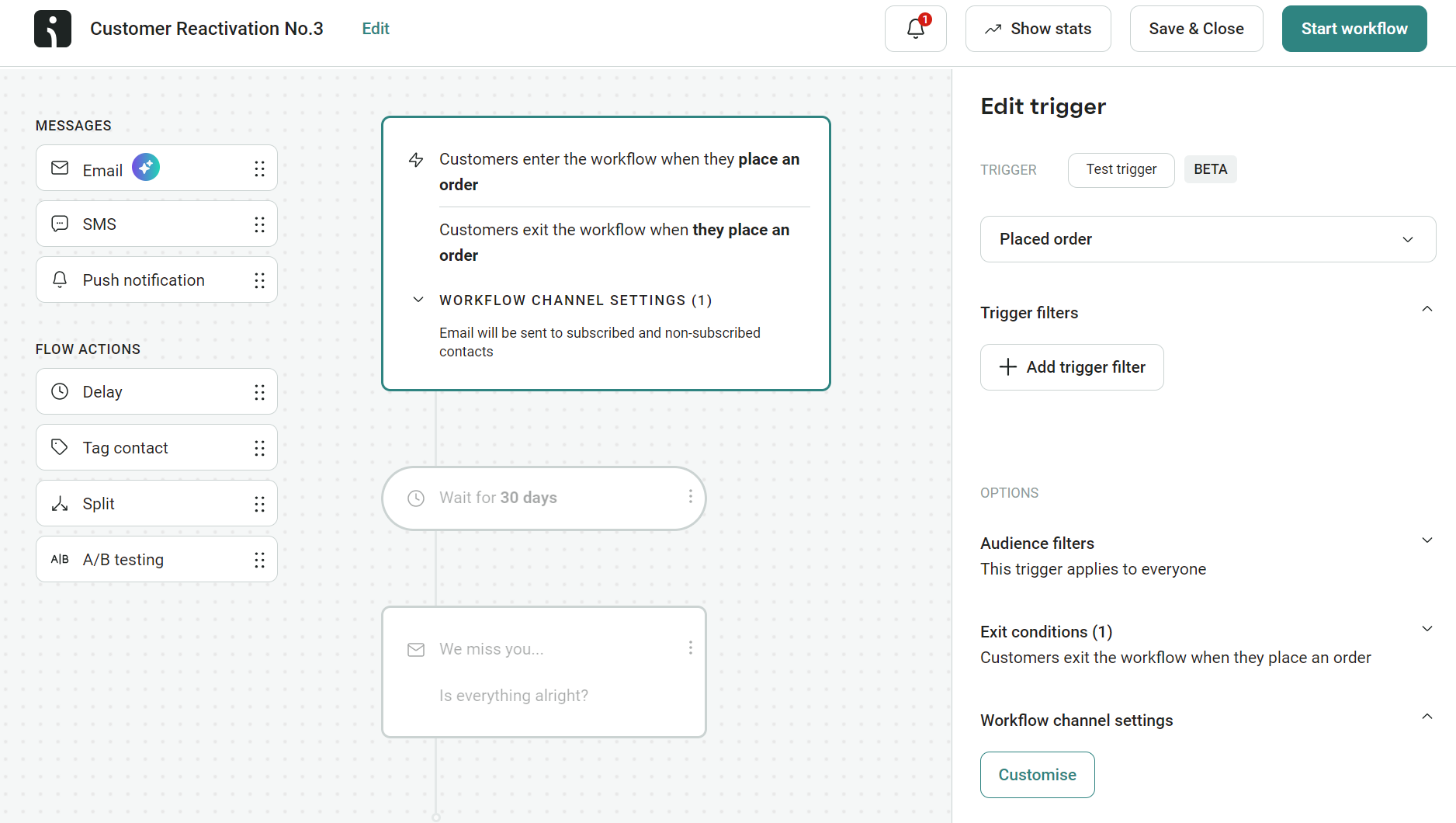
Lifecycle Stage Transition Trigger: This powerful trigger activates when a customer moves between defined stages in their lifecycle, such as transitioning from a "prospect" to a "first-time buyer," or from "active" to "at-risk." The strategic advantage lies in catching the customer at an inflection point, when their engagement or disengagement is still fluid. An "at-risk" customer, for example, is more receptive to re-engagement efforts at the moment they cross that threshold, rather than waiting until they are fully "lapsed," at which point the effort required to re-engage is significantly higher. By combining "placed order" triggers with sophisticated audience filters, platforms can identify customers falling into specific lifecycle categories and deliver targeted messages. Brands employing this approach have reported remarkable lifts in revenue per email compared to generic campaigns.
-
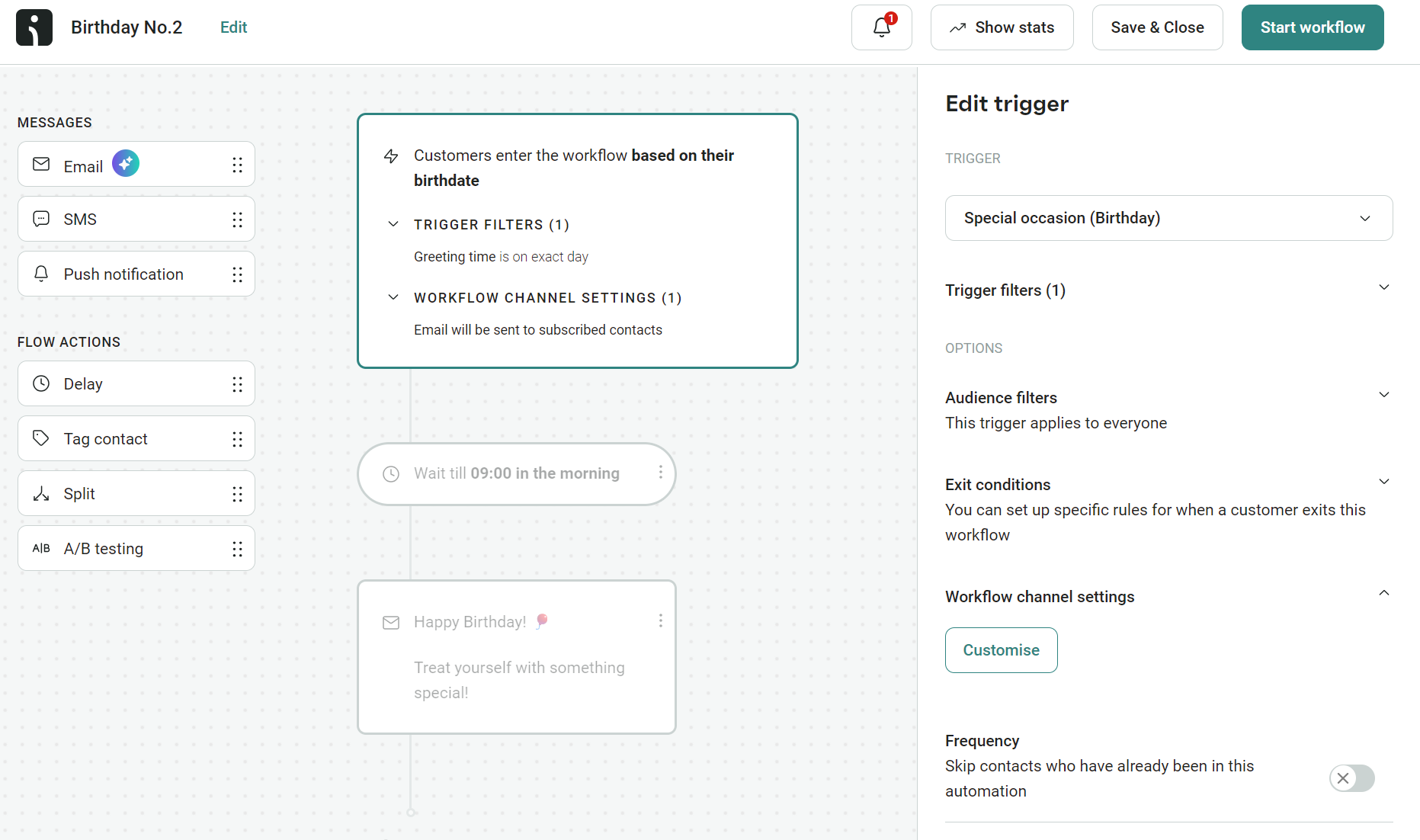
Birthday/Anniversary Trigger: Date-based triggers tied to specific dates stored in a contact’s profile, such as their birthday, signup anniversary, or first-purchase anniversary, offer a highly personalized touchpoint. Birthday emails, in particular, were noted to have the third-highest revenue per automated email in 2025, earning an average of $4.37 per send, surpassed only by welcome and back-in-stock emails. Furthermore, the average order value (AOV) for birthday automations was reported at an impressive $744, nearly five times the average across other automations. While collecting birthday data requires a dedicated effort at signup, anniversary triggers can leverage existing data, making them easier to implement. These celebratory messages often include special offers or discounts, fostering goodwill and driving sales.
-
Inactivity Trigger: Unlike most triggers that react to an action, inactivity triggers respond to a lack of action—no opens, no clicks, or no purchases within a defined period. This signals a customer’s shift from active to dormant. While valuable for re-engagement, careful implementation is paramount. Sending inactivity-triggered emails to a large segment of long-disengaged contacts can negatively impact email deliverability, as mailbox providers may interpret it as bulk messaging to unengaged recipients. Therefore, cleaning inactive contacts before launching such flows is a recommended best practice, ensuring higher open rates and improved campaign performance.
-
Cross-Channel Trigger: This category of triggers focuses on extending automation beyond email to other communication channels like SMS and push notifications. While email often remains the primary channel, integrating cross-channel triggers ensures that critical or time-sensitive messages reach customers on their preferred or most immediate platforms. For example, an abandoned cart flow might send an email, followed by an SMS reminder if the cart remains unpurchased after a few hours. Businesses that have adopted cross-channel abandonment flows have seen significant contributions to overall revenue from non-email channels, demonstrating the power of a unified communication strategy.
-
Zero-Party Data Trigger: This trigger leverages data explicitly provided by customers, such as their product preferences, interests, or quiz responses, typically collected during the signup process. While the core trigger might still be a signup event, the richness of the attached zero-party data allows for highly personalized welcome flows. Instead of a generic series, the automation can branch into different paths, delivering content, product recommendations, or offers directly aligned with the customer’s stated preferences. This level of personalization has been shown to triple click rates by making the initial interactions far more relevant.
-
POS / Offline Behavior Trigger: For businesses with both online and physical retail presence, a Point-of-Sale (POS) trigger activates based on customer actions in a brick-and-mortar store, such as a purchase, loyalty card scan, or event attendance. This enables online follow-up actions like thank-you emails, related product recommendations, or review requests, bridging the gap between physical and digital experiences. The challenge often lies in integrating disparate POS and email marketing systems. However, successful integrations have demonstrated significant revenue generation from campaigns triggered by offline fan behavior, underscoring the value of a holistic customer view.
Strategic Implementation: Timing and Frequency for Optimal Engagement
The effectiveness of email automation extends beyond merely selecting the right trigger; it critically depends on the precise timing and frequency settings layered upon these triggers. Mishandling these elements can lead to customer frustration, decreased engagement, and lost revenue.
-
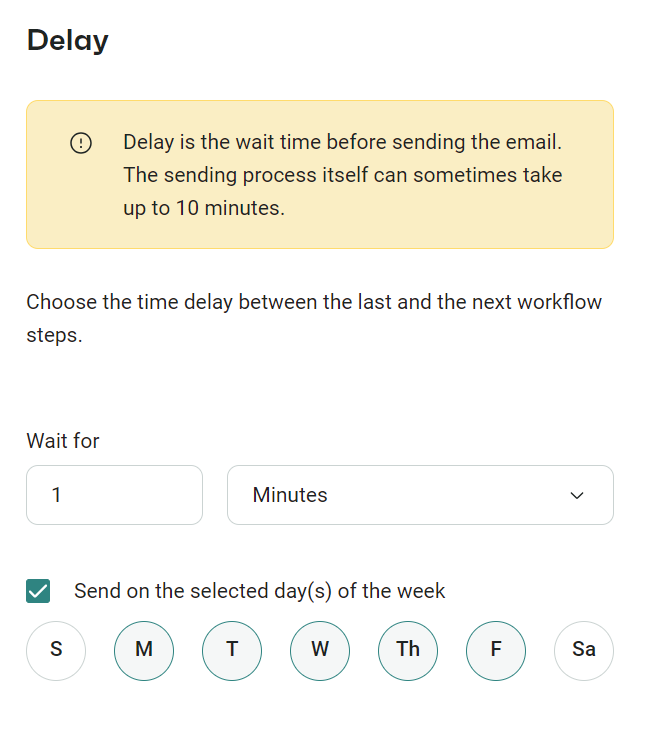
Trigger Delay Windows: These settings dictate the waiting period before an email is sent after a trigger event, such as "immediate," "after one hour," or "24 hours." Appropriate delays are essential to ensure messages are received at opportune moments, avoiding premature or irrelevant communication. For instance, a welcome email might send immediately after signup, while a browse abandonment email might be delayed by an hour to allow the customer time to return independently. Many platforms also offer options to specify sending only on certain days of the week, adding another layer of control.
-
Trigger Suppression Logic and Avoiding Conflicts: A crucial aspect of sophisticated automation is preventing the same contact from repeatedly entering the same flow or receiving multiple, similar emails across different flows. Without proper suppression, customers could be inundated with messages, leading to annoyance and unsubscribes. Marketing automation platforms address this through "frequency settings," which control how soon a contact can re-enter a specific flow, and "exit conditions," which remove a contact from a flow if a relevant event occurs (e.g., a customer completing a purchase while in an abandoned cart flow). This intelligent layering of conditions ensures that emails are not only timely but also respectful of the customer’s inbox, directly contributing to improved click-to-conversion rates, which saw a 53% year-over-year increase in 2025 due to more appropriate targeting.
Broader Implications for Digital Commerce
The strategic deployment of email automation triggers carries profound implications for the entire digital commerce ecosystem. For businesses, it translates into enhanced customer engagement, as communications become inherently more relevant and personal. This personalization fosters stronger brand loyalty and significantly improves customer retention rates. From a revenue perspective, the efficiency and high conversion rates associated with automated emails provide a powerful engine for sustained growth, allowing businesses to maximize the value of every customer interaction.
Furthermore, the continuous refinement of these triggers, often informed by data analytics and A/B testing, enables businesses to adapt swiftly to evolving customer behaviors and market trends. This agility provides a significant competitive advantage in an increasingly crowded online marketplace. For consumers, the shift towards trigger-based automation means a more curated and less intrusive inbox experience. They receive messages that are pertinent to their recent actions or interests, contributing to a more positive and valuable interaction with brands.
Industry Outlook and Future Evolution
The landscape of email automation triggers is continually evolving, driven by advancements in artificial intelligence, machine learning, and data integration capabilities. Future developments are likely to include even more sophisticated behavioral triggers, predictive analytics to anticipate customer needs, and seamless integration across an ever-expanding array of digital touchpoints. The emphasis will remain on creating highly personalized, contextually relevant, and multi-channel customer journeys that not only drive sales but also cultivate enduring brand relationships. Businesses that master the art and science of email automation triggers will be best positioned to thrive in the dynamic world of digital commerce.









