rifanmuazin
In an increasingly intricate B2B marketing landscape, characterized by the pervasive influence of Artificial Intelligence and a fragmentation of information channels, a new framework is emerging as critical for brands seeking to capture and retain customer attention: Best Answer Marketing (BAM). This strategic approach emphasizes creating content that not only stands out but also cultivates trust and confidence throughout the entire customer journey. As B2B buyers navigate a complex web of digital touchpoints and increasingly rely on AI in their decision-making processes, the core tenets of BAM—being visible, being believed, and ultimately, being chosen—offer a roadmap for success.
The modern B2B buyer’s journey is a far cry from previous eras. Research from 6Sense indicates that a significant 94% of B2B buyers incorporate AI tools into their purchasing processes. This technological integration is compounded by the sheer volume and diversity of information sources, with McKinsey data suggesting an average of over 10 distinct channels being utilized. Furthermore, the decision-making unit has expanded, with Forrester reporting that buying committees often comprise an average of 13 internal stakeholders and 9 external advisors. This confluence of factors—AI integration, channel proliferation, and complex buying committees—has fundamentally reshaped the B2B marketing environment, demanding a more sophisticated and customer-centric approach.
Many B2B brands, in an attempt to address this escalating complexity, have resorted to a strategy of simply producing "more content." This often involves leveraging AI to generate a substantial volume of material. However, this approach risks contributing to a homogenous digital landscape, where content, regardless of its origin, begins to blend into an undifferentiated mass. The challenge, therefore, is not merely about content creation, but about content differentiation and impact.
Adobe’s research highlights a key insight: 82% of B2B brands are focusing their content efforts on answering buyer questions. While this is a crucial starting point, the efficacy of this strategy hinges on several critical factors: the nature of the questions being addressed, the depth and quality of the answers provided, the channels through which these answers are delivered, the credibility of the source, and the underlying "why" behind the content’s creation. While tools for optimizing content for AI discovery and adhering to Google’s E-E-A-T (Experience, Expertise, Authoritativeness, Trustworthiness) guidelines are widely accessible, the ability to truly stand out requires a strategic approach that transcends mere technical compliance.
The fundamental question for B2B marketers today is: When everyone has access to the same strategies and resources, how can a brand authentically distinguish itself, foster genuine trust, and inspire the confidence necessary to drive purchasing decisions?

One compelling strategy for achieving this lies in a robust thought leadership focus, underpinned by original research, amplified through influencer collaborations, and delivered via content formats designed to create engaging experiences that meet the omnichannel expectations of contemporary buying groups. This approach recognizes that in an AI-saturated world, human insight, original data, and credible validation are paramount.
Original research, such as that conducted by TopRank Marketing in collaboration with Ascend2, titled "The State of B2B Thought Leadership in 2026," delves into the intersection of original research, influence, and content strategy. Complementary resources, like the "Best Answer Marketing Playbook" series, offer practical models for implementation. These types of in-depth resources have consistently emerged as highly popular content, underscoring a market appetite for strategic guidance beyond generic AI-generated output.
To successfully navigate the escalating complexities of B2B marketing in 2026 and beyond, a strategic pause on thinly spread efforts focused solely on efficiency is imperative. Instead, the focus must shift to delivering the precise answers that buyers require. As the promise of AI in content creation evolves from mechanical generation to meaningful human connection, B2B brands are presented with a pivotal opportunity to move beyond mere participation and establish themselves as "Best Answer Brands." This transition hinges on mastering three interconnected pillars: Be Visible, Be Believed, and Be Chosen.
Be Visible: Capturing Attention in a Crowded Digital Sphere
Visibility is the foundational element of any successful marketing strategy. Without a presence where buyers are actively seeking information, even the most insightful content will remain undiscovered. However, in the current environment, simply increasing content volume is counterproductive. It leads to a "sea of sameness" that buyers, conditioned by rapid scrolling and swiping, often overlook. Capturing attention in these crucial initial moments requires a strategic approach to visibility that considers relevance, reach, creativity, and integration.
Relevance: The cornerstone of relevance is a deep understanding of buyer inquiries. This necessitates dedicated question research to identify the specific pain points, challenges, and information needs of the target audience. Sources for this research are diverse and include analyzing search queries, social media conversations, customer service interactions, and sales team feedback. By directly addressing the questions buyers are asking, brands can position themselves as valuable resources from the outset.
Reach: With the understanding that "search happens everywhere," as highlighted by SparkToro’s research, prioritizing reach involves identifying and engaging with the channels where B2B buyers actively discover and validate information. Audience intelligence tools are invaluable in pinpointing these critical touchpoints. This is particularly important given that a significant 61% of B2B buyers now prefer a self-serve sales approach, often avoiding direct interaction with sales representatives, according to Gartner.
While Google remains a dominant force in B2B discovery, the rapid adoption of AI-powered search tools like ChatGPT, Gemini, and Perplexity demands strategic attention. TopRank Marketing’s survey of 797 senior B2B marketers revealed the leading channels for distributing B2B thought leadership:
- LinkedIn: Continues to be a primary platform for professional networking and content discovery.
- Industry Publications: Traditional and digital outlets that offer specialized content and analysis.
- Vendor Websites: Direct channels where brands host their own resources.
- Search Engines: The perennial gateway for information retrieval.
- AI-Powered Search Tools: Emerging platforms that are rapidly influencing how buyers access information.
Beyond these, other crucial channels include email marketing, word-of-mouth referrals, influencer collaborations, earned media, paid advertising, broader social media platforms, and both virtual (webinars) and in-person (conferences) events. Effective prioritization requires a nuanced understanding of where the target audience congregates and which channels are most effective at different stages of the buyer journey.
Creativity: In the face of widespread content homogenization, creativity becomes a powerful differentiator. This encompasses visual appeal, compelling copywriting, originality, authentic human narratives, and emotionally resonant storytelling. B2B brands often overlook the power of creative expression, missing a significant opportunity to capture attention. The adage "facts tell, stories sell" remains profoundly true. Buyers are seeking more than just information; they desire messaging that authentically connects with their challenges, empathizes with their constraints, and fosters genuine human connection. The drive to "break free of boring B2B" is not merely an aesthetic pursuit but a strategic imperative for engagement.
Integration: Creativity executed in isolation or across disparate channels is ephemeral and quickly forgotten. To achieve lasting impact, creative expressions of relevance must be coordinated and integrated across the channels where buyers are most active. Given the complexity of buying committees and their diverse information-seeking behaviors, integrated messaging and creative efforts are essential for building the mental availability required for consideration. A cohesive brand narrative, consistently delivered across multiple touchpoints, reinforces key messages and strengthens brand recall.
Be Believed: Cultivating Trust and Credibility
Capturing attention is only the first step; for that attention to translate into meaningful engagement, the brand must be perceived as credible and trustworthy. LinkedIn research underscores this, revealing that 94% of marketers agree that trust is paramount to B2B success. In a fragmented discovery environment, building trust evolves into inspiring belief.
The Best Answer Marketing framework incorporates a "Trust System" designed to architect this foundation of belief. This system leverages an integrated approach to messaging and creative execution, focusing on several key areas:

- Authenticity: Genuine, transparent communication that reflects the brand’s values and commitments.
- Expertise: Demonstrating deep knowledge and experience in the relevant field.
- Consistency: Delivering a unified message across all touchpoints, reinforcing reliability.
- Social Proof: Leveraging endorsements, testimonials, and peer recommendations to validate claims.
- Transparency: Openly sharing information about products, services, and company practices.
Beyond simply informing customers, B2B marketing must now aim to evoke an emotional response. This emotional connection is the bridge between trust and belief. By consistently delivering a unified message and garnering consensus from influential sources, a brand can establish itself as the premier answer for buyer needs. This integrated approach creates a robust foundation of trust, enabling brands to inspire the belief that they are indeed the most suitable solution.
Be Chosen: Driving Decision Confidence and Conversion
The ultimate goal of any marketing strategy is to be chosen by the customer. This requires a synergistic combination of visibility, trust, and a compelling reason for selection. Being chosen means not only being visible in relevant channels and validated by trusted sources but also delivering content experiences that resonate with the entire buying group and instill decision confidence.
Beyond having the best solution, brands must empower buying groups to confidently defend their decision to choose a particular offering over others. This involves providing comprehensive answers, engaging content experiences, and demonstrable credibility. Being the best answer means being discoverable by search engines, LLMs, and AI search, and being recommended by respected industry publications, thought leaders, and peers.
Determining when a brand is "chosen" has become more complex, especially with the rise of zero-click searches and LLMs that may not always cite sources. The focus shifts from merely tracking clicks to understanding whether content has influenced what buyers know, trust, or do next. Key indicators of being chosen include:
Brand Propagation: The unique ideas, narratives, or research of a brand are cited, summarized, or modeled by LLMs and search engines. This signifies that the content is actively shaping answers, even in the absence of direct clicks, demonstrating influence at the highest level of discovery. This can manifest as:
- Unique data points appearing in AI-generated summaries.
- Key phrases and concepts from brand content being adopted by LLMs.
- Brand narratives being reflected in broader industry discussions facilitated by AI.
Brand Consistency: The brand achieves disproportionate visibility across the channels that matter, demonstrating consistent discovery relevant to the buyer journey. This is evidenced by:
- Sustained presence across multiple relevant platforms.
- Recognition as a go-to source for specific topics.
- Positive sentiment and engagement across various channels.
Brand Persuasion: High-intent buyers arrive "pre-sold" or well-informed about the brand’s solutions. This indicates that the "best answer" content has effectively reduced uncertainty and built decision confidence, positioning the brand favorably as buyers move from passive awareness to active consideration. Metrics to track include:
- Increased engagement with product-specific content.
- Higher conversion rates from informed leads.
- Reduced sales cycle length for well-informed prospects.
Brand Driven Pipeline: The quality of the sales pipeline correlates with the impact of "best answer" content. This content not only influences discovery and engagement but also builds confidence in decision-making and the ability to defend those decisions. Pipeline metrics to monitor include:
- Higher lead-to-opportunity conversion rates.
- Increased average deal size.
- Improved win rates for opportunities influenced by strategic content.
Ultimately, being chosen is not a singular event but a cumulative outcome of consistent presence where and when buyers are looking, combined with the compounding value of familiarity, trust, and belief. By fostering mental availability through cross-channel consistency and building confidence through proof and consensus, brands can achieve selection. Understanding and tracking these multifaceted metrics is crucial, and frameworks like BAM Unified Analytics offer comprehensive solutions for this purpose.
Case Studies in Best Answer Marketing:
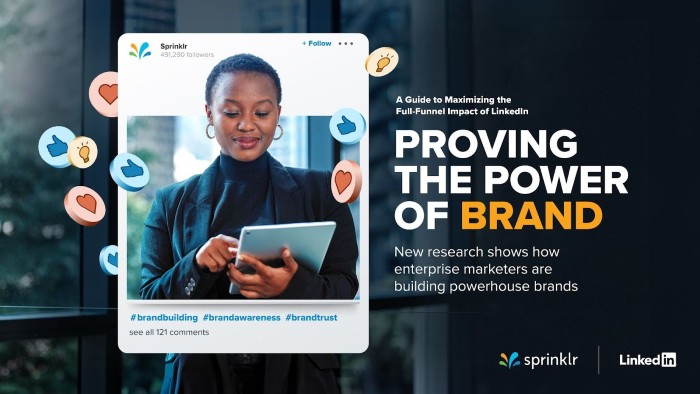
Examples of Best Answer Marketing in action demonstrate its tangible impact. A collaboration between Sprinklr and LinkedIn, executed under a Best Answer Marketing strategy, generated 4.6 million targeted impressions, achieved a 370% higher engagement rate, and resulted in 1,100 qualified leads.
Further illustrating the power of B2B influencer marketing, a component often integrated into BAM strategies, TopRank Marketing case studies showcase successful campaigns with industry leaders such as Adobe, Smartsheet, Microsoft Teams, LinkedIn, Dell, Demandbase, and Monday.com. These collaborations highlight how leveraging credible voices amplifies reach and enhances brand perception.
For brands seeking to evaluate the applicability of Best Answer Marketing to their own objectives, resources like the BAM Action Plan are available. Alternatively, direct engagement with experts can provide tailored guidance and answer specific questions about implementing this transformative framework. In the dynamic and AI-driven B2B landscape, becoming the "best answer" is no longer an aspirational goal but a strategic imperative for sustained growth and market leadership.