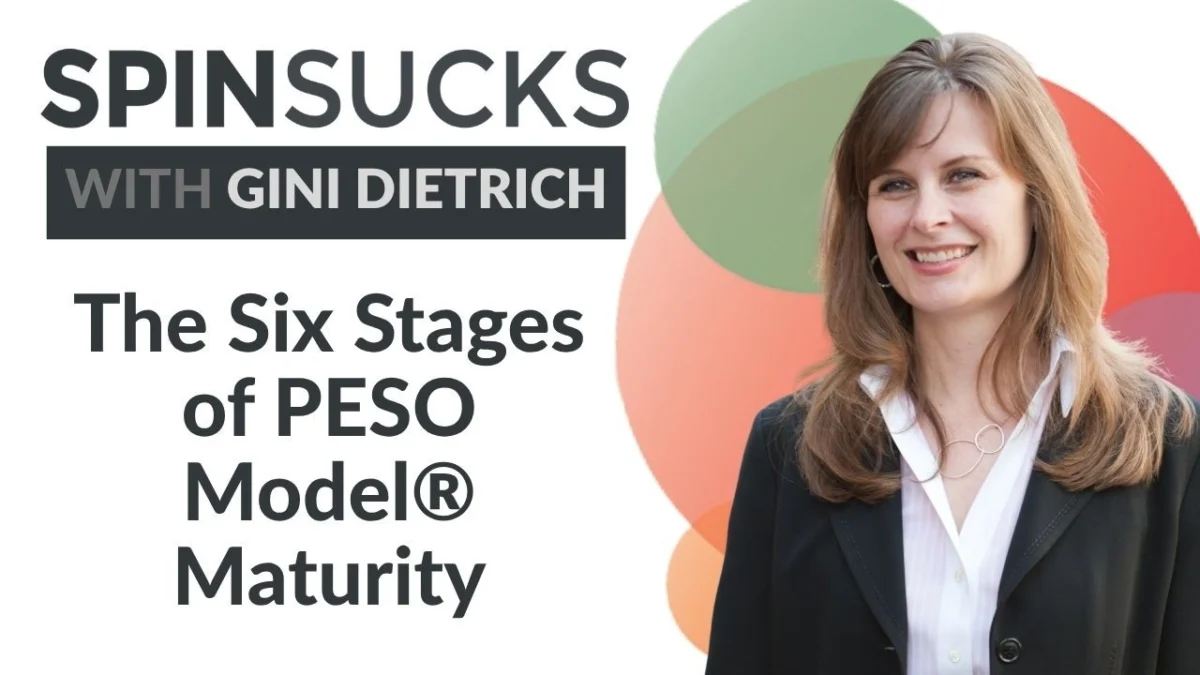
The marketing and communications industry is currently grappling with a significant "integration gap," according to new data derived from the PESO Model® Diagnostic. While nearly half of modern marketing teams describe their operations as "integrated," an overwhelming 91% are actually functioning within the bottom half of the PESO Model maturity ladder. This discrepancy between self-perception and operational reality suggests that many organizations are failing to move beyond tactical execution into a systemic, data-driven approach to communications.
The Evolution of the PESO Operating System
The PESO Model—an acronym for Paid, Earned, Shared, and Owned media—was first introduced by Gini Dietrich and Spin Sucks in 2014 as a framework to help communicators navigate the digital landscape. Over the past decade, the model has evolved from a simple graphic into a comprehensive operating system designed to break down departmental silos.
In the current era of artificial intelligence and rapid content saturation, the necessity for a unified operating system has become more acute. Industry experts argue that the proliferation of AI-generated content is threatening to undermine high-quality brand work, making the disciplined integration of all four media types essential for maintaining brand authority and visibility. The release of the PESO Model Diagnostic represents a formal attempt to quantify how effectively organizations are implementing this system.
The Six Stages of Maturity Defined
To understand the current state of the industry, it is necessary to examine the six distinct stages of the PESO Model maturity ladder. These stages are not merely aspirational; they represent a functional description of how data, strategy, and execution interact within an organization.
Stage 0: Foundation
At the Foundation level, organizations utilize various channels, but they do so in isolation. Marketing functions are typically execution-led and channel-organized. In this stage, a team might have a social media manager, a PR firm, and a paid search specialist, but these entities rarely coordinate their messaging or timing.
A prominent example of Foundation-level operations can be seen in large B2B enterprises like Oracle. Despite holding a significant share of the AI infrastructure market and securing high-profile cloud deals, the organization’s channels often operate independently. Paid media, earned media, and owned documentation frequently lack a single, reinforcing thesis. While the budgets are substantial, the lack of integration means visibility is not maximized across the ecosystem.
Stage 1: Pilot
The Pilot stage is characterized by the successful execution of a single integrated campaign. At this level, teams have demonstrated the ability to run an initiative end-to-end across paid, earned, shared, and owned media, but the discipline has not yet become the standard operating procedure for the rest of the year.
McDonald’s is often cited as a master of Pilot-level integration. During high-profile cultural moments—such as the Travis Scott Meal or the Grimace Shake campaign—the company coordinates every channel flawlessly. However, once the "event mode" concludes, the organization often reverts to separate teams and agencies running regional or product-specific pushes with disconnected KPIs.
Stage 2: Scale
At the Scale level, integration becomes a consistent behavior rather than a one-time event. Organizations at this stage run multiple integrated campaigns annually and maintain shared KPIs across marketing and communications departments.
Dove’s "Real Beauty" platform serves as a benchmark for Scale. For over two decades, the brand has launched major integrated campaigns every few years. While these campaigns are expertly integrated across all PESO pillars, the brand’s standard day-to-day operations between these major launches often still function within traditional, siloed CPG marketing structures.
Stage 3: Systemize
Systemization occurs when integration shifts from a campaign discipline to a core organizational function. This stage requires a dedicated PESO "integrator"—a specific role or person responsible for ensuring cross-channel harmony—and shared dashboards that track performance in real-time.
Sephora represents the Systemize stage through its "Beauty Insider" loyalty program. This data layer connects digital interactions, in-store purchases, and creator partnerships. Every channel feeds into a central dashboard, though the organization may still face challenges in pivoting quickly to short-lived social trends that occur between quarterly planning cycles.
Stage 4: Real-Time
The Real-Time stage is reached when the operating system becomes nimble enough to pivot within hours or days based on performance data. At this level, the integrated insights derived from PESO operations begin to influence decisions outside of marketing, including product development, pricing, and hiring.
Netflix operates at this level of maturity. When a series becomes a viral hit, the entire brand ecosystem pivots almost instantly. The algorithm (owned), talent circuits (earned), social media creators (shared), and advertising spend (paid) are reallocated in real-time to capitalize on the momentum.
Stage 5: Leadership
At the pinnacle of the ladder, the PESO operating system serves as the brand’s primary competitive moat. The organization’s mastery of integration is publicly recognized and studied by competitors. In this stage, the marketing operation is not just supporting the product; the operation is, in many ways, the product itself.
Liquid Death is a primary example of Leadership. By treating its marketing operation as a content-first engine, the company has built a billion-dollar brand in a commodity category. The water is incidental to the integrated PESO strategy, which leverages provocation to drive earned media and creator collaborations to fuel shared media growth.
Analyzing the "Math That Isn’t Mathing"
The data from the PESO Model Diagnostic highlights a stark reality regarding professional self-perception. According to the findings, 68% of respondents claimed they run the PESO Model as a system, yet 100% of those individuals scored at the bottom two stages (Foundation or Pilot).
Furthermore, 47% of participants described themselves as "integrated" across all four media types, while their actual scores placed them at the Foundation or Pilot levels. Perhaps most tellingly, 31% of respondents rated themselves at the top of the self-rating scale, but only two individuals in the entire data set actually scored above the "Scale" level.
This gap suggests that many senior leaders and mid-market marketers mistake "having all four channels active" for "integration." True integration requires a structural shift in how teams are managed, how budgets are allocated, and how success is measured.
The Structural Barriers to Integration
The research identifies several key reasons why organizations struggle to move past the Pilot or Scale stages:
- Organizational Silos: Traditional corporate structures often reward channel-specific performance (e.g., "social media growth" or "media mentions") rather than holistic brand impact.
- Measurement Disparity: Paid media is often measured by immediate ROI, while earned and owned media are measured by long-term authority. Reconciling these different time horizons into a single dashboard remains a technical and philosophical challenge.
- The Discipline Problem: In the age of AI, there is a temptation to prioritize volume over strategy. Without the discipline to maintain a single narrative across all channels, the "operating system" breaks down into disconnected tactical noise.
- Lack of Centralized Ownership: Many teams lack a dedicated "integrator" who has the authority to reallocate resources across departments based on integrated data insights.
Broader Implications for the Industry
The failure to achieve higher levels of PESO maturity has significant financial and strategic implications. Organizations stuck at the Foundation or Pilot levels often experience higher customer acquisition costs because their channels are not working in concert to lower the barrier to conversion.
Moreover, in a landscape where search engines are evolving into "answer engines" powered by AI, the lack of an integrated "owned and earned" strategy can lead to a sudden loss of visibility. An integrated PESO approach ensures that a brand’s thesis is reinforced across multiple high-authority touchpoints, making it more likely to be cited as a primary source by AI models.
For agencies, the data reveals a major opportunity. Clients are increasingly looking for partners who can offer "integrated" services, but many agencies are themselves stuck in channel-specific execution. Agencies that can demonstrate true Systemize or Real-Time capabilities will likely command a significant market premium.
Conclusion and Path Forward
The path to closing the integration gap begins with an honest assessment of current capabilities. The PESO Model Diagnostic data proves that most teams are at least one stage behind where they believe they are. The transition from Foundation to Leadership is not a single leap but a series of structural adjustments: implementing weekly cross-functional standups, establishing shared KPIs, and eventually appointing a dedicated integrator.
As the media landscape becomes increasingly fragmented and AI-driven, the ability to operate a cohesive, integrated system will likely separate the market leaders from the brands that are merely "active" on various channels. For most organizations, the next move is not to aim for the top of the ladder immediately, but to move from the Foundation of execution to the Pilot of coordination, and eventually, the Scale of consistency.
© 2026 Spin Sucks. All rights reserved. The PESO Model is a registered trademark of Spin Sucks.