rifanmuazin
The Black Friday and Cyber Monday (BFCM) period in 2025 proved to be far more than a mere sales window for retailers and marketers; it emerged as the ultimate crucible for digital communication strategies, rigorously testing the deliverability of billions of messages. With Adobe reporting an unprecedented $137.4 billion in online revenue generated throughout November 2025—marking a robust 7.2% year-over-year increase—the stakes for brands to effectively reach consumers were astronomically high. This period underscored a critical duality: the immense pressure to convert promotional emails into sales, alongside the non-negotiable imperative to ensure vital transactional communications, such as order confirmations and shipping alerts, were delivered instantly and reliably. As consumers increasingly rely on digital channels for every step of their purchasing journey, the success or failure of a brand’s communication infrastructure during this peak season offered profound insights into the evolving landscape of e-commerce and digital marketing.
The Evolution of a Shopping Phenomenon: From Days to a Month-Long Marathon
The origins of Black Friday, traditionally the day after Thanksgiving, trace back to the mid-20th century, marking the unofficial start of the Christmas shopping season. Cyber Monday emerged in 2005 as its digital counterpart, specifically designed to encourage online shopping. For years, these two days, often extending into a "Cyber Weekend," dictated the rhythm of holiday retail. However, the 2025 data conclusively demonstrated that this concentrated sprint has irrevocably transformed into a month-long engagement marathon, demanding sustained strategic outreach.
This shift is not merely a tactical adjustment by retailers; it is a direct response to evolving consumer expectations. Sinch’s 2025 pre-holiday survey of 3,180 consumers, a consistent annual benchmark, revealed that nearly half of shoppers (45.9%) desired to receive promotions at least a full month before Black Friday. This clear preference for earlier engagement has compelled brands to redefine their holiday communication calendars, moving away from a single-day or weekend burst to a comprehensive November-long campaign. This extended promotional window also helps to mitigate the intense traffic spikes that could overwhelm logistics and digital infrastructure if sales were confined to just a few days.
BFCM 2025 in Numbers: A Deliverability Stress Test
The sheer volume of digital communications during November 2025 presented an unprecedented deliverability challenge. Email marketers, in particular, faced a "stress test" where the capacity of their sending infrastructure, the health of their sender reputation, and adherence to best practices were pushed to their limits. Sinch’s analysis, drawing from billions of emails sent via its Mailgun and Mailjet platforms, provided a comprehensive look at how brands performed during this critical period.

The data confirmed email’s unwavering dominance in consumer engagement. Over half of consumers (56.5%) explicitly preferred email for receiving Black Friday and Cyber Monday promotional offers. Even more significantly, an overwhelming 73.9% relied on email for crucial transactional updates, such as order confirmations, shipping notifications, and delivery alerts. This dual role — as a primary channel for both proactive marketing and essential customer service — underscores email’s irreplaceable value in the modern retail ecosystem.
Brands demonstrably aligned their strategies with these consumer preferences. Email volume steadily escalated throughout November, reaching its zenith during Cyber Week. Sinch’s email platform alone delivered an staggering 20.4 billion emails during this peak week, demonstrating the colossal scale of promotional campaigns. On Black Friday itself, email volumes surged by 30% year-over-year, a clear indicator of the intensified competition and the strategic centrality of email to holiday sales efforts. This surge in volume, however, also amplified the importance of deliverability. An email, no matter how compelling its offer, is worthless if it doesn’t reach the inbox.
Engagement Amidst the Deluge: Open Rates Defy Expectations
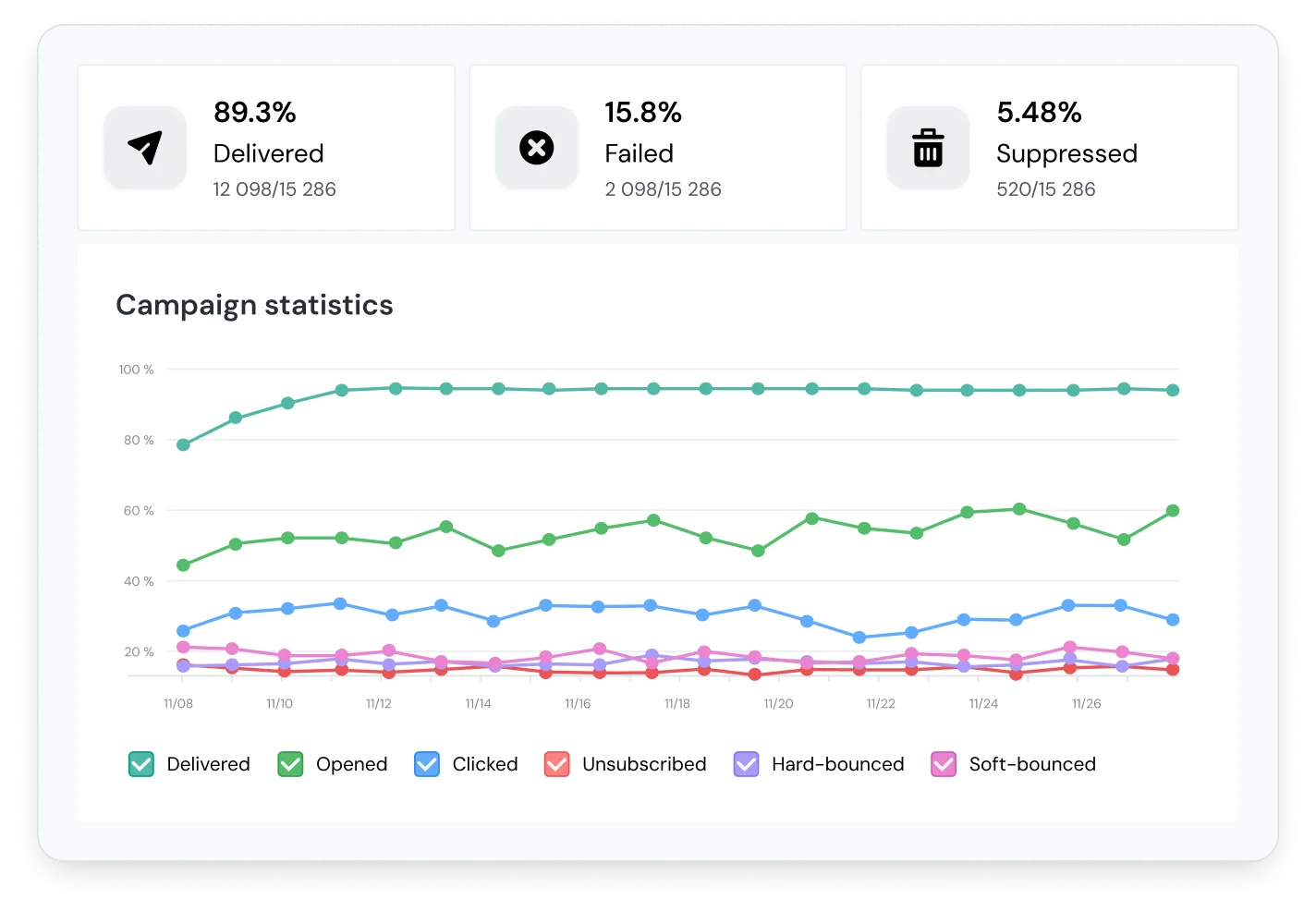
A persistent concern for marketers during high-volume periods like BFCM is "email fatigue"—the fear that overflowing inboxes lead to diminished engagement. However, Sinch’s 2025 data offered a reassuring counter-narrative. Despite the record-breaking email volumes, average open rates held steady at a respectable 13% (excluding bot-generated clicks). This figure, consistent with performance outside peak season, suggests that consumers were not overwhelmed but actively engaged, diligently searching for deals and critical updates.
This sustained engagement underscores several key points:
- Intent-Driven Behavior: During BFCM, consumers are in a shopping mindset. They are actively seeking out promotions, making them more receptive to emails from brands they trust.
- Segmentation and Personalization: The ability to maintain stable open rates amidst a flood of messages implies that many brands successfully leveraged segmentation and personalization to deliver relevant offers to their subscribers.
- Sender Reputation: A strong sender reputation, built on consistent deliverability and positive engagement over time, is paramount. Even the best content will fail if emails are consistently diverted to spam folders.
"The 13% average open rate during such an intense period is a testament to the sophistication of modern email marketing and the enduring power of direct communication," commented Dr. Anya Sharma, Lead Data Scientist at Sinch. "It signals that when campaigns are well-targeted and infrastructure is robust, consumers are not only willing but eager to engage with brand emails, actively hunting for value rather than being fatigued by volume."
Beyond the Inbox: The Omnichannel Imperative
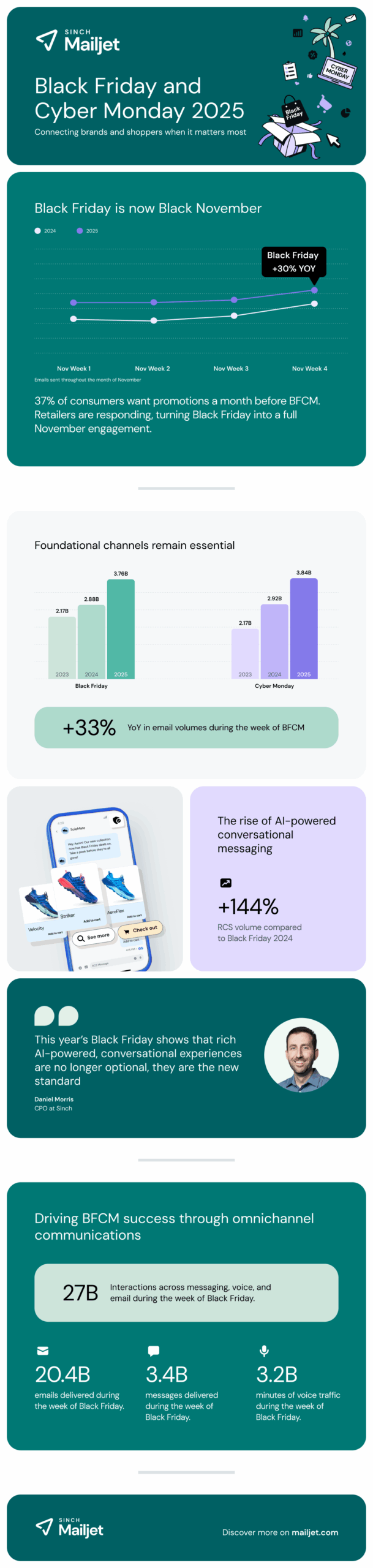
While email remained a foundational pillar of BFCM 2025 strategies, the broader success story was undeniably omnichannel. In today’s interconnected retail landscape, a single-channel approach is increasingly obsolete. Sinch’s 2025 consumer survey highlighted this shift, revealing that nearly 77.9% of customers expected to interact with brands across multiple channels during major shopping events. Brands that embraced this expectation saw significant returns.
Sinch’s communication platforms facilitated an astonishing 27 billion customer interactions across SMS, MMS, RCS, WhatsApp, email, and voice during Black Friday week alone. This staggering figure illustrates the strategic imperative for integrated, multi-channel outreach.
- SMS for Urgency and Alertness: Short Message Service (SMS) proved invaluable for cutting through the digital noise with time-sensitive offers and critical alerts. Sinch delivered 3.4 billion SMS messages globally during the BFCM weekend. Its immediacy and high open rates (often exceeding 90%) made it the go-to channel for flash sales, last-minute promotions, and urgent delivery updates, ensuring consumers received vital information directly on their mobile devices.
- Voice for High-Stakes Support: For complex inquiries, order modifications, or critical customer service issues, the human touch remains irreplaceable. Sinch handled 3.2 billion minutes of voice traffic on Black Friday alone, a clear indication that when stakes are high, consumers overwhelmingly prefer real-time, personalized support. This highlights the crucial role of robust contact center infrastructure and scalable voice solutions during peak periods.
- Emerging Channels: While email, SMS, and voice formed the core, the increasing adoption of channels like WhatsApp and RCS (Rich Communication Services) signals a growing trend towards richer, more interactive mobile messaging experiences. These channels offer opportunities for brands to engage customers with multimedia content, interactive buttons, and more conversational flows, further enriching the omnichannel journey.
"The 2025 holiday season cemented the reality that customer engagement is no longer confined to a single touchpoint," stated Marcella Rossi, Vice President of Product Marketing at Sinch. "Our data shows that successful brands orchestrated a symphony of communication, leveraging each channel’s unique strengths – email for detailed promotions, SMS for immediate alerts, and voice for critical support – to create a seamless, responsive customer experience. This holistic approach is not just a trend; it’s the new standard for peak season performance."
Implications for 2026 and Beyond
The performance and trends observed during BFCM 2025 carry significant implications for the future of digital commerce and marketing:
- The "Cyber Month" is Here to Stay: The extension of Black Friday promotions throughout November is now an established norm. Brands must plan their campaigns with a longer lead time, strategizing a sustained cadence of communication rather than focusing solely on a few intense days. This necessitates sophisticated email automation and campaign management tools.
- Deliverability as a Competitive Advantage: With billions of emails flooding inboxes, ensuring messages actually reach their intended recipients is no longer a technical detail but a strategic differentiator. Brands that invest in robust deliverability practices, clean lists, and reliable sending infrastructure will outperform competitors. The 13% open rate, while positive, still means 87% of emails were not opened, underscoring the continuous need for optimization.
- Omnichannel is Non-Negotiable: Consumer expectations for multi-channel engagement are clear. Brands must move beyond siloed communication strategies to integrated platforms that allow for seamless transitions between email, SMS, voice, and other channels, providing a consistent and personalized customer journey.
- Data-Driven Optimization: The sheer volume of interactions provides a treasure trove of data. Brands that effectively analyze this data—from email open rates and click-throughs to SMS response times and voice call durations—will be better equipped to refine their strategies for future peak seasons, optimizing everything from timing and content to channel mix.
- The Crucial Role of Transactional Messaging: While promotional emails drive sales, the reliability of transactional messages under extreme load is paramount for customer satisfaction and brand trust. A delayed shipping confirmation or order receipt can quickly erode goodwill, even after a successful purchase. Platforms that guarantee high deliverability for these critical messages are essential.
As 2025 draws to a close, the lessons from Black Friday and Cyber Monday resonate strongly throughout the remaining holiday shopping season and into planning for 2026. The success achieved by brands during this period was a direct result of strategic foresight, technological prowess, and a deep understanding of evolving consumer behavior. For email senders, this means partnering with providers who offer not just scalable infrastructure but also expert guidance on deliverability and engagement best practices.
Sinch Mailjet, with its easy-to-use email solution, continues to empower senders to design, send, and track impactful email campaigns that drive both sales and engagement. Whether managing thousands or billions of messages, the platform’s features and expert support are designed to ensure emails consistently reach the inbox, a critical factor for success in an increasingly competitive digital marketplace. The future of holiday retail will undoubtedly be characterized by even greater digital sophistication, making robust, integrated communication strategies more vital than ever before.