AWeber, a prominent provider of email marketing and automation solutions, announced on June 30, 2026, the immediate launch of advanced AI-powered image editing features, now integrated into its AI Signup Form Builder. This development marks a significant stride in democratizing sophisticated visual content creation for digital marketers and small business owners, enabling a single product shot or generic image to be transformed into diverse, contextually relevant, and branded visuals through simple text prompts. The company has also confirmed that these innovative capabilities will soon extend to its AI Landing Page Builder and AI Email Builder, ensuring a comprehensive suite of AI-driven design tools across its core offerings.
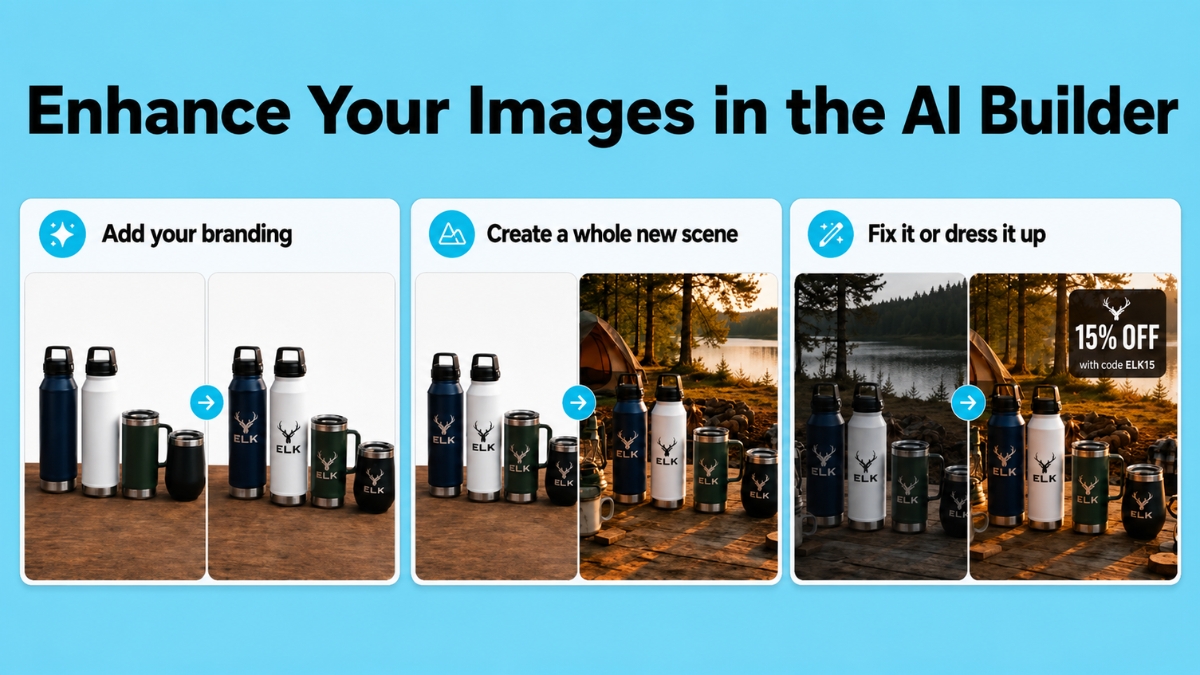
The introduction of these AI image editing tools is poised to fundamentally alter how users approach visual content within their marketing campaigns. No longer constrained by the limitations of original photography or the extensive time and cost associated with professional graphic design, marketers can now generate bespoke visual assets on demand. This includes altering scenes, incorporating brand elements, rectifying photographic imperfections, and seamlessly integrating promotional text overlays—all through intuitive conversational commands. Each modification is saved as a distinct file, preserving the original image within the user’s library, thereby facilitating iterative design and A/B testing without the risk of permanent alteration or the need to restart from scratch.
The Evolution of Visual Content Creation: A Detailed Look at Key Features
The newly launched AI image editing suite offers a range of functionalities designed to address common pain points in digital content creation. These features leverage advanced generative AI models to interpret user prompts and execute complex visual manipulations with remarkable precision and speed.
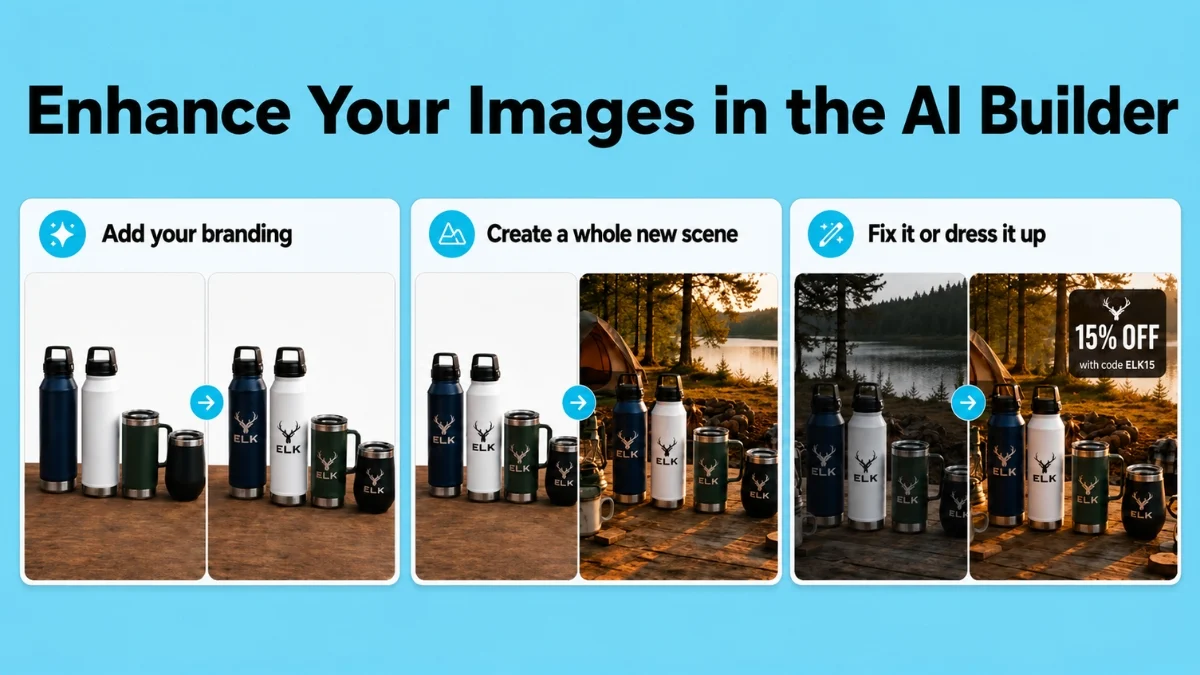
Seamless Branding Integration: A perennial challenge for businesses, especially those relying on stock photography or basic product shots, is the absence of consistent branding. The AI tool directly addresses this by allowing users to describe the desired placement and style of a logo or other brand elements. For instance, a prompt such as "Add our company logo ‘AWeber’ to the top right corner of the product" can instantly brand a generic image, ensuring brand consistency across all marketing materials without requiring manual graphic design work or re-shooting products with branding. This capability is invaluable for maintaining a professional and cohesive brand identity, a critical factor in building trust and recognition in competitive digital landscapes.
Contextual Scene Transformation: One of the most powerful features introduced is the ability to place a product or subject from a plain studio shot into an entirely new, descriptive scene. This moves beyond simple background removal to a full contextual reimagining, allowing marketers to tell a richer story around their offerings. For example, a plain photograph of a coffee mug can be placed "on a rustic wooden table in a sunlit cafe" or "on a minimalist desk setup with a laptop and plants." This feature is particularly impactful for lifestyle marketing, enabling businesses to visually communicate how their products integrate into customers’ lives, evoking aspiration and relevance. The capacity to generate diverse environmental contexts for a single product image significantly reduces the need for multiple, expensive photoshoots tailored to different marketing narratives or seasonal campaigns.
Intelligent Image Correction and Enhancement: The new AI tools also provide solutions for common photographic flaws that often necessitate costly re-shoots or professional photo editing. Users can now describe desired fixes, such as "improve the lighting to be brighter and more even," "remove the cluttered background and replace it with a clean, white backdrop," or "crop the image to focus on the product, removing extraneous elements." This functionality can rectify issues like poor illumination, distracting backgrounds, awkward framing, or even minor imperfections on a product, transforming suboptimal images into high-quality marketing assets. This capability effectively democratizes access to advanced photo retouching, empowering users to achieve polished visuals without specialized software or expertise.
Sophisticated Text Overlays: Beyond simple image manipulation, the AI editor can integrate promotional text overlays that appear as an intrinsic part of the design rather than a superimposed element. Marketers can prompt the AI to "add ‘Limited Time Offer!’ in a stylish, sans-serif font that complements the scene," or "include promo code ‘SAVE20’ subtly integrated into the bottom corner." The AI intelligently styles and positions the text to match the aesthetic of the image, ensuring visual harmony and professional appeal. This feature is particularly useful for calls-to-action, special announcements, discounts, or headlines, enhancing the effectiveness of marketing visuals by making key messages stand out in a visually pleasing manner.
Generating New Images from Scratch: A distinct and equally groundbreaking feature is the ability to generate entirely new images based solely on text prompts, bypassing the need for an initial image input. This "Image Generate" function allows users to conceptualize and create visuals from the ground up. For instance, a prompt like "a whimsical illustration of a small business owner celebrating a successful sale with confetti" could yield a unique graphic. This unleashes unprecedented creative freedom, enabling marketers to produce bespoke illustrations, abstract visuals, or conceptual imagery tailored precisely to their campaign themes, without any prior visual assets. It fundamentally transforms the ideation process for visual content, offering limitless possibilities for unique digital assets.
Background and Strategic Context in the AI Marketing Landscape
AWeber’s strategic pivot towards deeply embedding AI into its platform reflects a broader industry trend where artificial intelligence is increasingly becoming indispensable across various facets of digital marketing. The period leading up to 2026 has witnessed an accelerated adoption of AI-powered tools for content generation, personalization, audience segmentation, and analytics. Companies are striving to offer comprehensive, integrated AI solutions that empower users to streamline workflows and enhance campaign effectiveness without requiring extensive technical knowledge.
This launch is not an isolated event but rather a continuation of AWeber’s commitment to innovation in AI. The company previously introduced its AI Signup Form Builder, which simplifies the creation of conversion-optimized forms, and has announced similar AI integrations for its Landing Page and Email Builders. These successive product enhancements illustrate a clear strategic roadmap: to provide a holistic, AI-driven marketing ecosystem where users can generate, optimize, and deploy content seamlessly across multiple channels. By integrating sophisticated image editing directly into these builders, AWeber is ensuring that visual assets can be created and adapted fluidly within the overall campaign development process, eliminating friction points and enhancing creative agility.
The growing dominance of visual content in digital communication underscores the timeliness and significance of AWeber’s new offering. Statistics consistently demonstrate that visual elements significantly boost engagement rates across email, social media, and landing pages. For instance, emails with images typically see higher click-through rates, and social media posts with compelling visuals generate more shares and interactions. However, creating high-quality, varied visual content at scale has traditionally been a resource-intensive endeavor, often presenting a significant barrier for small and medium-sized businesses (SMBs). AWeber’s AI image editing tools aim to dismantle this barrier, effectively democratizing access to professional-grade visual content creation.
Chronology and Development: A Phased Rollout
The journey to this advanced AI integration has likely involved extensive research and development within AWeber. While specific internal timelines are proprietary, the phased rollout strategy indicates a methodical approach to product deployment and refinement.
Early AI Explorations (Pre-2025): AWeber likely initiated its deeper foray into generative AI and machine learning well before 2025, experimenting with various models and technologies to identify those best suited for marketing applications. Initial efforts might have focused on text generation for email copy or headline suggestions, laying the groundwork for more complex visual AI.
Launch of AI Builders (2025-Early 2026): The introduction of the AI Signup Form Builder, followed by the announcement of AI Landing Page and Email Builders, represented AWeber’s first public-facing integrations of generative AI into its core product line. These builders likely incorporated AI for layout generation, content suggestions, and basic design elements, establishing user familiarity with AI-assisted creation.
Development of Advanced Image AI (Late 2025-Mid 2026): The development of sophisticated image editing capabilities would have required significant investment in integrating and fine-tuning advanced image generation and manipulation AI models. This phase would involve training models on vast datasets, developing intuitive user interfaces for prompt engineering, and ensuring seamless integration with existing AWeber infrastructure. Challenges would include ensuring high-quality output, maintaining brand consistency across edits, and optimizing processing speeds.
Initial Rollout (June 30, 2026): The strategic decision to launch the AI image editing features first within the AI Signup Form Builder allows AWeber to gather real-world user feedback in a controlled environment. Signup forms, being critical conversion points, benefit immensely from visually appealing and branded imagery. This initial deployment provides a testing ground for user interaction, prompt effectiveness, and system performance before broader integration.
Upcoming Integrations (Post-June 2026): The planned expansion to the AI Landing Page Builder and AI Email Builder signifies a commitment to a unified AI experience. This phased approach allows for continuous improvement and ensures that the AI image editing capabilities are robust and optimized across AWeber’s primary content creation platforms, maximizing their utility for a wide range of marketing activities.
Implications and Broader Impact on Digital Marketing
The introduction of AWeber’s AI image editing tools carries significant implications for its user base, the broader digital marketing industry, and the evolution of creative skill sets.
Empowerment for Small Businesses and Marketers: For independent entrepreneurs, small businesses, and marketing teams with limited resources, these tools are transformative. They effectively level the playing field, allowing smaller entities to produce professional-grade visual content that rivals larger corporations with dedicated design departments. This access to high-quality, customized imagery can significantly enhance brand perception, engagement rates, and ultimately, conversion performance. It dramatically reduces the reliance on expensive stock photo subscriptions or outsourcing graphic design tasks.
Enhanced Efficiency and Content Velocity: The ability to generate and modify visual assets rapidly through text prompts drastically cuts down the time traditionally spent on graphic design. Marketers can now iterate on visual concepts almost instantaneously, producing multiple variations for A/B testing or adapting content quickly for different platforms and audiences. This increased content velocity is crucial in today’s fast-paced digital environment, where consistent and fresh visual content is key to maintaining audience interest.
Shift in Creative Skill Sets: While AI automates many aspects of design execution, it elevates the importance of "prompt engineering" and strategic visual communication. Marketers will need to develop skills in articulating their creative vision through precise textual commands, understanding how to guide AI to achieve desired aesthetic and contextual outcomes. The focus shifts from manual manipulation to conceptualization and direction, demanding a blend of creative thinking and technical prompting expertise.
Potential for Hyper-Personalization: Although not explicitly stated as a current feature, the ease of generating diverse visual content opens the door for future advancements in hyper-personalization. Imagine tailoring specific images within an email or landing page to individual user segments based on their demographics, interests, or past behavior, all generated on the fly by AI. This level of personalized visual content could dramatically increase engagement and relevance for target audiences.
Considerations for Responsible AI Use: As with all powerful AI tools, considerations around ethical use, potential biases in generative models, and the need for human oversight remain pertinent. While AWeber’s focus is on enhancing creative output, users must remain mindful of ensuring that AI-generated content aligns with brand values, avoids unintended stereotypes, and maintains authenticity. The ability to iterate and save multiple versions, with the original preserved, helps in this regard by allowing users to refine and select the most appropriate outputs.
Inferred Statements and Industry Reactions
While specific quotes from AWeber leadership or external analysts were not provided in the original article, it is possible to infer the type of statements that would accompany such a significant product launch.
From AWeber Leadership (Hypothetical):
"This launch represents a pivotal moment in our mission to empower every marketer and small business owner," stated a fictional AWeber CEO, Jane Doe. "We believe that cutting-edge visual content should be accessible to everyone, not just those with extensive design budgets or expertise. Our new AI image editing capabilities break down these barriers, enabling our users to bring their creative visions to life with unprecedented speed and ease. This is more than just a tool; it’s a catalyst for innovation in digital marketing, allowing our community to craft compelling stories and connect with their audiences in powerful new ways. We are committed to continuously integrating intelligent solutions that not only streamline workflows but also amplify creative potential across all our platforms."
From Industry Analysts (Hypothetical):
"AWeber’s move to embed advanced AI image editing directly into its marketing builders is a shrewd strategic play," commented a hypothetical industry analyst, Dr. Alex Chen, specializing in marketing technology. "In an increasingly visual-first digital economy, the ability for non-designers to generate and adapt high-quality imagery on demand is a significant competitive differentiator. This not only enhances AWeber’s value proposition but also signals a broader industry shift towards comprehensive, AI-powered marketing platforms that cater to the end-to-end content creation lifecycle. It positions AWeber firmly at the forefront of accessible AI innovation for SMBs."
From the User Community (Hypothetical):
Early adopters and small business owners are expected to express enthusiasm for the practical benefits. "As a small e-commerce business, getting professional product shots for every marketing campaign was always a huge hurdle and expense," remarked Sarah Miller, owner of ‘EcoCraft Goods.’ "AWeber’s new AI image editor changes everything. I can now take one photo of my product and instantly put it into different lifestyle settings, add promotions, and brand it, all in minutes. It’s a game-changer for my productivity and my ability to compete visually."
Conclusion
AWeber’s introduction of advanced AI image editing capabilities marks a significant milestone in the ongoing evolution of digital marketing tools. By empowering users to transform, correct, and generate high-quality visual content through intuitive text prompts, the company is not only enhancing its existing platform but also contributing to the broader democratization of sophisticated design. As these features roll out across the AI Landing Page Builder and AI Email Builder, they are set to provide a comprehensive, AI-driven ecosystem that streamlines content creation, boosts efficiency, and unleashes new levels of creative potential for marketers and businesses of all sizes. This strategic development positions AWeber as a key innovator in leveraging artificial intelligence to redefine the landscape of digital content creation, making compelling visual storytelling more accessible and impactful than ever before.


 Asro
Asro
 Nana
Nana