rifanmuazin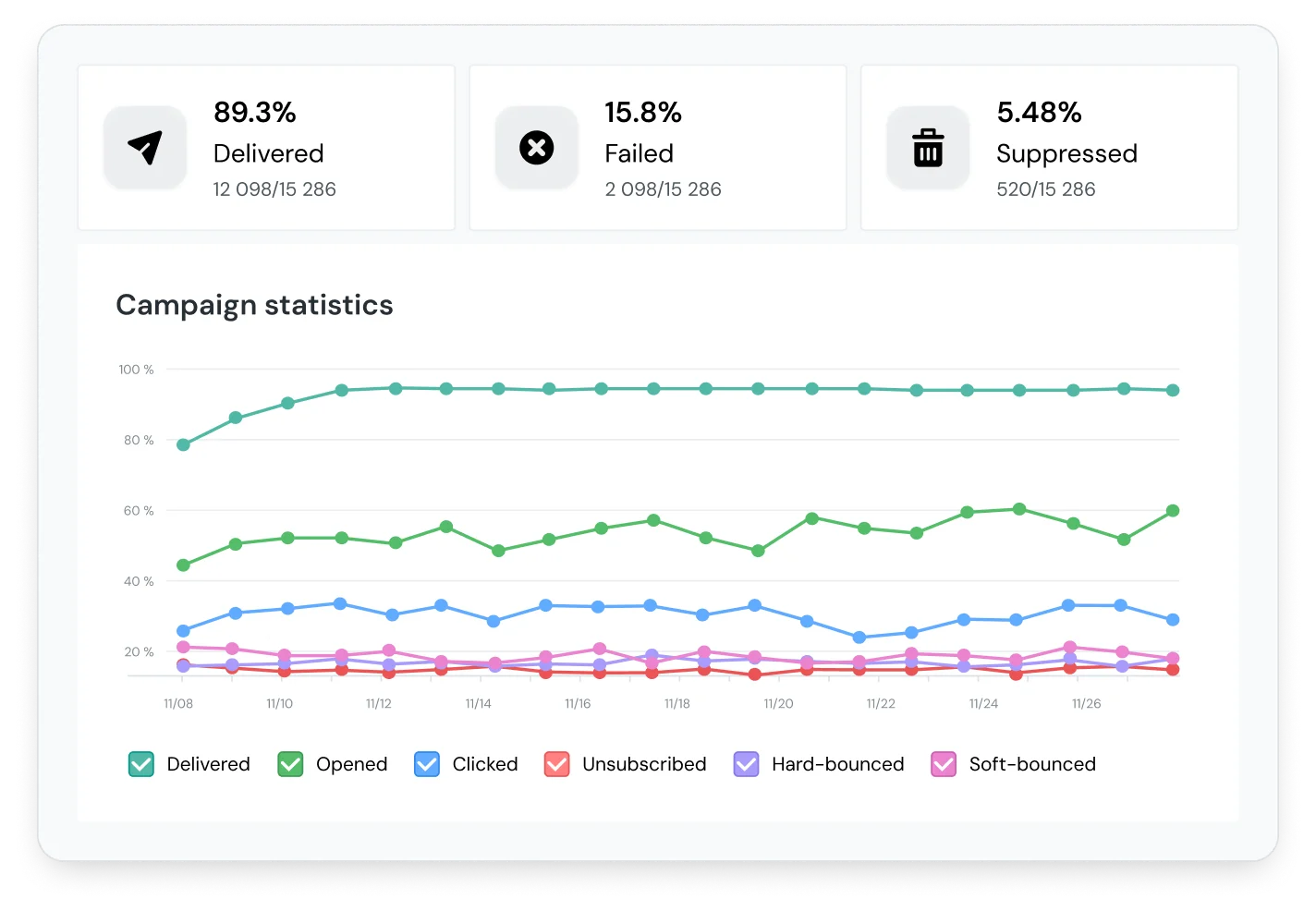
In the dynamic landscape of digital marketing, the precise timing of email newsletter dispatches has emerged as a critical determinant of campaign success, directly influencing open rates, click-through rates (CTR), and overall subscriber engagement. For email marketers globally, the perennial question – "What’s the best time to send my newsletter?" – transcends a simple inquiry, evolving into a complex strategic challenge demanding data-driven insights and a nuanced understanding of audience behavior. This article delves into recent research and expert recommendations to demystify optimal email send times, offering a comprehensive guide to maximizing the impact of email marketing efforts.
The Foundational Challenge: Navigating a Crowded Inbox
The modern email inbox is an increasingly competitive arena, with consumers barraged by a relentless stream of communications from businesses, social networks, and personal contacts. In this saturated environment, visibility is paramount. An email arriving at the top of an inbox during a recipient’s active checking period stands a significantly higher chance of being opened and acted upon compared to one buried under dozens of others. This fundamental principle underscores why send time optimization is not merely a tactical tweak but a strategic imperative. The average user checks their personal mailbox multiple times throughout the day, with studies, such as the Email Engagement Report, indicating that 63.3% of users interact with their personal mailboxes at various intervals. However, mere visibility is insufficient; the capacity to engage and act on an email is equally crucial, making the alignment of send time with recipient availability and receptiveness key to driving meaningful engagement.
Global Insights: Pinpointing Peak Engagement Hours
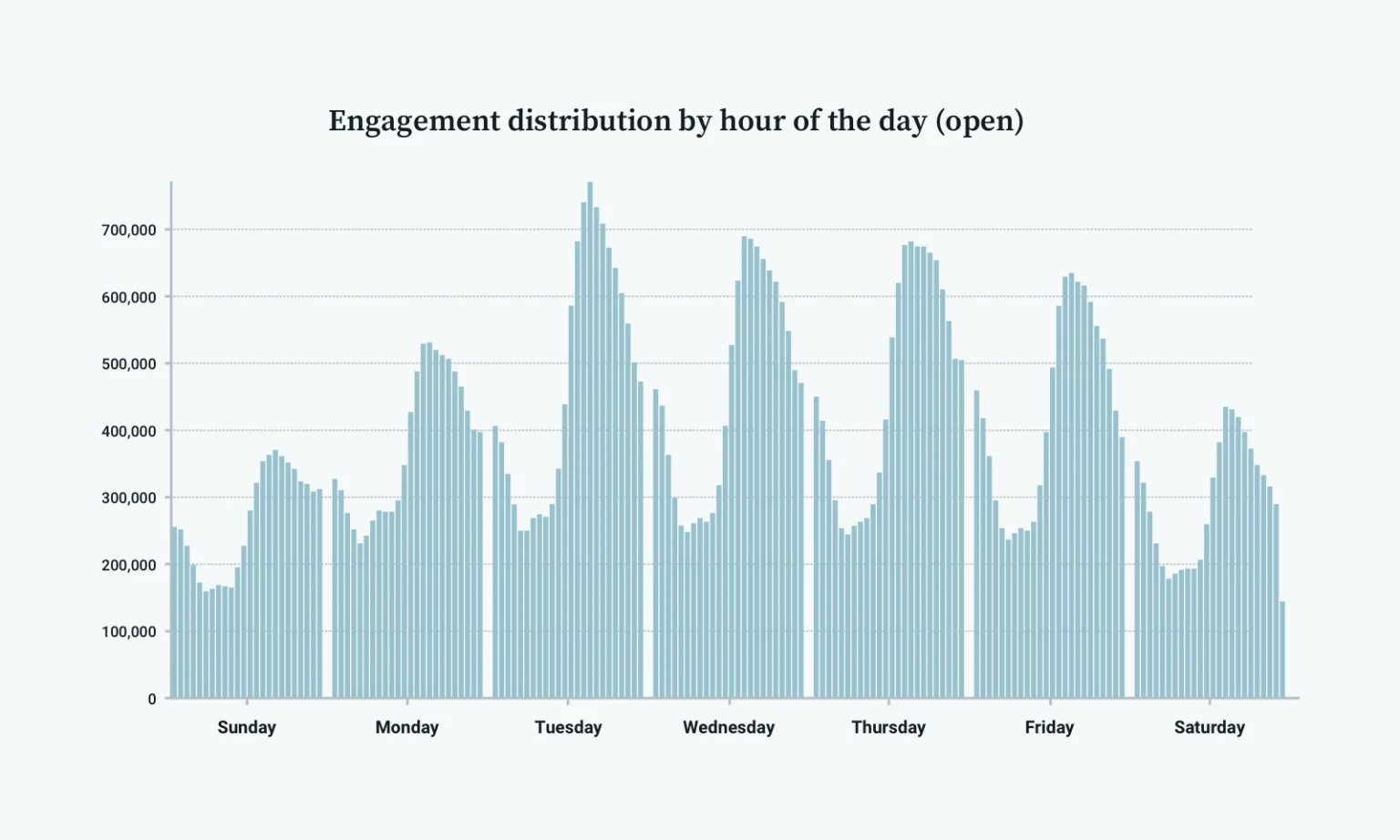
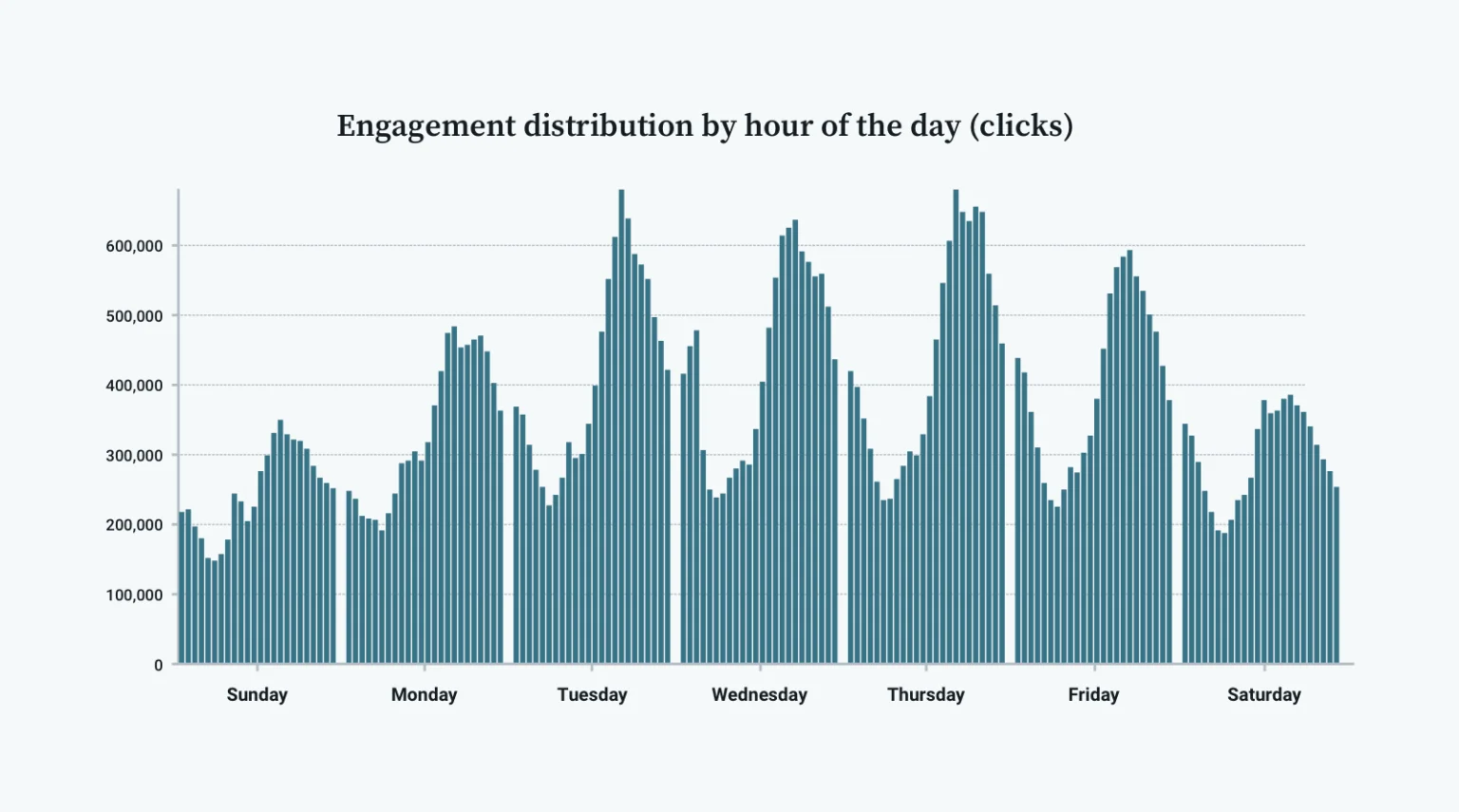
Recent extensive research, notably a study conducted by Sinch Mailgun analyzing billions of emails, provides valuable insights into global email engagement patterns. This research indicates a consistent peak in engagement, measured by click-to-open ratios, around 15:00 UTC. This hour consistently registers the highest volume of opens and clicks. However, it is crucial for marketers to accurately convert this UTC time to their specific target audience’s local time zones. For instance, during summer months, 15:00 UTC translates to 11:00 AM Eastern Standard Time, highlighting the need for precise localization in scheduling. This global data serves as a powerful starting point, suggesting that late morning to early afternoon in many major time zones often correlates with heightened email interaction.
Graph 1: Open rates by hour of the day (Illustrative data based on Mailgun research)
Graph 2: Click rates by hour of the day (Illustrative data based on Mailgun research)
These aggregate findings challenge the simplistic notion that a single "best time" exists, instead emphasizing a window of opportunity that shifts with geography.
Geographic and Cultural Nuances: A Differentiated Approach
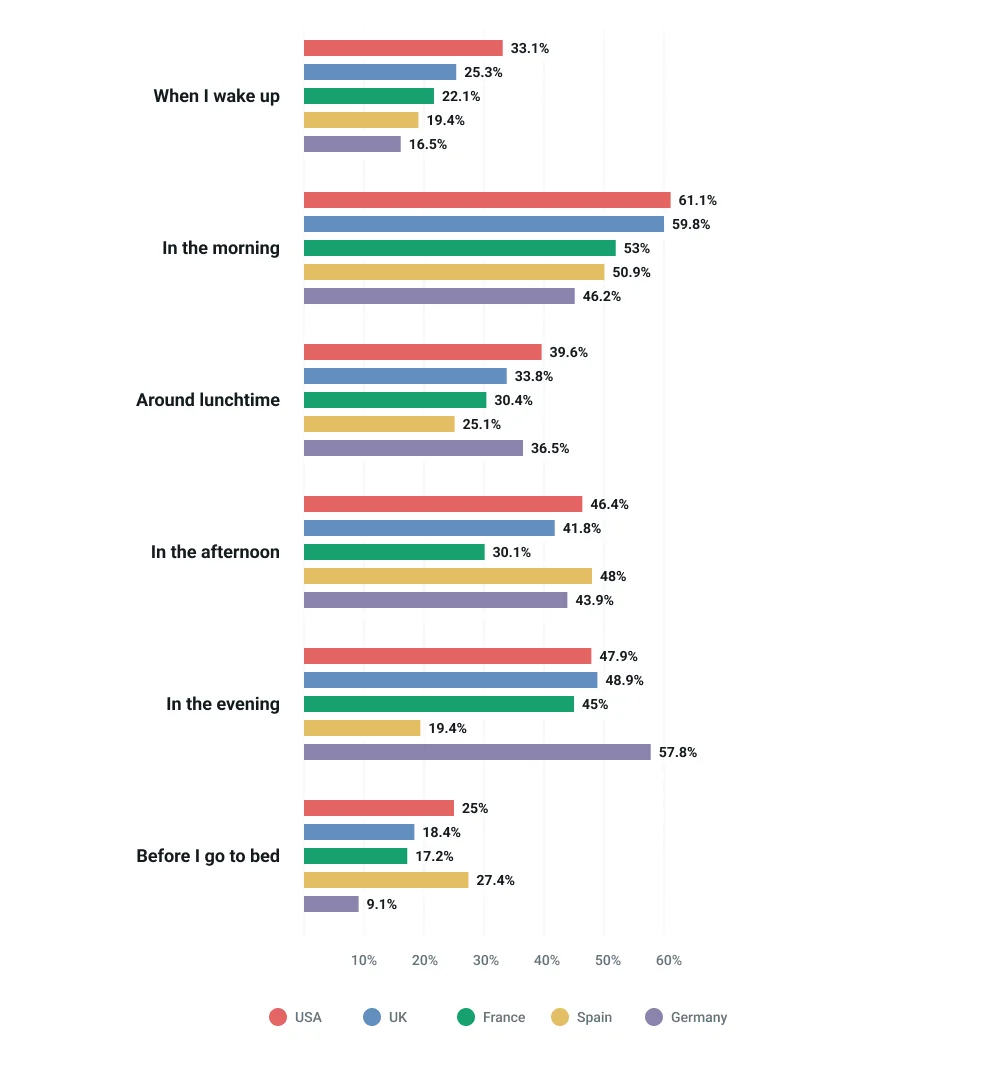
Beyond global averages, email habits exhibit significant variation across different countries and cultures. The same Email Engagement Report highlights fundamental differences in how and when users interact with their inboxes worldwide. For example, marketers targeting German customers might find early evening a prime window, with 57.8% of German recipients opening emails during this period. In stark contrast, only 19.4% of Spanish recipients show similar activity in the early evening. Conversely, a substantial 27.4% of Spanish participants reported checking emails in the late evening, just before bed, a habit far less prevalent among Germans (9.1%).
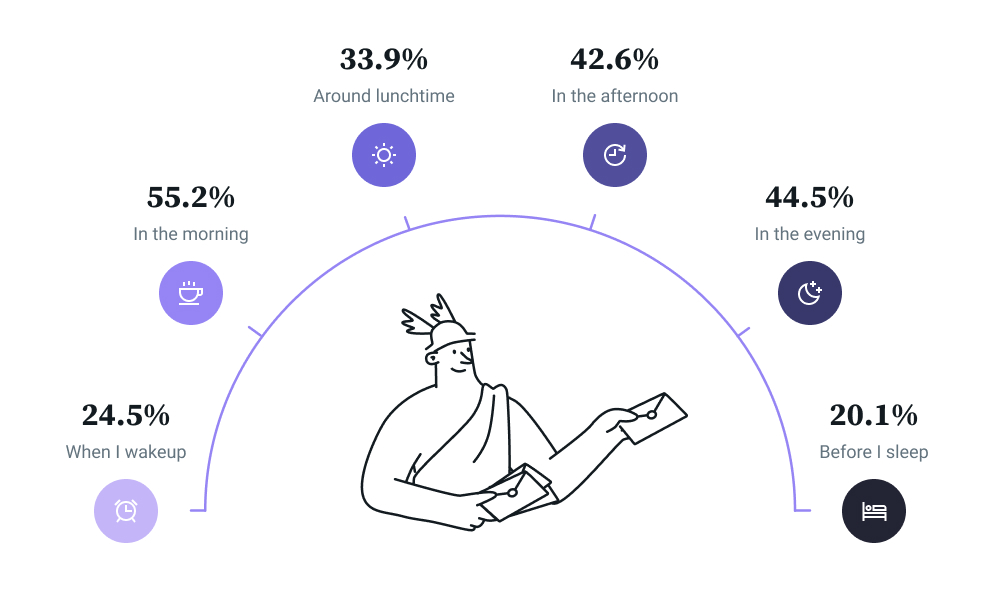
This divergence underscores the critical importance of audience segmentation. A blanket sending strategy risks alienating or missing entire segments of a global audience. Effective email marketing necessitates tailoring send times based on the geographic location and cultural habits of distinct subscriber groups. A multinational campaign, therefore, should ideally involve segmented sending schedules, optimizing for each regional audience rather than adhering to a single, universal timetable. This hyper-localization ensures that messages arrive when recipients are most likely to be attentive and responsive, transforming a generic broadcast into a series of well-timed, relevant interactions.
The Weekly Rhythm: Identifying Optimal Days for Engagement
The day of the week also plays a significant role in email campaign performance. While content and audience remain central, data consistently points to certain days outperforming others in terms of open and click-through rates. Generally, Tuesdays through Thursdays emerge as the strongest days for email engagement. The aforementioned Sinch Mailgun study corroborates this, showing that these midweek days capture the largest share of campaign opens and clicks.
- Tuesdays and Thursdays: These days often exhibit slightly higher engagement rates, suggesting they are prime candidates for high-priority campaigns.
- Wednesdays: A strong second option, making it a reliable choice for consistent communication.
- Strategic Spacing: If sending emails twice weekly, a combination like Tuesday and Thursday is often recommended. Sending on consecutive days, such as Tuesday and Wednesday, or Wednesday and Thursday, risks overwhelming subscribers and potentially leading to email fatigue or unopened messages.
Days to Approach with Caution:
- Weekends (Saturdays and Sundays): Data consistently identifies weekends as the weakest days for email engagement. During these periods, individuals are typically engaged in personal activities, social outings, or errands, making emails a low priority. The primary exception to this rule is content specifically designed for leisure reading or weekend-centric promotions, which might find a niche audience.
- Mondays: Traditionally viewed as a poor day due to recipients sifting through weekend backlogs and planning their week. However, recent research indicates that Friday often outperforms Monday in terms of open and click-through rates, challenging some long-held assumptions. On Mondays, the influx of accumulated emails from the weekend combined with the demands of starting a new work week can lead to lower engagement for marketing messages.
B2B vs. B2C: A Fundamental Distinction in Timing
A critical factor in determining optimal send times is the nature of the business relationship: Business-to-Business (B2B) versus Business-to-Consumer (B2C). The way individuals interact with their professional and personal inboxes is fundamentally different.
- B2B Email Engagement: Professional emails are typically checked during working hours. For B2B campaigns, early to mid-morning (e.g., 9 AM – 11 AM local time) on weekdays, particularly Tuesdays, Wednesdays, and Thursdays, often yields the best results. Professionals are usually settled into their workday, have addressed urgent tasks, and are more receptive to industry news, product updates, or thought leadership content. Sending too early might get lost in the initial morning rush, while sending too late might be pushed to the next day’s backlog.
- B2C Email Engagement: Consumer behavior is more varied. Personal emails might be checked during commutes, lunch breaks, evenings, or even weekends, depending on the individual’s lifestyle and the nature of the content. Retail promotions, entertainment news, or leisure-related content might perform well in the late afternoon or early evening when people unwind, or even during lunch breaks. For B2C, understanding the customer’s daily routine and leisure patterns is paramount.
The Email Engagement Report indicates that a significant percentage of the user base checks personal emails more than once a day, emphasizing the fluid nature of B2C interaction. Marketers must ask: What is the typical workday of my audience? When do they commute? When do they take breaks? What devices do they use? Answering these questions through marketing personas and customer insights is crucial for both B2B and B2C strategies.
The Strategic Imperative: Why Email Sending Time Matters Deeply
Beyond mere vanity metrics, the timing of an email campaign profoundly impacts its strategic objectives. A meticulously crafted email, with compelling copy, an engaging subject line, and clear calls-to-action (CTAs), can fail to achieve its potential if delivered at an inopportune moment. The sheer volume of emails received daily means that messages at the top of the inbox generally garner better engagement.
Optimizing send times contributes to several key marketing outcomes:
- Increased Open Rates: Ensures the message is seen.
- Higher Click-Through Rates (CTR): Drives traffic to landing pages, products, or services.
- Improved Conversion Rates: Converts interest into desired actions (purchases, sign-ups).
- Enhanced Brand Perception: Consistent, timely delivery builds trust and professionalism.
- Reduced Spam Complaints and Unsubscribes: Prevents annoyance from ill-timed or irrelevant messages.
- Better Deliverability: Engagement metrics positively influence sender reputation, leading to higher inbox placement rates.
As an insightful quote from "The Path to Email Engagement" highlights, "86.4% of respondents say having time to read an email is an important factor in determining whether to open it." This statistic powerfully underlines that the recipient’s capacity and willingness to engage are paramount, making timing a direct lever for influencing these factors.
A/B Testing and Continuous Optimization: The Path to Precision
Given the multifaceted variables influencing email engagement – audience demographics, geographic location, industry, content type, and the B2B/B2C distinction – there is no universal "one-size-fits-all" answer. The most effective strategy involves a scientific approach rooted in continuous testing and analysis.
- Leverage Your ESP’s Analytics: Email Service Providers (ESPs) like Mailjet offer robust analytics dashboards that provide invaluable data on past campaign performance. Marketers can delve into hourly and daily breakdowns of open and click rates to identify existing patterns of audience engagement. This historical data is a treasure trove, revealing when your specific audience is most active.
- Implement A/B Testing: A/B testing is indispensable for refining send times. For instance, a marketer could test three different send times for a weekly newsletter over three consecutive weeks (e.g., 10 AM, 1 PM, 9 PM). Alternatively, a single campaign could be split, sending to half the list in the morning and the other half in the afternoon, then comparing the results. This iterative process allows for empirical validation of hypotheses about optimal timing.
- Consistency is Key (with caveats): For regular communications like weekly newsletters, maintaining a consistent sending day and time builds anticipation and trust with the audience. Subscribers learn to expect content at a specific interval. However, flexibility is also crucial. During holidays or special events, deviating from the usual schedule to align with changed audience routines (e.g., sending promotional emails for holiday sales during evening shopping hours) can be highly beneficial. Prioritizing higher open rates over strict adherence to a schedule is often the wiser choice.
- Dynamic Content and Time Zone Optimization: Advanced ESPs offer features like time zone optimization, automatically adjusting send times based on each recipient’s local time zone. This ensures that a global audience receives the email at their respective "optimal" time, maximizing relevance and impact across diverse geographies.
The Broader Implications for Digital Marketing
Optimizing email send times is not an isolated tactic; it integrates seamlessly into a broader digital marketing strategy. By enhancing email engagement, businesses can improve customer lifecycle management, strengthen customer loyalty, and ultimately drive higher return on investment (ROI) from their marketing spend. Increased engagement signals to internet service providers (ISPs) that the content is valued, leading to better sender reputation and improved deliverability rates. This virtuous cycle ensures that future campaigns are more likely to reach the inbox, further boosting performance.
Looking Ahead: The Evolution of Email Timing
As email marketing continues to evolve, advancements in artificial intelligence and machine learning are poised to revolutionize send time optimization. Predictive analytics, driven by AI, can analyze vast datasets of individual subscriber behavior – including past open times, device usage, and content preferences – to predict the absolute best moment to send an email to each unique recipient. This level of personalized timing moves beyond segment-level optimization to hyper-individualized delivery, promising even greater engagement and efficiency. Marketers who embrace these emerging technologies will be at the forefront of maximizing their email channel’s potential.
Conclusion: Data, Dedication, and Dynamic Strategies
In conclusion, while the search for the single "best time" to send an email newsletter remains elusive due to the myriad influencing factors, the journey toward optimal engagement is clearly defined. It requires a commitment to data analysis, an understanding of audience segmentation (geographic, demographic, B2B/B2C), and a willingness to continuously test and refine strategies. Platforms like Mailjet, with features such as Segmentation, A/B Testing, Campaign Comparison, and comprehensive Email Statistics, empower marketers to navigate this complexity. By transforming generic broadcasts into precisely timed, highly relevant communications, businesses can ensure their messages resonate effectively, cut through the digital noise, and forge stronger connections with their audience. The power of email lies not just in what is sent, but critically, in when it arrives.