rifanmuazin
The affiliate marketing landscape experienced a seismic shift in mid-January 2026 as two of the industry’s most prominent networks, Rakuten Advertising and impact.com, took decisive action against PayPal Honey. The browser extension and coupon aggregator, which was acquired by PayPal in 2020 for a record-breaking $4 billion, has been removed or suspended following allegations of noncompliance and "attribution manipulation." This development marks one of the most significant enforcement actions in the history of digital partnerships, highlighting a growing demand for transparency and technical integrity within the "partnership economy."
The removal occurred against the backdrop of Affiliate Summit West, the industry’s premier annual conference, ensuring that the news reverberated through the professional community in real-time. The actions taken by the networks follow a series of high-profile investigations into Honey’s technical practices, specifically regarding how the extension interacts with affiliate cookies and its adherence to "stand-down" protocols designed to protect the commissions of other publishers.
The Catalyst: Investigations into Attribution Manipulation
The recent enforcement actions did not occur in a vacuum. They were preceded by intensive scrutiny from independent investigators and technical experts. Most notably, a detailed video report by the investigative creator MegaLag and a technical breakdown by Ben Edelman, a well-known researcher and consultant specializing in online fraud and affiliate compliance, brought Honey’s practices to the forefront of industry discussion.
The investigations centered on the concept of "attribution manipulation." In the affiliate marketing world, most programs operate on a "last-click" or "last-touch" basis. This means the affiliate responsible for the final click before a purchase receives the full commission. However, to ensure fairness, many programs implement "stand-down" rules for browser extensions. These rules mandate that an extension must not fire its own affiliate link if another affiliate’s cookie is already present in the user’s browser. This prevents extensions from "hijacking" a conversion that was originally driven by a content creator, influencer, or review site.
Edelman’s investigation suggested that Honey had implemented mechanisms to detect when it was being tested for compliance, effectively concealing violations of these stand-down rules. By firing its link even when it should have remained dormant, the extension was allegedly overwriting the cookies of other affiliates, thereby redirecting commissions to itself.
A Chronology of Removal
The timeline of Honey’s removal from major U.S. affiliate networks unfolded rapidly during the second week of January 2026.

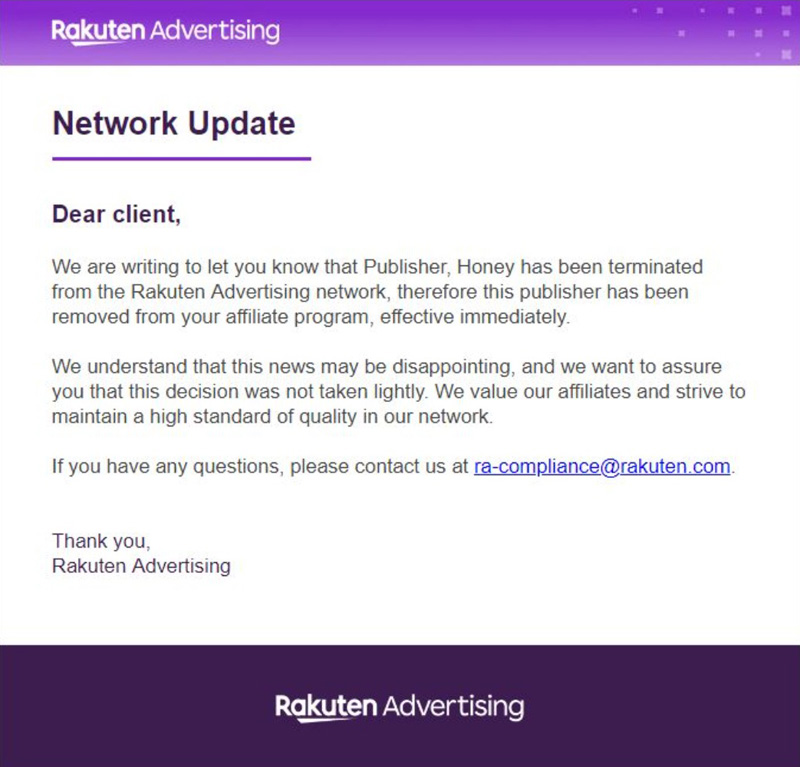
On Monday, January 12, Rakuten Advertising—one of the largest global affiliate networks—announced that Honey had been "terminated from the network." In a statement to its partners, Rakuten framed the move as a necessary step "to maintain a high standard of quality" within its ecosystem. The timing was particularly poignant, as it coincided with the opening day of Affiliate Summit West, leading to immediate and widespread discussion among thousands of marketing professionals in attendance.
By Friday, January 16, impact.com followed suit, though with a slightly different administrative approach. The platform announced that Honey was found to be "out of compliance" with its platform policies and was being "removed" from its Discovery Marketplace. Impact.com’s CEO explicitly cited "attribution manipulation" as the core issue. While impact.com characterized the move as a suspension rather than a permanent termination, the removal from the marketplace effectively severs Honey’s ability to easily partner with new brands on the platform.
Supporting Data and Market Context
To understand the gravity of these removals, one must look at the scale of the entities involved. When PayPal acquired Honey Science Corp in 2020 for $4 billion, it was PayPal’s largest acquisition to date. At the time, Honey claimed more than 17 million monthly active users and partnerships with approximately 30,000 retailers.
The affiliate marketing industry itself has grown into a multi-billion-dollar global powerhouse. According to data from the Performance Marketing Association (PMA), affiliate marketing spending in the United States alone was estimated to exceed $9 billion by the end of 2024, with similar growth trajectories continuing into 2026. For a player as large as Honey to be sidelined by the very networks that facilitate its revenue is a testament to the increasing prioritization of "clean" traffic and ethical attribution.
In the United Kingdom, the Affiliate & Partner Marketing Association (APMA) recently conducted an independent audit of thirty brands across ten networks. The study highlighted the technical complexity of "soft clicks" versus "stand-down rules," revealing that many networks and brands struggle to police these nuances effectively. The removal of Honey suggests that networks are now willing to take aggressive action to protect the integrity of their data, even if it means losing a high-volume publisher.
Official Responses and Industry Implications
While PayPal Honey has not released a comprehensive public rebuttal to the specific technical allegations at the time of this report, the industry response has been characterized by a mix of shock and validation. Many affiliate managers have long suspected that high-volume coupon extensions were cannibalizing sales rather than driving incremental growth.
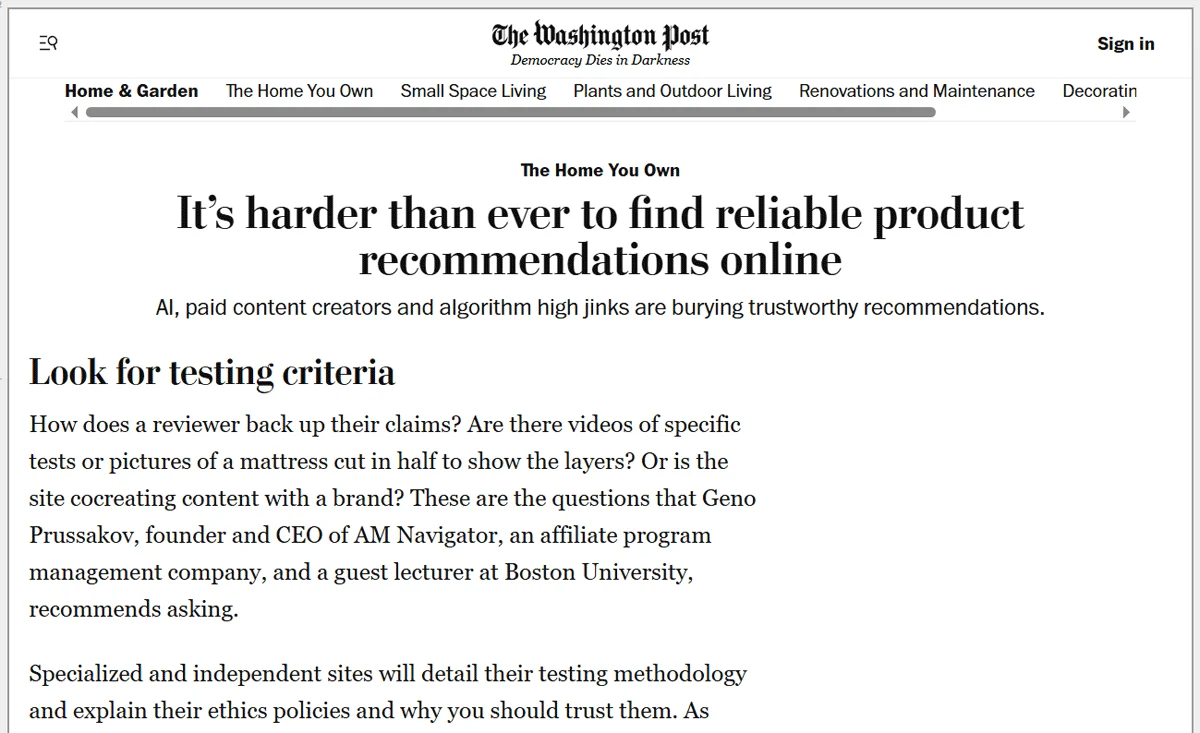
The removal of a "bad apple"—or at least a controversial one—has broader implications for the "good" affiliates in a program. When a high-volume publisher engages in cookie-stuffing or link-hijacking, it discourages high-quality content producers from participating. Influencers and editorial sites, who often spend significant resources on content creation, are less likely to promote a brand if they believe their earned commissions will be "stolen" by a browser extension at the point of checkout.
Network executives have emphasized that these actions are intended to restore trust. The "partnership economy," a term popularized by impact.com, relies on the premise that all parties—merchants, publishers, and networks—act in good faith. When that trust is undermined by automated scripts and concealed code, the entire economic model is at risk.
Strategic Lessons for Affiliate Program Managers
The Honey saga provides several critical lessons for brands and affiliate managers looking to safeguard their marketing budgets in 2026.
1. The Risk of Homogeneous Affiliate Bases
A common pitfall in affiliate management is the "all-eggs-in-one-basket" scenario. Audits frequently reveal that 80% or more of a program’s revenue is driven by a small handful of publishers, often of the same type (e.g., all coupon sites or all extensions). If a program relied heavily on Honey for its performance metrics, these removals would result in a catastrophic drop in reported revenue. Diversification is no longer just a recommendation; it is a survival strategy. Experts suggest recruiting from at least 28 different affiliate categories, including:
- Content producers and mass media
- Social media influencers and podcasters
- Card-linked offer providers
- Charities and affinity groups
- Niche review and ranking sites
2. The Necessity of Independent Policing
While networks provide the infrastructure for affiliate marketing, they are not always the final authority on compliance. As noted by industry veterans, network compliance teams monitor for violations of network rules, which may not always align with the specific Terms and Conditions (Ts & Cs) of an individual brand’s program. Brands must take an active role in monitoring their own clickstream data and enforcing their own stand-down rules. Relying solely on a network to catch sophisticated attribution manipulation is a high-risk approach.
3. Technical Literacy in Management
The Honey case underscores the need for affiliate managers to understand the technical nuances of the tools they use. Distinguishing between a "soft click" (which might not overwrite a cookie) and a "hard click" (which does) is essential for intelligent policing. Managers must be able to audit the behavior of Downloadable Software Publishers (DSPs) to ensure they are providing incremental value rather than merely inserting themselves into the final seconds of a transaction.
Conclusion: A New Era of Accountability
The removal of PayPal Honey from Rakuten Advertising and impact.com marks a turning point for the affiliate marketing industry. It signals that even the largest, most well-funded publishers are not immune to the rules of the ecosystem. As the industry moves further into 2026, the focus is shifting away from raw volume and toward "clean" attribution and incremental growth.
For brands, the message is clear: transparency and compliance are the new currency of the partnership economy. By diversifying affiliate bases and taking a proactive, technically informed approach to program management, companies can build resilient marketing channels that withstand the volatility of network-level enforcement and foster genuine, mutually beneficial partnerships.