
 rifanmuazin
In the contemporary global marketplace, the success of a product is no longer determined solely by its technical specifications or utility. Instead, the primary driver of consumer behavior and profit margins is perceived value—the subjective worth a customer assigns to a product or service relative to its costs and available alternatives. This psychological and economic construct dictates not only the price a consumer is willing to pay but also the long-term viability of a brand in an increasingly competitive environment. While actual value is defined by objective performance and durability, perceived value is shaped by marketing messaging, brand reputation, social proof, and the overall customer experience.
Understanding the Conceptual Framework of Value
Perceived value represents the gap between a customer’s evaluation of the benefits received and the sacrifices made to acquire those benefits. These sacrifices are not limited to monetary costs; they also include time, effort, and emotional energy. In professional marketing terms, "value" is a belief system rather than a set of physical attributes.

A critical distinction must be made between perceived value and actual value. Actual value is the objective reality of the product—its raw materials, engineering, and functional results. Perceived value, however, is a mental construct fueled by signals. For instance, Liquid Death, a canned water brand, offers a product that is chemically identical to most spring waters. Its actual value is hydration. However, its perceived value is significantly higher due to its "punk rock" branding, novelty packaging, and environmental messaging. Consumers are frequently willing to pay a premium of 200% to 300% over standard bottled water because the brand satisfies a psychological need for identity and rebellion, which standard brands do not address.
Furthermore, perceived value must be distinguished from perceived price. Perceived price is the consumer’s subjective sense of whether a product is expensive, fair, or a bargain based on context. A five-dollar bottle of water may be perceived as a "rip-off" in a supermarket but as a "reasonable necessity" at an international airport. This shift occurs because the reference point—what the customer expects to pay in a specific environment—changes, thereby altering the value calculation.
The Evolution of Value Perception: A Brief Chronology
The methodology of driving perceived value has shifted significantly over the last century, reflecting changes in consumer psychology and technology.

- The Utility Era (1900s–1950s): Marketing focused almost exclusively on actual value. Advertisements highlighted durability, specific ingredients, and labor-saving capabilities. Value was perceived through the lens of "more for less."
- The Image Era (1960s–1980s): Led by the "Creative Revolution" on Madison Avenue, brands began associating products with lifestyle and status. The perceived value of a cigarette or a car became tied to the "persona" of the user.
- The Brand Equity Era (1990s–2010s): Corporations began to view the brand itself as a financial asset. Value was driven by consistency, global recognition, and the "Halo Effect," where a customer’s trust in one product (e.g., the iPod) increased the perceived value of another (e.g., the iMac).
- The Experience and Purpose Era (2020s–Present): In the modern digital landscape, perceived value is driven by the user experience (UX), ethical alignment, and community. Consumers now assign value to brands that represent their personal values, such as sustainability or social justice.
Empirical Data and the Economic Impact of Perception
The impact of perceived value on a company’s bottom line is supported by extensive market research. According to data from the Qualtrics XM Institute (2025), approximately 72% of consumers are willing to pay a premium for a superior experience, even if the core product remains the same as lower-priced competitors. Conversely, research from PwC (2025) indicates that 29% of consumers will abandon a brand after a single negative experience, regardless of the product’s actual quality.
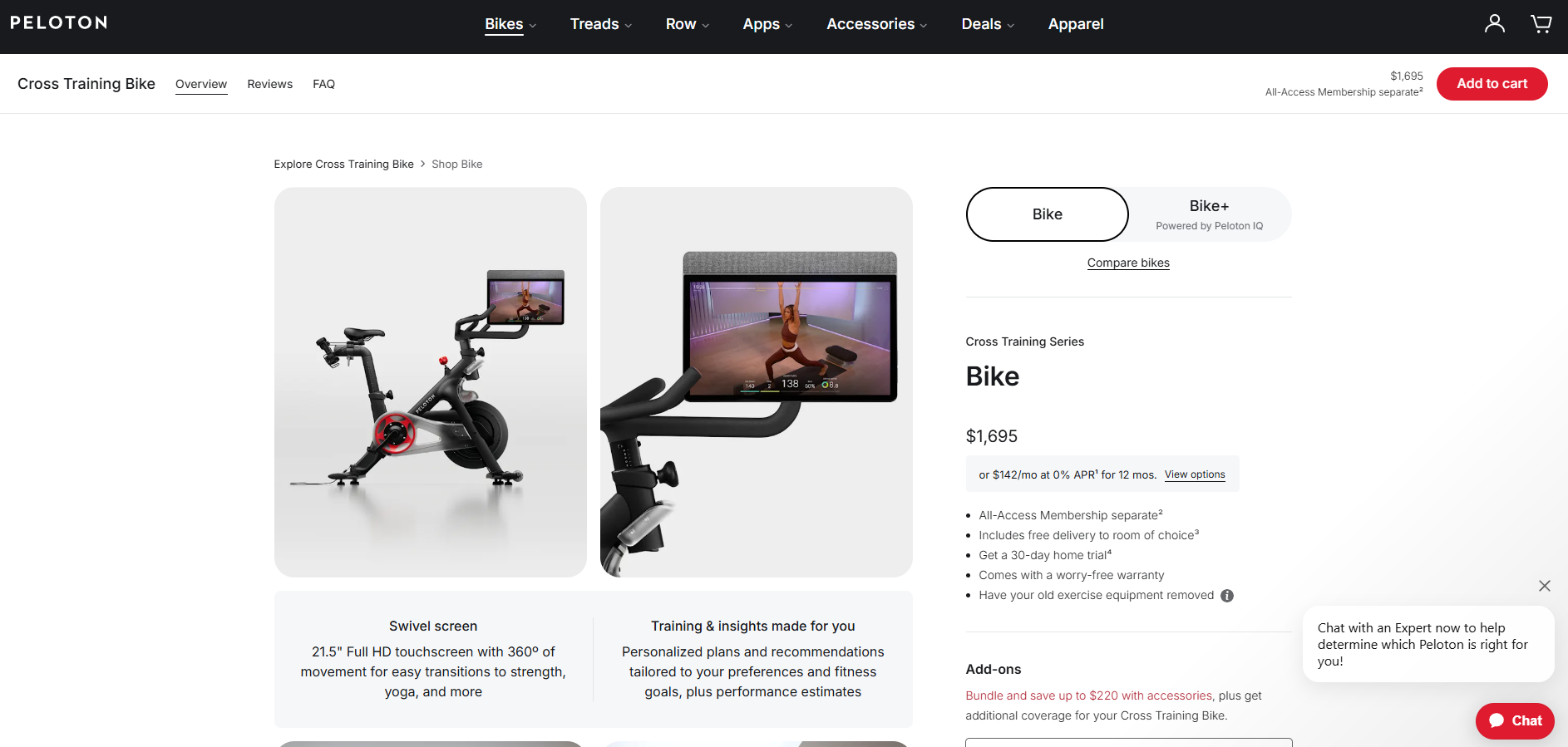
In the luxury and high-end tech sectors, the disparity between actual and perceived value is even more pronounced. A standard exercise bike might retail for $200 on mass-market platforms like Amazon. However, Peloton bikes, which offer a similar mechanical function, are priced between $1,695 and $2,695. The added value is perceived through the digital community, the prestige of the instructors, and the status associated with the brand. This allows the company to command a price point nearly ten times higher than the industry floor.
Methodologies for Measuring Consumer Perception
Because perceived value is subjective, businesses must employ a mix of qualitative and quantitative tools to measure it accurately.
The Van Westendorp Price Sensitivity Meter
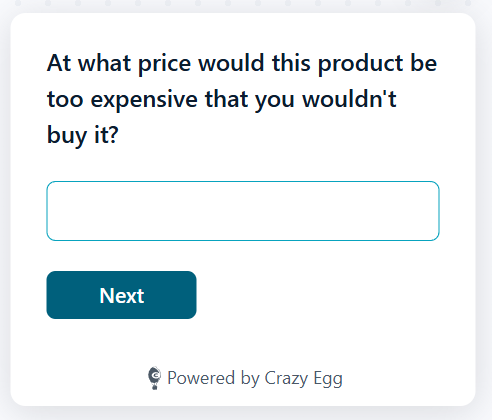
This is a cornerstone of pricing research. It utilizes four key questions to identify the "Optimal Price Point" and the "Range of Acceptable Prices":
- At what price is the product so expensive you would not consider buying it?
- At what price is the product so low that you would doubt its quality?
- At what price is the product starting to get expensive?
- At what price is the product a bargain?
Behavioral Analytics and Digital Tracking
Modern firms use tools like heatmaps and scroll maps to observe how users interact with pricing pages. If a user spends a significant amount of time hovering over a "Premium" tier but ultimately selects a "Basic" tier, it suggests a "value gap"—the perceived benefits of the premium tier do not yet outweigh the perceived cost.
Sentiment Analysis
Mining customer reviews on platforms like G2, Capterra, or Reddit provides raw, unfiltered data on how the market evaluates a product against its competitors. Analysts look for "value-based" keywords, such as "worth every penny" versus "overpriced for what it does."
Strategic Levers to Enhance Perceived Value
To raise the "ceiling" of what customers are willing to pay, organizations can pull several strategic levers.
1. Optimization of Pricing Architecture
Price itself is a signal of quality. A product priced too low can trigger suspicion regarding its efficacy or origin. Strategic pricing involves "Charm Pricing" (ending in .99) to lower the perceived cost or "Prestige Pricing" to signal exclusivity. By offering a "decoy" option—a very expensive tier that makes the middle-tier look like a bargain—companies can manipulate the perceived value of their primary offering.
2. The Halo Effect and Brand Authority
Building a strong brand allows a company to transfer the perceived value of its reputation to new products. Patagonia, for example, has built such immense value around its mission to "save the home planet" that its customers perceive its apparel as more valuable than functionally similar items from generic retailers. The brand’s ethical stance reduces the "social risk" for the consumer, making the purchase feel like an investment in a cause.

3. Mitigation of Perceived Risk
Psychological research, including studies by Yu Wang et al. (2019) and Xianfeng Hu et al. (2023), confirms that perceived risk is the greatest enemy of perceived value. When a customer fears a product might fail, their perception of its value plummets. Brands can counter this by offering robust guarantees, such as "30-day money-back trials," or by showcasing extensive social proof through case studies and third-party certifications.
4. Aesthetic and Industrial Design
The visual presentation of a product often serves as a proxy for its internal quality. This is why brands like Moleskine can charge $30 for a notebook that contains the same paper as a $5 alternative. The weight of the paper, the texture of the cover, and the elegance of the typography communicate a level of "craft" that elevates the product’s perceived worth.
Broader Implications for the Global Economy
The shift toward perception-based valuation has profound implications for global trade and competition. In an era of "commoditization," where manufacturing capabilities are widely distributed and specs are easily mimicked, the only way to maintain healthy profit margins is through the cultivation of perceived value.

Industry analysts suggest that as artificial intelligence and automation continue to lower the cost of "actual value" (production and logistics), the competitive battlefield will shift entirely to the "perception" layer. Companies that fail to invest in branding, user experience, and social proof will find themselves trapped in a "race to the bottom," competing solely on price. Meanwhile, companies that master the art of perceived value will be able to sustain high margins and customer loyalty even in inflationary environments.
In conclusion, while the actual value of a product provides the functional floor, the perceived value provides the financial ceiling. A product must work to survive, but it must be perceived as exceptional to thrive. As market outcomes increasingly depend on the "believed" utility rather than the "objective" utility, the mastery of consumer perception remains the most critical skill for the modern enterprise.








