rifanmuazin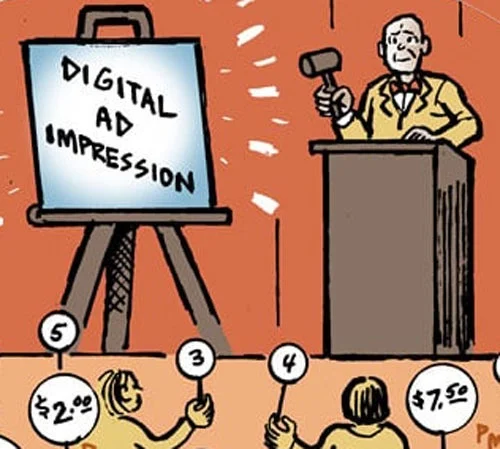
The digital advertising ecosystem, a complex web of automated transactions, has long been criticized for its inherent opacity. Advertisers and publishers alike have struggled to gain a clear understanding of how their ad dollars are spent and how their inventory is monetized, often due to proprietary auction mechanics employed by individual platforms. To address this pervasive lack of transparency, the Media Rating Council (MRC) has unveiled a new set of standards for digital ad auction transparency, coupled with a voluntary certification program designed to encourage platforms to adopt these guidelines.
This initiative aims to shed light on the "black boxes" of programmatic advertising, where the intricacies of bid requests, auction dynamics, and win probabilities can remain obscure. The MRC’s objective is not to impose a monolithic auction system or a singular algorithm across the industry. Instead, as Ron Pinelli, the MRC’s SVP of Digital Research and Standards, explained to AdExchanger, the goal is to establish a consistent framework that enables platforms to articulate their auction processes. This framework will push platforms to disclose their "key decision variables" that influence auction outcomes, as well as any modifications to their auction rules.
While the standards are designed to foster greater understanding, platforms seeking the MRC’s new transparency seal of approval will need to adhere to certain auction best practices. This includes the adoption of specifications like OpenRTB (Open Real-Time Bidding), some of which the industry has been slow to embrace due to technical complexities or competitive considerations.
The Imperative of Fair Play and Rule Disclosure
At the core of the MRC’s new standards is the principle that fair play in any auction environment necessitates a clear understanding of the rules governing it. To qualify for certification, platforms are now required to disclose a comprehensive list of auction parameters. This includes specifying whether they operate first-price, second-price, or modified second-price auctions. Crucially, they must also reveal whether factors beyond the bid price, such as demand source priority or seller-defined rules, play a role in determining the winning bid.
For publishers and Supply-Side Platforms (SSPs), the standards mandate transparency regarding the use of reserve prices or pricing floors. Furthermore, these pricing floors must be applied uniformly to all buyers, rather than being subject to differential treatment based on specific buyer relationships. This move is intended to level the playing field and prevent potential biases in inventory pricing.
The genesis of these standards can be traced back to a collaborative effort spearheaded by Omnicom Media Group, a major agency holding company, in conjunction with the MRC. In early 2024, a steering committee was formed to guide the development of these crucial guidelines. This committee garnered significant support from a broad spectrum of industry stakeholders, encompassing nearly 70 companies and organizations. The roster of participants reads like a who’s who of the digital advertising world, including major technology platforms like Meta, TikTok, and X, prominent publishers such as Hearst, leading ad tech vendors like The Trade Desk, and influential industry trade organizations including the 4A’s (American Association of Advertising Agencies), ANA (Association of National Advertisers), WFA (World Federation of Advertisers), and the IAB Tech Lab.
Ben Hovaness, Chief Media Officer at Omnicom-owned OMD Worldwide, emerged as a driving force behind this initiative. His deep-seated fascination with the theoretical underpinnings of programmatic ad auctions, coupled with a surprising observation of the industry’s lack of standardized disclosure practices, fueled his commitment. Hovaness has been actively involved in educating internal teams on auction mechanics since 2014 and has meticulously collected official auction rule disclosures from major platforms like Google, Meta, and Amazon for Omnicom’s Council on Accountability and Standards in Advertising. In 2023, he brought this project to the MRC with the explicit aim of establishing the industry’s inaugural comprehensive standard for auction rule and change disclosures.
"It always seemed unreasonable to ask advertisers or agencies to place a bid in an auction where the rules are unknown," Hovaness stated. He further elaborated that such a lack of transparency not only erodes trust between advertisers and sellers but also "degrades the advertiser-agency relationship." Hovaness drew a stark contrast with traditional auction environments, where transparency is paramount. "If you go to Sotheby’s or Christie’s, you get a term sheet at the door that says exactly how the auction works, how much the auction house is taking – all the associated fees and rules," he remarked. "That is how you run a good auction with high integrity." The expectation is that greater transparency in auction rules will empower both buyers and sellers to meticulously scrutinize each other’s practices, thereby enhancing accountability across the entire advertising supply chain, from publishers and advertisers to brands and their agency partners.
Beyond fostering accountability, Ron Pinelli of the MRC believes that clearer disclosure of auction logic will enable both buyers and sellers to refine their pricing and bidding strategies, leading to more efficient and effective campaign execution.
Adherence to Industry Specifications: A Cornerstone of Transparency
The MRC standards, while allowing for proprietary auction logic, insist on the disclosure of such elements. However, a set of fundamental requirements must be met by all platforms seeking certification. Hovaness characterized these as the essential baseline for eliminating inconsistent, and in some instances, "deliberately deceptive," practices within ad auctions.
According to Pinelli, these mandated requirements are also poised to encourage the broader adoption of updated OpenRTB specifications, championed by the IAB Tech Lab. Some of these specifications have faced resistance or protracted debate within the industry.
A prime example of this is the requirement for platforms to exclusively utilize the new video.plcmt field for labeling and decision-making in online video ad placements. The IAB Tech Lab introduced video.plcmt to the OpenRTB specification in 2023. Its primary objective was to establish a clearer distinction between "instream" video ads, which play within video content, and "outstream" video ads, which appear in non-video contexts. Despite this advancement, a significant portion of Demand-Side Platforms (DSPs) and SSPs continue to rely on the older, now-deprecated video.placement spec, or even employ both the new and old specifications simultaneously. The MRC’s new standards aim to drive universal adoption of the more current and precise video.plcmt field.
Navigating Compromises on Transaction IDs and Global Placement IDs
In a similar vein, the MRC standards now mandate the universal adoption of Transaction IDs (TIDs), aligning with the IAB Tech Lab’s OpenRTB specification. TIDs play a critical role in preventing duplicate auction activity and ensuring that each bid request is uniquely identifiable.
The issue of TIDs was a focal point of a public dispute last year between Prebid.org and The Trade Desk. Prebid initially disabled TIDs by default in an August update, citing concerns about potential inefficiencies. While Prebid later relented, allowing publishers to revert to universal TIDs, they maintained the default setting of disabling them. Notably, Prebid.org is absent from the list of contributors to the MRC’s new transparency standards, and the organization declined to comment on its nonparticipation.
However, Pinelli assured that the MRC’s approach is not skewed towards buy-side interests. The new transparency standards also stipulate that DSPs must submit multiple bids per auction. This provision offers publishers enhanced visibility into the bidding competition without necessitating duplicate bid requests or obscuring TIDs, which could otherwise facilitate bid duplication.
This multi-bidding provision also serves as a compromise to encourage publishers and SSPs to include a Global Placement ID (GPID) in every bid request. A GPID is a unique identifier assigned to each specific ad placement, providing a granular level of tracking and management.
Catalyzing Industry Adoption: Challenges and Aspirations
Despite the MRC’s concerted effort to foster broad industry involvement, Prebid is not the only significant entity missing from the list of direct contributors. Google and Amazon, both dominant players in the ad-buying landscape and also significant sellers of publisher inventory, have historically faced scrutiny regarding their auction transparency. Neither company provided comment in time for publication regarding their non-participation.
Ron Pinelli acknowledged this reality, stating that the MRC "can’t compel any organization to [participate]." He added, however, that "many organizations did not participate directly, but commented during the public comment period." The voluntary nature of the certification process means that adoption will hinge on the perceived value and benefits derived by individual platforms and stakeholders. Importantly, platforms will undergo annual reevaluations to ensure ongoing compliance with the established standards. The transparency accreditation is also entirely distinct from other existing MRC accreditations.
Looking ahead, the MRC’s transparency steering team is actively developing solutions tailored for mid- and long-tail publishers who may lack the resources to navigate the formal MRC accreditation process. Concurrently, the group is engaged in the development of new standards focused on incrementality measurement, another critical area for advertisers seeking to understand the true impact of their ad spend.
Inspiring industry-wide adoption of these new standards, a perennial challenge in the dynamic digital advertising space, will require a concerted push. Hovaness urged advertisers, particularly larger brands, to proactively engage with their contacts at major sell-side platforms. "If there’s enough advertiser interest," he asserted, "then this is going to move ahead." The hope is that a clear signal of demand from advertisers, who ultimately fund the ecosystem, will incentivize platforms to embrace these new transparency measures, fostering a more equitable and understandable programmatic advertising environment. The long-term success of these standards will be measured by their ability to foster greater trust, accountability, and ultimately, more effective advertising outcomes for all participants.