
 rifanmuazin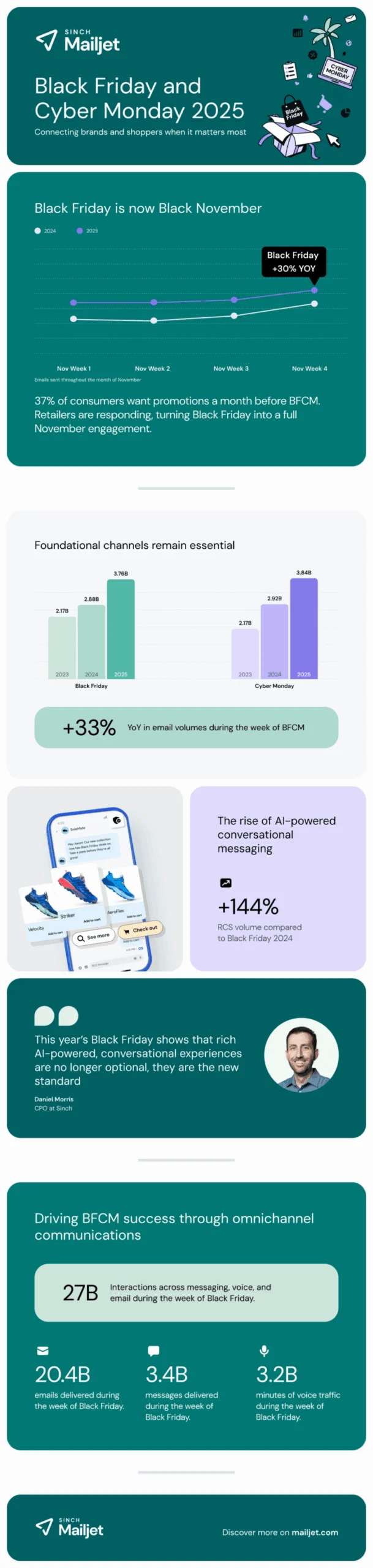
December 9, 2025 — The pivotal Black Friday and Cyber Monday (BFCM) period in November 2025 has once again proven to be the ultimate stress test for digital communication strategies, particularly for email marketers. With Adobe Analytics reporting an unprecedented $137.4 billion in revenue generated during November 2025—marking a robust 7.2% year-over-year increase—the stakes for brands to effectively reach consumers were higher than ever. This record-breaking surge in digital commerce underscored the critical importance of reliable deliverability across all communication channels, especially email, which remains the cornerstone of both promotional outreach and essential transactional updates.
The success of the BFCM period for brands was not solely measured by the volume of promotional messages sent, but rather by the seamless and instant delivery of critical transactional communications. In an era where consumers depend heavily on timely updates for order confirmations, shipping alerts, and delivery notifications, the ability of brands to consistently deliver these messages instantly directly impacts customer satisfaction and loyalty. An in-depth analysis of billions of emails sent through leading communication platforms, Sinch Mailgun and Sinch Mailjet, during this make-or-break period reveals a compelling narrative about consumer preferences, brand strategies, and the evolving landscape of holiday shopping.
The Evolving Landscape of Holiday Shopping: From Days to a Month-Long Marathon
The traditional concept of Black Friday and Cyber Monday as discrete, single-day shopping events has definitively faded into history. Consumers in 2025 demonstrated a clear expectation for deals to commence much earlier, transforming the traditional weekend sprint into an extended, month-long engagement marathon. A comprehensive 2025 pre-holiday survey conducted by Sinch, encompassing 3,180 consumers, confirmed this trend, with a significant 45.9% of respondents expressing a desire for promotions to begin at least a full month before Black Friday itself. This shift necessitated a fundamental adaptation in brand communication strategies, moving from concentrated bursts to sustained, multi-channel outreach throughout November.
The data unequivocally supports this strategic evolution. November 2025 witnessed a remarkable 32% year-over-year surge in overall email volume, with the most pronounced growth observed in the week before Cyber Week. This early acceleration indicates brands were proactively launching early-bird deals and teaser campaigns to capture consumer attention ahead of the peak rush, aligning their strategies with evolving shopper behaviors. This sustained campaign approach culminated in a staggering 27 billion customer interactions across all digital channels during Black Friday week alone, underscoring the intensity and breadth of brand engagement required to succeed in the modern holiday shopping landscape.
Email’s Unrivaled Dominance: More Than Just Promotions
Despite the proliferation of digital communication channels, email continues to reign supreme as the preferred method for holiday shopping engagement. The 2025 Sinch survey highlighted that over half of consumers (56.5%) still prefer email for receiving Black Friday and Cyber Monday promotions. This preference intensified for critical transactional updates, with an overwhelming 73.9% of consumers relying on email for essential information such as order confirmations and shipping details. This dual role—as both a primary promotional tool and an indispensable transactional channel—cements email’s strategic importance in the e-commerce ecosystem.

Brands, keenly aware of these consumer preferences, scaled their email operations to unprecedented levels. An analysis of sending data from Sinch Mailgun and Sinch Mailjet revealed a steady climb in email volume throughout November, peaking dramatically during Cyber Week. During this crucial period, Sinch’s email platform alone delivered an astounding 20.4 billion emails, reflecting the immense ramp-up of promotional campaigns leading into the main sales events. Black Friday specifically saw a 30% year-over-year increase in email volumes, showcasing a clear alignment between consumer expectations and business strategy, firmly placing email at the heart of the holiday shopping experience.
A significant concern for marketers amidst this deluge of messages is whether their emails actually cut through the noise. The data from BFCM 2025 provided a reassuring answer: engagement levels remained robust. Even at its peak, average open rates held steady at 13% (excluding bot activity), demonstrating that consumers were not experiencing email fatigue but were actively hunting for deals. This finding underscores that a well-targeted, relevant campaign, executed with precision, can still achieve significant visibility and engagement, even in a hyper-competitive environment.
However, achieving such engagement demands more than just compelling offers; it requires flawless execution rooted in stringent email deliverability best practices. During this hyper-competitive period, ensuring messages land in the inbox, rather than spam folders, is non-negotiable. This data highlights a critical reality for brands: to succeed during peak season, an email infrastructure capable of scaling under immense pressure without compromising on world-class delivery rates is absolutely essential. Any failure in deliverability translates directly to lost sales, frustrated customers, and reputational damage.
Beyond the Inbox: The Omnichannel Imperative
In today’s complex retail environment, relying on a single communication channel is increasingly a losing proposition. The 2025 consumer survey by Sinch vividly illustrated this, revealing that nearly 77.9% of customers expect to hear from brands across multiple channels during major shopping events. This expectation underscores the need for an integrated, omnichannel strategy that provides a cohesive and seamless customer experience, regardless of the touchpoint.
Brands demonstrated a clear understanding of this imperative during BFCM 2025. Sinch, a global leader in cloud communications, powered an incredible 27 billion interactions across a diverse range of channels including SMS, MMS, RCS, WhatsApp, email, and voice. This massive volume of multi-channel engagement proves that a truly integrated omnichannel approach has become the new standard for effective holiday communication. Each channel played a distinct yet complementary role in the overall strategy:
- SMS: Proved essential for cutting through the noise with time-sensitive offers and urgent alerts. Sinch delivered 3.4 billion SMS messages globally during the BFCM weekend, solidifying its role as the go-to channel for last-minute deals and high-priority notifications due to its high open rates and immediate impact.
- Voice: When the stakes were highest, especially for complex inquiries or sensitive issues, customers overwhelmingly turned to the phone for real-time support. This was evidenced on Black Friday alone, where Sinch handled a staggering 3.2 billion minutes of voice traffic. This figure underscores the vital role of voice for urgent customer care, service escalation, and personalized assistance when it matters most, providing a human touchpoint that other channels cannot replicate.
The seamless orchestration of these diverse channels allowed brands to tailor their communications, delivering the right message, through the right channel, at the right time. This strategic integration not only enhanced customer experience but also maximized the reach and effectiveness of holiday campaigns.
The Deliverability Challenge: Navigating the Digital Flood
The sheer volume of digital communications during BFCM 2025 presented unprecedented challenges for deliverability. With billions of emails, SMS messages, and other interactions flowing through digital pipes, the infrastructure supporting these communications was pushed to its limits. Email deliverability, in particular, becomes a critical differentiator during such peak periods. It’s not enough to simply send emails; they must consistently reach the intended recipient’s primary inbox.
The technical complexities involved are substantial. Internet Service Providers (ISPs) and email clients employ sophisticated algorithms and filters to protect users from spam and unwanted solicitations. During high-volume events like BFCM, these filters become even more vigilant. Factors such as sender reputation, IP address history, content quality, authentication protocols (SPF, DKIM, DMARC), and user engagement all play a crucial role. A single misstep, such as a sudden spike in bounce rates or an increase in spam complaints, can severely impact a sender’s reputation, leading to blocklisting or emails being routed to spam folders.
For brands, the implications of poor deliverability are severe. Lost opportunities for sales due to promotional emails not reaching the inbox are immediate. More critically, delayed or undelivered transactional emails—like order confirmations or shipping updates—can lead to significant customer dissatisfaction, increased customer support inquiries, and potential brand erosion. In a competitive market, customer experience is paramount, and reliable communication is a cornerstone of that experience.
The holding steady of average open rates at 13% during the peak, despite the massive volume, suggests that successful brands were adhering to best practices, maintaining healthy sender reputations, and sending highly relevant content. This achievement is a testament to sophisticated email programs that prioritize audience segmentation, personalization, and consistent monitoring of deliverability metrics. Furthermore, the role of AI and machine learning in optimizing sending patterns and predicting potential deliverability issues is becoming increasingly vital for large-scale senders.
Strategic Implications for 2026 and Beyond
As 2025 draws to a close, the insights gleaned from BFCM 2025 offer invaluable lessons for the holiday seasons to come. The record-breaking revenue figures and the scale of digital interactions underscore several key strategic imperatives for brands aiming for success in 2026 and beyond:
- Early and Sustained Engagement: The "Black Frid… November" phenomenon is here to stay. Brands must plan for extended promotional periods, initiating campaigns well in advance of Cyber Week to capture early shoppers and maintain engagement throughout the month.
- Robust, Scalable Infrastructure: The sheer volume of emails and messages necessitates communication platforms that can handle massive sending peaks without compromising deliverability or speed. Investing in world-class infrastructure and expert guidance is not a luxury but a necessity.
- Omnichannel Orchestration: A truly integrated, multi-channel approach is no longer optional. Brands must leverage email for broad reach and detailed content, SMS for urgent alerts, and voice for critical customer support, ensuring seamless transitions and consistent messaging across all touchpoints.
- Data-Driven Personalization: To cut through the digital noise and maintain high engagement rates, personalization is key. Utilizing consumer data to segment audiences, tailor offers, and send relevant communications will be crucial for maximizing impact and avoiding email fatigue.
- Deliverability as a Core Competency: Email deliverability cannot be an afterthought. It must be a central focus of digital marketing strategy, supported by ongoing monitoring, adherence to best practices, and potentially leveraging AI-driven tools to proactively manage sender reputation and inbox placement.
- Customer Experience Focus: Beyond driving sales, the seamless flow of transactional information is critical for customer satisfaction and long-term loyalty. Brands must ensure their communication strategy prioritizes timely and accurate updates at every stage of the customer journey.
The BFCM 2025 season set new benchmarks for digital commerce and communication. While the holiday season continues to present both immense opportunities and significant challenges for email senders, success hinges on a sophisticated blend of strategic planning, the right technology partners, deep email expertise, and an unwavering focus on performance. Companies like Sinch Mailjet are positioned to offer the comprehensive support needed, from easy-to-use email solutions for designing and tracking impactful campaigns to enterprise-level deliverability guidance, ensuring that messages, whether thousands or billions, consistently reach the inbox. The lessons of 2025 will undoubtedly shape the future of holiday retail, emphasizing agility, integration, and unparalleled communication reliability.









