rifanmuazin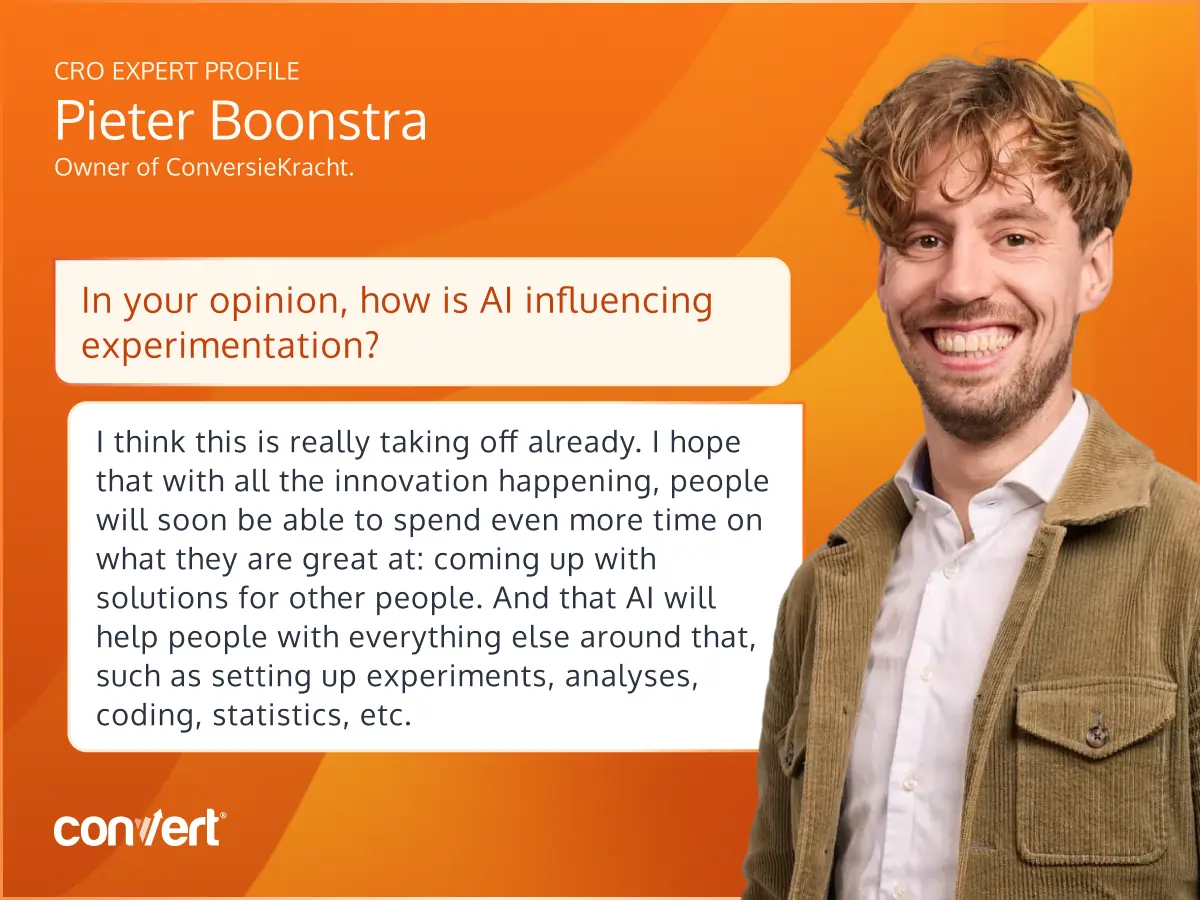
The discipline of Conversion Rate Optimization (CRO) has transitioned from a niche technical requirement to a fundamental pillar of digital business strategy, a shift exemplified by the rise of specialized agencies like ConversieKracht. Pieter Boonstra, the founder and lead strategist of the Netherlands-based firm, has positioned his organization at the forefront of this movement by prioritizing "proven business impact" over vanity metrics. In a landscape often cluttered by data noise, Boonstra’s approach emphasizes the synthesis of consumer psychology and rigorous experimental design to solve complex organizational challenges.
The Emergence of a Data-Driven Specialist
The trajectory of Pieter Boonstra’s career reflects the broader professionalization of the optimization industry. While studying marketing at the university level, Boonstra focused heavily on the theoretical underpinnings of consumer psychology and buying behavior. Unlike traditional academic pursuits that remain confined to textbooks, Boonstra applied these theories in real-time through freelance marketing roles for various e-commerce entities.

During this formative period, the digital landscape was heavily influenced by the accessibility of tools like Google Optimize. This platform served as a testing ground where Boonstra could validate psychological theories through empirical experimentation. By running experiments during the evening hours, he bridged the gap between academic theory and commercial application, a practice that eventually led to the founding of ConversieKracht. Today, the agency is recognized as the fastest-growing CRO firm in the Netherlands, a market known for its high e-commerce maturity and competitive digital landscape.
Defining Optimization in a Modern Context
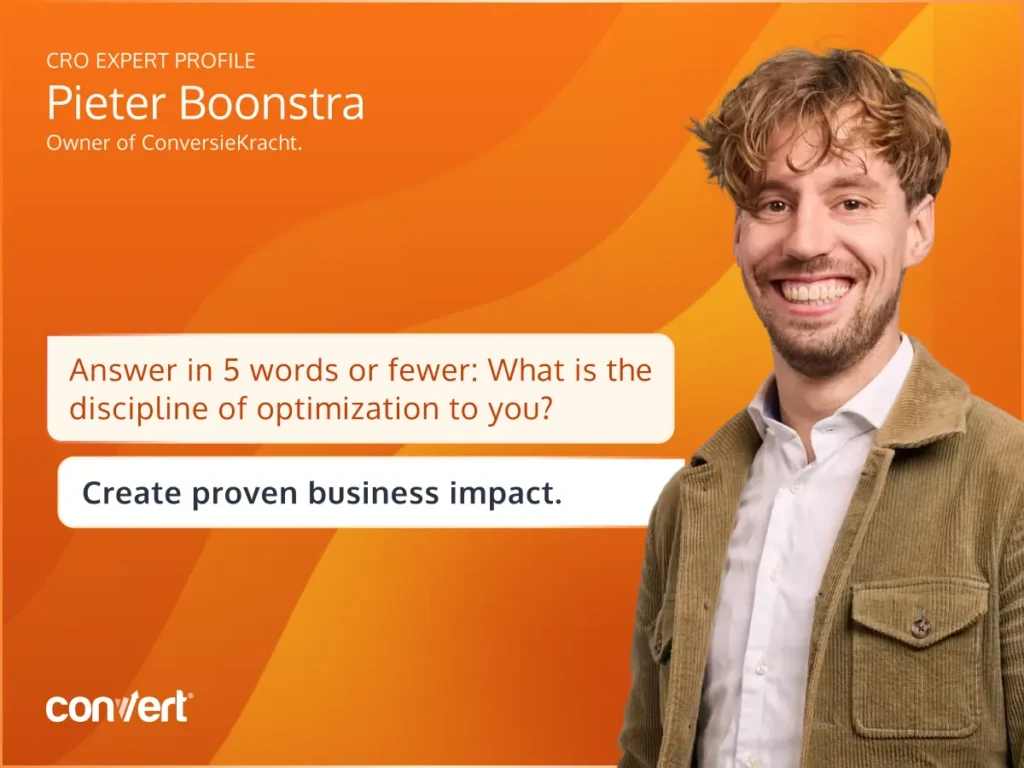
When tasked with defining the discipline of optimization in its most distilled form, Boonstra identifies it as the ability to "create proven business impact." This definition moves the needle away from simple A/B testing—which can often focus on minor UI tweaks—toward a more holistic view of business growth. In this framework, every experiment must be tied to a measurable financial or operational outcome.
The necessity of this results-oriented approach is supported by broader industry data. According to recent market analysis, organizations that adopt a "culture of experimentation" see an average of 30% higher growth in annual revenue compared to those that rely on intuition-based decision-making. Boonstra’s philosophy aligns with this trend, suggesting that the true value of an optimizer lies not in the tools they use, but in their ability to secure stakeholder buy-in through the demonstration of tangible value.

The Integration of Artificial Intelligence in Experimentation
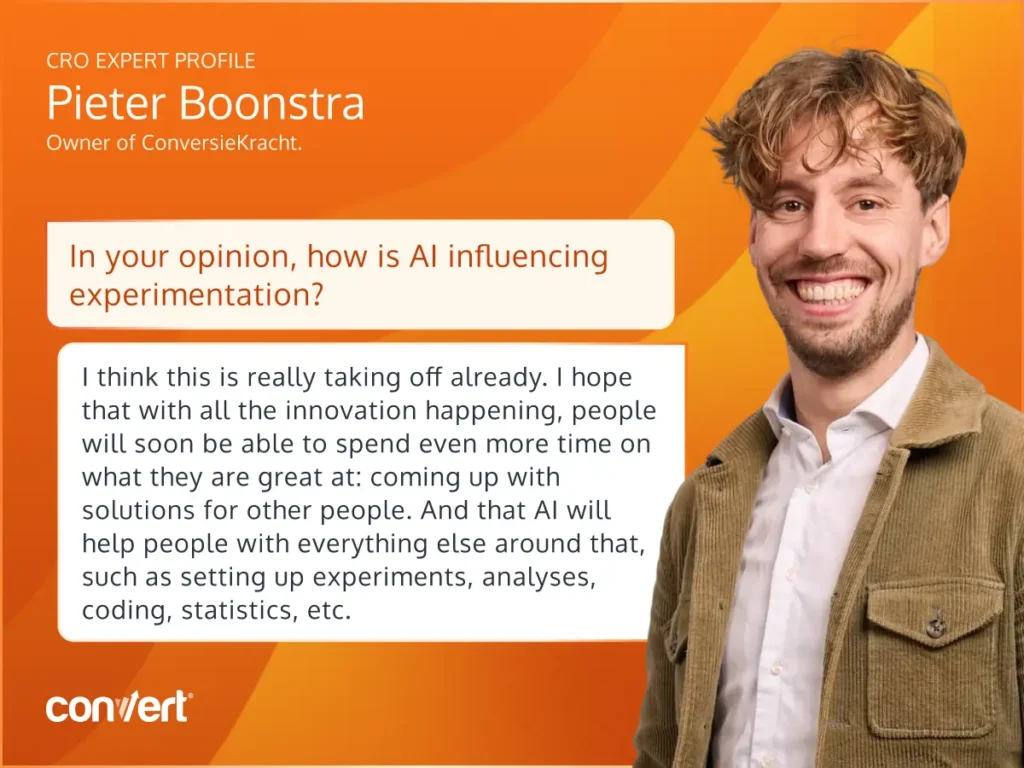
The rapid advancement of Artificial Intelligence (AI) is currently reshaping the experimentation landscape. Boonstra posits that AI is not merely a supplementary tool but a transformative force that will allow human practitioners to focus on high-level strategy. He envisions a future where AI handles the more labor-intensive aspects of the CRO workflow, including experiment setup, complex statistical analysis, and front-end coding.
This shift is anticipated to liberate human "optimizers" to do what they are uniquely qualified for: empathy-driven problem-solving. By delegating the "how" of testing to automated systems, strategists can focus on the "why"—developing solutions that resonate with the nuanced needs and frustrations of the end-user. Market research from firms like Gartner suggests that by 2026, 60% of marketing organizations will rely on AI-driven experimentation to personalize customer journeys, further validating Boonstra’s outlook on the human-AI synergy.
Case Study Analysis: Optimizing the Supply Chain Through Marketing
One of the most significant examples of Boonstra’s "business impact" philosophy is found in an experiment conducted for an organic soup manufacturer. By moving beyond the digital interface and visiting the physical production facility, Boonstra identified a significant operational inefficiency. The factory packed soups in units of six, yet the e-commerce store allowed customers to order arbitrary quantities, such as two or seven jars. This forced warehouse staff to manually open pre-packed boxes and repackage them, increasing labor costs and the risk of shipping errors.
To address this, ConversieKracht implemented an experiment on the webshop that offered incremental discounts for purchasing in multiples of the factory standard (6, 12, or 24 jars). The results were twofold:
- Revenue Growth: The client saw a 60% increase in revenue per customer as users were incentivized to increase their order volume to reach the discount threshold.
- Operational Efficiency: A vast majority of orders could be shipped directly in their original factory packaging, drastically reducing labor requirements and overhead.
This case highlights a critical evolution in CRO: the transition from "on-page" optimization to "end-to-end" business optimization. It demonstrates how a marketing experiment can solve a supply chain bottleneck, creating value that transcends a simple conversion rate increase.
Behavioral Psychology and the "Aha Moment"
Another benchmark experiment involved a brand selling high-fiber protein bars. Through qualitative user research, Boonstra discovered two key friction points. First, the product’s "Aha moment"—the point at which a customer becomes a brand advocate—was centered entirely on the taste. Second, some consumers found the full-sized bars too filling, leading them to cut the bars in half and potentially delaying their next purchase.
Boonstra’s team designed a "tasting box" featuring the five best-selling flavors in half-sized portions. This addressed the taste barrier by allowing low-risk sampling and catered to the preference for smaller portions. When tested on the homepage, the tasting box resulted in a 15% uplift in purchases among new visitors. Crucially, follow-up data showed that the lifetime value (LTV) and repeat purchase rates of these customers were equal to those who bought full-sized products. This experiment leveraged the psychological principle of "trialability"—the degree to which an innovation may be experimented with on a limited basis—to accelerate customer acquisition.
Organizational Structure and the Future of Growth Teams
A recurring challenge in the corporate world is the siloing of departments. Boonstra notes that the most successful companies he works with are those where marketing and production departments share responsibility for results. This cross-functional collaboration is essential for the type of holistic optimization seen in the organic soup case study.
Looking ahead, the role of the optimizer is expected to become more integrated within the core of the business. Whether they sit in dedicated "Growth Teams" or are embedded within product squads, the demand for professionals who can interpret data through the lens of human behavior is increasing. In the Netherlands, specifically, the demand for CRO expertise has seen a 25% year-over-year increase as traditional retailers move toward direct-to-consumer (DTC) models.

Broader Impact and Industry Implications
The growth of agencies like ConversieKracht signals a maturing market where businesses are no longer satisfied with "best practices" or "industry standards." Instead, they require bespoke experimentation programs that account for their specific operational constraints and customer psychology.
The broader implications for the digital economy are significant. As more companies adopt Boonstra’s approach, the focus of competition will shift from who has the largest advertising budget to who can learn and adapt the fastest. The sunsetting of older tools like Google Optimize has forced the industry to adopt more robust, enterprise-grade solutions (such as Convert or Optimizely), which in turn has raised the bar for statistical significance and data integrity.
In conclusion, Pieter Boonstra’s journey from a marketing student to the head of a leading CRO agency underscores the importance of merging psychological insight with operational reality. By focusing on "proven business impact," the modern optimizer acts as a bridge between the customer’s desires and the company’s bottom line. As AI continues to automate the technical hurdles of the field, the future of CRO will increasingly depend on the strategist’s ability to uncover the "signals in the noise" and transform them into sustainable business growth. The success of ConversieKracht serves as a blueprint for this integrated, impact-first approach to digital commerce.


 Asro
Asro
 Dwi Wanna