
 rifanmuazin
The e-commerce landscape is in a constant state of evolution, driven by rapid technological advancements and an ever-increasing demand for seamless, personalized customer experiences. This week, a wave of new product and service releases underscores this dynamic shift, with a particular emphasis on artificial intelligence, modular commerce architectures, and sophisticated marketing tools designed to streamline operations and boost conversion rates for online merchants. From AI-powered store builders that can launch a fully functional e-commerce presence with simple text prompts to advanced solutions for managing brand visibility across generative AI platforms, businesses are being equipped with unprecedented capabilities to reach, engage, and convert their target audiences.
The suite of innovations unveiled addresses a broad spectrum of merchant needs. Key themes emerging from this latest wave of releases include the democratization of online store creation through AI, the strategic adoption of composable commerce for greater flexibility, the integration of AI into customer-facing interactions, and the optimization of payment and marketing workflows. These developments signal a move towards more intelligent, agile, and customer-centric e-commerce operations.
AI Revolutionizes E-commerce Store Creation and Management
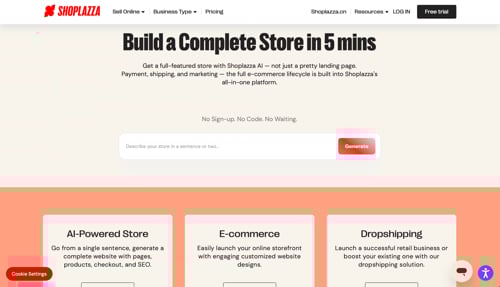
Artificial intelligence is no longer a futuristic concept in e-commerce; it is rapidly becoming an indispensable tool for merchants seeking to simplify complex processes and accelerate their time to market. Shoplazza, a platform catering to direct-to-consumer brands, has introduced its AI Store Builder, a revolutionary tool designed to drastically reduce the complexity and technical expertise required to launch an online storefront. Merchants can now generate a complete, ready-to-sell e-commerce website by simply describing their products, brand positioning, and target markets in natural language. The AI then automatically constructs essential components, including homepage layouts, product pages with descriptions and images, collection structures, and policy content. This innovation promises to empower a wider range of entrepreneurs, particularly small businesses and startups, by lowering the barrier to entry and enabling them to focus on their core business rather than intricate website development.

Complementing Shoplazza’s offering, Stable Commerce has emerged as a new AI-powered e-commerce platform that further redefines store creation and management through a chat-based interface. Founders with extensive experience in the e-commerce sector have developed this platform, allowing merchants to articulate their needs conversationally. The AI agent then constructs a fully operational storefront, complete with page design, product listings featuring descriptions and images, integrated checkout functionality, and shipping configurations. The conversational interface extends to ongoing store management, enabling merchants to modify layouts, products, or content with the same ease as initial setup. This approach not only simplifies operations but also offers a dynamic and adaptable e-commerce environment, crucial for businesses aiming to respond quickly to market trends.
The implications of these AI store builders are profound. They democratize e-commerce by removing significant technical hurdles, potentially leading to an explosion of new online businesses. For established merchants, these tools offer a pathway to rapid prototyping and efficient scaling of their online presence. Furthermore, the integration of AI in content generation, such as product descriptions and marketing copy, can lead to more consistent branding and optimized messaging across various platforms.
Enhancing Brand Visibility and Customer Engagement with AI
Beyond store creation, AI is being leveraged to enhance brand visibility and deepen customer engagement. Adobe has launched a significant brand visibility tool specifically designed to improve how businesses appear on generative AI platforms. This development is particularly timely as brands grapple with the increasing prevalence of AI-driven search and content discovery. Alongside this, Adobe has expanded its Experience Manager with a contextual layer for AI agents, facilitating more intelligent and personalized interactions. The introduction of CX Enterprise, an agentic AI system, aims to simplify the entire customer lifecycle management process, from initial prospect acquisition through to driving conversions and fostering long-term loyalty. This integrated approach suggests a future where AI actively manages customer relationships, providing proactive support and personalized experiences at scale.
Kaltura is also at the forefront of integrating AI-driven conversational experiences into content management systems (CMS). Through native integrations with popular platforms like Adobe Experience Manager, WordPress, and Drupal, organizations can now embed Kaltura’s advanced AI tools as native components. This includes the deployment of agentic avatars designed to greet website visitors, sophisticated conversational search functionalities, and interactive video experiences. Such capabilities can significantly enhance user engagement by making digital interactions more dynamic and human-like, ultimately contributing to improved customer satisfaction and higher conversion rates.

Parsnipp has introduced a behavior-driven AI search and GEO platform, designed to provide brands with deep insights into their visibility within AI-powered discovery and search environments. By identifying specific signals, misconfigurations, and content gaps, this platform helps businesses optimize their presence across large language models (LLMs). Features such as brand analytics across LLMs, competitor tracking, GEO content optimization, search persona analysis, and AI readiness recommendations empower merchants to understand and influence how they are perceived in the evolving digital landscape. This proactive approach to AI visibility is critical for maintaining competitive advantage.
Composable Commerce and Streamlined Operations
The adoption of composable commerce architectures continues to gain momentum, offering businesses the flexibility and agility to adapt to changing market demands. Vaimo has launched Nexus, a frontend orchestration platform specifically designed for composable commerce environments. Nexus acts as a crucial intermediary between frontend and backend systems, enabling a modular architecture without necessitating extensive rebuilds or incurring prohibitive overhead. The platform comprises an orchestration layer that aggregates data across various systems, a high-performance frontend layer, and connectors for leading platforms such as Commercetools, Adobe Commerce, Contentful, and Sanity. As part of the Vaimo Accelerator program, Nexus is positioned to help businesses unlock the full potential of their composable commerce strategies, allowing for faster innovation and more tailored customer experiences.
BlueSwitch, a Shopify Platinum Partner, has introduced its Unified Commerce Suite. This comprehensive collection of production-ready Shopify modules is engineered to address the unique operational challenges faced by B2B merchants. The suite tackles critical gaps in pricing, ordering, onboarding, fulfillment, shipping, and account workflows, providing a more integrated and efficient experience for businesses operating in the business-to-business space. By offering pre-built solutions for common B2B complexities, BlueSwitch aims to accelerate the adoption and effectiveness of e-commerce for B2B operations.
Optimizing Marketing and Payment Workflows
In parallel with advancements in store creation and architecture, significant innovations are also emerging in marketing and payment processing. Klaviyo has expanded its integration with Canva, enabling marketers to seamlessly import their Canva designs into Klaviyo. This integration allows for the refinement and personalization of marketing campaigns using segmentation, automation, and customer data, leading to more effective and targeted communication. The synergy between design tools and marketing automation platforms empowers businesses to create visually compelling and data-driven campaigns with greater efficiency.

Wayvia has launched Shoppable Next Generation, an AI-enhanced update to its shoppable media tool. This platform allows brands to transform various marketing touchpoints, including display ads, social media posts, and email campaigns, into shoppable experiences within minutes. The update provides customizable landing page templates designed to drive conversions, facilitate basket building, and enhance brand awareness. Each template is mapped to specific campaign objectives within Meta Ads Manager, offering a strategic and measurable approach to integrating commerce into marketing efforts.
Payment processing is also seeing significant AI-driven enhancements aimed at improving security and conversion rates. Payabl., a fintech provider, has launched Click to Pay with Visa. This service replaces manual card number entry with token-based checkouts, allowing customers to complete purchases with just a few clicks after enrolling their card. Available through Payabl.checkout, this feature enhances security by reducing the risk of manual entry errors and fraud, while simultaneously streamlining the checkout process for customers across all devices.
Gr4vy, a payment orchestration platform, has announced support for agentic transactions, enabling merchants to manage and process payments within AI-driven environments. This capability is crucial for the emerging field of AI commerce. To further support this transition, Gr4vy is releasing its Agentic Development Kit, which guides merchants in building and launching AI-native storefronts on platforms like ChatGPT. This toolkit aims to equip businesses with the necessary resources to navigate the complexities of AI-native commerce, ensuring control over performance, security, and customer experience.
Streamlining Logistics and Shipping
The efficiency of logistics and shipping operations remains a critical component of the e-commerce ecosystem. Australia Post has introduced a "Print in Store" capability for eBay sellers. This service allows sellers to generate shipping labels at participating post offices by simply scanning a QR code provided by eBay. This initiative simplifies the shipping process, particularly for sellers who may not have immediate access to printing facilities. It follows Australia Post’s recent launch of a new small parcel option for items under 250 grams, developed in collaboration with eBay, indicating a strategic effort to support small businesses and enhance the efficiency of e-commerce logistics.
UPS is deploying its radio frequency identification (RFID) sensing technology across its U.S. small package network. This technology, now present in all UPS delivery vehicles, facilities, and on every package shipped through UPS stores, aims to eliminate manual scanning. RFID sensing automatically confirms package pickups and possession, significantly improving tracking accuracy and operational efficiency. This advancement contributes to a more transparent and reliable supply chain, benefiting both businesses and consumers by ensuring timely and accurate delivery information.
Empowering Small Businesses with Integrated Platforms
Recognizing the unique needs of small businesses, SiteGround has launched SiteGround Ecommerce, an all-in-one platform designed to simplify the process of building, hosting, and growing online stores. This comprehensive solution provides essential tools for managing payments, shipping, taxes, orders, and inventory. Additionally, it includes built-in marketing features to help store owners enhance their visibility and convert visitors into customers. By consolidating these critical functionalities into a single platform, SiteGround aims to lower the operational burden on small business owners, allowing them to focus on growth and customer acquisition.
Broader Implications and Future Outlook
The wave of product and service launches this week underscores a significant acceleration in the integration of advanced technologies into the e-commerce workflow. The widespread adoption of AI for tasks ranging from store creation to customer interaction promises to democratize online business ownership and enhance operational efficiency. Composable commerce architectures are providing businesses with the agility needed to adapt to rapidly evolving consumer preferences and market dynamics. Furthermore, the focus on streamlined marketing and payment processes, coupled with innovations in logistics, indicates a comprehensive effort to optimize every touchpoint of the customer journey.
These developments suggest a future where e-commerce is more intelligent, personalized, and accessible than ever before. Merchants will increasingly rely on AI-driven tools to manage complex operations, freeing them to concentrate on strategic growth and customer relationship building. The trend towards modular and flexible technology stacks will empower businesses to innovate rapidly and tailor their offerings to specific market needs. As these technologies mature and become more widely adopted, the competitive landscape of e-commerce is poised for further transformation, with businesses that embrace these innovations likely to gain a significant advantage. The ongoing evolution of AI, composable architectures, and integrated platforms signals a new era of opportunity and efficiency for online retailers worldwide.









