rifanmuazin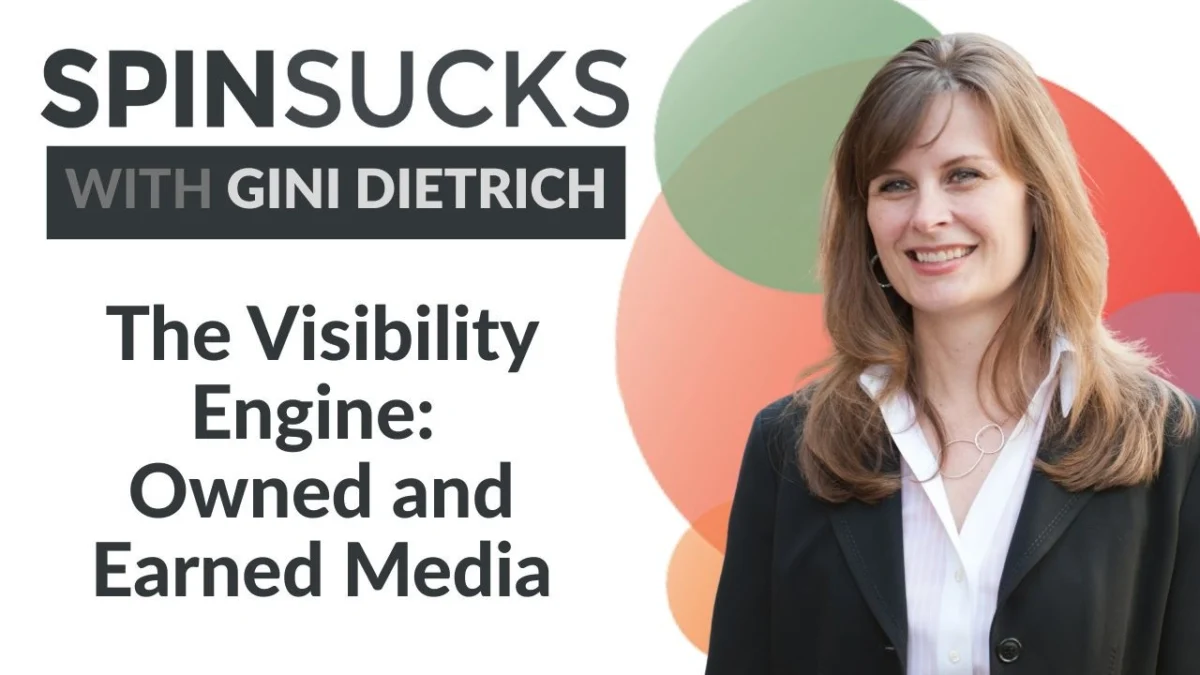
The landscape of digital discovery has undergone a fundamental transformation, shifting from a click-driven economy to a system-based authority model where visibility is no longer determined by individual channel performance but by the cohesion of an organization’s entire communications engine. This evolution, characterized by the rise of zero-click searches and generative artificial intelligence, necessitates a departure from traditional, siloed marketing strategies toward a discipline known as visibility engineering. As search engines and AI models increasingly provide direct answers to users without requiring them to visit a source website, the challenge for modern brands is no longer just capturing traffic, but building a foundation of proof-backed authority that both humans and machines can recognize and trust.
The Paradigm Shift: From Clicks to Conversations
For over two decades, the primary metric of digital success was the click-through rate. Brands optimized content to entice users to leave search engines or social media platforms and enter their owned ecosystems. However, recent data from SparkToro indicates a drastic shift in this behavior. In a 2024 study of U.S. Google searches, it was found that for every 1,000 searches, only 374 resulted in clicks to the open web. In the European Union, the number was even lower, at 360. This "zero-click" environment is driven by Google’s AI Overviews, featured snippets, and the integration of Large Language Models (LLMs) into the search experience.
In this new environment, the audience is receiving information through summaries, screenshots, and AI-generated recommendations. This means that a brand’s presence must be felt even when a user never visits its website. When marketing teams operate in silos—where social media, search engine optimization (SEO), public relations, and content marketing are managed as separate programs with different metrics—the resulting digital footprint is often scattered and contradictory. Visibility engineering proposes that these elements must be treated as a single, integrated system to ensure that the signals being sent to both human audiences and AI training sets are consistent and authoritative.
A Chronology of Digital Discovery Evolution
The transition to the current state of visibility engineering can be traced through several distinct phases of digital marketing history. In the early 2000s, the "Channel-First" era focused on individual platforms, where SEO was a technical exercise and PR was limited to traditional media outreach. By 2010, the "Content is King" era emerged, popularized by the original PESO Model (Paid, Earned, Shared, Owned), which encouraged brands to become their own publishers.
The 2020s marked the beginning of the "AI and Zero-Click" era. With the launch of ChatGPT and the subsequent integration of generative AI into search engines, the way information is indexed and retrieved changed. AI models do not just look for keywords; they look for entities, relationships, and "structured expertise." This historical progression has moved the goalposts from simply being "found" to being "validated" by the very systems that summarize information for the end-user.
Owned Media as the Foundation of Structured Expertise
Under the visibility engineering framework, owned media serves as the "home base" where an organization defines its truth. It is no longer sufficient to treat a blog or a website as a repository for disconnected posts or trending topics. Instead, owned media must be built around "authority anchors"—clear, repeatable points of view that are consistently reinforced across all communications.
Structured expertise requires three core components:
- Defensible Themes: These are ideas rooted in the organization’s genuine knowledge and the audience’s specific needs. They are not temporary trends but the "spine" of the brand’s narrative.
- Authority Anchors: These are the primary concepts the brand wants to own. They must be present in executive communications, sales enablement, and pitch angles.
- Proof Points: This is the data, methodology, and third-party validation that turns a claim into a fact. Without proof, owned media is merely self-promotion, which carries a low trust ceiling for both humans and AI.
Industry analysts suggest that AI models, such as those developed by OpenAI and Google, prioritize consistency when determining the reliability of a source. If an organization’s leadership says one thing on LinkedIn while its website says another, the AI may perceive a lack of authority, leading to a lower likelihood of being featured in AI-generated summaries.
Earned Media and the Mechanics of Credibility Transfer
While owned media establishes the narrative, earned media provides the external validation necessary to break through the "credibility ceiling." In a professional journalistic context, earned media is defined as a "credibility transfer." When a trusted third party—whether a trade publication, a podcast host, or an industry analyst—validates a brand’s expertise, it provides a signal of trust that the brand cannot buy or generate itself.
Modern earned media has expanded beyond the traditional press release. It now encompasses:
- Mentions in industry-specific newsletters and podcasts.
- Inclusion in analyst reports and academic citations.
- Awards and recognitions from professional associations.
- Organic mentions within influential digital communities.
The power of earned media in the age of AI lies in its role as a training signal. LLMs are trained on vast datasets, including news archives and reputable publications. When a brand’s "authority anchors" from its owned media are mirrored and validated in earned media outlets, it creates a compounding effect. This loop ensures that the brand’s expertise becomes easier for AI systems to recognize and repeat as a factual recommendation.
Supporting Data: The Impact of Integrated Communications
Recent surveys of Chief Marketing Officers (CMOs) and communications directors highlight the growing necessity of this integrated approach. According to data from Muck Rack, there is an increasing focus on how AI "reads" and interprets brand data. Professionals who have adopted the PESO Model report higher levels of consistency in their brand messaging, which correlates with better performance in "generative engine optimization" (GEO).
Furthermore, consumer trust data continues to show that earned media remains the most trusted form of communication. The 2023 Edelman Trust Barometer indicated that consumers are increasingly skeptical of paid advertising but remain receptive to "expert" voices and peer-validated information. By engineering visibility through a combination of owned expertise and earned validation, brands can navigate this skepticism more effectively than through traditional advertising alone.
Official Responses and Industry Perspectives
Communications experts and proponents of the PESO Model Certification argue that the shift toward visibility engineering is a response to the "noise" of the modern internet. Gini Dietrich, the creator of the PESO Model, has frequently noted that when the four quadrants of the model (Paid, Earned, Shared, and Owned) are run as separate programs, they "occasionally bump into one another in the hallway" rather than working as a synchronized engine.
Leading practitioners in the PR and marketing space have reacted to the rise of AI by emphasizing that "authority" is the new currency. The consensus among industry leaders is that the traditional "buyer journey" has been disrupted. Instead of a linear path from awareness to consideration to purchase, the journey is now a web of fragmented touchpoints where the brand must maintain a constant, validated presence.
Broader Impact and Long-term Implications
The long-term implications of visibility engineering extend beyond marketing metrics to the very core of brand reputation. As AI becomes the primary interface through which humans interact with the web, the "Brand Graph"—the network of associations and data points that define a company online—becomes its most valuable asset.
Organizations that fail to integrate their owned and earned media strategies risk becoming invisible in an AI-first world. If a brand’s expertise is not "structured" and "validated," it will be bypassed by AI summaries in favor of competitors who have built a more cohesive authority engine. Conversely, those who master visibility engineering will find that their influence compounds over time. Each piece of owned content reinforces their earned media pitches, and each earned media "win" strengthens the authority of their owned platform.
The transition to visibility engineering is not merely a change in tactics but a shift in mindset. It requires moving from "chasing attention" to "building an engine." By treating communications as a system rather than a series of campaigns, organizations can ensure that their expertise is not only found but is also trusted and repeated by both the people they serve and the machines that guide them. This systemic approach is the foundation of the modern PESO Model, providing a repeatable framework for authority in an increasingly complex digital landscape.