
 rifanmuazin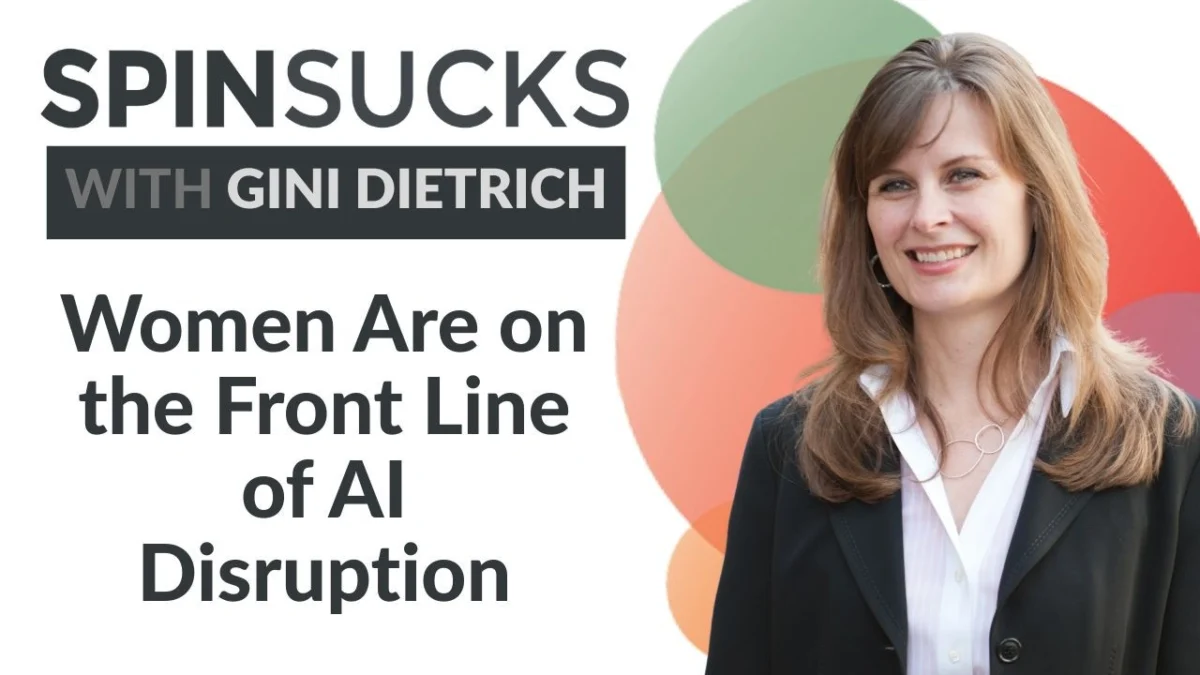
The rapid integration of generative artificial intelligence into the global economy has moved beyond mere technological advancement, evolving into a fundamental restructuring of labor, education, and political leverage. Recent public statements from influential tech leaders have sparked a critical debate regarding the specific demographic impact of this disruption, suggesting that the "white-collar" roles traditionally held by highly educated women are the primary targets of the current AI revolution. While early discussions of automation focused on manual labor and manufacturing, the advent of Large Language Models (LLMs) has shifted the focus toward strategy, communications, and the humanities—sectors where women have historically maintained a significant professional presence.
The Catalyst: Palantir CEO Alex Karp’s Public Projections
The discourse surrounding the gendered impact of AI reached a tipping point following a series of public appearances by Alex Karp, the CEO of Palantir Technologies. Palantir, a company valued at over $200 billion, specializes in big data analytics and surveillance for government and military agencies, positioning Karp as a pivotal figure in the deployment of high-stakes AI systems. In a televised interview with CNBC, Karp articulated a stark vision for the future of the American workforce, suggesting that AI would fundamentally alter the balance of economic and political power.
Karp stated that the technology is being developed to reduce the influence of "highly educated, often female" professionals who typically lean toward the Democratic party. Conversely, he predicted an increase in the economic power of "vocationally trained, working-class, often male" individuals. This assessment was not presented as a theoretical risk to be mitigated, but rather as an inevitable reality of the technology’s trajectory. Karp’s rhetoric suggests that the very skills cultivated through a humanities education—critical analysis, persuasive writing, and ethical reasoning—are the specific targets of AI-driven automation.
Chronology of a Shifting Narrative
The narrative regarding the destruction of humanities-based roles has been building through key high-level forums over the past several years. The timeline of these statements reveals a consistent business strategy aimed at devaluing liberal arts expertise.
In early 2024, during the World Economic Forum in Davos, Karp engaged in a dialogue with BlackRock CEO Larry Fink. During this exchange, Karp asserted that AI "will destroy humanities jobs." He further suggested that individuals who studied philosophy or similar disciplines at elite institutions would find their skills increasingly difficult to market unless they possessed secondary technical vocational training. He characterized those who failed to anticipate this disruption as being disconnected from reality, using provocative language to underscore the severity of the shift.
The subsequent CNBC interview, conducted during Women’s History Month, further refined this thesis by adding a demographic and political layer. By explicitly naming "highly educated women" as the demographic most at risk of losing "economic power," Karp signaled that the automation of text-heavy, strategy-driven work is a calculated feature of the current technological roadmap rather than an unintended consequence.
Structural Vulnerabilities: Why Women Face Higher Exposure
The projections made by industry leaders are supported by emerging data from international labor organizations. The vulnerability of female professionals is rooted in long-standing structural patterns within the global labor market. According to the International Labour Organization (ILO), women in high-income countries are nearly three times more likely than men to occupy roles with high exposure to generative AI automation.
Current data indicates that in the United States, approximately 9.6 percent of the female workforce is in a position with high potential for automation, compared to only 3.5 percent of the male workforce. This disparity is primarily due to occupational segregation. Approximately 70 percent of working women are employed in white-collar roles, whereas for men, the figure is closer to 50 percent.
The professions most susceptible to current AI capabilities include:
- Communications and Public Relations: Roles involving press release drafting, media monitoring, and campaign planning.
- Marketing and Content Creation: Copywriting, social media management, and email marketing.
- Administration and Operations: Project coordination, scheduling, and reporting.
- Human Resources and Customer Engagement: Initial screening, policy drafting, and support services.
In contrast, sectors such as construction, manufacturing, and manual trades—which remain predominantly male-dominated—rely on physical tasks that current AI and robotic technologies cannot yet replicate at scale or cost-effectively.
The "Support Gap" and the Risk of Displacement
Compounding the risk of displacement is a documented gap in institutional support for AI adoption. A report by McKinsey & Company, titled "Women in the Workplace," highlights a concerning trend in how AI tools are introduced to entry-level employees. The study found that only 21 percent of entry-level women reported that their managers encouraged them to utilize AI tools, compared to 33 percent of their male counterparts.
This "support gap" suggests that women are being hit by a dual crisis: they are more exposed to the risks of AI-driven automation but are less likely to be trained in the strategic use of these tools to enhance their own productivity and job security. Without active intervention, this could lead to a permanent loss of leverage for female professionals in middle-management and strategic roles.
The Devaluation of the Humanities and Ethical Oversight
A critical component of the current AI discourse is the specific targeting of the humanities. Education in the liberal arts focuses on questioning power structures, ethical reasoning, and understanding the nuances of human behavior. Tech leaders like Karp argue that these "soft skills" are easily replicated by algorithms. However, experts in AI ethics argue the opposite.
Research from the Markkula Center for Applied Ethics at Santa Clara University indicates that women disproportionately hold roles within AI ethics and governance. This concentration is attributed to the humanities-heavy backgrounds of these professionals, which train them to consider the long-term consequences and societal impacts of technology.
The irony of the current technological trajectory is that as AI systems become more powerful, the need for ethical oversight—the ability to ask "should we?" instead of "can we?"—becomes paramount. By devaluing the roles of those trained in the humanities, the industry risks removing the very conscience required to prevent algorithmic bias, misinformation, and institutional harm.
Strategic Responses: The PESO Model as a Defensive Framework
In response to the threat of economic marginalization, communications and marketing professionals are increasingly turning to integrated strategic frameworks to prove their bottom-line value. One such framework is the PESO Model (Paid, Earned, Shared, Owned media), which emphasizes measurable business outcomes over simple content production.
To counter the narrative that AI can replace human strategists, professionals are being urged to shift their focus from "tactical execution" to "strategic integration." This involves:
- Quantifying Impact: Moving beyond "vanity metrics" (like likes or impressions) to demonstrate how communications strategies drive qualified leads, reduce acquisition costs, and build search authority.
- Mastering the Technology: Rather than avoiding AI, professionals must lead its implementation to automate mundane tasks while reserving human judgment for high-level strategy.
- Prioritizing Ethics and Governance: Positioning oneself as the essential gatekeeper for brand reputation and ethical compliance—roles that a chatbot cannot legally or morally fulfill.
- Demonstrating Strategic Judgment: Highlighting the ability to navigate complex stakeholder relationships and crisis management, where human empathy and nuance are irreplaceable.
Broader Implications for Policy and Society
The prospect of AI reducing the economic power of a specific demographic has profound implications for social stability and political representation. If highly educated women lose their professional leverage, the ripple effects will be felt in corporate leadership, policy-making, and the global economy.
The "business plan" articulated by leaders in the AI sector suggests a future where efficiency is prioritized over human-centric judgment. However, the ultimate impact of AI will depend on how the workforce adapts. While the "quiet part" of the AI revolution has been spoken out loud—that certain roles and demographics are being targeted for disruption—the response from those professionals will determine whether AI serves as a tool for displacement or a catalyst for a new era of high-value, human-led strategy.
The challenge for the coming decade is not merely a technical one; it is a battle for the preservation of the humanities and the strategic power of the people trained to think critically about the world. As the technology continues to scale, the insistence on ethical, human-driven oversight remains the only viable defense against the wholesale automation of professional influence.










